Why common industrial fastener materials matter
Choosing among common industrial fastener materials is not a minor procurement detail. It affects clamp load, corrosion resistance, galvanic compatibility, maintenance cycles, and sometimes whether a machine stays in service or comes apart at the wrong time. Engineers know the basic truth already: a fastener is rarely the most expensive part on the BOM, but it can become the most expensive failure in the assembly.
That is why sourcing teams and design engineers tend to ask a practical question rather than a material-science one: what fastener material makes sense for this environment, this load, and this budget? The answer depends on the base material, the operating atmosphere, temperature, vibration, and whether the joint will ever need to be disassembled without drama.

Quick view of the most used options
In day-to-day manufacturing, a short list shows up again and again: carbon steel, alloy steel, stainless steel, brass, and sometimes aluminum or titanium for special cases. Each brings a different balance of strength, corrosion resistance, and cost.
Carbon steel
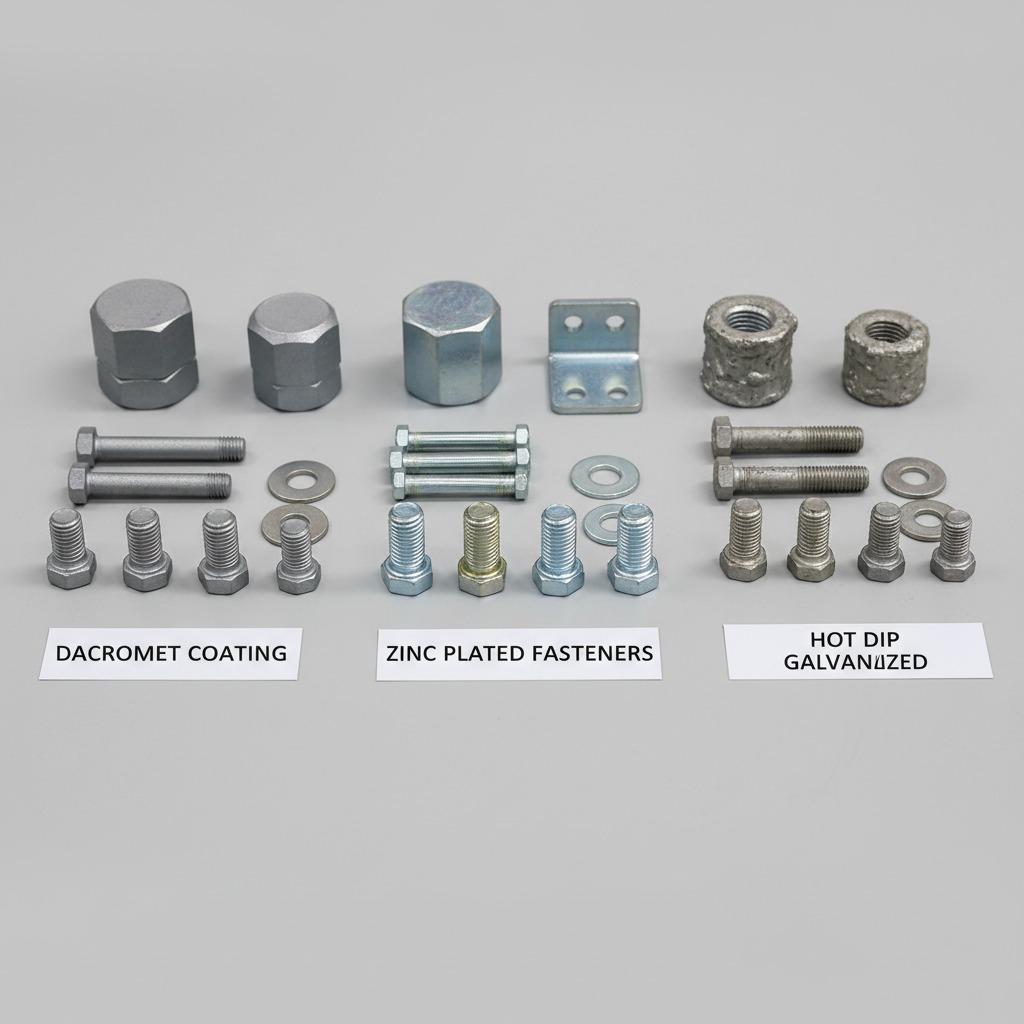
Carbon steel is widely used because it is economical and available in many grades. It works well for general-purpose applications, especially when plated or coated for corrosion protection. The caution is obvious but worth repeating: if the coating is damaged, the underlying steel can rust quickly in humid or outdoor service.
Alloy steel
Alloy steel fasteners are chosen when strength matters more than low cost. They are common in structural assemblies, heavy equipment, and machinery subject to high clamp loads. Heat treatment is often part of the story, which means buyers should pay attention to grade, not just size. A fastener that looks similar on paper may behave very differently under torque or fatigue.
Stainless steel
Stainless steel is usually selected for corrosion resistance, sanitary environments, or exposed assemblies. It is not automatically the best choice for every job, though. Some stainless grades are less strong than high-strength alloy steel, and galling can be an issue if the wrong thread pairing or lubrication strategy is used. That small detail causes more field complaints than many teams expect.
Brass and aluminum
Brass fasteners are used in electrical, decorative, and low-load applications. Aluminum fasteners are lighter, but they are not the default answer for demanding joints. Both materials can make sense in niche assemblies, yet buyers should check compatibility with the mating materials and service conditions before committing.
Titanium
Titanium fasteners offer an attractive strength-to-weight profile and strong corrosion resistance in demanding environments. They are usually reserved for applications where weight savings or high performance justify the higher cost. For mainstream industrial purchasing, titanium tends to be a special order rather than a standard line item.
Selection criteria engineers actually use
Material selection starts with the service environment. Outdoor exposure, chemical contact, salt spray, high humidity, and temperature swings all push the decision toward more corrosion-resistant materials or protective finishes. Then comes mechanical demand: tensile strength, shear load, fatigue resistance, and preload retention.
For many assemblies, galvanic corrosion is the hidden problem. Pairing dissimilar metals without thinking through the electrolyte and contact path can create premature joint degradation. A stainless fastener in an aluminum housing, for example, may be perfectly fine in one design and troublesome in another if moisture and electrical continuity are present.
Temperature also matters. Some materials hold strength better than others at elevated temperatures, while others may lose clamp load or experience relaxation. In high-heat equipment, the fastest way to a maintenance issue is to assume room-temperature properties tell the whole story.
Common mistakes in fastener material selection
One frequent mistake is over-specifying strength when corrosion is the real risk. Another is choosing a corrosion-resistant material without checking whether its mechanical properties are adequate for the joint. A third is assuming a coating solves every problem. Coatings help, but they do not replace correct material choice, and they do not always survive aggressive handling or repeated assembly cycles.
There is also a procurement trap: buying by dimensions alone. Two bolts with the same thread and length can differ significantly in grade, finish, and suitability for the application. That is how mismatches slip into production.
A practical buyer checklist
Before approving a fastener spec, it helps to confirm four things: the load requirement, the operating environment, the mating material, and the service interval. If the assembly will be exposed to moisture or chemicals, corrosion resistance should move up the list. If the joint depends on high preload, strength and consistent material quality become more important.
It is also worth asking whether the fastener will be installed repeatedly. Reusable joints often need materials and finishes that tolerate assembly better than the cheapest alternative. A small increase in unit price can save real labor later, especially if field service is involved.
What to ask suppliers
Good suppliers should be able to tell you the material family, available grades, finish options, and whether a part is better suited to strength, corrosion resistance, or weight reduction. If documentation is thin, treat that as a warning sign. For production programs, material traceability and consistent supply matter almost as much as the part itself.
If you are comparing common industrial fastener materials for a new design or a sourcing refresh, start with the environment and the joint requirements, then narrow to the shortest list that meets both. That approach usually avoids both overbuying and field failures.
Next step
For the cleanest result, build a simple fastener spec sheet for each assembly: material, grade, finish, mating material, and service conditions. It is a small exercise, but it prevents a lot of confusion later, especially when procurement has to substitute under pressure.