What a lifting clutch does, and why buyers should care
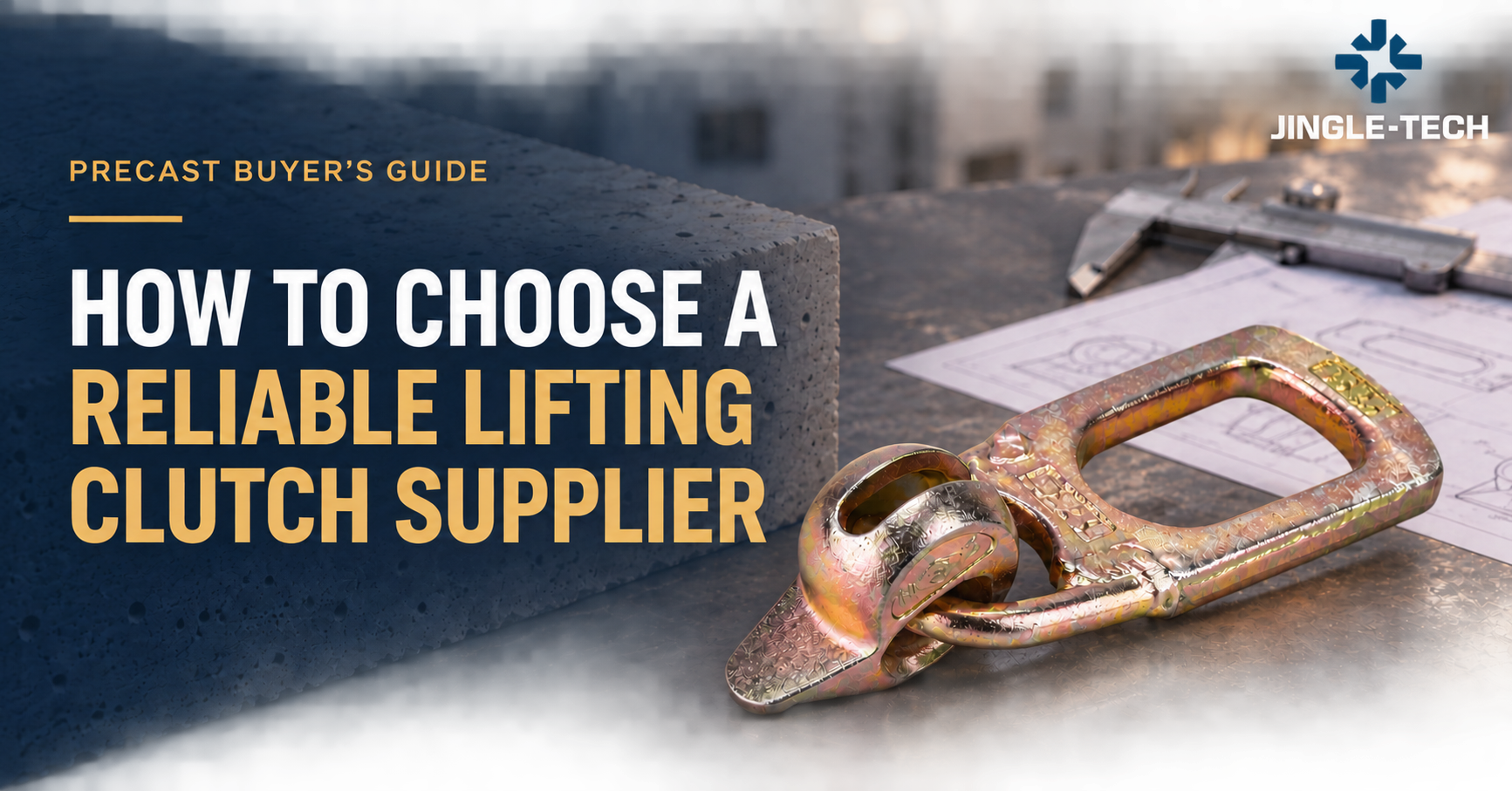
A lifting clutch sits at the center of many precast and concrete handling operations, yet it is often treated as a small accessory until something slows a pour, a lift, or an installation crew. In practice, the right Lifting Clutch helps connect lifting anchors to cranes or lifting gear quickly and predictably, which matters when a site is working to sequence precast panels, pipes, steps, or other heavy elements without unnecessary delay. The wrong choice can create handling friction, poor fit with the anchor system, or worse, unsafe lifting behavior.
For engineers, sourcing managers, and product teams, the real question is not simply which clutch to buy. It is whether the clutch matches the anchor system, the load requirement, the jobsite conditions, and the crew’s method of handling. That decision affects installation speed, reliability, and the amount of rework a team may face if components are mismatched.
Quick buyer takeaway
If you are comparing a Lifting Clutch Manufacturer or a Ring Clutch Supplier, start with compatibility rather than catalog appearance. The best-looking option on paper is not necessarily the one that seats correctly on your anchor or gives crews the easiest connection. In lifting hardware, fit is not cosmetic; it is operational.
Buyers should also be cautious about mixing terminology. Some products are marketed under similar names, but the actual geometry, connection method, and intended anchor family can differ. That is one reason purchase teams should ask for product drawings or application guidance before placing an order, especially for projects with repeat lifting cycles or mixed element types.
How lifting clutches are used in real production and site work
In precast and concrete handling, the lifting clutch is typically part of a larger lifting system that includes anchors cast into the element, lifting eyes or couplers, and crane attachments. The clutch is designed to engage the anchor securely so the load can be lifted and moved without the sort of slippage or awkward engagement that causes delays.
Different project teams value different things. Fabricators usually want a clutch that is easy to install and remove during repetitive production. Contractors tend to focus more on site speed, visible fit, and how forgiving the system is under normal field conditions. Procurement teams, meanwhile, often need to balance availability, traceability, and consistency across multiple lots. A single component has to satisfy all three groups, which is why the purchase decision is rarely as simple as matching dimensions.
Selection criteria that matter more than marketing claims
1. System compatibility
The first filter is always compatibility with the lifting anchor family. If the clutch does not match the anchor profile, thread, or engagement method, the rest of the discussion becomes academic. This is the point where many sourcing mistakes begin: the part is “close enough” to the original sample, but not close enough in service.
2. Load handling expectations
Different projects place different demands on lifting hardware. Some applications are repetitive and predictable; others involve irregular shapes, tight lifting angles, or site constraints that make positioning less straightforward. Buyers should confirm that the clutch is intended for the load class and lifting method being used. If the operation involves unusual geometry, that caution should be taken seriously rather than brushed aside.
3. Ease of crew use
A product that looks efficient in a drawing can still be awkward in the yard or on a slab. Crews need to connect, disengage, inspect, and store the clutch with minimal confusion. A design that reduces handling steps often pays for itself in fewer delays, though that benefit is easy to underestimate during purchasing.
4. Surface condition and maintenance habits
Even robust lifting hardware deserves routine visual checks. Dirt, wear, bent components, or damaged contact surfaces can interfere with reliable engagement. This is not a glamorous point, but it is a practical one. A sourcing decision should account for how the part will actually be maintained on your floor or site, not just how it performs when new.
Common mistakes buyers make
One common mistake is assuming all clutches with similar names are interchangeable. Another is buying only against price and then discovering the part needs extra handling care or does not align cleanly with the anchor system already in use. A third issue is overlooking the difference between a one-off purchase and a program buy. For a single job, a minor inconvenience may be tolerable. For repeated production, that same inconvenience becomes a recurring cost.
It is also worth watching for vague product descriptions. If a supplier cannot explain the intended application clearly, the buying team may need to slow down and ask for drawings, dimensional references, or technical clarification. That extra step is usually cheaper than sorting out a field mismatch later.
Practical questions to ask before placing an order
Before you buy, ask whether the lifting clutch is intended for your exact anchor type, how it is installed and released, what inspection routine is recommended, and whether the supplier can support repeated sourcing for future jobs. If you are comparing vendors, request enough information to make a side-by-side review possible. A good supplier should be able to speak plainly about application limits and not hide behind generic descriptions.
For engineering teams, it helps to document the load path and lifting method early in the project. For sourcing teams, it helps to keep approved product references on file so you are not re-qualifying the same part every time a new order comes through. Small process discipline saves real time later.
Where a reliable supplier makes the difference
A capable supplier does more than ship parts. They help the buyer avoid mismatches, narrow down the correct product family, and reduce the risk of buying hardware that looks appropriate but does not serve the actual lifting method. That is especially important when multiple project sites are involved or when the company is standardizing on a single part family across production lines.
If you are evaluating a Ring Clutch Supplier or a broader lifting hardware source, ask how they handle product identification, application guidance, and repeat orders. The best commercial relationship is usually the one that reduces uncertainty before material arrives at the dock.
Next step for buyers and project teams
Before you commit to a lifting hardware purchase, map the clutch to the anchor system, the load scenario, and the crew’s method of use. That one review can prevent most of the common issues. If you need a clearer selection path, request technical drawings, application notes, and a direct comparison between candidate products so the buying decision is based on fit and function, not just a product name on a line card.