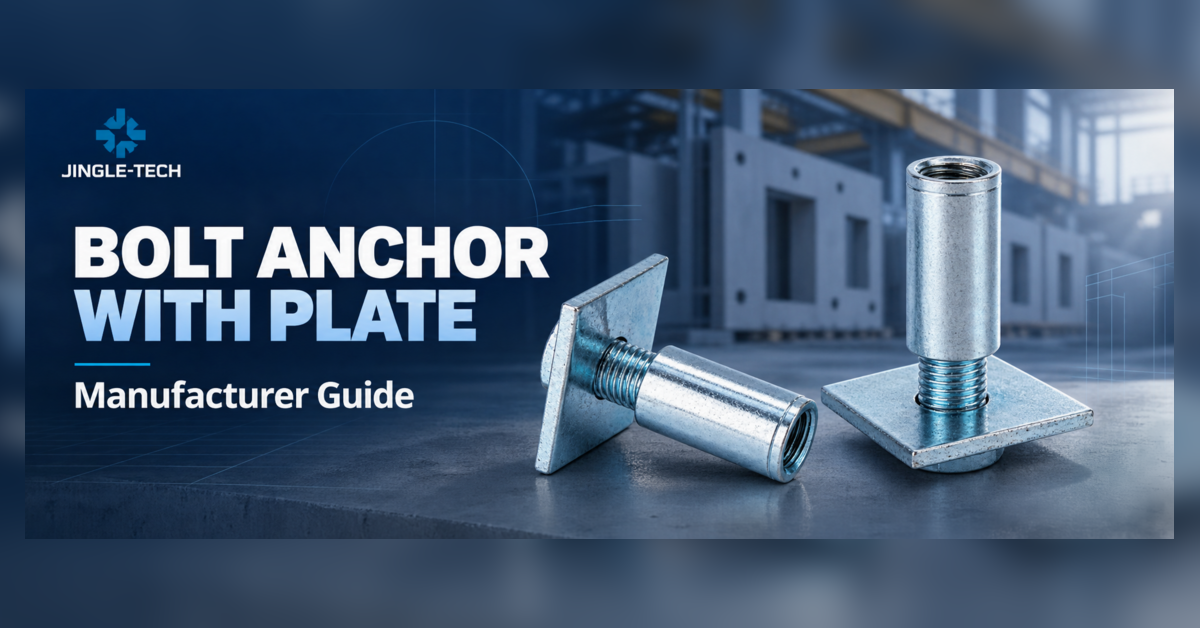
Erection Anchor: what it does and why buyers pay attention
An Erection anchor is one of those small site components that can make a large difference during lifting, positioning, and final placement of precast or heavy concrete elements. It is not a glamorous part of the bill of materials, but when a panel, beam, or slab has to be handled safely on a busy jobsite, the anchor point becomes a decision that affects both productivity and risk.
For engineers, sourcing managers, and project teams, the real question is not whether an erection anchor is useful. The question is which type fits the load case, the element geometry, and the installation method without creating unnecessary complications for production or field crews.
What the erection anchor helps solve
Most lifting and positioning problems start with the same constraint: large concrete elements are strong in service, but awkward before they are fixed in place. Crews need a reliable connection point for hoisting, rotating, bracing, and aligning the piece while avoiding local damage or unpredictable pull-out behavior.
That is where the erection anchor comes in. It creates a defined interface between the precast element and the lifting or erection hardware. In practice, that means better control during handling, fewer improvised rigging choices, and a cleaner path from fabrication yard to final set.
A buyer should think about the anchor not as a stand-alone part, but as part of a system that includes the concrete, the insert geometry, the rigging accessories, and the way the assembly is used on site. If one of those elements is mismatched, the weakest point usually shows up at the worst possible moment.
Key factors that drive selection
1. Load direction and handling method
Erection conditions are not always the same as lifting conditions. A piece may be lifted vertically, tilted into position, or temporarily supported while connections are made. The anchor has to suit the actual load path, not an assumed one. Side loading, angular rigging, and repeated handling can all change the demand on the insert.
2. Concrete element geometry
Edge distance, embedment depth, wall thickness, and reinforcement layout all matter. A compact anchor may be easy to install, but it still needs enough surrounding concrete to transfer force properly. Thin sections are especially sensitive, and this is where design teams sometimes become too optimistic. The hardware may look simple; the stress field around it is not.
3. Production workflow
A good erection anchor should be practical for the plant, not just acceptable on paper. If it is difficult to place accurately, slows down rebar installation, or creates inconsistent finishes, it becomes a hidden cost. In precast work, small inefficiencies accumulate quickly across batches.
Common mistakes to avoid
One frequent mistake is treating all anchors as interchangeable because the part is small. They are not. Geometry, intended use, and compatibility with the associated lifting accessory all matter.
Another common issue is underestimating the effect of installation quality. Even a suitable erection anchor can perform poorly if it is mispositioned, poorly secured, or embedded without enough surrounding reinforcement. Site teams may also assume that “it fit” means “it is ready.” Those are different things.
A more subtle problem is selecting hardware only around nominal capacity and ignoring how the anchor will be used in real conditions. Field conditions are messy: access is limited, lifting angles vary, and crew habits differ from one contractor to another.
Practical buyer advice
If you are comparing erection anchor options, ask for the data that matters in use, not just the headline size. Check the intended application, installation requirements, compatibility with adjacent lifting hardware, and any constraints on concrete strength at the time of handling.
It also helps to standardize where possible. Fewer variants can simplify procurement, reduce training needs, and lower the chance of a wrong part being used on the wrong element. That said, standardization should not override technical fit. A neat parts list is not worth much if it forces poor field practice.
For sourcing teams, the safest path is to work backward from the actual erection sequence: how the element is lifted, rotated, supported, and finally fixed. That sequence usually reveals the right anchor type faster than a general catalog search.
FAQ: common questions about erection anchors
Is an erection anchor the same as a lifting anchor?
Not always. The terms can overlap in practice, but the intended use, loading direction, and hardware pairing should be checked carefully.
Can one anchor cover every precast element?
Usually no. Different elements create different load paths and installation constraints, so one universal answer is rare.
What matters most: capacity or installation?
Both matter. A strong design can still fail in real use if installation is poor, and a convenient installation is no help if the load case is wrong.
Next step for engineers and buyers
Before placing an order, review the erection sequence, confirm the concrete element details, and verify that the anchor system matches the rigging method used on site. If the application is not routine, involve both the structural side and the production side early. That small extra step usually prevents the expensive kind of surprise later.