What a lifting ring clutch is used for, and why buyers care
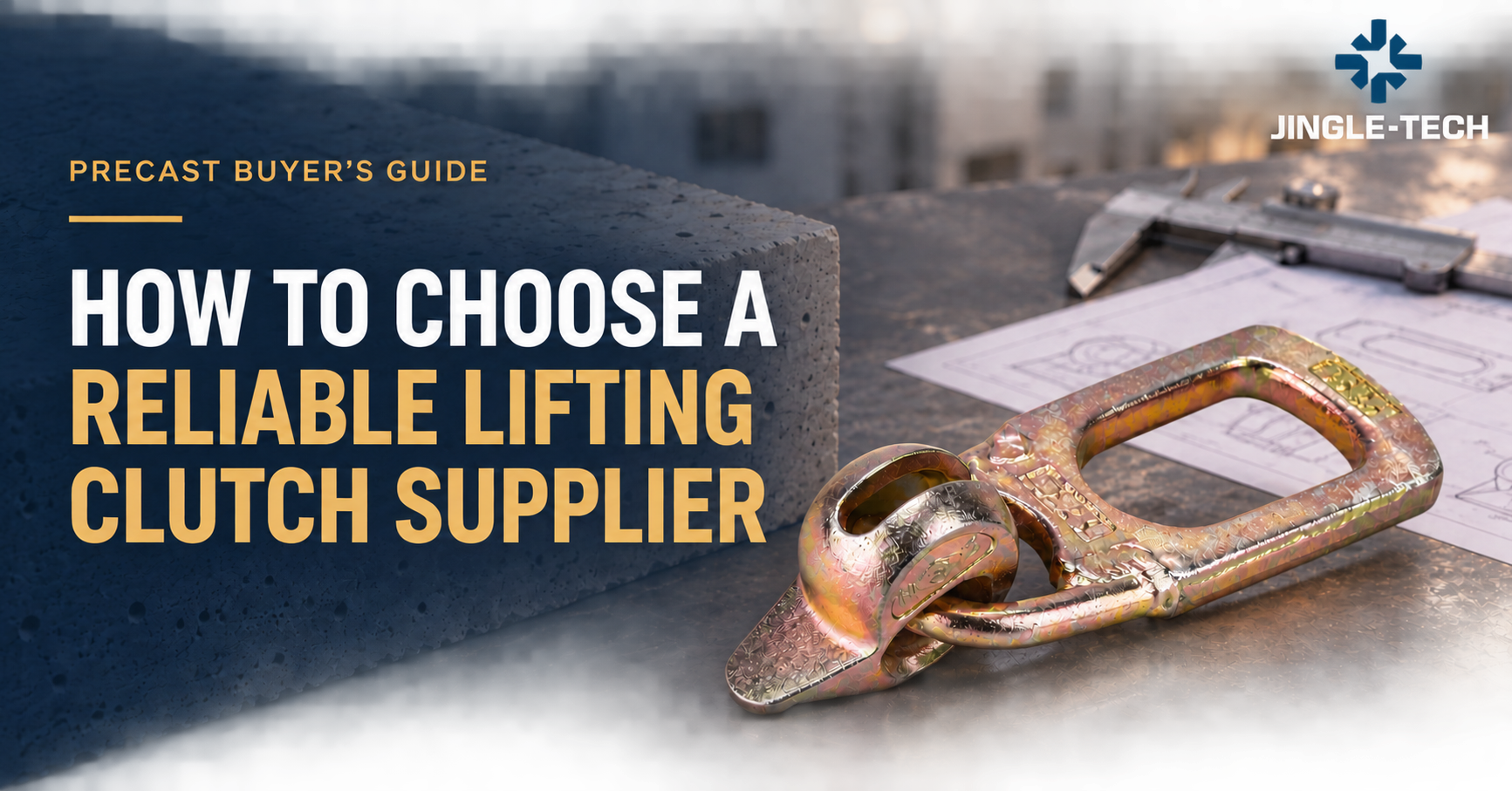
A lifting ring clutch is one of those components people only notice when the job is already awkward: a precast concrete element has to be lifted, rotated, or set precisely, and the attachment point has to be dependable. In practical terms, the clutch is the interface between the lifting insert cast into the concrete and the crane hook or lifting system above. If that interface is wrong, the whole lift becomes slower, riskier, and more expensive.
For engineers, sourcing managers, and project teams, the real question is not simply “does it work?” but “does it match the insert, the load, and the way the plant or site actually handles the part?” That is where many mistakes happen. A clutch that looks similar on paper may not fit the geometry, may be awkward to engage with gloves on, or may not suit the production rhythm of a precast yard. Those are not minor inconveniences; they affect throughput and safety.
Key role in precast handling
Most lifting ring clutch applications are tied to precast concrete production, where repeatable handling is part of the manufacturing process. The clutch is designed to connect with a compatible lifting insert or anchor embedded in the concrete. Once engaged, it allows the element to be lifted by crane or hoisting equipment and moved into position.
That sounds straightforward, but precast work rarely is. Panels, beams, pipes, and other elements may need different lift orientations. Some lifts are straight out of the mold; others involve turning the piece, slewing it, or placing it into a tight site opening. The clutch therefore has to do more than “hold.” It must help make the lift controlled and predictable.
What to check before selecting a lifting ring clutch
The first check is compatibility. The clutch must match the insert system being used, and that includes the shape and engagement method, not just the nominal load. A common sourcing error is assuming that similar-looking hardware can be swapped across systems. In lifting hardware, “similar” is not the same as “interchangeable.”
Load rating is the next obvious point, but it should be read in the context of the lift, not in isolation. The capacity you need depends on geometry, lift angle, number of pick points, and the element’s center of gravity. If a component is used at a poor angle or with uneven load sharing, the practical working condition can be very different from the simple rated figure on a catalog page.
Buyers should also consider accessibility. In a plant environment, workers need to connect and release the clutch efficiently. If the mechanism is too fiddly, it slows the line. If it is difficult to inspect, that is another issue. Some of the best hardware is not the most glamorous; it is the hardware crews can use consistently without improvisation.
Practical buying questions
Ask how the clutch is intended to be used: single lift, repetitive production, tilt-up handling, or site erection. Confirm whether the system requires a specific insert family. Check whether the lift crew can engage it cleanly with typical site access and PPE. And do not overlook storage and handling between lifts; small components are easily lost, damaged, or mixed with the wrong size on a busy job.
Common mistakes that cause trouble
The biggest mistake is treating lifting hardware as a commodity item. It is not. Another common problem is relying on visual similarity instead of verified compatibility. A third is skipping a review of the actual lifting sequence. A clutch may be correct for the load but awkward in a confined setting, especially where the crane angle or pick direction changes during installation.
There is also a habit, in some projects, of leaving the decision to the last moment. That tends to push teams toward whatever is available rather than what is appropriate. When the lift plan is already locked, there is little room to correct a mismatch. Buyers usually save time later by clarifying the lifting system earlier, even if it feels like one more detail during procurement.
How to use the information in a purchase decision
If you are comparing options, start with the insert system and the lift method, then narrow the list by working load, access, and operator handling. If the supplier provides technical documentation, review it against your actual part geometry and lifting sequence. If the data is incomplete, ask for clarification rather than filling in the blanks yourself. That small pause can prevent a lot of field frustration.
For sourcing teams, the right decision is usually the one that reduces ambiguity in production and erection. For engineers, it is the one that fits the load path without introducing unnecessary complication. And for plant managers, it is the one crews can use repeatedly without turning every lift into a special case.
Frequently asked questions
Is a lifting ring clutch the same as a lifting hook?
No. A clutch is the connecting device used with a compatible insert or anchor system; a hook is typically part of the crane or lifting gear above it.
Can one clutch fit every insert?
Usually not. Compatibility is system-specific, and that is one of the main points buyers need to verify.
What matters most: capacity or fit?
Both matter, but fit and compatibility come first. A hardware item with the wrong interface is not useful, even if the rated load looks adequate.
Next step for buyers and project teams
Before placing an order, confirm the insert type, lift configuration, and handling requirements with the people who will actually use the hardware. That simple check often separates a smooth precast workflow from one that needs constant correction. If you are evaluating a lifting ring clutch for production or site erection, the safest path is to treat compatibility and lift method as the starting point, not the afterthought.