What Buyers Really Need to Know About DIN 7981 Self Tapping Screw Selection
A DIN 7981 Self Tapping Screw is one of those small fastening parts that can quietly make or break a product build. If you are sourcing sheet metal assemblies, enclosures, appliances, or general hardware, the screw choice affects not only assembly speed but also joint reliability, serviceability, and the look of the finished unit. The basic question is simple: which screw style will bite cleanly, hold consistently, and avoid creating avoidable rework on the line?
That is why buyers and engineers pay attention to standards rather than just head shape or length. A standard like DIN 7981 gives everyone a common reference point for geometry and application. It does not eliminate the need to check base material, thickness, coating, and driving method, but it does narrow the field in a useful way.
What This Screw Type Is Typically Used For
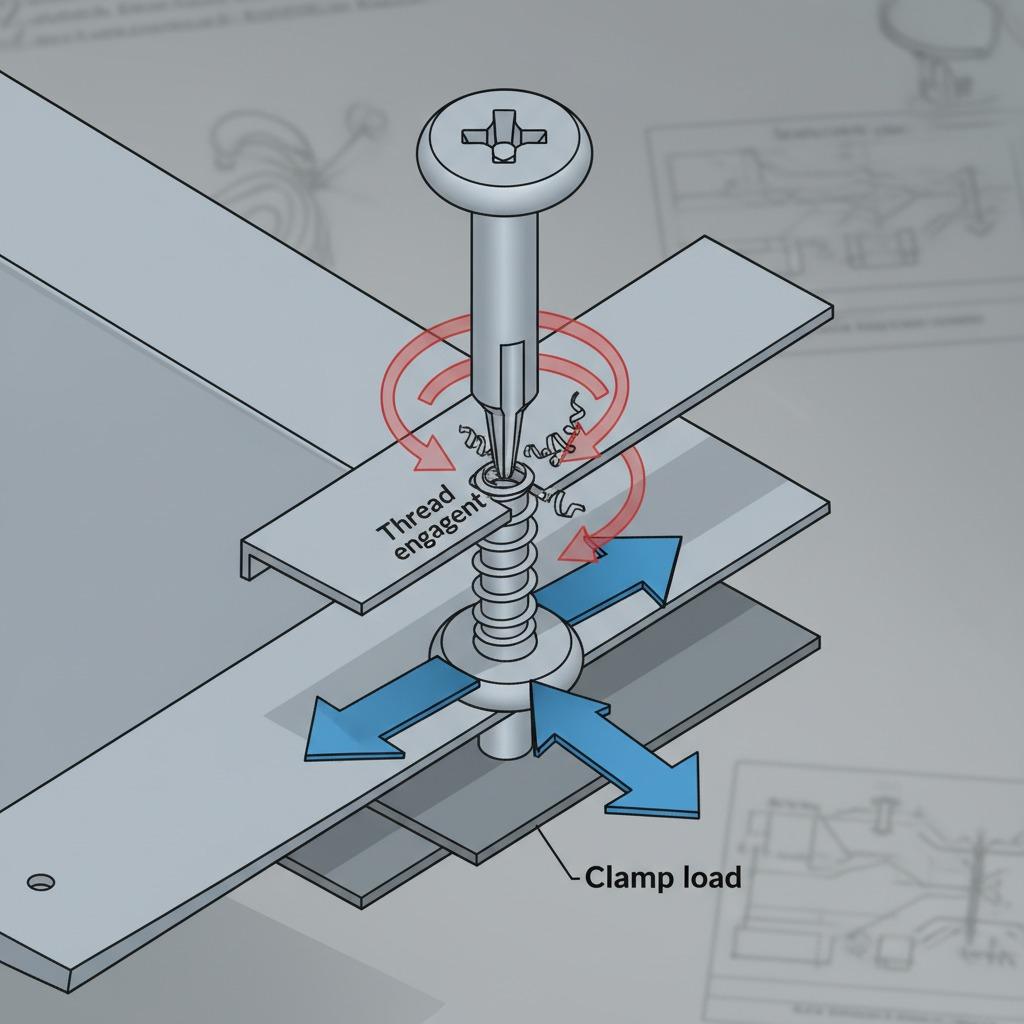
In practical terms, this fastener is used where a threaded hole is not pre-cut in the receiving material, or where the screw is intended to form its own thread in lighter-gauge material. That makes it common in thin sheet metal, plastic parts, covers, guards, electrical housings, and equipment panels. The pointed end and thread form are meant to start easily and cut or displace material as the screw advances.
For procurement teams, the important detail is not just whether the screw can fasten a part, but whether it can do so repeatedly without stripping, cracking, or creating poor clamp load. A screw that feels fine in a sample test can behave differently when the production line is running fast, operators vary in technique, or the mating material is slightly outside the ideal range.
Quick Reference: Where It Fits and Where It Does Not
Used well, this screw type is a strong option for fast assembly and lower part-count designs. It is often chosen when designers want to avoid tapped inserts or more complex fastening systems. It can be especially attractive in repairable products where field service matters.
Used poorly, it can cause recurring problems. If the substrate is too hard, too thin, brittle, or inconsistent, the screw may not form a reliable thread. In those cases, a different fastener strategy may be safer, even if it adds cost at the part level.
Selection Factors That Matter More Than the Catalog Photo
Base material
Start with what the screw will drive into. Mild steel sheet, coated panels, aluminum, and plastics each behave differently. A thread-forming screw that performs well in one material may not be appropriate in another. This is where many sourcing mistakes begin: the fastener is specified by appearance instead of by substrate.
Thickness and edge distance
Thin material can limit thread engagement, while insufficient edge distance can increase the chance of distortion or breakout. Buyers often focus on screw length alone, but geometry around the hole matters just as much. If the design is marginal, the fastener may be blamed for a problem that actually starts in the stamped part.
Drive style and assembly method
For production builds, the drive type must match the tooling strategy. Manual assembly, semi-automated lines, and torque-controlled tools place different demands on the screw head. A good match reduces cam-out, speeds installation, and improves consistency. A poor match slows the line and tends to show up as damaged heads or operator complaints.
Corrosion and finish
Even a modest indoor product can face humidity, cleaning chemicals, or long storage periods. Coating choice should be checked against the actual service environment rather than assumed from a general-purpose spec. This is one of those small decisions that is cheap to get right and surprisingly expensive to correct later.
Common Buying Mistakes
The most common mistake is assuming all self-tapping screws behave the same. They do not. Point geometry, thread profile, head design, and finish all influence installation and performance. Another frequent issue is overdriving, especially in plastics or soft metal. Once the thread is damaged, the problem is usually not recoverable in the field without rework or redesign.
It is also easy to overlook packaging and traceability needs. For high-volume manufacturing, consistent lot control and clear labeling matter more than many teams expect. A mixed shipment or unclear part identification can disrupt kitting and create assembly errors that cost far more than the screw itself.
Practical Advice for Engineers and Sourcing Teams
If you are evaluating a DIN 7981 Self Tapping Screw for a new program, ask for sample parts and test them in the real substrate, not just in a lab fixture. Watch starting torque, thread formation, final seating, and whether the joint remains stable after repeated removal and reinstallation, if serviceability is required.
Also check whether the design needs a single fastening standard across multiple product variants. Standardizing screw families can reduce inventory complexity, but only if the chosen part truly works across all cases. That trade-off deserves more attention than it sometimes gets in a rushed launch meeting.
FAQ
Is this screw suitable for every self-tapping application?
No. It is best treated as one option within a broader fastening toolbox. Material, thickness, and assembly method decide whether it is appropriate.
Can it replace a machine screw?
Not automatically. Machine screws rely on preformed threads or nuts. A self-tapping design serves a different purpose and should be selected for that purpose.
What should buyers request from suppliers?
At minimum, ask for the exact standard designation, dimensions, finish, and packaging details. If the application is critical, request material and compatibility information tied to the intended substrate.
A sensible next step
If you are shortlisting fasteners for a new enclosure, appliance, or metal housing, build a small test matrix with the intended material, drive tool, and installation torque window. That will tell you more than a polished catalog page ever will. For sourcing managers, it is usually the fastest way to separate a workable fastener from one that only looks right on paper.