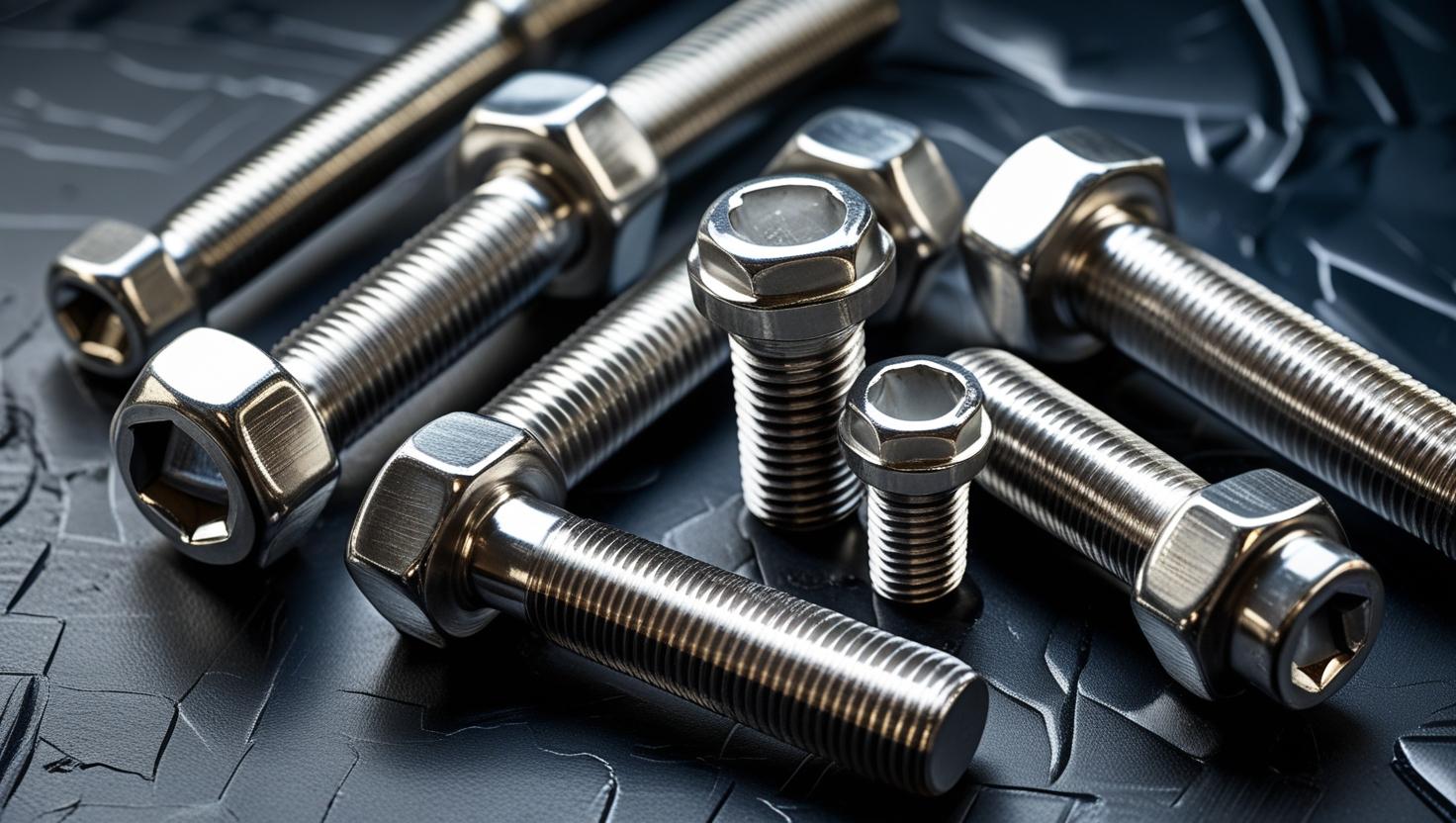
Designing Fasteners for Dynamic Loads: Vibration and Fatigue Considerations
When Static Strength Isn’t Enough
In structural or mechanical systems, static loads rarely tell the full story.
Fasteners are constantly subjected to dynamic forces—vibration, cyclic stress, impact, and thermal expansion—that can loosen or fracture even the strongest hardware.
Bridges sway with traffic. Turbines oscillate with airflow. Machines vibrate under rotation.
In these environments, fatigue, not tensile strength, becomes the true test of durability.
Jingle engineers design and manufacture fasteners that maintain clamping integrity and fatigue endurance in the most demanding dynamic applications.
Understanding Dynamic Stress and Its Effect on Fasteners
When loads fluctuate, the fastener experiences alternating tension and compression cycles. Over time, micro-cracks form at stress concentration points, especially at thread roots or under the head-to-shank transition.
Key mechanical influences include:
-
Amplitude of load variation (Δσ) – Determines fatigue damage rate.
-
Frequency of cycles (N) – More cycles = shorter fatigue life.
-
Surface micro-geometry – Rough surfaces accelerate crack initiation.
-
Clamping force stability – Preload loss under vibration triggers early failure.
Typical fatigue failure occurs at 60–80% of yield stress, often long before the material’s ultimate strength limit is reached.
Technical Comparison: Conventional vs. Fatigue-Resistant Fasteners
| Parameter | Standard Bolts | Jingle Dynamic-Load Fasteners |
|---|---|---|
| Material Grade | 8.8 carbon steel | 10.9–12.9 alloy steel / 17-4PH stainless |
| Thread Geometry | Standard flank angle | Rolled fine-thread with controlled root radius |
| Surface Finish | Machined only | Shot-peened + phosphate / zinc-nickel coating |
| Preload Retention | Moderate | High preload stability with controlled torque-tension ratio |
| Fatigue Life (cycles) | 10⁴–10⁵ | 10⁶–10⁷ (lab tested) |
These enhancements—especially in thread rolling and surface hardening—enable Jingle’s fasteners to sustain millions of load cycles without performance degradation.
Engineering Design Strategies for Dynamic Environments
1. Optimized Geometry and Load Path
-
Use filleted transitions instead of sharp corners to reduce stress concentration.
-
Design threads with rolled roots to enhance grain flow continuity.
-
Avoid long unsupported shank sections which magnify bending fatigue.
2. Preload Control and Torque Management
A stable preload is the first defense against vibration-induced loosening.
-
Employ torque-angle or direct tension control methods.
-
Combine high-friction coatings with locking elements (e.g., Nord-Lock washers).
-
Use lubricants with consistent friction coefficients to ensure torque accuracy.
3. Surface Engineering for Fatigue Life
-
Apply shot peening to introduce compressive residual stress, delaying crack initiation.
-
Select phosphate or zinc-nickel coatings for wear and corrosion protection.
-
Consider dry-film lubricants for temperature-stable preload retention.
4. Material and Heat Treatment Selection
-
Use medium-carbon alloy steels with tempering for high strength and ductility.
-
For marine or high-temperature environments, adopt stainless or precipitation-hardened alloys.
-
Avoid over-hardening, which increases brittleness and crack sensitivity.
Real-world Applications of Dynamic Fastening Systems
1. Heavy Machinery and Equipment
Fasteners in vibrating frames and engine housings use rolled threads and friction-control coatings for longer service intervals.
2. Bridges and Civil Structures
Structural bolts must maintain preload across thermal expansion and cyclic loads from vehicles or wind.
3. Wind Turbines and Energy Equipment
High-cycle fatigue resistance is essential for rotor assemblies and tower joints.
4. Automotive and Rail Systems
Dynamic bolts connect engines, suspensions, and tracks—where each component experiences millions of vibration cycles per year.
Across all cases, the focus is the same: predictable performance under unpredictable motion.
Practical Design Reference for Engineers
| Design Consideration | Recommended Practice | Engineering Rationale |
|---|---|---|
| Thread Type | Fine thread (1.5–2 mm pitch) | Reduces loosening under vibration |
| Surface Roughness (Ra) | ≤1.0 μm | Minimizes stress risers |
| Coating Type | Zinc-nickel / phosphate | Improves wear and preload retention |
| Tightening Method | Torque-angle / tension control | Ensures repeatable clamping force |
| Material Hardness | 30–38 HRC | Balances strength and flexibility |
🧩 Engineering Note:
Always design for 10⁶ load cycles minimum in any structure exposed to vibration, and validate through fatigue simulation or physical test.
Frequently Asked Questions
Q1: How does vibration cause bolts to loosen?
Repeated micro-slip between threads reduces frictional resistance, causing incremental rotation and preload loss.
Q2: What’s the best way to prevent fatigue cracking?
Improve surface finish, apply compressive stress via shot peening, and use rolled threads with controlled geometry.
Q3: Can high-strength bolts always resist fatigue better?
Not necessarily. Strength without ductility leads to brittle failure—balance hardness with elongation.
Q4: Should locking adhesives be used in dynamic joints?
Yes, but only alongside mechanical locking features—adhesives alone can degrade under high temperature or oil contamination.
Built for Motion, Proven in Stability
Dynamic environments test every detail of design.
From material selection to preload retention, success lies in engineering discipline—not luck.
At Jingle, every fastener is designed with controlled geometry, fatigue-tested threads, and precision finishing.
The result: components that hold steady under vibration, flex, and time—from turbine towers to transportation frames.
To learn more about Jingle’s dynamic load fastener solutions or request OEM consultation, visit our homepage or reach us via the contact page.