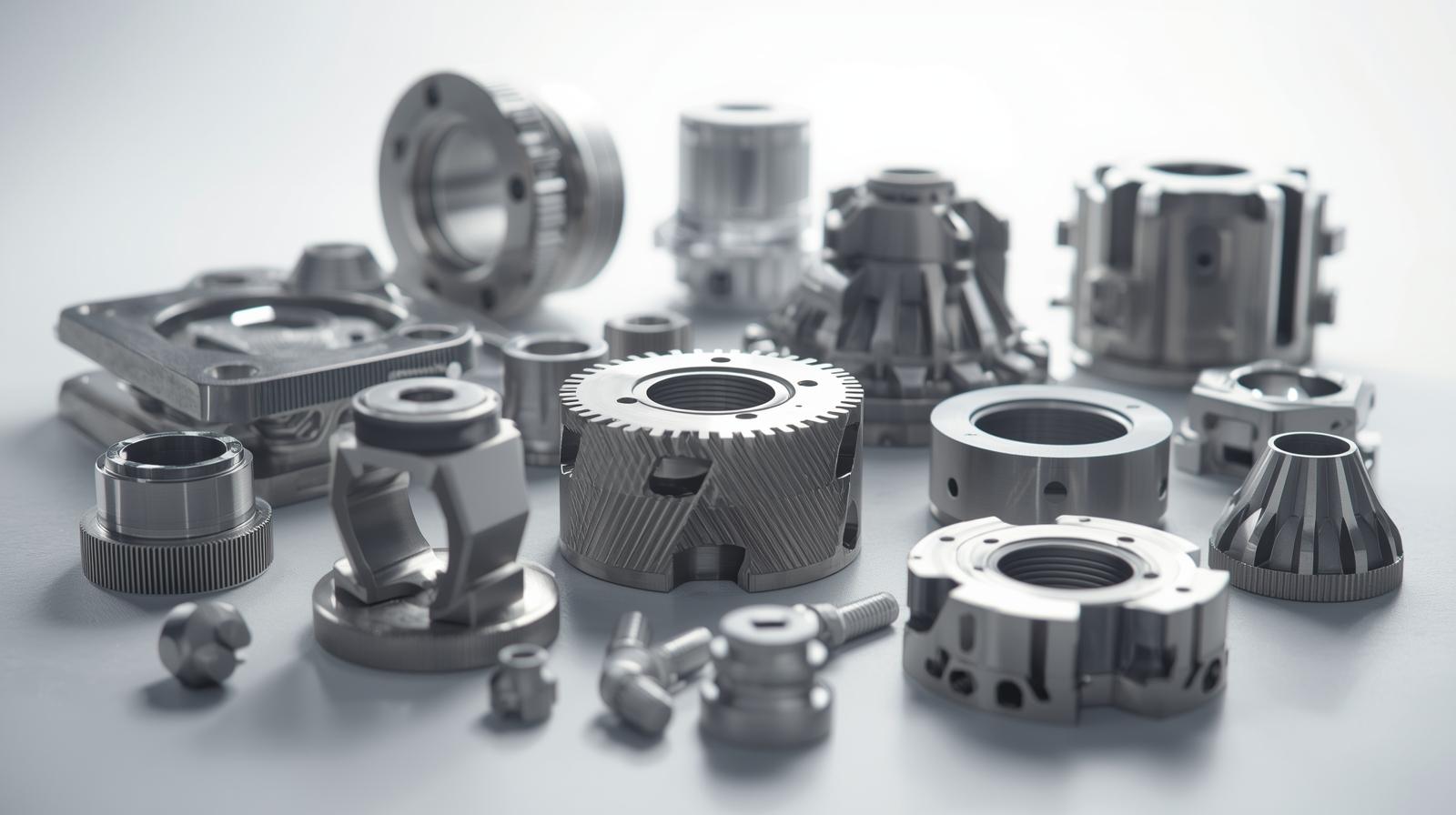
Aluminum CNC Precision Parts: How Process Control Delivers Stability Across Real Applications
Many aluminum CNC precision parts meet dimensional requirements during inspection but begin to show problems after installation or during repeat production. Assemblies require adjustment, surface alignment shifts, or sealing performance degrades after thermal cycling. These issues are rarely caused by drawing errors. They result from machining processes that are not designed around real operating environments.
Reliable aluminum CNC precision parts are not achieved by tighter inspection, but by building stability into material choice, machining sequence, tolerance strategy, and production discipline.
Material Strategy: Selecting Aluminum for Application, Not Availability
Aluminum behaves differently depending on alloy composition, grain structure, and residual stress condition. In real projects, instability often appears when material is selected purely based on machinability or price.
For aluminum CNC precision parts, material selection is aligned with:
-
wall thickness and symmetry of the part
-
load direction and fastening interfaces
-
exposure to vibration or temperature fluctuation
-
post-machining surface treatment requirements
By locking aluminum grade and raw material source across repeat orders, dimensional variation caused by batch inconsistency can be reduced before machining begins. This is a foundational step that prevents downstream correction work.
Machining Process Design: Controlling Stress and Heat Release
Aluminum releases internal stress rapidly during material removal. If roughing and finishing are compressed into a single stage, parts may pass inspection and then shift after unclamping or storage.
To stabilize aluminum CNC precision parts, machining is designed as a controlled sequence:
-
roughing operations remove bulk material symmetrically
-
semi-finishing allows internal stress to stabilize
-
final finishing is applied only after dimensional equilibrium is reached
Clamping force and fixturing contact points are also adjusted based on wall thickness and geometry. This prevents localized deformation that becomes visible only during assembly.
Application Scenario 1: Automation and Moving Assemblies
In automation systems, aluminum CNC precision parts are commonly used for brackets, frames, actuator mounts, and guide supports. These components operate under continuous motion and vibration.
Challenges in this environment
-
gradual positional drift affecting alignment
-
tolerance stack-up across multiple mating parts
-
fastener loosening under vibration
Our approach
-
machining datums are aligned with functional assembly references
-
tolerance control focuses on load-bearing and locating surfaces
-
surface finish is optimized for contact stability rather than appearance
This allows aluminum CNC precision parts to maintain alignment throughout extended operating cycles.
Application Scenario 2: Electrical and Industrial Enclosures
Aluminum enclosures and internal structural components are widely used in electrical cabinets and control systems where internal heat and ambient temperature changes are common.
Challenges in this environment
-
panel warping after installation
-
uneven gasket compression
-
sealing degradation after thermal cycling
Our approach
-
machining sequence balances stress release before flatness-critical finishing
-
functional sealing surfaces receive tighter tolerance zoning
-
non-functional exterior areas are allowed wider tolerance to protect stability
This ensures aluminum CNC precision parts remain dimensionally stable during operation, not just at inspection.
Application Scenario 3: Lightweight Structural Components
For portable equipment and modular systems, aluminum CNC precision parts are often designed with thin walls and internal pockets to reduce weight.
Challenges in this environment
-
deformation during machining
-
low yield caused by thin-wall distortion
-
inconsistent fit across batches
Our approach
-
roughing and finishing are separated to avoid sudden stress release
-
fixturing distributes clamping force across larger surface areas
-
geometry is reviewed for manufacturability before production confirmation
This enables lightweight aluminum CNC precision parts to meet both strength and dimensional requirements.
Measurable Production Impact From Process Control
The table below shows typical industry-observed improvements when aluminum CNC precision parts are produced using controlled material selection, machining sequence, and tolerance zoning. Percentages represent realistic reference ranges commonly achieved in stable production environments.
| Control area applied | Production outcome | Typical improvement |
|---|---|---|
| Fixed aluminum grade & batch control | Reduced dimensional variation | 20–30% reduction |
| Stress-balanced machining sequence | Lower post-machining movement | 25–40% reduction |
| Functional tolerance zoning | Higher assembly pass rate | 15–25% increase |
| Controlled thin-wall fixturing | Reduced deformation rework | ~30% reduction |
| Process-locked repeat production | Batch conformity rate | >95% |
These gains are cumulative and directly affect cost, lead time, and project stability.
How This Supports Repeat Production and Procurement Stability
When aluminum CNC precision parts are manufactured with application-driven process control, repeat orders no longer require revalidation from scratch. Inspection focuses on trends rather than isolated dimensions, pricing becomes predictable, and delivery schedules stabilize.
From a procurement perspective, this reduces:
-
quality escalation frequency
-
assembly adjustment time
-
unexpected cost increases
Common Buyer Questions
Q: Why do aluminum CNC parts change after installation?
A: Because vibration, load, and thermal effects reveal stress and tolerance issues not visible during inspection.
Q: Can tighter tolerances eliminate aluminum deformation?
A: No, without process alignment, tighter tolerances often increase scrap instead of improving stability.
Q: How can repeat aluminum CNC orders stay consistent?
A: By locking material batches, machining sequence, and functional tolerance zoning across production runs.
Conclusion and Next Steps
Stable aluminum CNC precision parts are produced by aligning material behavior, machining strategy, and tolerance control with real operating environments. When this alignment is built into the manufacturing process, aluminum components deliver consistent accuracy, predictable delivery, and scalable production performance.
To review aluminum machining capabilities and industrial component supply scope, visit:
👉 https://jinglefix.com/
If you are preparing drawings, evaluating aluminum CNC parts for demanding environments, or planning repeat production, early technical coordination can significantly reduce downstream risk:
👉 https://jinglefix.com/en/contact-us