Beyond Metal: How Fasteners Manufacturers Innovate with Coatings and Materials
The Changing Demands on Fasteners
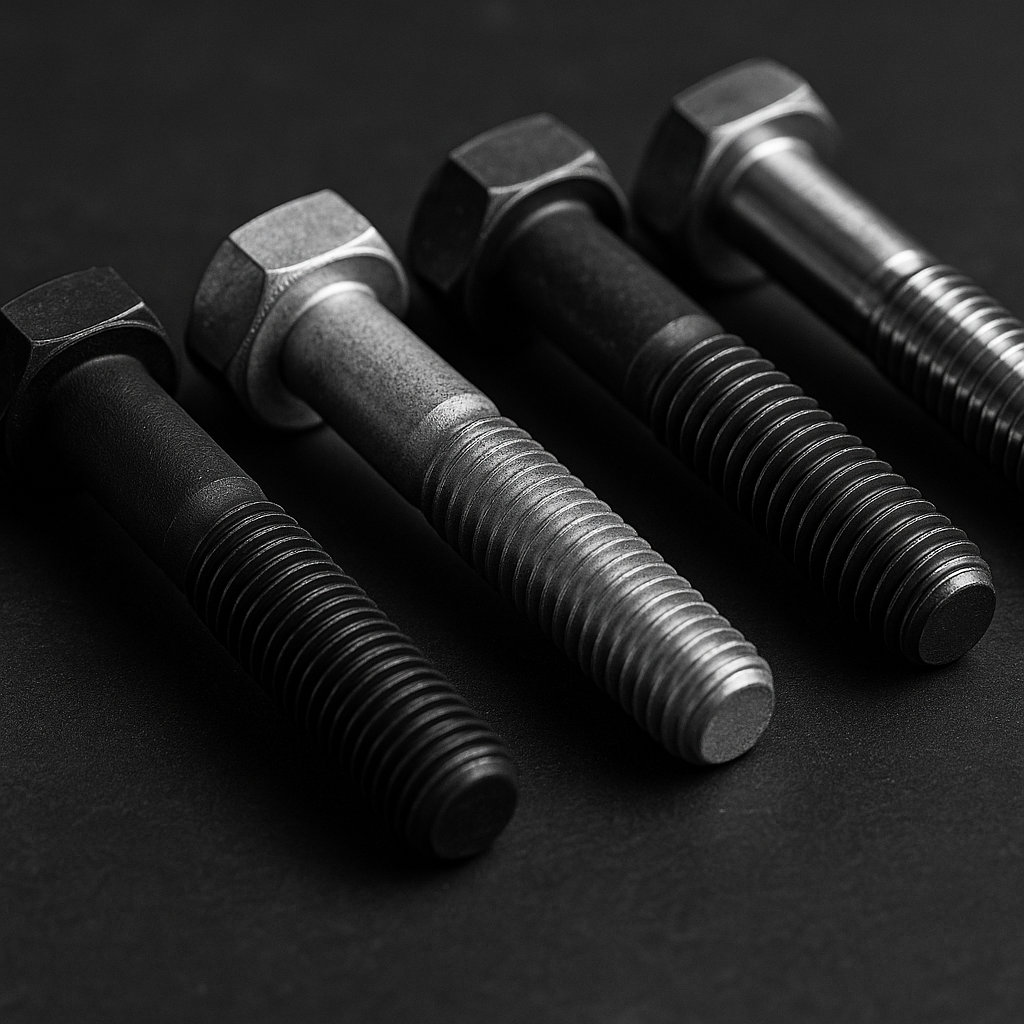
In the past, fasteners were defined by their metal core—steel bolts, nuts, and rivets supplied by weight. But today’s industries—from offshore energy to high-speed transport—demand more than just “metal strength.” Corrosion, fatigue, and environmental compliance are reshaping expectations. A bridge on a coastal highway cannot rely on untreated steel; a turbine operating at sea level needs coatings and alloys that last decades. These realities force manufacturers to move beyond metal into advanced engineering.
When Material Alone Isn’t Enough
Traditional carbon steel is strong but not invincible. In marine and chemical environments, it rusts quickly. In extreme cold, it becomes brittle. In aerospace, it is simply too heavy. These limits explain why manufacturers have turned to new materials:
-
Stainless steels provide resistance against humidity and salt spray.
-
High-strength alloys deliver better fatigue resistance in heavy equipment.
-
Titanium balances extreme strength with lightweight performance for aerospace.
-
Hybrid solutions combine metals with composites for specialized applications.
By diversifying materials, manufacturers ensure that fasteners are fit for purpose, not just fit for catalogs.
The Silent Power of Coatings
If materials provide the skeleton, coatings act as the shield. A properly engineered surface treatment can double or triple the lifespan of a fastener. Instead of presenting coatings as options, manufacturers increasingly design them as integral parts of the product.
-
Offshore bolts often receive hot-dip galvanizing to withstand saltwater immersion.
-
Automotive fasteners use zinc-nickel or phosphate coatings to resist vibration fatigue.
-
Rail systems adopt epoxy or fluoropolymer coatings to survive decades of weathering.
-
New eco-friendly finishes replace hazardous chemicals to meet global regulations.
These coatings aren’t cosmetic—they are what stand between long-term reliability and premature failure.
Innovation Beyond the Workshop
Material and coating innovation does not happen in isolation. It is driven by three industry forces:
-
Rising Compliance Standards – Projects increasingly require ASTM and ISO-certified fasteners with documented traceability.
-
Environmental Responsibility – Clients demand eco-friendly processes, pushing manufacturers to adopt greener coatings and recyclable materials.
-
Global Supply Chains – Infrastructure projects need bulk quantities delivered with batch consistency, requiring factories to scale innovation without losing quality.
Manufacturers who fail to evolve risk being excluded from large-scale tenders where compliance and sustainability weigh as heavily as cost.
How JINGLE Approaches Coatings and Materials
At JINGLE, coatings and materials are not afterthoughts—they are part of the design brief. The company works with distributors and contractors at the project planning stage, recommending alloys and surface treatments based on real-world conditions. For offshore wind farms, that means duplex stainless steel with epoxy finishes. For high-speed rail, fatigue-resistant alloys with weatherproof coatings. For automotive supply chains, lightweight but certified fasteners delivered in mass volume.
Rather than offering a fixed catalog, JINGLE positions itself as a problem-solver, ensuring every bolt, nut, and rivet is engineered for the environment where it will be used.
Applications That Prove the Value of Innovation
-
Coastal Infrastructure – Anchors and couplers with anti-corrosion systems extend the lifespan of bridges and tunnels exposed to saltwater.
-
Energy Projects – Wind turbines and solar farms use coated fasteners to endure decades of weather cycles with minimal maintenance.
-
Transport Systems – Automotive and rail fasteners combine fatigue-resistant alloys with precision coatings for safety-critical assemblies.
-
Aerospace and Defense – Lightweight titanium fasteners coated for fatigue resistance meet the toughest certification regimes.
Each sector demonstrates that innovation in coatings and materials is no longer optional—it is fundamental to delivering safety and reliability.
Building the Next Generation of Fasteners
The future of fasteners lies in integration:
-
Green Coatings will eliminate hazardous substances without sacrificing performance.
-
Hybrid Alloys and Composites will balance strength, weight, and sustainability.
-
Smart Monitoring Layers may one day signal when corrosion begins, enabling predictive maintenance.
As industries demand higher standards, manufacturers like JINGLE are not just producing fasteners—they are engineering trust, compliance, and longevity into every piece.
Explore how JINGLE delivers advanced fasteners with coatings and materials engineered for modern industries: Contact JINGLE.