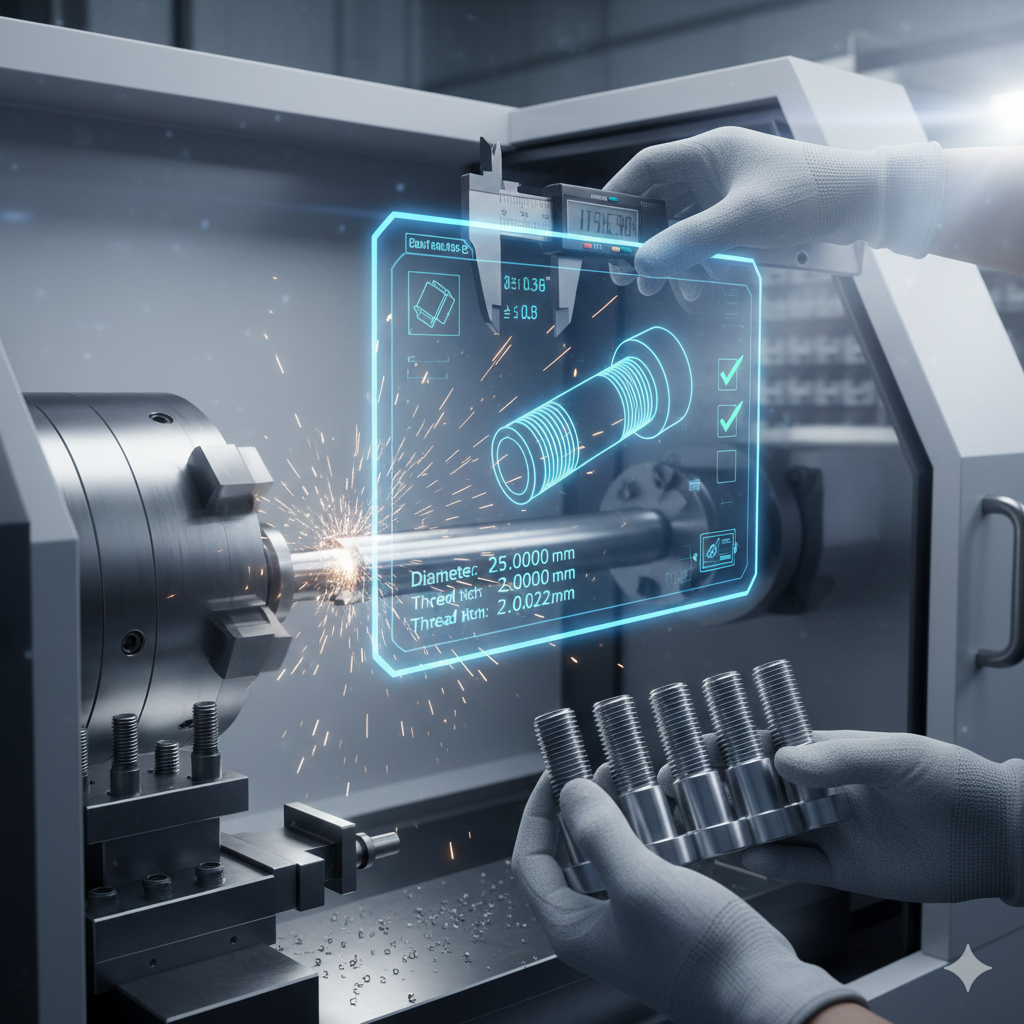
How CNC Machining Improves Dimensional Accuracy in Custom Bolts
Why Precision Matters More Than Ever
In modern industries—whether it’s construction, aerospace, or heavy machinery—bolts aren’t just connectors; they’re load-bearing components that determine safety, alignment, and durability. Even a 0.05mm deviation in diameter or thread pitch can result in torque imbalance, vibration, or premature failure.
That’s why dimensional accuracy has become a defining factor in fastener quality. At Jingle, CNC machining transforms traditional bolt production into a science of precision, ensuring every dimension aligns perfectly with its intended load profile.
Traditional Manufacturing vs CNC Machining: A Critical Difference
Traditional machining methods—like manual lathes or stamping—depend heavily on operator skill. While adequate for mass production, they often introduce tolerance variation across batches, especially in threads and seating surfaces.
CNC machining changes that entirely.
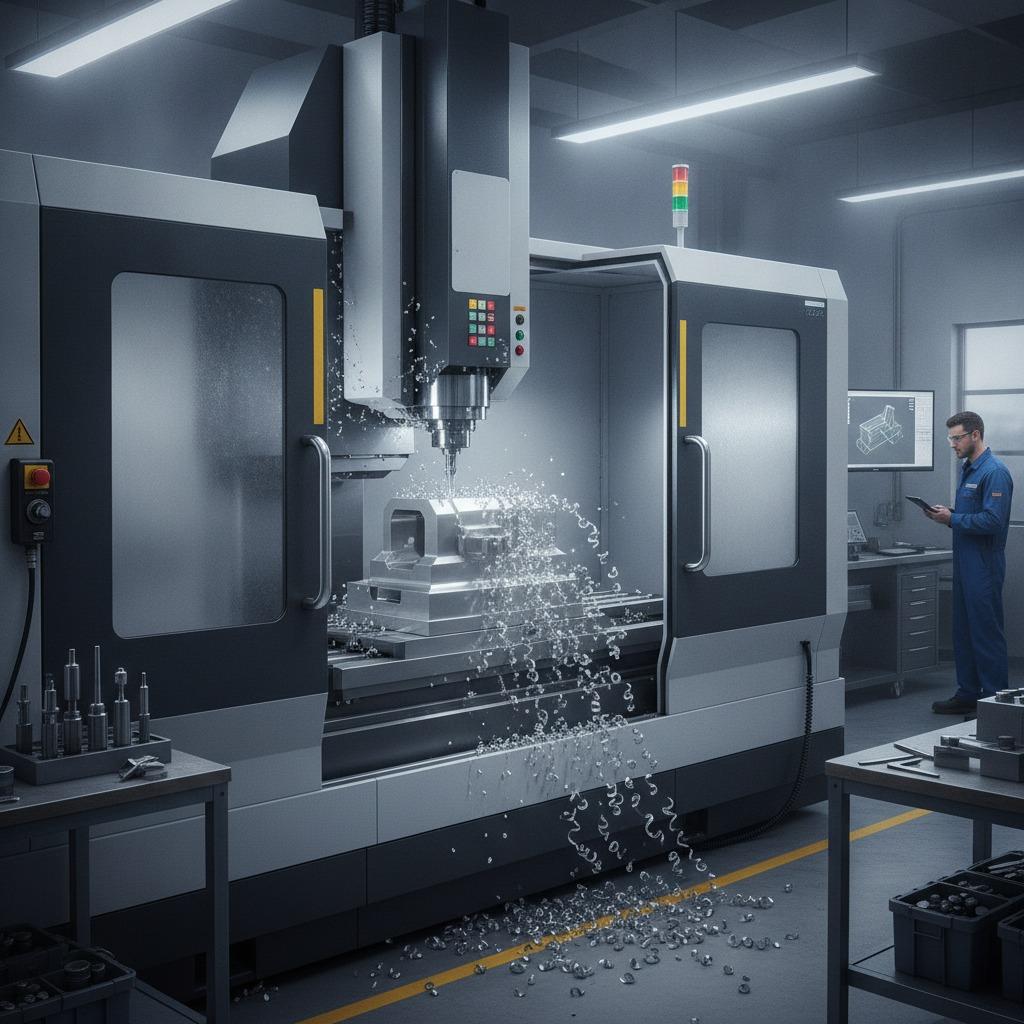
By using digital tool paths and real-time feedback, CNC machines maintain consistent dimensional control within ±0.01mm, regardless of production volume.
| Feature | Conventional Production | CNC Machining (Jingle) |
|---|---|---|
| Accuracy | ±0.1–0.2 mm variation | ±0.01 mm tolerance |
| Repeatability | Operator-dependent | Computer-controlled consistency |
| Surface Finish | Tool marks common | Micro-finished (Ra < 0.8μm) |
| Thread Integrity | Manual die variation | Digitally milled or rolled |
| Batch Consistency | Variable by shift | 100% program-controlled |
This level of precision eliminates issues like uneven clamping force, thread misalignment, and unpredictable torque—all common causes of joint fatigue and leakage.
How CNC Technology Ensures Dimensional Accuracy
1. Digital Blueprint Control
Each custom bolt begins with a CAD model defining every dimension—length, diameter, pitch, and chamfer. The CNC system converts these specs into exact tool movements, ensuring perfect repeatability across batches.
2. Multi-Axis Synchronization
5-axis CNC systems used at Jingle allow complex geometries like undercuts, tapered shanks, or precision thread transitions—all achieved without repositioning. This eliminates cumulative errors common in multi-step manual setups.
3. Automated Feedback and Tool Compensation
In-process sensors continuously monitor tool wear, temperature, and vibration. If deviations occur, real-time compensation adjusts cutting paths to restore exact tolerance.
4. Controlled Environment Production
CNC machining occurs in temperature-regulated environments, minimizing thermal expansion—a critical factor when achieving micron-level precision.
Advantages of CNC Machined Custom Bolts
| Benefit | Practical Impact |
|---|---|
| Consistent fit across components | Prevents joint loosening and misalignment |
| Improved surface contact | Reduces wear and increases torque stability |
| Accurate thread pitch and depth | Enhances preload predictability |
| Reduced need for rework or shimming | Saves cost during installation |
| Enhanced aesthetic and corrosion coating | Uniform plating adherence improves longevity |
In high-load assemblies, these benefits translate directly into fewer maintenance intervals and improved safety margins.
Real-World Example: Precision Bolts for Energy Equipment
A power equipment manufacturer experienced frequent bolt failures in turbine housings due to inconsistent thread profiles from conventional machining. After switching to Jingle CNC-machined custom bolts, torque uniformity improved by 22%, and rework time dropped by 40%.
The change required no redesign—only precision manufacturing that aligned the fasteners with the engineering intent.
Common Dimensional Errors and How CNC Prevents Them
| Issue | Cause in Traditional Methods | CNC Solution (Jingle) |
|---|---|---|
| Uneven thread pitch | Manual die wear | Digital toolpath synchronization |
| Off-center shank | Poor alignment | Servo-controlled spindle centering |
| Inconsistent head geometry | Tool shift during production | Multi-axis locked positioning |
| Variable length | Manual measurement errors | Laser-based dimensional feedback |
| Surface damage | Excessive feed rates | Controlled spindle speed + coolant optimization |
Why Jingle’s CNC Process Stands Out
-
Certified Tolerances: Each batch undergoes micrometer and optical inspection for ±0.01mm dimensional accuracy.
-
Comprehensive Material Adaptation: From carbon steel to stainless and titanium, tool paths are optimized for hardness and elasticity.
-
Thread Verification: 100% of threads are digitally scanned to confirm conformity with ISO 965-1 and ASME B1.1 standards.
-
End-to-End Traceability: Each lot includes a machining report detailing feed rate, cutting temperature, and deviation metrics.
This precision-first approach transforms a simple bolt into a reliable engineering component.
FAQ
Q1 – Is CNC machining cost-effective for small batches?
Yes. CNC allows flexible setup for prototypes and short runs without sacrificing accuracy, making it ideal for custom or specialized parts.
Q2 – How does CNC improve thread quality?
Digitally milled threads maintain exact pitch and lead angle, preventing loosening or galling under load.
Q3 – What tolerance range is standard for custom bolts?
Jingle maintains ±0.01mm for critical dimensions and ±0.05mm for general features, exceeding ISO Grade 6 precision.
Q4 – Does CNC machining affect coating or galvanizing?
Quite the opposite—smooth, uniform surfaces from CNC processes allow better adhesion for plating and corrosion protection.
Precision That Connects Performance
Dimensional accuracy is the foundation of every strong connection. Through CNC machining, Jingle ensures every bolt fits perfectly, performs consistently, and endures the harshest industrial conditions.
From small prototypes to large production runs, precision isn’t optional—it’s engineered into every thread.
Explore our precision manufacturing solutions at Jingle Homepage or contact our specialists through Contact Us for tailored CNC fastener services.