How Expansion Bolt Design and Material Improve Load-Bearing Performance
1. Why Expansion Bolt Design Matters in Structural Anchoring
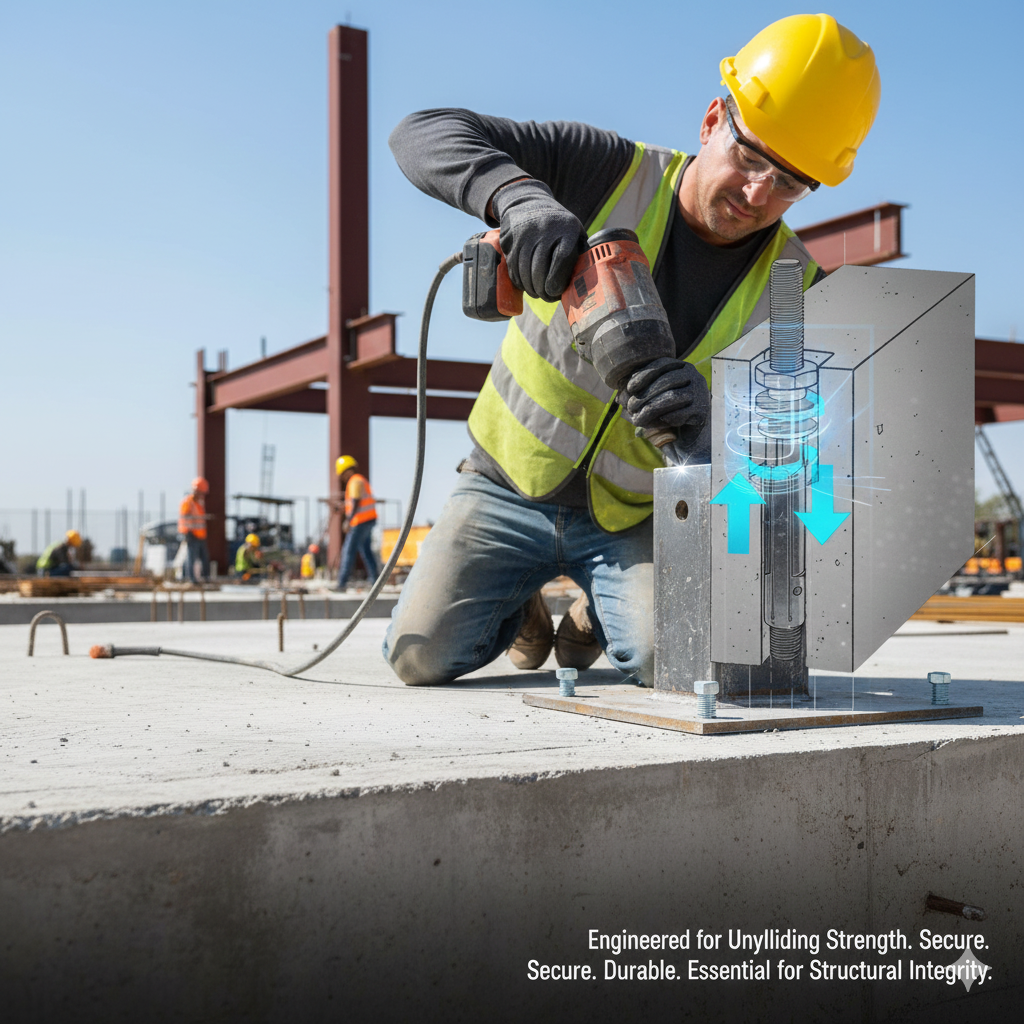
In construction and machinery installation, expansion bolts are the unseen components that hold everything in place. Their design directly determines how loads are transferred between concrete or steel substrates and the attached structure. A well-engineered expansion bolt converts torque into expansion force, distributing pressure evenly along the hole wall to achieve superior grip.
Modern design improvements—such as tapered cones, split sleeves, and controlled friction zones—ensure stable anchoring even under vibration or lateral movement. This precision in geometry minimizes cracking and slippage, providing long-term reliability for infrastructure, heavy equipment, and industrial installations.
2. The Mechanics Behind Load-Bearing Performance
When an expansion bolt is tightened, its cone-shaped end pulls into the expansion sleeve, generating outward pressure. This pressure creates mechanical interlock and frictional resistance, which combine to support vertical and shear loads.
The bolt’s geometry, including its cone angle, sleeve thickness, and expansion ratio, directly affects its pull-out strength. Tests show that a 1° difference in cone taper can alter anchoring capacity by up to 15%. That is why quality manufacturers like Jingle use precision-rolled cones and heat-treated sleeves to maintain consistent expansion force across batches.
| Parameter | Influence on Performance | Optimization Strategy |
|---|---|---|
| Cone angle | Determines expansion force | Maintain 8–10° taper for balanced load |
| Sleeve thickness | Affects pressure distribution | 1.2–2.5 mm thickness for concrete anchors |
| Thread pitch | Influences torque transmission | Rolled threads for better fatigue resistance |
| Washer size | Prevents surface damage | Use oversized washers for thin plates |
3. Material Selection: The Foundation of Strength
Choosing the right material is critical to achieving both tensile and shear resistance. Expansion bolts are commonly made from carbon steel, alloy steel, or stainless steel, each offering different mechanical and environmental properties.
| Material Type | Key Features | Recommended Use |
|---|---|---|
| Carbon steel | High strength, cost-effective | Indoor mechanical fixing |
| Alloy steel (Grade 8.8–10.9) | Excellent tensile load and fatigue resistance | Heavy machinery foundations |
| Stainless steel 304 / 316 | Corrosion-resistant, aesthetic finish | Outdoor or marine structures |
Heat treatment further enhances hardness and elasticity, preventing sudden failure under dynamic loading. Surface finishes—zinc plating, hot-dip galvanizing, or Dacromet coating—add corrosion protection while maintaining friction performance.
4. Design Innovations That Enhance Reliability
Modern expansion bolt design has evolved far beyond simple wedge mechanisms. Leading factories employ finite element analysis (FEA) to simulate stress distribution, ensuring each component performs under both static and cyclic loads.
Key innovations include:
-
Double-cone expansion systems for stronger pull-out resistance.
-
Split sleeve geometry allowing smoother installation and higher torque control.
-
Anti-rotation ribs to prevent spinning during tightening.
-
Integrated washers reducing component loss on-site.
These subtle adjustments, combined with precision cold-forging and CNC machining, elevate load consistency and installation efficiency across large-scale construction projects.
5. Manufacturing Process Ensuring Consistency
To achieve uniform load-bearing results, every production step is monitored:
-
Material inspection – verify tensile properties and chemical composition.
-
Cold forging – shape cone and sleeve for dimensional accuracy.
-
Thread rolling – improve fatigue resistance compared to cut threads.
-
Heat treatment – enhance strength and ductility balance.
-
Surface finishing – apply corrosion-resistant coatings.
-
Quality testing – perform tensile, torque, and pull-out tests before packing.
Each batch undergoes sampling according to ASTM F1554 and ISO 898-1 standards, ensuring consistent performance from the factory floor to the job site.
6. Testing Standards and Performance Validation
Certified manufacturers conduct multiple laboratory tests before shipment:
-
Static load test – confirms ultimate tensile and shear capacity.
-
Pull-out test – measures expansion strength under real conditions.
-
Salt-spray test (> 500 h per ASTM B117) – verifies corrosion resistance.
-
Torque test – ensures safe tightening range for installers.
By following standardized procedures, expansion bolts maintain predictable behavior across different concrete grades and embedment depths—vital for engineers designing high-safety structures.
7. Industrial Applications Across Sectors
Expansion bolts are used wherever secure anchoring is required:
| Industry | Application | Performance Focus |
|---|---|---|
| Construction | Steel columns, façades | Structural stability |
| Manufacturing | Machine base installation | Vibration resistance |
| Energy & Utilities | Pipeline and turbine mounts | Heavy load endurance |
| Transportation | Bridge railings, sign frames | Long-term fatigue resistance |
| Marine | Docks and cranes | Corrosion protection |
Across these industries, expansion bolts provide the silent assurance that every connection will hold under pressure.
8. Selecting a Reliable Manufacturer
A qualified manufacturer doesn’t just deliver bolts—it delivers confidence. When sourcing for industrial projects, verify:
-
ISO 9001 certification and process traceability.
-
Material certification and third-party test reports.
-
Customization capability for diameter, coating, and head type.
-
Consistent lead times for large orders.
-
After-sales technical support for installation or testing assistance.
Jingle integrates all these capabilities within a vertically managed production system, ensuring clients receive both product quality and project reliability.
9. Lasting Strength Built on Design and Material Integrity
Every expansion bolt carries a precise balance between geometry, metallurgy, and craftsmanship. Its strength lies not in size but in how well design and material work together to distribute forces safely into the structure.
For engineers and buyers, understanding these fundamentals is key to ensuring safety and performance across decades of use.
Learn more about industrial fastening and anchoring systems at the Jingle Home Page,
or reach our specialists through the Contact Page for customized technical guidance.