Quick answer for buyers
Choose a hose clamp from the installed hose outside diameter, fitting geometry, environment and assembly method, not from a catalogue photo or nominal hose size alone. A useful RFQ should identify the clamp type, diameter range, band width, band and screw materials, finish, tool access, service conditions, quantity, inspection documents and packing. This information lets a hose clamp manufacturer recommend a repeatable item instead of quoting a visually similar part.
JingleFix supplies adjustable worm gear, mini, English type, quick-release and two-ear hose clamp programs for OEM, distribution and industrial applications. Review the JingleFix fasteners product category for the relevant product family before sending your size schedule.
Public product records list stainless steel 201, 304 and 316, galvanized steel or carbon-steel options depending on the model. The final grade, dimensions, finish, test scope and packaging must be confirmed against the controlled drawing and purchase order.Request a hose clamp quotation from JingleFix
What a hose clamp does in an assembly
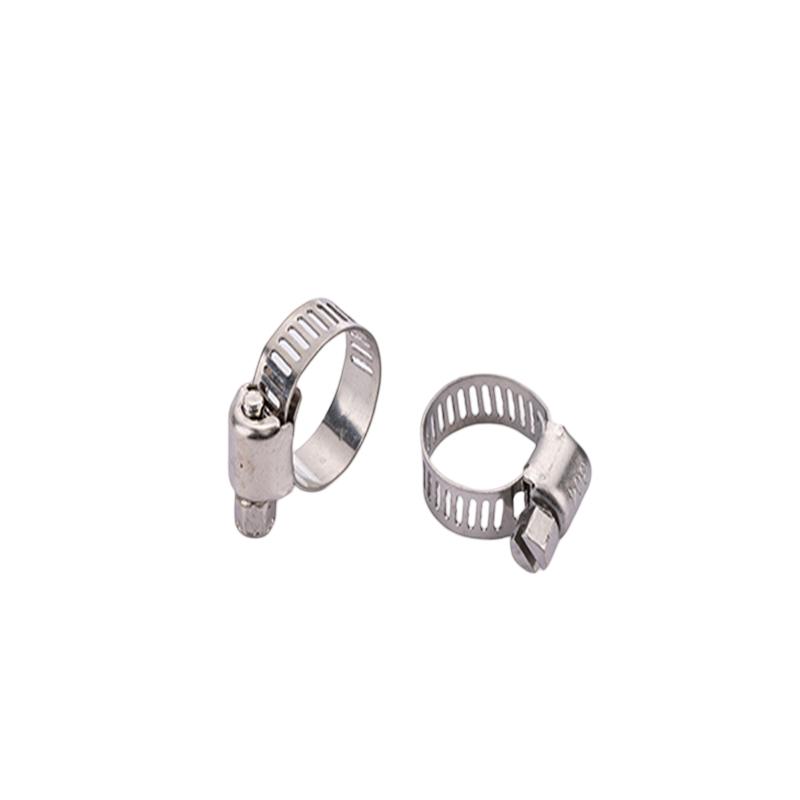
A hose clamp creates circumferential compression around a hose that has been seated on a pipe, barb or fitting. The clamp supports the joint by helping the hose remain seated and by distributing contact pressure around the connection. It cannot correct an unsuitable hose, a damaged fitting, insufficient insertion depth or an incorrectly assembled joint.
Describe the complete connection before requesting price. State the hose material, outside diameter after installation, wall construction, fitting form, fluid or air, pressure and temperature range, vibration, maintenance frequency and service environment. These details matter because a soft rubber hose, silicone tube, reinforced hydraulic hose and flexible duct do not behave in the same way under compression.
The buyer should answer three questions first:
- What is the minimum and maximum installed outside diameter?
- Does the assembly need adjustment, a one-time crimp or frequent service?
- What evidence is needed before the item can be approved for production or distribution?
Hose clamp types compared
| Type | Useful characteristics | RFQ question |
|---|---|---|
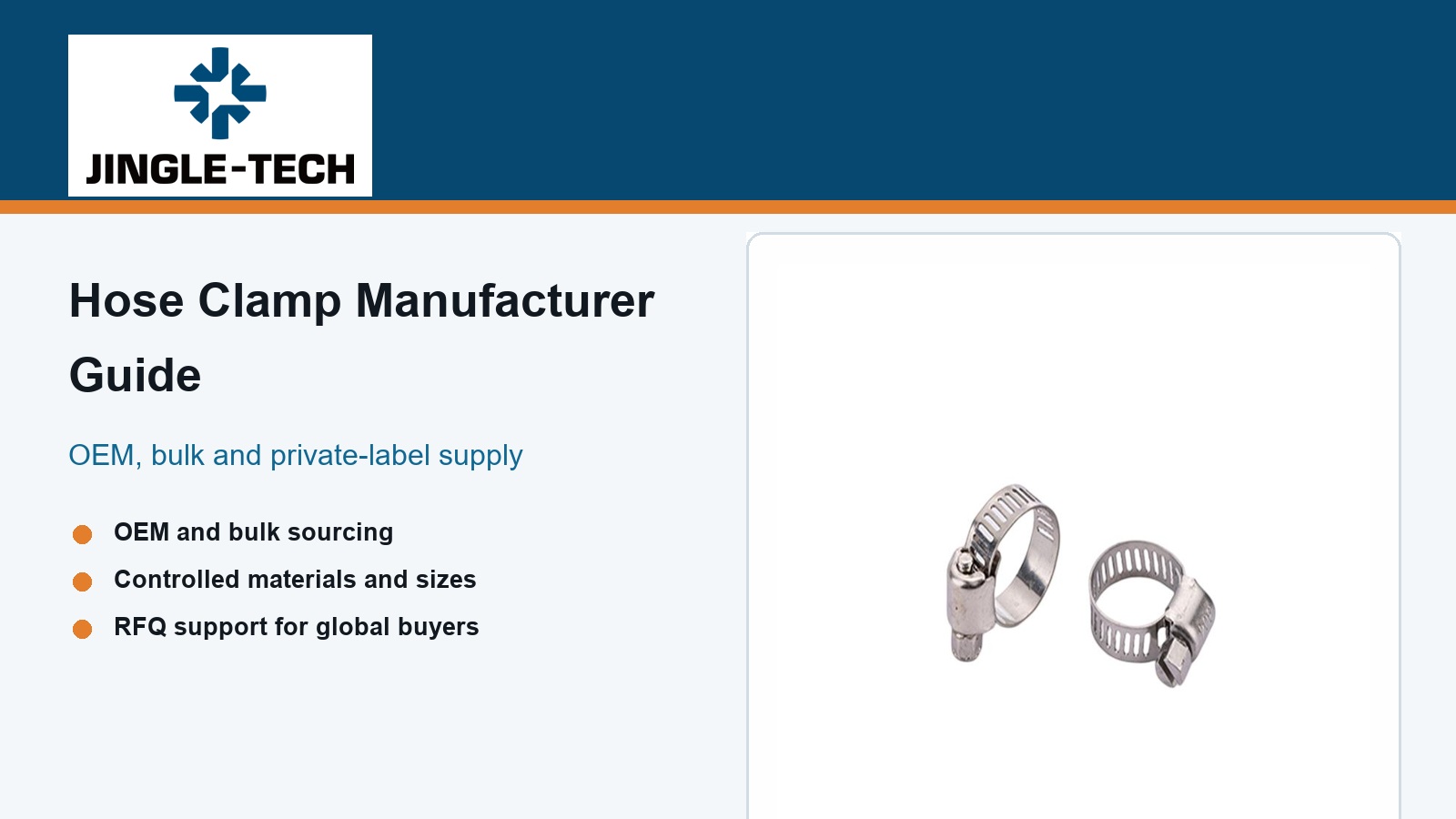
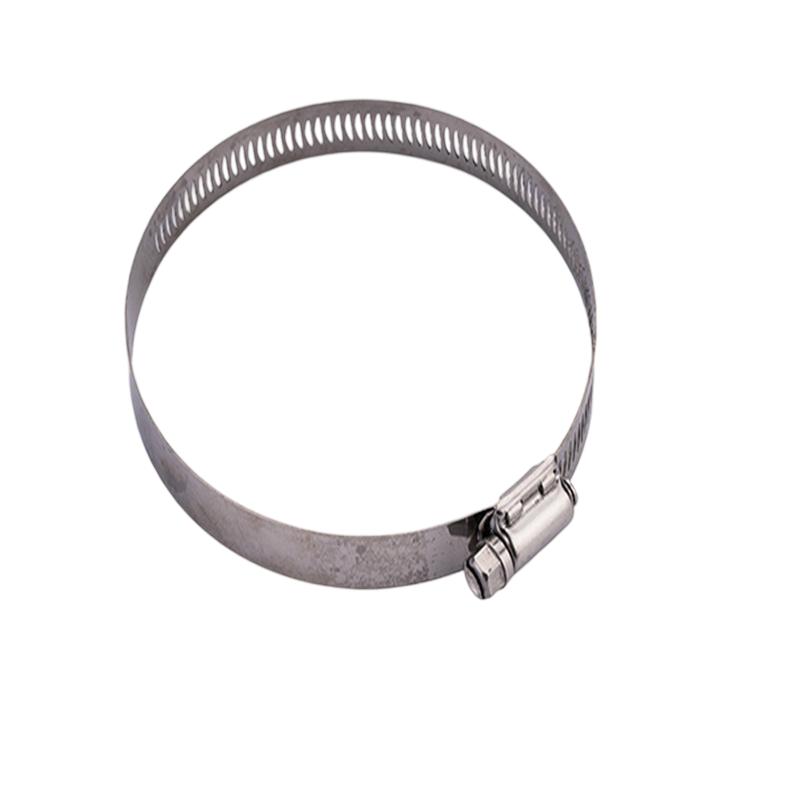
| Worm gear hose clamp | Adjustable band, screw-driven tightening and convenient maintenance. | What working diameter and band width are required? |
| Mini worm gear clamp | Compact design for small-diameter hoses, tubes and lines. | Will the housing fit the available clearance? |
| English type clamp | British-style worm-drive form with a broad adjustment range and rounded band edge. | Is a particular British form, standard or label required? |
| Quick-release clamp | Adjustable worm-drive format intended to make repeated access easier. | How often will the joint be opened and what tool is available? |
| Two-ear clamp | One-time crimp installation, compact size and even circumferential compression. | Can the line control the crimp tool and accept a permanent installation? |
A worm gear clamp is often suitable where adjustment and field service matter. A two-ear clamp can be efficient in a controlled high-volume line where the hose and fitting dimensions are stable. These choices are not automatic substitutes. Tooling, inspection, service life and rework rules should be compared before the design is frozen.
How to specify the correct size
Measure the outside diameter after the hose is fully seated on the fitting. Include the hose wall, reinforcement, sleeve, liner and fitting geometry in the measurement. If the hose changes size with temperature, pressure or supplier tolerance, send the expected minimum and maximum values rather than one nominal number.
The installed diameter should sit inside the useful adjustment range. A clamp that is too large may reach the end of its slot before enough compression is created. A clamp that is too small may force excessive local pressure, distort the hose or leave too little engagement. The drawing should show the usable range, band width, material thickness, housing and screw information.
Tool access is part of sizing. Check whether the screw or crimp ear can be reached from the direction available on the production line or at the service location. A clamp that fits the hose but cannot be tightened safely is not a finished solution.
Band width, thickness and edge condition
Band width and thickness influence how pressure is spread across the hose surface. A narrow band may suit a small tube and a tight space. A wider or heavier band can be considered for a larger hose or a more demanding joint, but it also consumes more clearance and may require another housing.
Ask the supplier how the band edges and formed parts are controlled. Rounded or deburred edges reduce the risk of scratching a hose cover. Perforations, drive teeth, housing transitions and the underside of the band should be checked on a sample. A visual description such as “heavy duty” is not a measurable acceptance criterion.
Material and finish selection
Material should follow the environment and the full clamp construction. JingleFix product records list 201, 304 and 316 stainless steel for selected worm-drive ranges, with galvanized or carbon-steel options for applicable items. Put the band, housing and screw material in separate fields on the RFQ. A stainless band with an unspecified screw is not a complete specification.
| Condition | Discussion | Evidence to request |
|---|---|---|
| Dry indoor general service | A cost-sensitive stainless or coated-steel option may be reviewed after fit approval. | Material designation, finish and sample. |
| Outdoor or humid service | Consider the exposure, wash-down, temperature and expected maintenance. | Grade, finish and agreed corrosion test. |
| Coastal or chemical exposure | 316 stainless may be considered, but chlorides and chemicals still require review. | Complete material statement and test scope tied to the item. |
| High-volume assembly | Compare cycle time, tool repeatability and rework as well as piece price. | Assembly trial and process acceptance. |
| Private label | Control item identity, logo, size, count and carton labels together. | Approved artwork, label proof and packing specification. |
Stainless steel is not an automatic guarantee for every corrosive service. Chloride concentration, dissimilar-metal contact, trapped moisture, cleaners and temperature can change the outcome. The approved grade and finish should be connected to the actual application and any required test.
Worm gear clamps for OEM assemblies
Worm gear clamps are used across automotive cooling and fuel lines, machinery, irrigation, plumbing, marine equipment and industrial fluid connections. Their screw mechanism allows adjustment and replacement without a dedicated press. That convenience is useful, but it also makes the tightening method important.
The assembly instruction should identify the approved driver, access direction and acceptance check. Do not copy a generic torque value from a different clamp or hose. Tightening behavior depends on the band, screw, hose, fitting, lubrication and tool. Validate the complete joint using the real or representative hose.
During validation, inspect the hose after tightening and after any pressure, vibration or temperature test defined by the product team. Look for cutting, extrusion, housing movement, screw damage, uneven seating or persistent leakage. A test result belongs to the tested connection and should not be described as proof for every hose or fitting.
Two-ear clamps for repeat production
A two-ear clamp uses a crimping tool to deform the ear and generate compression. It can provide a compact assembly and repeatable process when the hose, fitting and inner diameter are controlled. It is attractive for high-volume applications where a permanent installation is acceptable.
The production team should define the tool, crimp position, closure criterion, inspection frequency and rework rule. Workers should know how to handle an off-centre clamp, under-crimped ear or hose that has not reached its seating mark. If a connection must be opened repeatedly, a screw clamp may be more practical.
Application review by industry
Automotive and mobile equipment
Vibration, temperature change, road spray and service access often matter as much as diameter. State the hose compound, connection location, movement and heat exposure. A fuel or cooling application should be approved against the actual hose and fitting rather than a general catalogue range.
Plumbing and irrigation
Indoor water, outdoor irrigation and seasonal service have different exposure conditions. Note UV, humidity, water chemistry and whether the clamp will be removed. A distributor also needs clear size, material and pack identification to avoid mixing similar parts in stock.
HVAC and duct connections
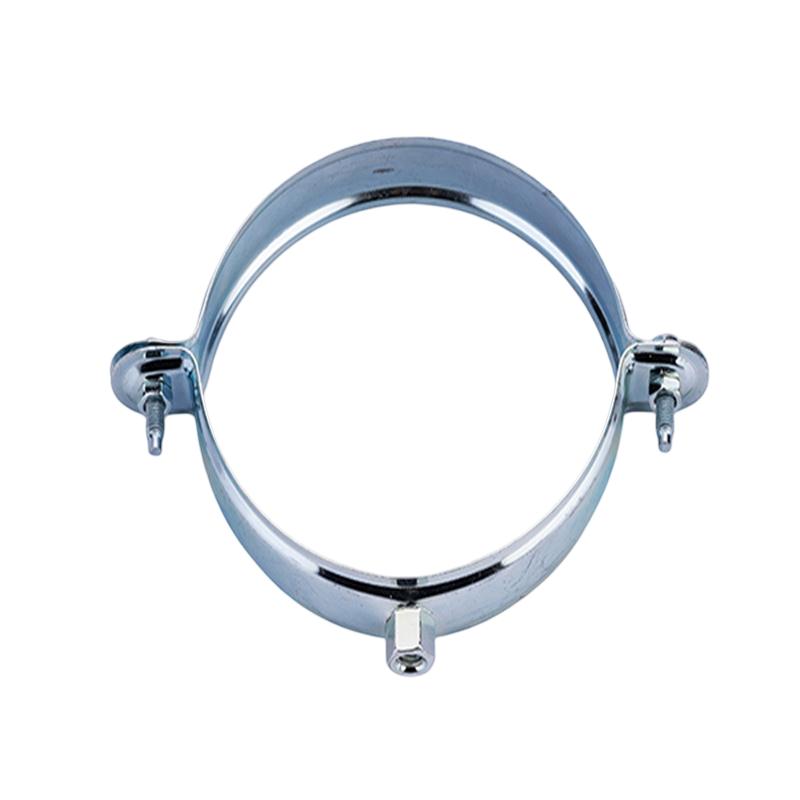
Clarify whether the clamp retains a flexible duct, tube, insulation layer or liquid hose. The sealing concept, access and surface contact determine the suitable clamp family. A photo helps explain the joint, but the installed diameter and environment still need to be recorded.
Hydraulic and industrial fluid systems
State pressure, temperature, chemical exposure and failure consequence. A hose clamp cannot compensate for an unsuitable hose or fitting. Ask the supplier to identify missing data before treating a commercial quote as technical approval.
Marine and coastal equipment
Salt exposure makes grade, crevice conditions and dissimilar-metal contact important. Consider 304 or 316 only as part of a written application review. Keep the exact material, finish, test method and maintenance expectation on the order.
Quality controls to discuss with a supplier
A capable custom hose clamp manufacturer should explain how the band is formed, how the screw and housing are assembled, how burrs are controlled and how lots are identified. The inspection plan should match the risk. Ask which features are inspected 100 percent, which are sampled and how a nonconforming lot is contained.
Useful checks include band width and thickness, diameter range, hole or tooth form, housing position, screw engagement, material identification, surface finish, burr control, ear geometry and package count. For a private-label program, add logo legibility, label content, barcode, carton mark and mixed-size controls.
For a sealing application, define the test setup. A leak test should state the hose, fitting, medium, pressure, temperature, dwell time and acceptance limit. A salt-spray result should state the method, specimen construction and failure criterion. A generic certificate should not replace an application-specific review.
How to compare a hose clamp supplier
| Capability | Audit question | Why it matters |
|---|---|---|
| Product scope | Can the supplier provide worm gear, mini, English type and crimp options? | It reduces unnecessary supplier and item variation. |
| Engineering response | Will the team review installed diameter, environment and tool access? | It reduces the risk of selecting by nominal size alone. |
| Quality evidence | Can the supplier define inspection, tests and lot traceability? | It supports approval and repeat supply. |
| Customization | Can dimensions, material, logo and packing be controlled? | It supports OEM and private-label programs. |
| Commercial clarity | Are MOQ, mixed sizes, samples, lead time and delivery terms stated? | It makes quotes comparable. |
When comparing a hose clamp supplier, normalize material, diameter range, band width, screw, finish, pack count, documents, MOQ and destination. A low unit price is not comparable if the supplier has omitted the test, packing or material requirement.
OEM and private-label requirements
OEM programs often fail at the boundary between engineering, purchasing and packaging. Put the technical item, packaging item and commercial item on the same controlled revision. The clamp drawing should show dimensions and materials. The packaging specification should show pieces per bag or box, label content and carton marks. The purchase order should reference both.
For a branded program, provide logo artwork and state where it may appear. Embossed band logos, printed boxes and labels have different approval and durability implications. Confirm mixed-size packing and the identification method before the first bulk order.
RFQ checklist
- Clamp family: worm gear, mini, English type, quick release, two-ear or another defined type.
- Installed hose outside diameter: minimum, nominal and maximum.
- Hose and fitting: material, wall construction, barb or tube geometry and insertion depth.
- Band: width, thickness, perforated or smooth form and adjustment range.
- Material: band, housing, screw and any liner.
- Finish: polished, plain, zinc plated or specified system.
- Environment: indoor, outdoor, salt air, chemicals, temperature, vibration and wash-down.
- Assembly: tool, access, tightening or crimp procedure and maintenance expectation.
- Validation: leak, pressure, vibration, corrosion or endurance test.
- Documents: drawing, material record, inspection report and lot traceability.
- Order: samples, annual volume, MOQ, release schedule and mixed-size plan.
- Packaging: pieces per pack, labels, barcode, carton marks, pallet and destination.
Attach a marked sketch or photo when a formal drawing is not available. The image helps explain access and housing, but measured diameter and material requirements are still needed.
Cost drivers and sample approval
Hose clamp cost depends on material, diameter range, band width, screw, forming, logo, finish, testing, packing and quantity. Ask the supplier to separate one-time artwork or tooling from recurring item and packaging costs where practical. This makes a standard item, custom item and private-label program easier to compare.
During sample approval, measure the clamp, install it with the intended tool, check access and inspect the hose after tightening. For a crimp clamp, use the production tool and record the closure result. Record supplier part number, material, finish, size, lot and date. Freeze the approved revision before releasing bulk production.
Frequently asked questions
Which material should I choose for outdoor service?
Start with exposure, hose chemistry, temperature and maintenance. 304 or 316 stainless may be considered for specified environments, while coated steel may fit another application. Confirm grade and finish against the product and test requirement.
Is a worm gear clamp better than a two-ear clamp?
Neither is universally better. Worm gear supports adjustment and service. Two-ear can suit controlled one-time crimping. Compare fit, tool, access, service life, rework and validation.
Can I choose by nominal hose size?
No. Use the installed outside diameter on the fitting and provide minimum and maximum values when tolerances or temperature change the fit.
Can JingleFix make a custom logo clamp?
Selected JingleFix hose clamp programs list OEM and ODM support, including custom dimensions and embossed brand logos. Provide artwork, material, finish, quantity and packaging for review.
What should a hose clamp manufacturer test?
Match the test to the risk. Discuss dimensional inspection, material identification, screw engagement, burr control, clamping behavior, leakage or pressure testing, corrosion testing and lot traceability.
How should a distributor compare two quotes?
Normalize material, diameter range, band width, screw, finish, pack count, documents, MOQ, delivery term and destination. Quotes that omit these fields are not directly comparable.
Turn the RFQ into a supply decision
A reliable hose clamp purchase begins with a complete connection description. Define the installed diameter, select the clamp family by assembly and service need, specify the full material and finish, and validate a sample with the intended hose and tool. This gives an OEM team a defensible approval record and gives a distributor a stable item to replenish.
JingleFix can review standard or custom hose clamp requirements for automotive, plumbing, machinery, hydraulic, marine and industrial applications. Include the size schedule, drawing or sample, material, environment, target quantity, inspection documents and packaging plan.
Send your hose clamp RFQ to JingleFix
Public product ranges are subject to confirmation against the controlled drawing, current standard and agreed order conditions. Safety-critical or regulated applications require review by the responsible engineer and purchaser.
RFQ fields that prevent a second round of questions
A short enquiry can still be complete when it uses the right fields. Start with the item family and the installed diameter. Then separate the technical requirements from the commercial requirements. The technical section should describe the hose, fitting, clamp construction, material, finish, environment and assembly. The commercial section should describe the sample quantity, annual demand, release schedule, destination, delivery term and packing.
For a hose clamp OEM supplier, the first drawing or marked sketch should show the band width, band thickness, adjustment range, housing position, screw head, material and logo location if applicable. If the clamp is based on an existing item, provide the sample and identify the dimensions that must remain unchanged. Do not ask a supplier to make an exact copy while leaving the critical dimensions undefined.
For a hose clamp bulk supplier, add the item code, package count and stock rotation plan. State whether the order contains one size or a family of sizes. A mixed order may require separated bags, inner boxes, pallet labels or a different production sequence. The pack plan is part of the item definition because receiving errors can create more cost than the small difference in unit price.
Specification versus substitution
Buyers often receive a quote with a familiar product name but a different material, band width or screw. That quote may still be useful, but it should be marked as an alternative rather than silently accepted as an equivalent. Ask the supplier to list every difference in a comparison table.
| Field | Original requirement | Alternative to review |
|---|---|---|
| Clamp family | Worm gear, two-ear or defined family | Proposed family and assembly difference |
| Installed range | Minimum and maximum diameter | Supplier range and working position |
| Band construction | Width, thickness, perforation or smooth band | Proposed dimensions and edge condition |
| Materials | Band, housing and screw grades | Every component and finish |
| Validation | Leak, pressure, corrosion or assembly test | Available evidence and limits |
| Packaging | Count, label, barcode and carton mark | Proposed packing and cost impact |
This method keeps the purchasing decision clear. A buyer may approve a substitute for a low-risk maintenance item but require engineering review for a fuel, cooling, hydraulic or high-consequence connection.
Design review before mass production
When a clamp is customized, hold a short design review before tooling or production starts. Review the hose cross-section, clamp clearance, screw or crimp tool, installation sequence and inspection point. Use a representative hose and fitting when possible. A drawing review is especially important when the available radial clearance is small or when the housing must face a specific direction.
Ask the supplier to confirm what is controlled by drawing and what is controlled by process instruction. Dimensions such as band width and diameter can be measured. Process features such as deburring, screw engagement and crimp consistency may need a separate inspection method. The approval record should connect the drawing, sample, test and purchase order.
Do not use a sample approval to hide an unresolved application. If the hose compound, pressure, temperature or chemical environment is still unknown, record it as an open design input. A sample can confirm fit and assembly. It cannot prove an application that has not been defined.
Repeat-order controls for distributors and OEMs
Repeat supply becomes easier when the buyer treats the clamp as a controlled item rather than a generic commodity. Keep the supplier item number, buyer item number, drawing revision, approved sample image, material statement, packaging specification and inspection level together. When a supplier changes a material source, coating, housing or packing process, request a change notice and decide whether a new sample is needed.
For a distributor, monitor the difference between ordered quantity and received quantity by pack. Check that the label matches the inner bag and master carton. For an OEM, sample the first cartons of a new lot and verify dimensions, screw engagement and finish. These checks do not need to be excessive; they need to be consistent with the risk of a wrong part entering production.
Keep a small record of field feedback. If installers report slipping, damaged hose, difficult access or missing labels, send the complete information back to the supplier. A useful corrective action identifies the part, lot, hose, fitting, tool and installation condition. Without that context, a supplier can only offer a generic replacement.
Packaging, labelling and export documents
Packaging should protect the clamp from deformation, contamination and mixed-size confusion. Heavy clamps can damage thin boxes if the carton is not designed for the unit weight. Stainless parts can show cosmetic marks if they rub against each other during transport. Small clamps can be lost inside oversized cartons. State the pack count and protection method in the RFQ.
For private-label programs, the label should identify the product family, size range, material or finish, quantity, lot if required and country-of-origin information required by the destination. Barcode placement and carton marks should be approved before printing. If the buyer needs a packing list, inspection record or material document, name the format and the item or batch it must cover.
Incoterms and delivery estimates should be written with the named place and quotation assumptions. Freight, duties, local charges and customs classification are not defined by the clamp name alone. The supplier can provide product facts for the broker, while the importer should confirm the destination-country requirements.
Field troubleshooting after installation
If a connection leaks, do not solve the issue by tightening harder without checking the assembly. First confirm that the hose reached the seating mark and that the fitting is correct. Check for a cut, fold, liner distortion, contamination or a damaged barb. Then check the clamp size, orientation, band edge, housing and tightening method. Record what changed between the approved sample and the field installation.
If a worm gear clamp slips, inspect screw engagement, band perforation, housing position and the surface of the hose. If a two-ear clamp leaks, check the crimp height, tool condition, ear position and hose outside diameter. If corrosion appears, identify the exact component and exposure rather than replacing the complete item without understanding the cause.
These checks help a hose clamp manufacturer provide a useful corrective action. They also prevent a buyer from treating every leak as a simple size problem.
Buyer worksheet
| Requirement | Buyer entry |
|---|---|
| Clamp family and reference sample | ____________________________ |
| Installed hose outside diameter | Minimum ______ Nominal ______ Maximum ______ |
| Hose and fitting material | ____________________________ |
| Band width and thickness | ____________________________ |
| Band, housing and screw material | ____________________________ |
| Finish and exposure | ____________________________ |
| Tool, access and assembly rule | ____________________________ |
| Validation and acceptance limit | ____________________________ |
| Quantity, MOQ and release plan | ____________________________ |
| Pack count, labels and destination | ____________________________ |
Completing this worksheet before contacting a supplier usually shortens quotation time. It also helps the buyer explain the project internally because the choice is linked to the connection rather than to a product photo.
Additional buyer questions
Can the clamp be supplied with an embossed brand?
Selected JingleFix programs list embossed logo support. Provide the artwork, usable band area, required size range, finish, quantity and packing plan. Approve a marked sample before bulk production.
What if the hose diameter is between two standard ranges?
Send the minimum and maximum installed diameter, not only the midpoint. The supplier can then review a standard size, a different band range or a custom option. The chosen clamp should work inside its adjustment range rather than at its limit.
Can a galvanized clamp be used with a stainless fitting?
Check the environment, galvanic contact, fluid and project requirement. Do not approve the combination based on appearance alone. A material review may be needed for wet, salt or chemical exposure.
Should a buyer request a material certificate?
Request the document when the material, regulatory or customer requirement needs it. State the exact component, grade and lot it must cover. A generic certificate with no item linkage is difficult to use during receiving inspection.
How should a maintenance team store clamps?
Keep sizes, materials and finishes separated, protect parts from contamination and moisture, and retain the original labels. Stock rotation matters for private-label and coated products. Any storage limit or special condition should be confirmed with the supplier.