Choosing the Right Precast Accessories Supplier for Construction Projects
Why Precast Accessories Are Critical for Modern Construction
Precast concrete components—such as beams, panels, and slabs—are only as reliable as the accessories that hold them together. From lifting anchors to fixing inserts, every accessory plays a role in ensuring safety and efficiency. Choosing the right precast accessories supplier determines whether a project is delivered on time, within budget, and in compliance with safety standards. For contractors and importers, it is not just about finding parts—it is about securing trust and long-term reliability.
Quality Standards and Certification Requirements
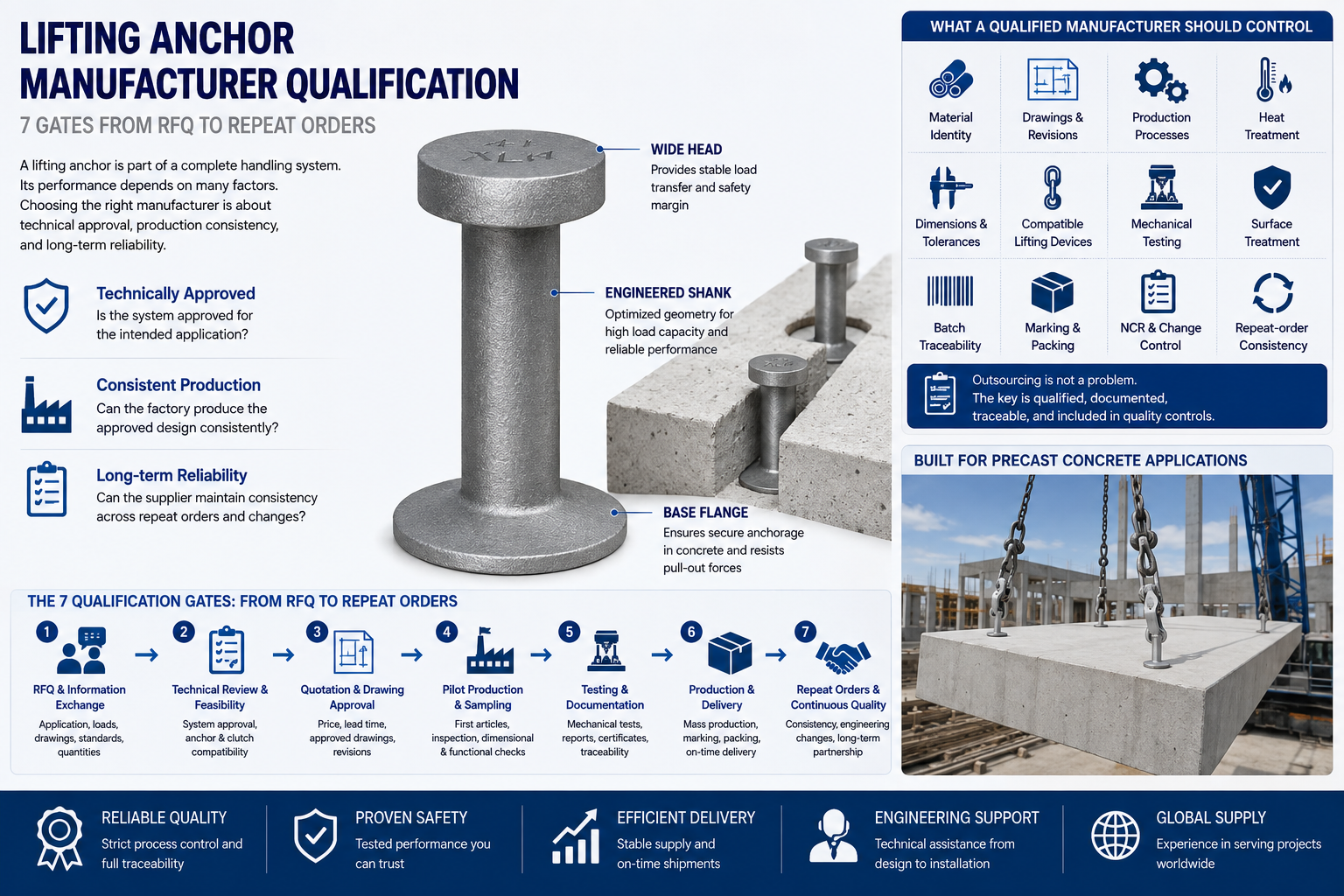
Reliable suppliers follow internationally recognized benchmarks. Organizations like the American Concrete Institute (ACI) provide guidelines that ensure accessories meet structural requirements. Similarly, ASTM International sets standards for concrete-related materials, including steel inserts and lifting systems. In addition, the Precast/Prestressed Concrete Institute (PCI) publishes best practices for safe precast construction. Buyers should always confirm that their precast accessories supplier complies with these standards and can provide test reports verifying load capacity, corrosion resistance, and durability.
Risks of Choosing Low-Cost or Unverified Suppliers
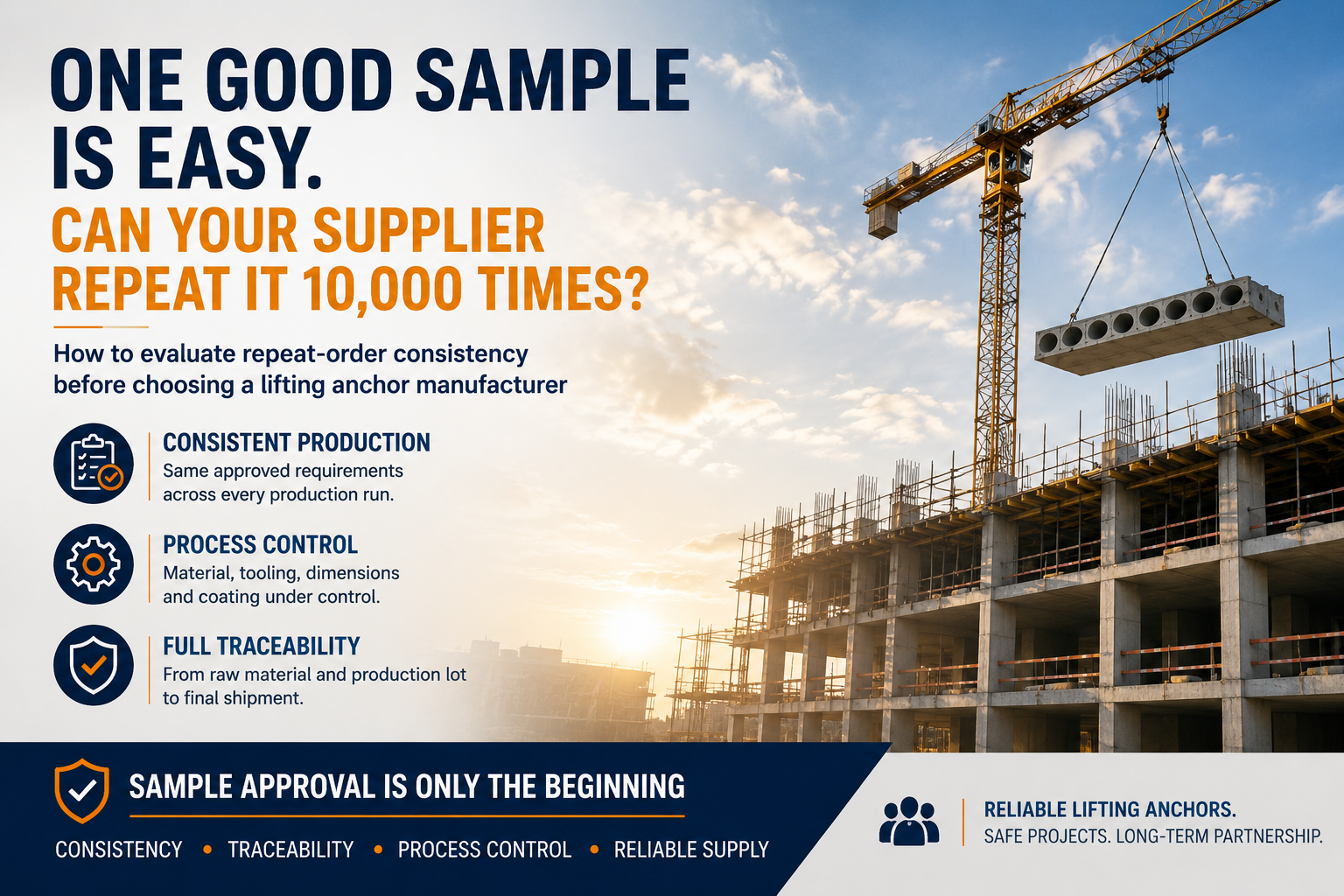
Importers and contractors who choose unverified suppliers often face hidden costs. Inadequate lifting anchors may lead to on-site accidents, while poor-quality inserts can cause cracks or failures in concrete elements. Such risks not only delay construction but also expose companies to safety liabilities and reputational damage. Cheap products with no certification can result in rework, wasted materials, and higher overall costs—outweighing any initial savings. A professional precast accessories supplier eliminates these risks by providing certified, traceable, and performance-tested components.
Why JINGLE Stands Out as a Precast Accessories Supplier
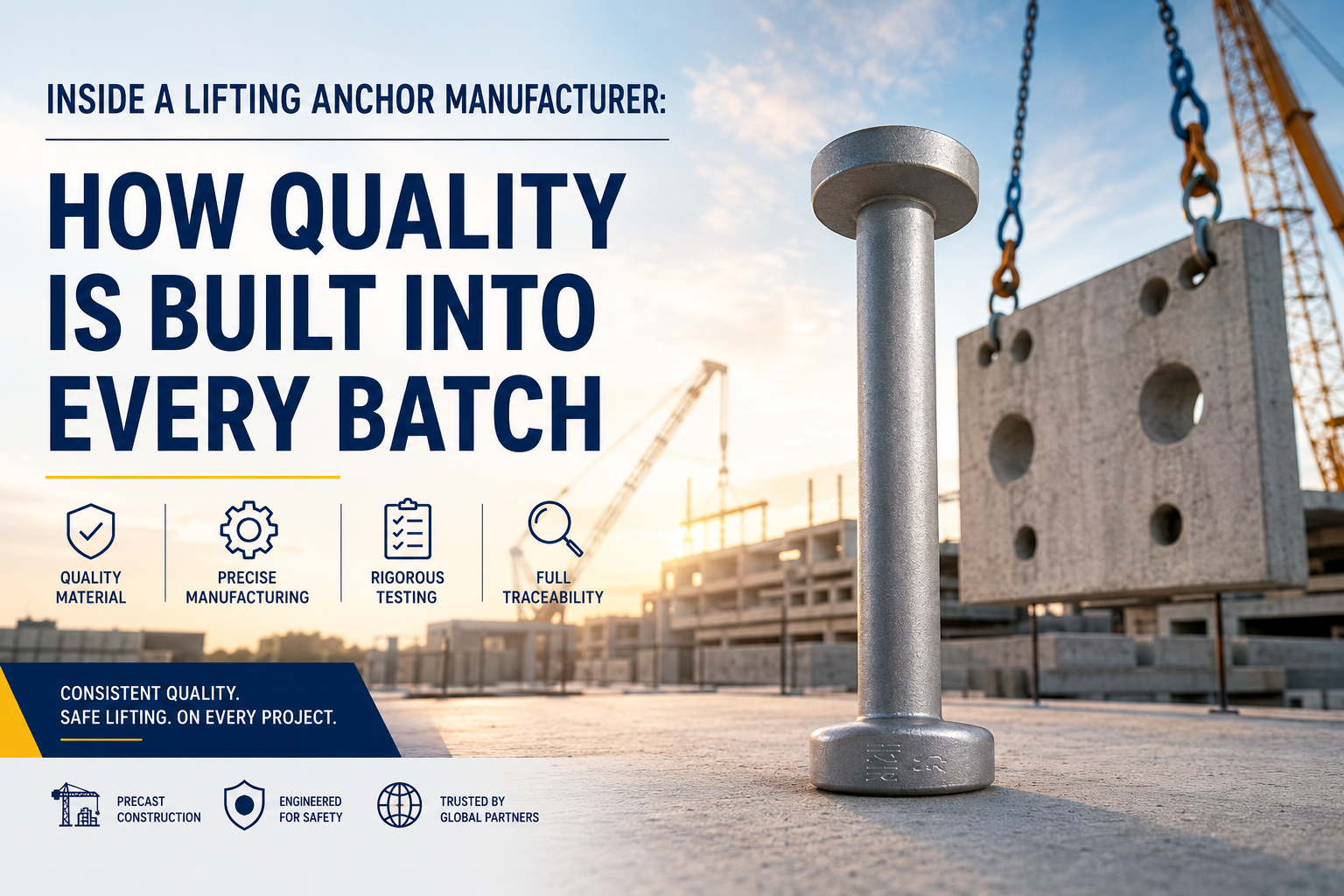
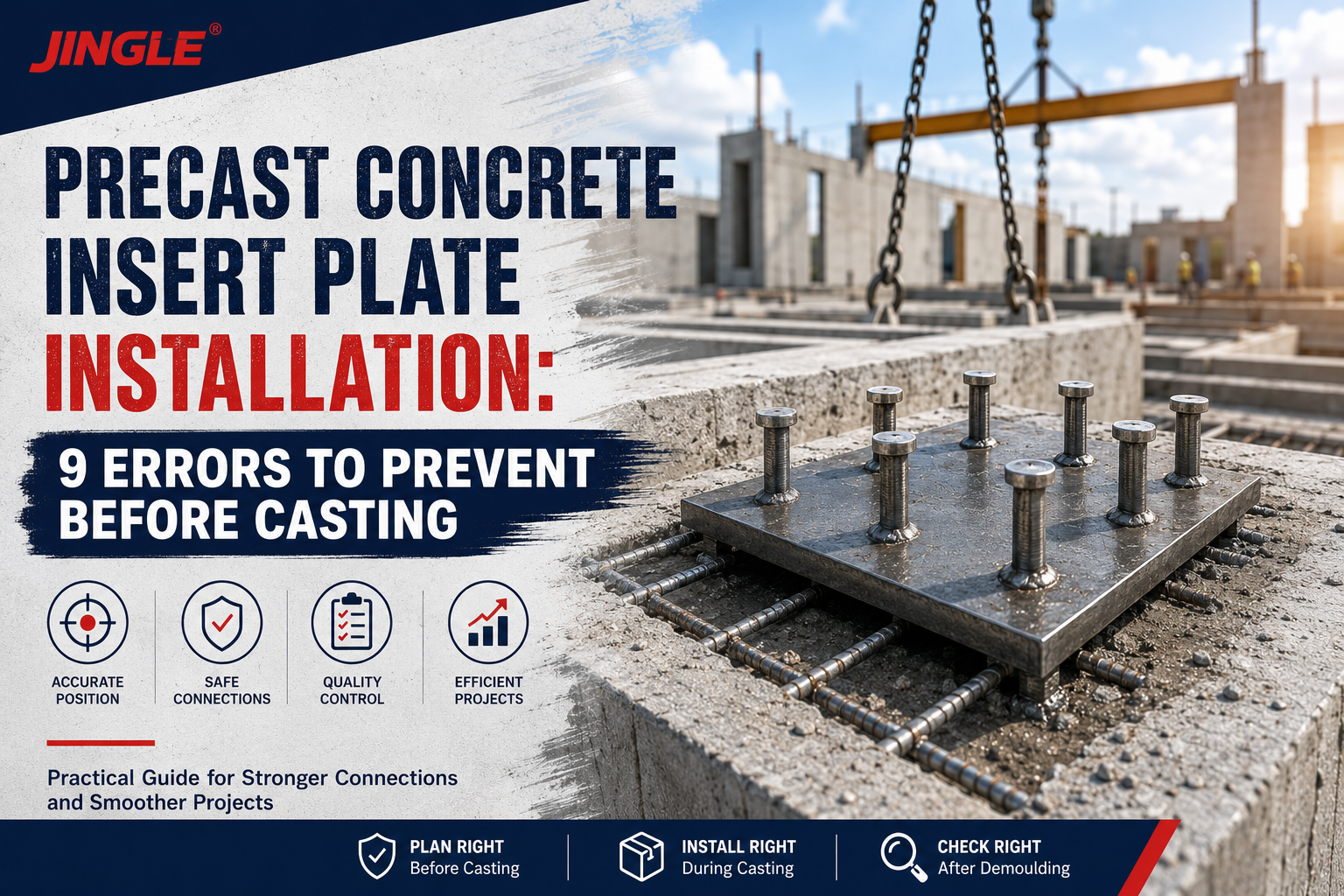
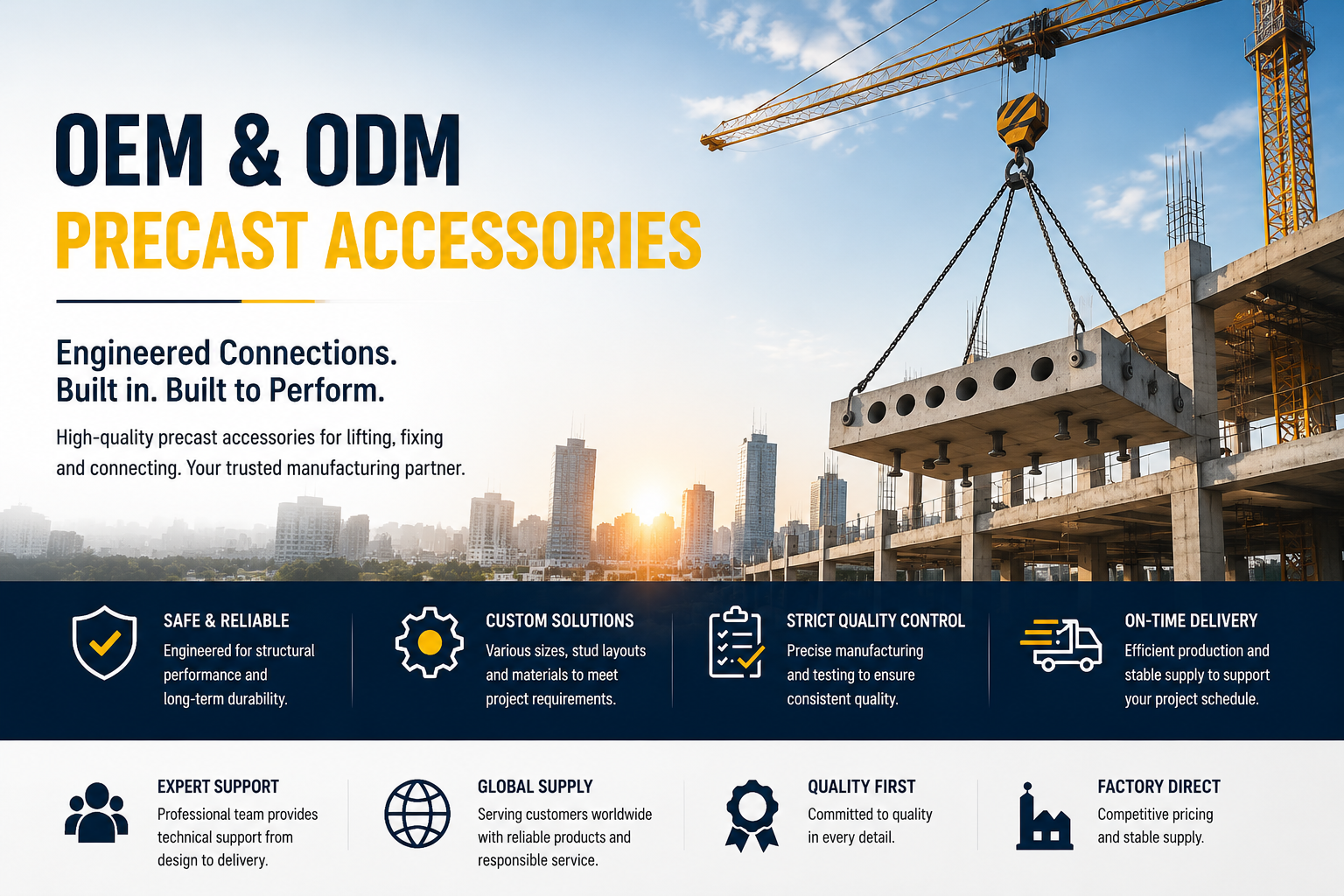
With over 20 years of manufacturing experience, JINGLE delivers a wide range of precast accessories, including lifting anchors, fixing inserts, rebar chairs, and threaded sockets. Our factory is ISO-certified and equipped with advanced CNC machinery to produce accessories with precision and reliability. For importers and global distributors, JINGLE offers OEM/ODM customization, flexible packaging, and ERP-based order tracking. Our internal laboratory conducts rigorous tensile and fatigue tests to guarantee that every accessory meets international construction standards.
Application Scenarios Across Global Construction
-
Infrastructure Projects: Bridges, tunnels, and highways requiring high-strength lifting anchors.
-
Commercial Buildings: Precast façade panels and flooring systems secured with fixing inserts.
-
Residential Housing: Precast walls and slabs requiring rebar spacers and threaded sockets.
-
Industrial Facilities: Heavy-duty concrete structures where accessories must withstand extreme loads and environments.
These scenarios show how the right precast accessories supplier supports faster installation, safer handling, and longer service life for concrete structures.
What Importers and Contractors Should Look For
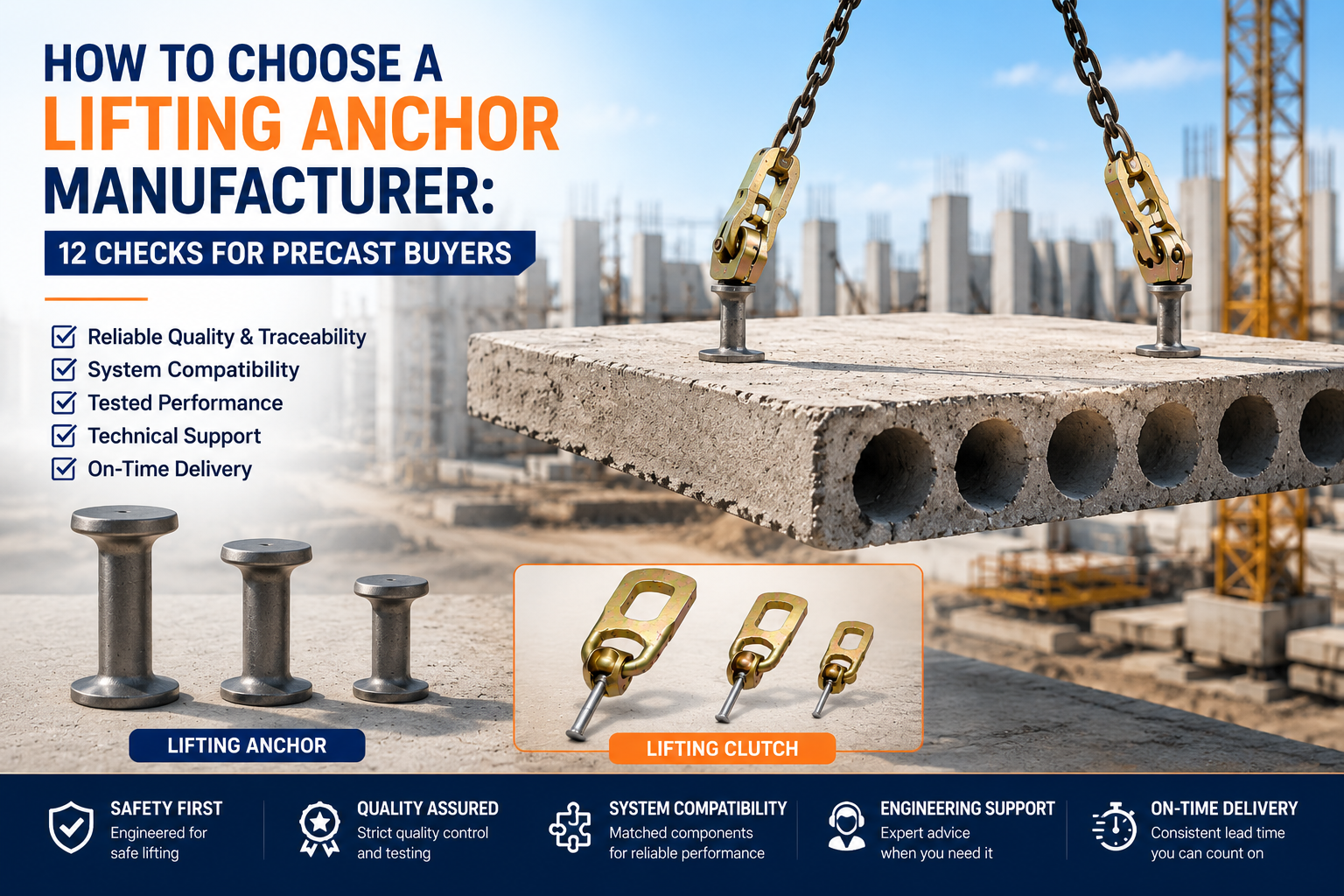
When selecting a supplier, key factors go beyond unit price:
-
Product Range: Ability to supply a complete set of accessories for different precast applications.
-
Testing and Documentation: Load certificates, material reports, and compliance with ACI/ASTM standards.
-
Production Capacity: Scalability to handle both bulk projects and customized orders.
-
Global Logistics: Experience in managing export shipments, customs clearance, and on-time delivery.
-
Technical Support: Engineering assistance in choosing the right accessories for specific project requirements.
Future Trends in Precast Accessories
As global demand for precast construction grows, suppliers are expected to invest in stronger, lighter, and more sustainable accessories. Stainless steel and composite materials are becoming popular for coastal and high-humidity environments. Digitalization also plays a role, with 3D modeling and BIM integration allowing suppliers to provide accessories that fit seamlessly into digital construction workflows. Importers working with forward-looking suppliers will be better prepared for future construction demands.
Partnering with the Right Supplier for Reliable Projects
Precast accessories may be small in size, but they have a big impact on project safety and efficiency. By working with a certified supplier, importers, distributors, and contractors can avoid costly risks and improve long-term project outcomes.
👉 Looking for a reliable precast accessories supplier? Contact JINGLE today for OEM/ODM solutions and ensure your construction projects meet the highest standards.