Welcome to our website
logo

Small Screws, Big Impact: Precision Fasteners for Tight Spaces

  • blog
Posted by JINGLE On Aug 04 2025

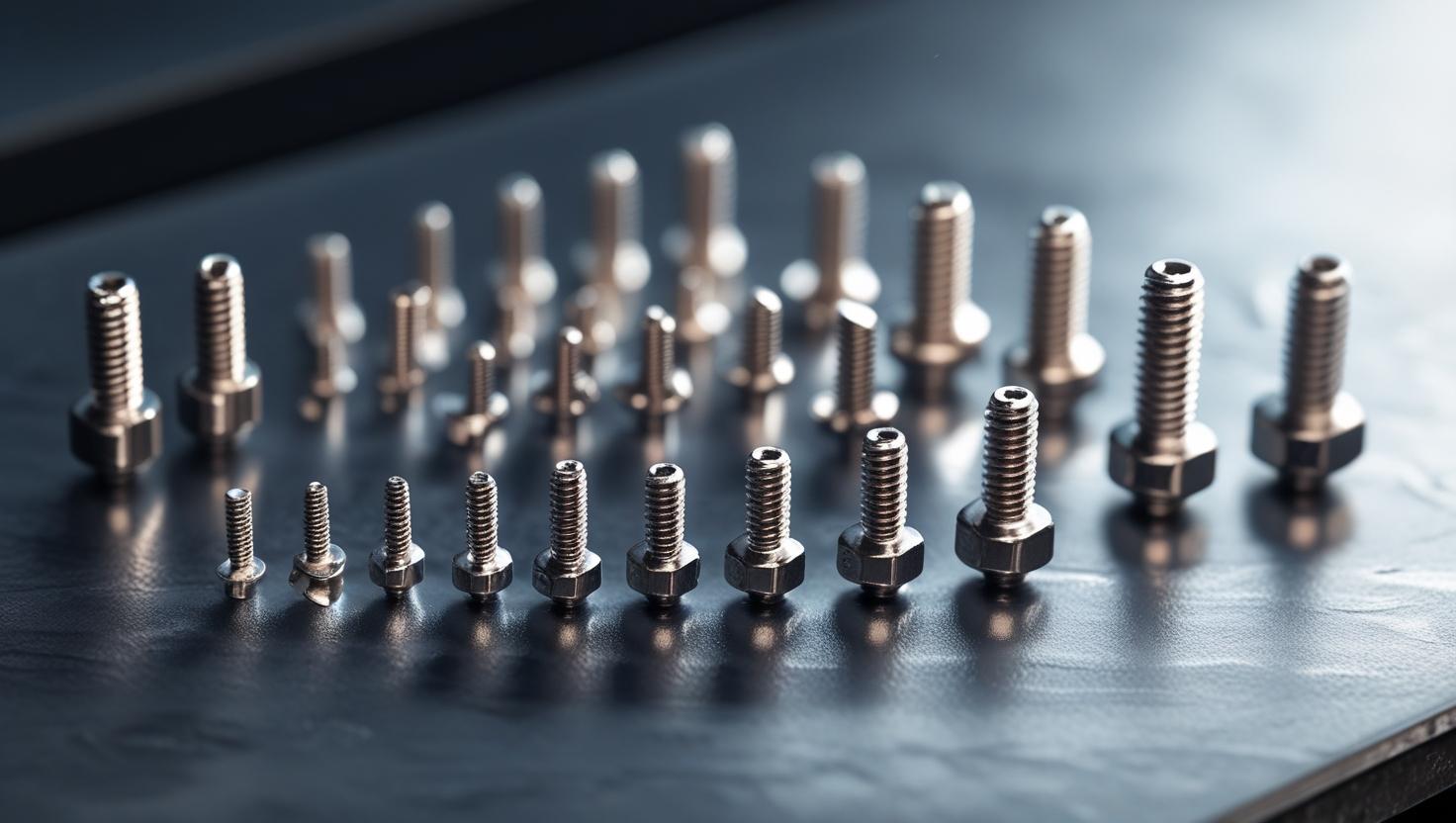
Jingle small precision screws used in electronics and compact devices

Small Screws, Big Impact: Precision Fasteners for Tight Spaces

Why Small Screws Are Essential in Modern Engineering

From smartphones to medical devices,small screwsare the hidden heroes of modern compact product design. They hold everything together—literally—when space is tight and precision is non-negotiable.

These fasteners are used in:

  • Consumer electronics(phones, tablets, laptops)

  • Medical devices(diagnostic tools, hearing aids)

  • Eyewear and watches

  • Optics and cameras

  • Lighting and display systems

Choosing the right screw ensures proper torque control, no thread damage, and long-term durability, especially in high-frequency use environments.

Common Problems When Sourcing Small Screws

Buyers often face real and costly issues when ordering small-sized fasteners in bulk or OEM kits:

  • Incorrect threadingor pitch, especially below M2

  • Low hardnesscausing stripping during assembly

  • Material inconsistencyaffecting conductivity or corrosion resistance

  • Incompatibility with automated equipment(screwdriver tips, feeders)

  • Incomplete documentation, especially for medical or export projects

These problems can cause downtime, product recalls, and mounting production costs.

What to Look for in a Reliable Small Screw Supplier

For electronics and micro-mechanical components, you need a partner that offers more than basic SKUs.

A qualified supplier likeJingleensures:

  • Consistent tolerancesdown to 0.01mm

  • Materials including stainless steel, brass, aluminum, and titanium

  • Micro threading for M1–M3screws

  • ISO-compliant packaging and labeling

  • OEM support, from blueprint verification to kitting

  • Surface treatment optionslike nickel plating, black oxide, or anodizing

Our screws are widely used in PCB assemblies, electronic housing enclosures, and testing equipment—where a failed screw is simply not an option.

Application Examples: When Precision Meets Function

Electronics Assembly

Using fine-thread stainless steel screws for battery compartments, touchscreens, or device chassis ensures tight hold without damaging plastic casings.

Medical Devices

In surgical toolsets or diagnostic modules, lightweight and corrosion-resistant screws with precise length/diameter ratios are essential. We provide clean-room compliant packaging and traceability for such orders.

Lighting Systems

For installing miniature LED modules or wiring bases, small pan-head screws with Philips or Torx drives offer easy access and clean finish.

Choose Smart. Choose Secure. Choose Small Screws That Last

Small screws may look insignificant, but a single thread misfit or rust-prone fastener can ruin your product integrity.

Jinglehelps you eliminate that risk with certified quality, technical support, and bulk/OEM flexibility tailored to your needs.

Browse our screw catalog
Contact our engineersfor help with specifications or custom kits

Featured Blogs
Join Us at the 2026 Cologne Hardware Fair – Visit Us at Booth 3.1B078!

Join Us at the 2026 Cologne Hardware Fair – Visit Us at Booth 3.1B078!

Title: Join Us at the 2026 Cologne Hardware Fair – Booth 3.1B078 Summary: Visit us at Booth 3.1B078 during the 2026 Cologne Hardware Fair (March 3-6) to explore new hardware innovations, connect with industry experts, and discover solutions tailored to your needs.

Small Batch CNC Machining: How to Balance Cost, Speed, and Consistency in Real Production

Small Batch CNC Machining: How to Balance Cost, Speed, and Consistency in Real Production

Small batch CNC machining is widely used for prototyping, pilot runs, and low-volume production, but many projects face unstable quality, rising costs, and delayed scaling. This article explains how process planning, material control, and production strategy ensure efficient and repeatable small batch CNC machining.

CNC Milling Parts Supplier: How Complex Geometry Is Controlled in Real Production

CNC Milling Parts Supplier: How Complex Geometry Is Controlled in Real Production

CNC milling parts are widely used in structural components, housings, and precision assemblies, but many projects face dimensional inconsistency and assembly misalignment during production. This article explains how a CNC milling parts supplier controls material behavior, toolpath strategy, and tolerance zoning to ensure stable performance across real industrial applications.

Stainless Steel CNC Turning Parts: How Stability and Wear Resistance Are Achieved in Real Use

Stainless Steel CNC Turning Parts: How Stability and Wear Resistance Are Achieved in Real Use

Stainless steel CNC turning parts are widely used in high-load, corrosive, and long-life applications, yet many projects encounter premature wear, thread failure, or dimensional drift after installation. This article explains how material grade control, turning strategy, surface management, and application-driven process design ensure reliable performance in real industrial environments.

Aluminum CNC Precision Parts: How Process Control Delivers Stability Across Real Applications

Aluminum CNC Precision Parts: How Process Control Delivers Stability Across Real Applications

Aluminum CNC precision parts are widely used in automation, enclosures, and lightweight structures, yet many projects encounter instability after installation or during repeat production. This article explains how controlled material selection, machining strategy, tolerance zoning, and application-driven process design ensure consistent performance across real industrial environments.

Custom CNC Machining Service: How Customization Impacts Cost, Lead Time, and Consistency

Custom CNC Machining Service: How Customization Impacts Cost, Lead Time, and Consistency

Custom CNC machining projects often fail not because parts are complex, but because customization decisions are made without considering process impact. This article explains how material choice, machining strategy, tolerance control, and supplier workflows determine whether custom CNC machining remains stable, predictable, and scalable.