The short answer for a stainless steel fastener RFQ

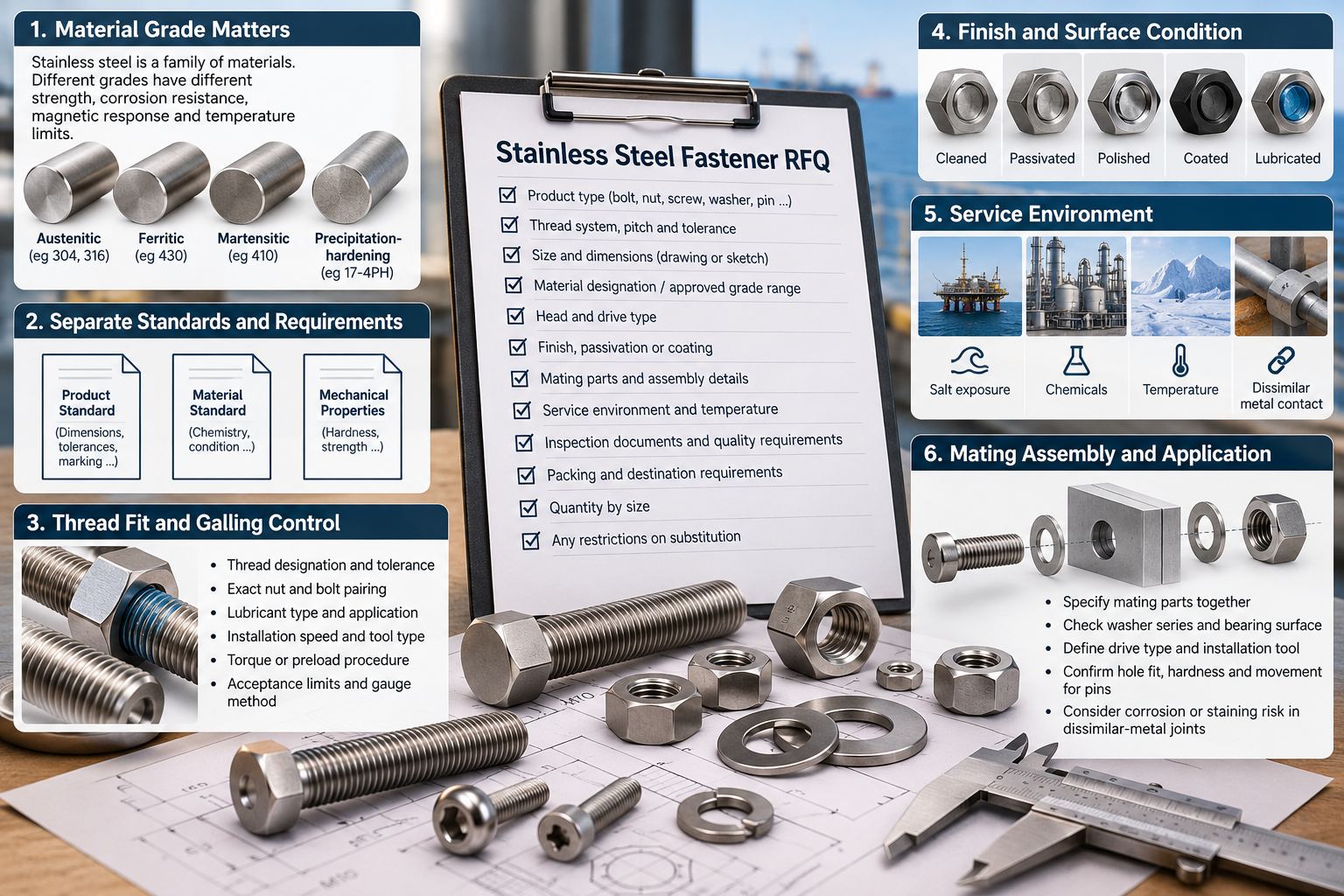
Choosing a stainless steel fastener supplier starts with the service environment and mating assembly, not with a bright product photograph. The RFQ should identify the product type, thread system, size, material designation or approved grade range, head and drive, finish, mating parts, inspection documents, packing and destination requirements. If the buyer leaves those fields open, suppliers may quote parts that look alike but behave differently in assembly or service. Stainless steel is a family of materials, not one universal product. Austenitic, ferritic, martensitic and precipitation-hardening stainless steels can differ in strength, magnetic response, work-hardening behavior, corrosion performance, heat treatment and temperature limits. Even within one family, the specified standard, condition and product form matter. A useful stainless steel fastener manufacturer will ask what the part must do before recommending a catalogue line. For the first enquiry, send a drawing or marked sketch, the mating fastener information, quantity by size, installation method, service environment, required documents and any restrictions on substitution. Ask the supplier to show the exact offered material and any deviations instead of silently replacing a requested grade with a familiar equivalent.
Ask JingleFix to review a stainless steel fastener RFQ
Why stainless steel fasteners need a complete specification
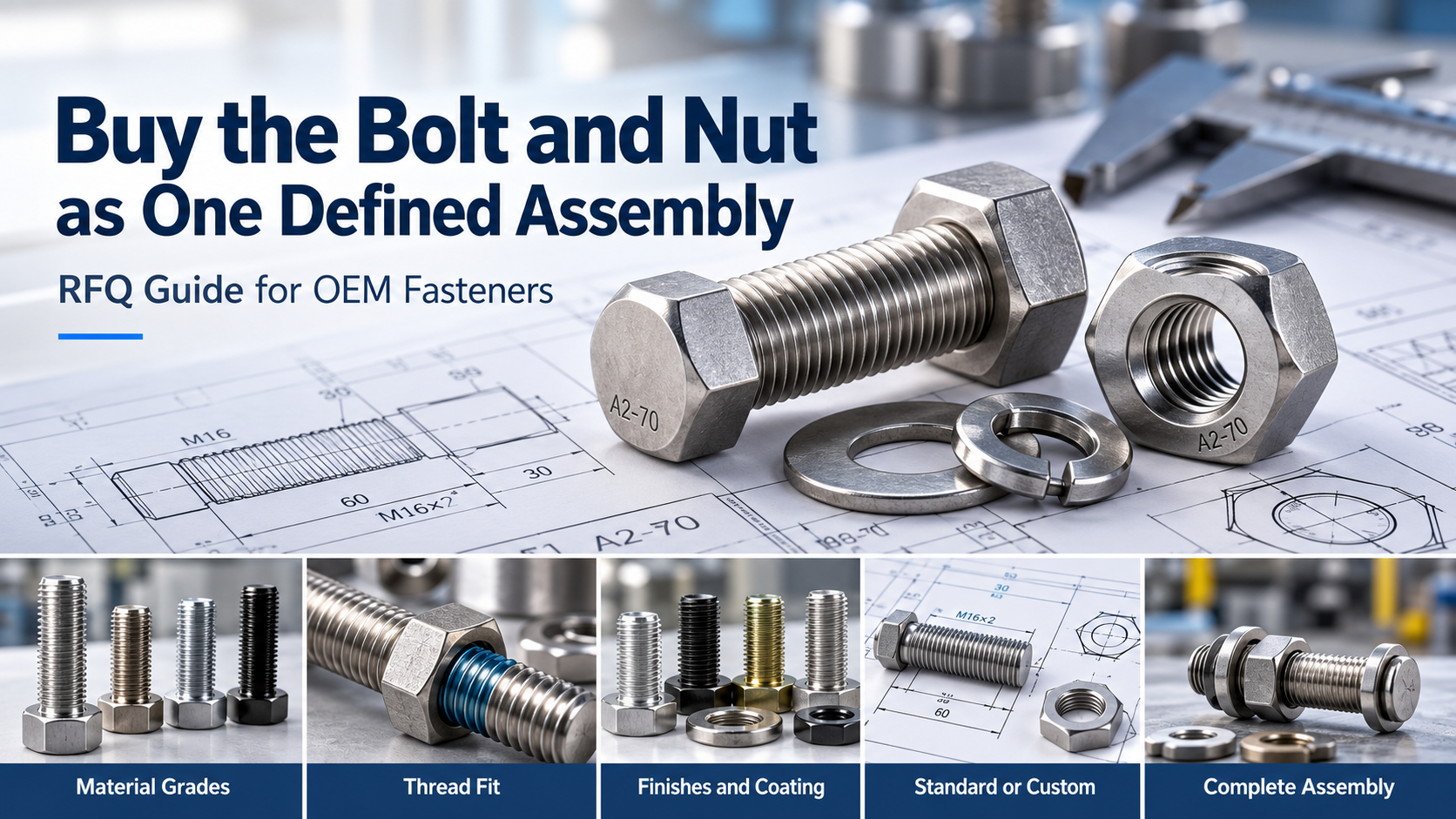
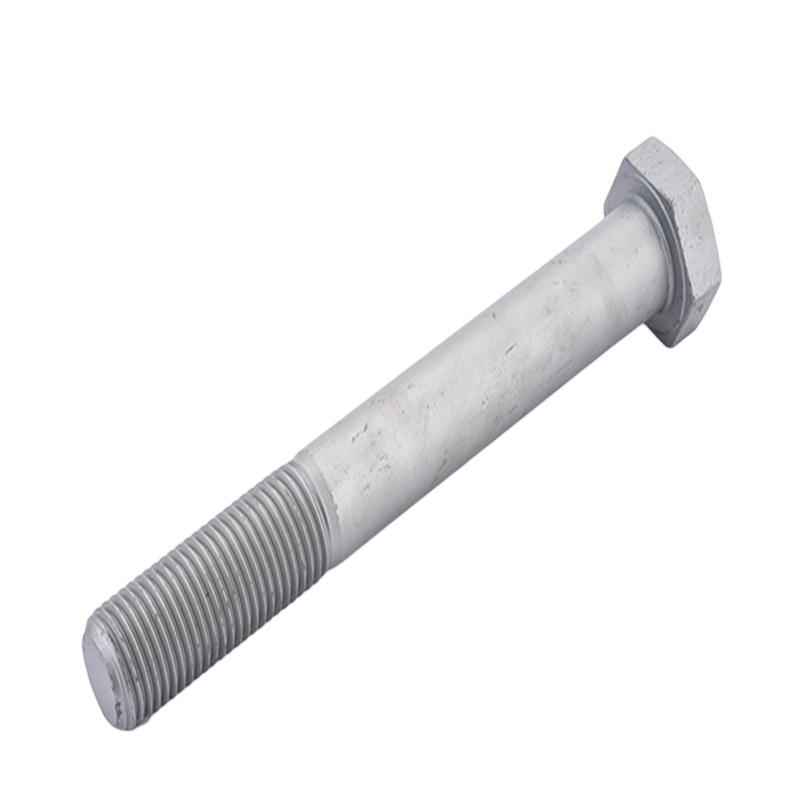
The words "stainless bolt" or "stainless nut" identify a product family, not a complete requirement. A buyer may need a specific thread tolerance, a controlled head geometry, a defined washer series, a nonstandard length or a finish that protects the mating interface. A different material can change galling risk, hardness, magnetic response or compatibility with the connected part. The assembly also matters. A nut should be specified with the mating bolt or stud. A washer should be checked against the hole, bearing surface, thickness and joint standard. A screw needs a defined drive, point, thread form and installation tool. A pin needs its hole fit, hardness, retention method and movement requirement. A stainless steel fastener supplier should receive those relationships, not only a nominal diameter.
Separate grade, product standard and condition
Material grade is only one line in the purchase specification. The product standard may define dimensions, tolerances, marking, sampling or mechanical requirements. The material standard may define chemistry and condition. The buyer should keep these references separate so that a supplier cannot treat one familiar grade name as permission to change the whole product. Ask engineering and quality to confirm:
- the governing product and material standards and their editions;
- the approved grade, grade range or equivalent policy;
- the mechanical property or hardness requirement, when applicable;
- the thread system, pitch, tolerance class and mating component;
- the dimensional tolerances, head or washer geometry and functional surfaces;
- the service temperature, chemicals, wash-down, salt exposure or dissimilar-metal contact;
- the required certificates, inspection records, lot traceability and change notification.
Do not write "304 equivalent" or "316 equivalent" as the entire requirement. If an alternative is acceptable, define the comparison method, minimum chemistry or property limits, documentation and approval route. The responsible engineer must decide whether a substitution is suitable for the joint and environment.
Thread fit and galling controls
Stainless steel threads can be vulnerable to galling when the material pair, surface condition, speed, lubrication and installation load combine unfavorably. The solution is not a universal promise that one grade or coating eliminates the risk. The buyer should control the actual mating set and the installation procedure. Include the following in the RFQ when the assembly is sensitive to thread behavior:
- internal and external thread designations, pitch and tolerance;
- the exact nut and bolt or stud pairing;
- lubricant type, application point and whether dry assembly is required;
- installation speed, tool type and any torque or preload procedure;
- allowed thread damage, gauge method and acceptance limit;
- sample assembly using the production tool and the specified mating parts.
If the buyer changes the lubricant, mating grade or installation speed after quotation, the thread result may change. Treat that change as an engineering and quality review, not as a packaging detail.
Finish, passivation and surface condition
Stainless fasteners may be supplied with a cleaned, passivated, polished, coated, lubricated or otherwise controlled surface. The correct choice depends on the material, environment, appearance, thread fit, contamination control and service requirement. "Bright" is an appearance description, not a complete surface specification. Define the surface requirement with enough detail to be inspected. State whether the buyer needs a particular passivation or cleaning route, a roughness limit, a coating, a lubricant, masking, a salt-spray test or a cleanliness record. Do not add a corrosion test by habit if it does not represent the application; agree the method, duration and acceptance criteria when such a test is contractually required. Consider dissimilar-metal contact as well. A stainless screw in contact with aluminium, zinc-coated steel or carbon steel can create a corrosion or staining concern depending on moisture, salts, geometry and isolation. The supplier can suggest material and finish options, but the design authority must approve the complete interface.
Build a quote-ready item definition
The following structure helps a stainless steel fastener manufacturer return a comparable offer:
| RFQ block | Buyer input | Supplier return |
|---|---|---|
| Identity | Part number, title, drawing revision, product standard and application. | Quoted item number, manufacturing location, offered standard and deviations. |
| Geometry | Diameter, length basis, thread, head, drive, point, washer or nut style and tolerances. | Controlled drawing, tooling assumptions and inspection method. |
| Material | Grade or approved range, condition, hardness or mechanical requirement and substitution rule. | Exact material, certificate type, heat or lot linkage and proposed alternative. |
| Surface | Cleaning, passivation, coating, lubrication, appearance and contamination limits. | Process route, sub-supplier disclosure, measurement or test record and thread-fit impact. |
| Quality | Dimensions, gauges, sampling, first-article or pilot approval and document scope. | Inspection plan, sample record, calibration status and conformity package. |
| Logistics | Quantity, releases, destination, labels, pack size, carton identity and requested dates. | Price basis, batch assumptions, sample/tooling charges, schedule and packing proposal. |
When a standard item is enough
Standard catalogue parts can reduce lead time and tooling when the complete standard matches the design. The buyer should still state the full designation, edition, size, thread, material, finish, quantity and documents. A line such as "stainless screw M8 x 25" leaves too many choices open: head style, drive, pitch, point, material, surface, tolerance and packaging may all vary. Use a drawing or controlled specification when the function depends on geometry outside a standard, a special length, a defined unthreaded shank, a captive feature, a pin fit, a custom washer or a restricted surface. Label a modified standard as modified. A supplier should not be expected to infer a change from a product photograph or a previous shipment.
Inspection and traceability that match the risk
Inspection should be proportional to the application. A general replacement screw may need identity, dimensions, thread fit and conformity. A safety-related assembly may need material linkage, hardness or mechanical evidence, special-process records, first-article approval and a lot-to-carton map. The purchase order should state the required evidence before production begins. Ask how the supplier defines a lot and how the certificate connects to the shipped parts. Confirm whether outsourced passivation, coating, heat treatment or sorting remains traceable. Agree what happens when a measurement is out of tolerance, a certificate is missing or a supplier proposes a source change. Traceability is useful only when the record can be followed from material and process to item, carton and shipment.
Sampling and production approval
For a new stainless steel fastener supplier, approve a sample using the real mating parts and installation method. Check thread run, tool access, head seating, washer bearing, surface condition, marking, packaging and any functional fit. Do not approve a sample using a convenient nut or tool if the production assembly uses a different combination. Set a clear boundary between sample approval and production release. A sample can show fit and workmanship; it does not automatically prove every lot, process or document requirement. Record the sample revision, material evidence, inspection results and open actions before the first production order.
Packaging and identification for mixed fastener programs
Stainless parts are often small, similar and purchased in several sizes. Packaging must preserve identity after cartons are split. Require labels with part number, revision, size, material or grade, lot, quantity, supplier code and any storage or handling note. Separate incompatible materials or finishes when mix-up or contamination is a concern. For export and distributor programs, agree inner packs, master cartons, pallet limits, barcode data, country-of-origin marking and moisture protection when relevant. Ask for a packing sample if warehouse operators will scan or count the parts. A good stainless steel fastener supplier can explain how the package remains linked to the inspection record.
Common sourcing mistakes
- Buying by colour: a silver appearance does not identify the grade, condition or surface process.
- Mixing thread systems: nominal diameter alone does not distinguish pitch, tolerance or inch and metric forms.
- Ignoring the mating part: a nut, washer or screw should be checked as part of the joint.
- Assuming corrosion resistance is universal: environment, crevices, chemicals, heat and dissimilar metals still matter.
- Requesting certificates after production: late evidence may not recreate missing lot linkage.
- Changing lubricant or tool speed without review: thread fit and installation behavior can change.
- Approving a sample without controlling revision: a later batch may follow a different drawing or process.
Questions to ask a stainless steel fastener supplier
Can a supplier recommend a stainless grade from the application description?
A supplier can identify options and explain manufacturing or commercial differences. The design authority must approve the grade, environment, joint and substitution policy. Ask the supplier to show the offered material and evidence rather than treating a recommendation as design approval.
Is a higher strength stainless fastener always better?
No. Strength is only one requirement. Thread fit, corrosion behavior, temperature, ductility, galling, mating materials, installation and the governing design can be more important. The responsible engineer should select the complete system.
Does passivation replace cleaning and inspection?
No. The specified surface route, cleaning condition, inspection method and acceptance criteria should be defined for the actual application. Passivation is not a universal guarantee of corrosion performance.
How should I compare two stainless fastener manufacturers?
Normalize the product standard, material, finish, evidence, packaging, batch size, tooling, sample charges, lead-time assumptions and deviations. Compare the complete offer rather than unit price alone.
What should I send for a custom stainless fastener quotation?
Send the released drawing or marked sketch, material and finish, mating parts, thread and tolerance, quantities, inspection documents, packaging, destination and open questions. Identify which fields are mandatory and which alternatives are allowed.
Turn the RFQ into a controlled supplier decision
A dependable stainless steel fastener purchase starts with a defined assembly. Confirm the material route, product standard, thread fit, surface condition, inspection evidence, lot traceability and package identity before comparing commercial offers. Approve samples with the real mating parts, record deviations, and carry the approved revision into every repeat order. JingleFix can review standard and drawing-controlled fastener requirements for OEMs, distributors, fabricators and industrial maintenance teams. Include the item schedule, drawings or samples, material, finish, quantities, destination, document scope and packing plan in the first enquiry.
Send your stainless steel fastener RFQ to JingleFix
Product names, dimensions, materials, standards, tests and packaging are subject to confirmation against the current controlled drawing and agreed order conditions. Safety-critical, regulated and load-bearing applications require review by the responsible engineer and purchaser.