


What a Full Thread Stud Is and Why Buyers Still Specify It
A full thread stud is one of those fastening parts that looks simple until a design change, maintenance issue, or sourcing mistake puts it under the spotlight. For engineers and purchasing teams, the appeal is straightforward: threads run along the usable length, so the stud can engage nuts, tapped holes, or clamping components without the unthreaded shoulder that a partially threaded fastener may leave behind. That small difference can matter a lot in assembly layout, load transfer, and serviceability.
In practice, buyers often choose a full thread stud when they need flexible engagement length, compact stack-ups, or a fastening point that can be adjusted more easily during installation. It is a common choice in machinery, equipment frames, flanges, and general industrial assemblies where consistent thread availability is more useful than a mixed shank-and-thread design. The key is not just selecting the right diameter and length, but understanding how the thread form, material, and finish will affect the whole joint.
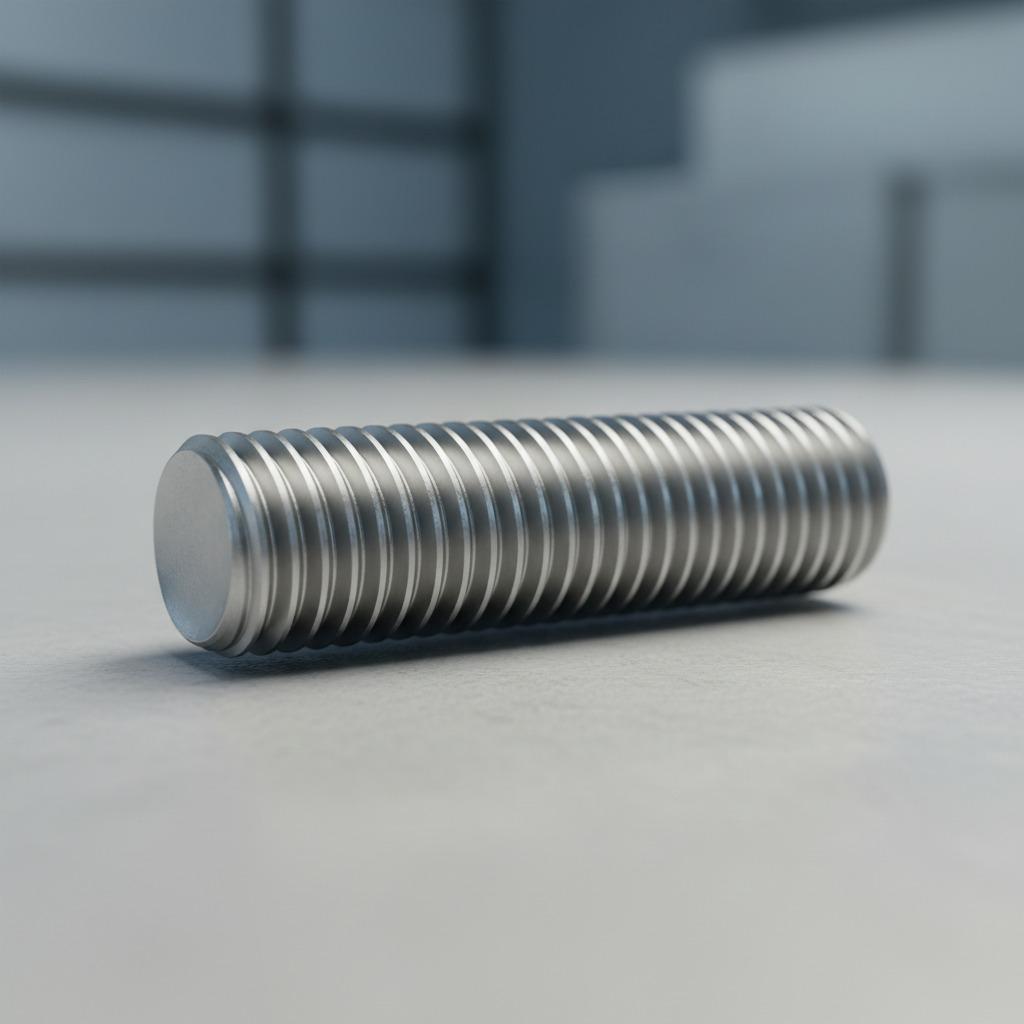
Why the Threaded Length Matters
The obvious advantage is versatility. With threads extending along the full body, the part can be trimmed, set, or engaged in different ways depending on the assembly. That can simplify inventory too. Instead of stocking multiple partially threaded variants for slightly different grip lengths, some buyers standardize on a full thread stud to cover a wider range of builds.
There is also a mechanical reason to pay attention. A fully threaded design can improve adjustment in assemblies where the exact clamping position changes from one build to another. But there is a tradeoff: because the full length is threaded, the root diameter is reduced along the entire member. That does not mean the part is weak by default, but it does mean engineers should check the load case rather than assuming it behaves like a smooth-shank fastener.
Common Materials and Finishes
Most full thread studs are made from steels chosen for strength and cost efficiency, though stainless steel is common where corrosion resistance is a priority. The right material depends on the service environment, the risk of galling, temperature exposure, and whether the assembly will be serviced repeatedly. In some applications, plated finishes are used to improve corrosion resistance or appearance, but the coating must be considered alongside thread fit. A finish that is fine for one environment can become a nuisance in another if it changes friction or interferes with torque control.
That is one of the practical cautions many sourcing teams learn the hard way: the “same” stud can behave differently once coating, lubrication, and mating nut material enter the picture. If the application is sensitive, ask how the threads are produced and whether the final finish affects engagement.
Quick Buyer Checklist
Before you place an order, confirm the following:
Thread size and pitch must match the mating hardware. That sounds basic, but mismatched pitch is still a common receiving problem.
Stud length should reflect the full stack of components, required nut engagement, and any allowance for lock washers or spacers.
Material choice should match load, corrosion exposure, and temperature.
Thread quality should be appropriate for the application. Fine assembly work tolerates less sloppy fit than heavy structural service.
Finish and packaging should be suitable for handling and storage, especially if the parts will sit in inventory before use.
Where Full Thread Studs Fit Best
These fasteners tend to show up in assemblies that need repeatable engagement and flexible clamp-up. Flanged connections, equipment housings, frames, brackets, and maintenance-heavy machinery are typical examples. They are also useful in repairs when the original fastener style is no longer practical and the replacement needs to accommodate varying material thicknesses or worn components.
For engineers, the decision is often less about whether a full thread stud can work and more about whether it is the cleanest option. If the joint requires a fixed grip length or needs the bearing characteristics of a smooth section, another fastener type may be better. If adjustability and broad engagement are more important, the full-thread format usually earns its keep.
Common Mistakes Buyers Make
The first mistake is treating all studs as interchangeable. They are not. Small differences in thread standard, material grade, or finish can create assembly problems that only become visible on the line. Another frequent issue is underestimating thread engagement. A full thread stud gives you more options, but it does not eliminate the need to verify that the nut or tapped component has enough effective engagement to do the job safely.
A third mistake is ignoring the environment. If the assembly sees vibration, moisture, or heat cycling, the fastening strategy should be reviewed as a system, not just as a part number. A good sourcing decision sometimes means asking for a little more documentation than the drawing initially shows.
Practical Advice for Sourcing Teams
When comparing suppliers, focus on consistency in dimensions, thread quality, and material traceability practices where relevant to your program. Ask how the studs are manufactured, whether the thread is rolled or cut, and how the supplier controls inspection. Those details may not be dramatic, but they often separate a dependable part from a troublesome one.
If the part will be used across multiple product lines, consider standardizing a short list of lengths and thread sizes. That can reduce purchasing complexity and simplify maintenance spares. Just be careful not to over-standardize to the point that assembly convenience starts fighting product design.
FAQ: A Few Questions That Come Up Often
Is a full thread stud always stronger than a partially threaded fastener? Not necessarily. Strength depends on the load path, diameter, material, and application. The full-thread design offers flexibility, not automatic superiority.
Can one stud size replace several fastener styles? Sometimes yes, especially in maintenance and general equipment assembly. In precision or highly loaded joints, the answer may be no.
What should I ask a supplier first? Start with material, thread standard, finish, and how the parts are inspected. Those four items often determine whether the stud will fit and perform as expected.
Choosing the Right Fastener Starts With the Joint, Not the Catalog
If you are evaluating a full thread stud for a new build or a replacement program, begin with the assembly conditions and work backward. Look at load, environment, service access, and the actual stack-up on the part. That approach prevents a lot of avoidable rework. A stud may be a small item in the BOM, but in manufacturing it is often the piece that quietly decides whether an assembly goes together cleanly or becomes a recurring problem on the shop floor.





