


Understanding CBAM: The EU's Carbon Border Adjustment Mechanism
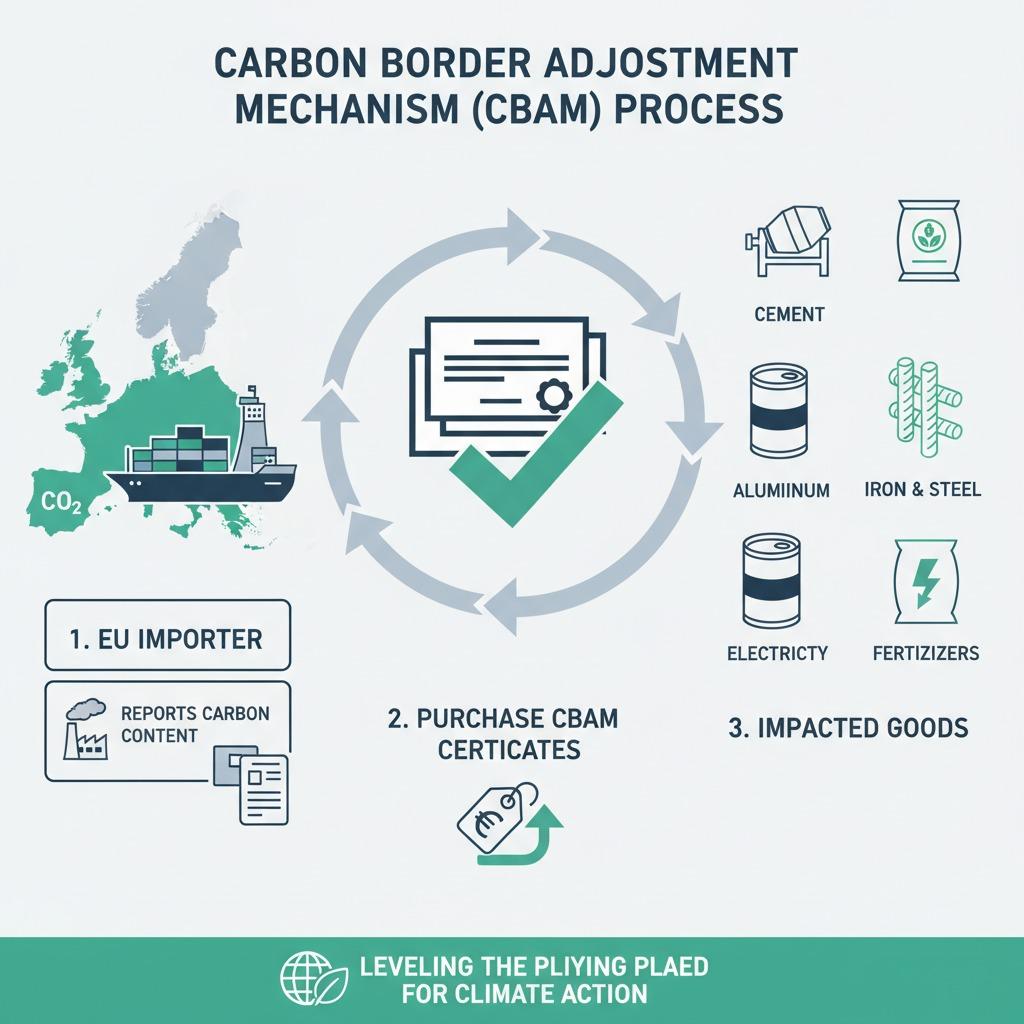
The Carbon Border Adjustment Mechanism (CBAM) represents a pivotal shift in global trade and environmental policy, introduced by the European Union to combat climate change. As industries worldwide grapple with sustainability, CBAM aims to level the playing field by imposing a carbon price on imports based on their embedded emissions. This mechanism ensures that products entering the EU market do not undermine the bloc's ambitious greenhouse gas reduction targets. For businesses, grasping CBAM is essential, as it could significantly impact costs, supply chains, and compliance strategies starting from its transitional phase in 2023 and full implementation by 2026.
How CBAM Works and Who It Affects
At its core, CBAM functions by requiring importers to report the carbon content of certain goods, such as cement, iron and steel, aluminum, fertilizers, electricity, and hydrogen. Importers must purchase CBAM certificates equivalent to the emissions produced during the production of these goods in non-EU countries, priced according to the EU Emissions Trading System (ETS). This approach prevents carbon leakage, where companies might relocate production to regions with laxer environmental regulations to avoid higher costs. Sectors like manufacturing and energy-intensive industries are directly affected, but ripple effects could touch downstream users, from construction to automotive. For instance, a steel producer exporting to Europe might face additional expenses, prompting a reevaluation of production methods or sourcing.
The Broader Implications of CBAM on Global Trade
CBAM's rollout has sparked debates on trade fairness and international relations. Critics argue it could be seen as a trade barrier, potentially leading to retaliatory measures from major economies like China, India, and the US, where carbon pricing isn't as stringent. However, proponents view it as a necessary tool to incentivize global decarbonization. Businesses can prepare by conducting carbon footprint audits, investing in low-carbon technologies, or exploring offsets through international agreements. The EU has provisions for countries with equivalent carbon pricing systems to receive exemptions, fostering diplomatic efforts toward a unified climate strategy. As CBAM evolves, it may inspire similar policies elsewhere, reshaping the landscape of sustainable trade.
Strategies for Compliance and Opportunities in a CBAM World
Navigating CBAM requires proactive steps. Companies should start by registering with national authorities and training staff on reporting requirements, which will become mandatory post-transition. Digital tools and consulting services are emerging to simplify emissions tracking and certificate management. Beyond compliance, CBAM opens doors for innovation—firms adopting green practices could gain competitive edges, access green financing, or even qualify for reduced tariffs. For exporters, partnering with EU-based entities or certifying low-emission processes can mitigate impacts. Ultimately, CBAM underscores the growing intersection of trade and climate action, urging businesses to integrate sustainability into their core operations for long-term resilience.





