What a Basin Screw Set Actually Does in a Plumbing Build
A basin screw set looks like a minor component until a sink starts shifting, leaking at the rim, or pulling unevenly against the wall or vanity. In plumbing work, the small hardware often decides whether an installation feels solid or annoyingly loose a few months later. For engineers, sourcing managers, and product teams, the decision is not really about the screw alone. It is about whether the fastener package gives the right hold, corrosion resistance, and fit for the fixture and the substrate it is mounted to.
That matters because basin installations live in a wet, chemically variable environment. Bathroom cleaners, splashing water, condensation, and repeated vibration from use all punish the fastening points. A basin screw set may be simple, but it sits in a part of the product where failure is visible to the customer immediately.
Why Buyers Should Care About the Fastener Package
Most purchasing discussions around sinks and basins focus on ceramic quality, glazing, dimensions, or faucet compatibility. Those are important, but the fastener set is where installation performance becomes real. A well-matched basin screw set can reduce install time, improve alignment, and avoid call-backs for movement or seal failure. A poorly chosen one can strip threads, corrode early, or create point stress on the basin body.
For product teams, the practical question is simple: does the fastening system suit the basin type and the environment it will live in? Wall-mounted basins, countertop basins, and vanity-mounted units do not all ask the same thing from their hardware. The screw set should match the load path, the wall condition, and the installer’s access. If that sounds obvious, it still gets overlooked in the field.
What Is Typically Included in a Basin Screw Set
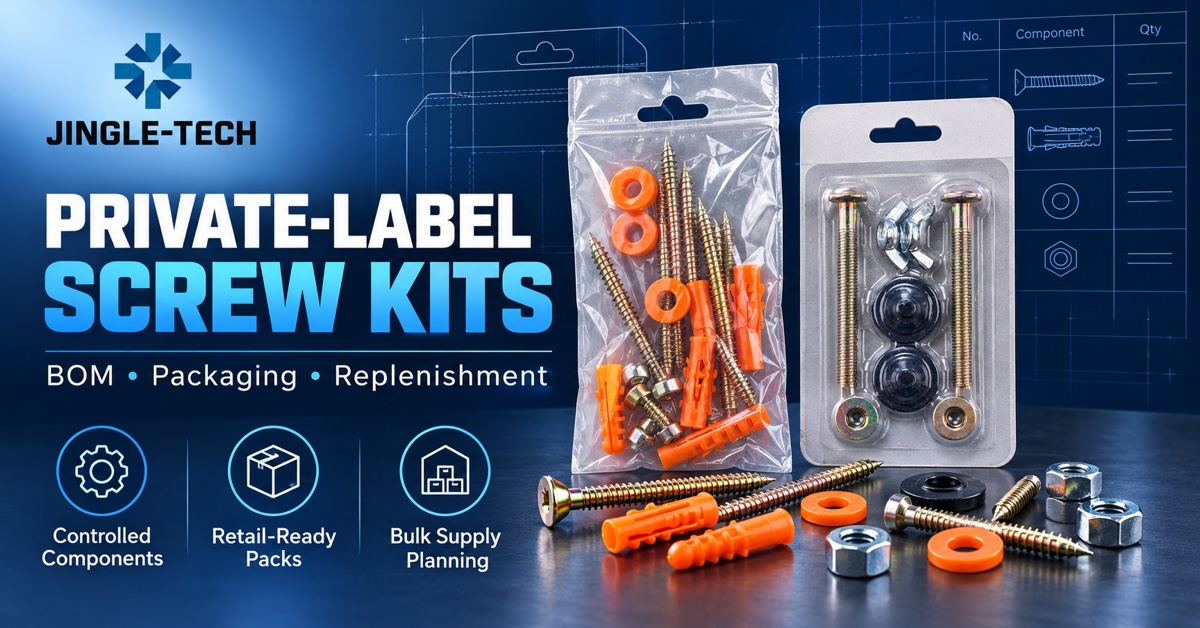
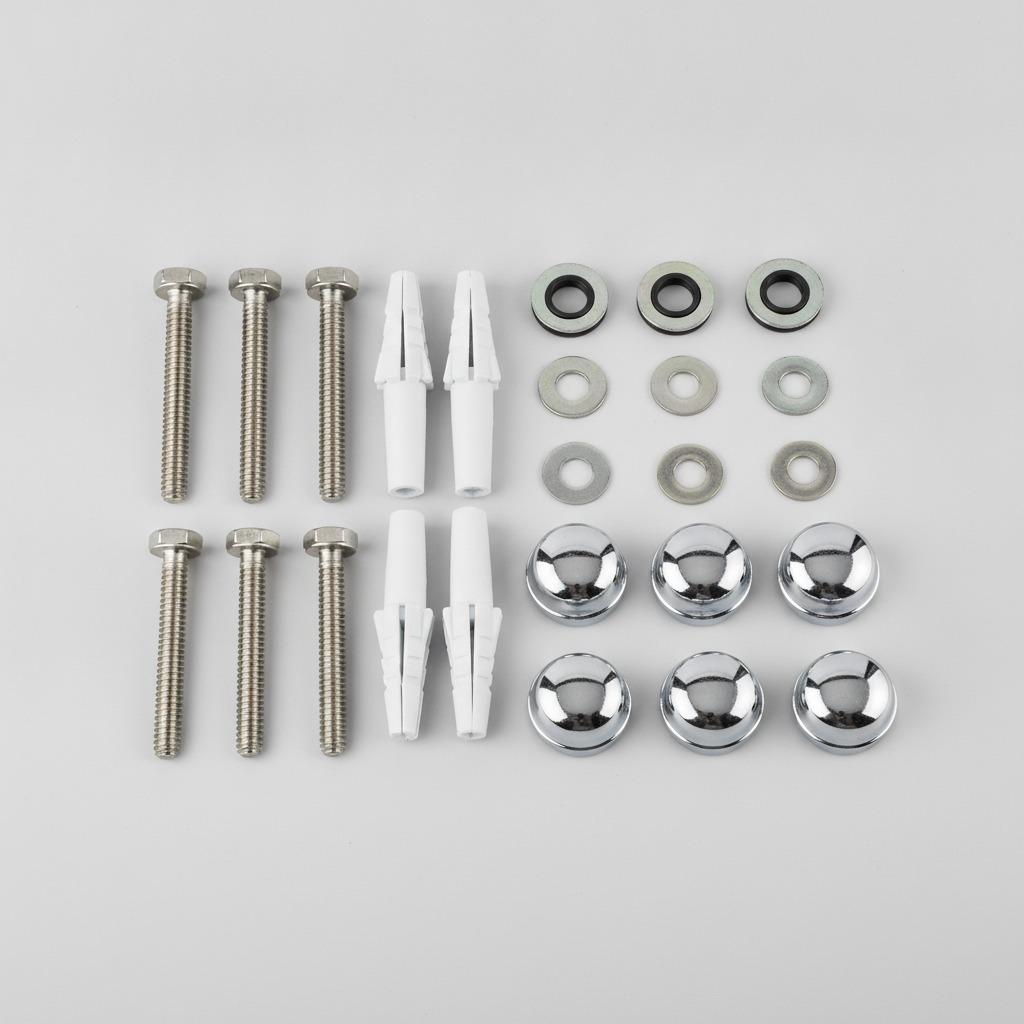
Exact contents vary by supplier and application, but a basin screw set usually contains the main screws or bolts used to secure the basin, along with matching anchors, washers, nuts, spacers, or caps depending on the design. Some sets are made for direct wall fixing, while others are intended for brackets or concealed mounting hardware.
The important point is compatibility. The screw is only part of the system. If the anchor is wrong for the wall material, the thread engagement is poor, or the washers do not spread the load properly, the installation still fails. Buyers often discover too late that a “universal” set is only universal in the loosest marketing sense.
Materials and Corrosion Considerations
In a bathroom or washroom, corrosion resistance is not a luxury feature. It is a baseline requirement. Metal components may be chosen for durability, appearance, and resistance to moisture exposure. Stainless steel is commonly favored in wet environments, though the right grade depends on the application and cost target. Coated steel may also be used in some assemblies, but coatings can be vulnerable if scratched during installation.
Plastic or polymer accessories sometimes appear in the package, especially where isolation from the ceramic surface matters. These small parts can help reduce chipping or improve fit. Still, the buyer should check how the full set behaves after repeated tightening, because some materials tolerate installation abuse better than others. That is one of those unglamorous details that separates a dependable product from a troublesome one.
Selection Criteria That Save Trouble Later
1. Basin type and mounting method
A wall-hung basin needs different support logic than a countertop bowl. The screw set should reflect the load direction and installation geometry.
2. Substrate condition
Plasterboard, masonry, tile-backed walls, and framed structures each demand different anchoring approaches. The fastening set must suit the actual wall, not the idealized one on a drawing.
3. Exposure to moisture and cleaning chemicals
Even in ordinary commercial washrooms, cleaning cycles can be harsher than expected. Fasteners should handle that environment without staining or weakening.
4. Installer friendliness
If the parts are awkward to access, poorly labeled, or inconsistent in thread engagement, installation time rises. That translates directly into labor cost.
Common Mistakes Buyers Make
One common mistake is treating all basin hardware as interchangeable. Another is focusing only on nominal size and ignoring the actual wall or cabinet structure. A third is overlooking the effect of finish and contact surfaces on ceramic basins, where over-tightening can cause damage that is expensive to repair and easy to blame on anyone else.
There is also a packaging issue worth mentioning: mixed fastener kits can be convenient, but only if the contents are clearly sorted and the instructions are usable. In a busy install environment, confusion over one washer or one anchor can slow an entire job.
Practical Buyer Advice for Sourcing Teams
When evaluating a basin screw set, ask for the assembly context, not just the screw specification. What basin style is it intended for? What wall or support condition? What materials are in contact with ceramic, metal, and sealant? Good suppliers can usually describe the intended use clearly. If they cannot, that is a warning sign.
It is also worth asking how the set supports repeatable installation. In manufacturing and commercial distribution, consistency matters more than a one-off sample that looks fine on a bench. The goal is fewer field problems, not a more impressive brochure.
FAQ: Quick Questions Buyers Usually Ask
Are basin screw sets all the same?
No. The fastening method, material, and included accessories can differ significantly.
Should corrosion resistance be a priority?
Yes, especially in bathrooms, washrooms, and other wet environments.
Is the cheapest option acceptable?
Only if the application is low-risk and the material match is still correct. Otherwise, cheap hardware can become expensive after installation.
A Better Way to Specify the Next Order
If you are sourcing a basin screw set for a new product line or a repeat installation program, specify the mount type, exposure conditions, and required accessory set first. Then compare hardware options on fit, durability, and installation clarity. That approach usually prevents the sort of mismatch that shows up too late, when the basin is already on the wall and the installer is improvising.
For teams building bathrooms, washrooms, or fixture packages at scale, the real value is not in buying hardware that simply exists. It is in buying a fastening set that makes the installation clean, repeatable, and durable enough to stay out of the complaint log.