Why Export Clients Rely on CNC Machined Bolts
When international buyers look for fasteners, they don’t just compare prices—they evaluate dimensional consistency, material certification, and machining precision.
A slight error in thread pitch or surface finish can lead to vibration, loosening, or leakage in critical assemblies.
That’s why CNC machining has become the foundation of high-value fastener exports. It ensures every bolt meets ISO, DIN, or ANSI standards—regardless of batch size or destination market.
At Jingle, we integrate high-precision CNC technology with rigorous quality inspection to deliver bolts that perform flawlessly in construction, automotive, energy, and machinery sectors worldwide.
How CNC Machining Ensures Export-Grade Consistency
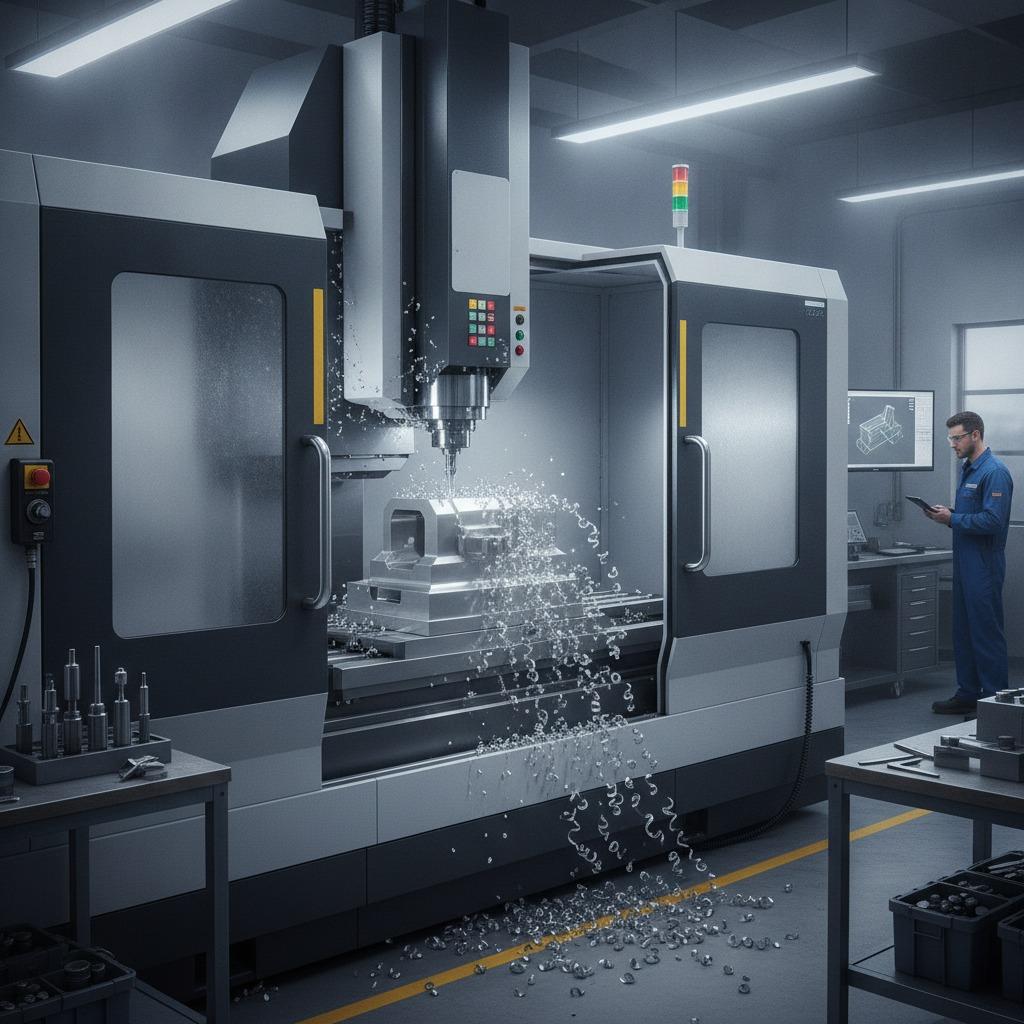
Unlike conventional turning or stamping, CNC machining operates under digital control, allowing each cut to follow the same programmed path—micron by micron.
| Feature | Traditional Machining | Jingle CNC Machining |
|---|---|---|
| Dimensional Accuracy | ±0.1 mm | ±0.01 mm |
| Thread Pitch Consistency | Manual variance | Computer-controlled threading |
| Batch Repeatability | Operator dependent | 100% programmable repeatability |
| Surface Roughness | Ra 1.6–3.2 μm | Ra ≤ 0.8 μm |
| Quality Traceability | Manual logs | Automated inspection reports |
This precision eliminates human deviation and ensures that each bolt—whether part of a 100-piece sample order or a 100,000-unit shipment—meets the same tolerance and finish standards.
Key Advantages of CNC Machined Bolts for Global Markets
1. Tight Tolerance Control
CNC-machined bolts maintain dimensional accuracy within ±0.01mm, preventing misalignment and torque imbalance in international assemblies.
2. Customizable Geometry
Thread design, head type, and shank dimensions can be adapted for regional standards or unique customer specifications without tool replacement delays.
3. Superior Surface Finish
Smooth, uniform surfaces improve coating adhesion—essential for zinc, nickel, or phosphate finishes used in high-humidity export markets.
4. Consistent Batch Quality
CNC machining’s repeatability ensures that every production run remains within the same tolerance range, even months apart.
5. Simplified Quality Verification
Each batch is accompanied by dimensional inspection reports and material certificates (EN10204 / ISO 898-1), streamlining customs and client audits.
Meeting International Standards with Certified Precision
Jingle’s CNC-machined bolts comply with major international standards, including:
-
ISO 4014 / 4017 (Hex Bolts)
-
DIN 933 / DIN 931 (Metric Threads)
-
ASTM A325 / A490 (High-Strength Structural Bolts)
Additionally, all materials—from carbon steel to stainless and titanium—are sourced with mill test certifications (MTCs) to guarantee traceability and mechanical strength conformity.
For clients across Europe, North America, and the Middle East, this compliance ensures smoother procurement, easier certification transfer, and zero rework risk.
Common Challenges in Fastener Export — and How CNC Solves Them
| Problem Faced by Buyers | Consequence | Jingle CNC Solution |
|---|---|---|
| Inconsistent thread depth | Loose fit or stripping | Digitally milled threads with automatic depth control |
| Dimensional drift between batches | Assembly misalignment | Computer-programmed repeatability ensures identical outputs |
| Surface oxidation during shipping | Rejected shipments | Anti-corrosion coating and vacuum-sealed packaging |
| Lack of certification | Customs delays | ISO, CE, and RoHS-compliant documentation provided |
| Poor surface finish | Coating adhesion failure | Mirror-smooth finish from precision milling |
Case Study: Power Equipment Client in Germany
A German OEM faced high rejection rates due to uneven threading from a previous supplier. Jingle provided CNC-machined M16 bolts with ±0.01mm tolerance and uniform zinc coating.
After switching suppliers, defect rates dropped from 8% to less than 0.5%, and assembly torque stability improved by over 20%.
The client has since standardized Jingle as its primary fastener vendor for EU production lines.
FAQs
Q1 – What makes CNC machining ideal for export fasteners?
CNC ensures consistent accuracy and surface quality that meet or exceed international standards, reducing post-shipment disputes or rejections.
Q2 – Can Jingle supply both standard and custom bolt types?
Yes. We produce according to ISO, DIN, ANSI, or customer-specific drawings, with custom head geometries and coatings.
Q3 – How are bolts inspected before shipment?
All fasteners undergo dimensional verification, thread gauge testing, salt-spray corrosion testing, and coating adhesion checks.
Q4 – What documentation accompanies export shipments?
Each order includes inspection reports, packing lists, MTCs, RoHS/REACH compliance, and quality certificates as required by the client.
Building Reliability, One Thread at a Time
Precision machining isn’t just about numbers—it’s about confidence.
Through CNC technology, Jingle delivers export-grade bolts that perform with unwavering consistency under any load, climate, or certification standard.
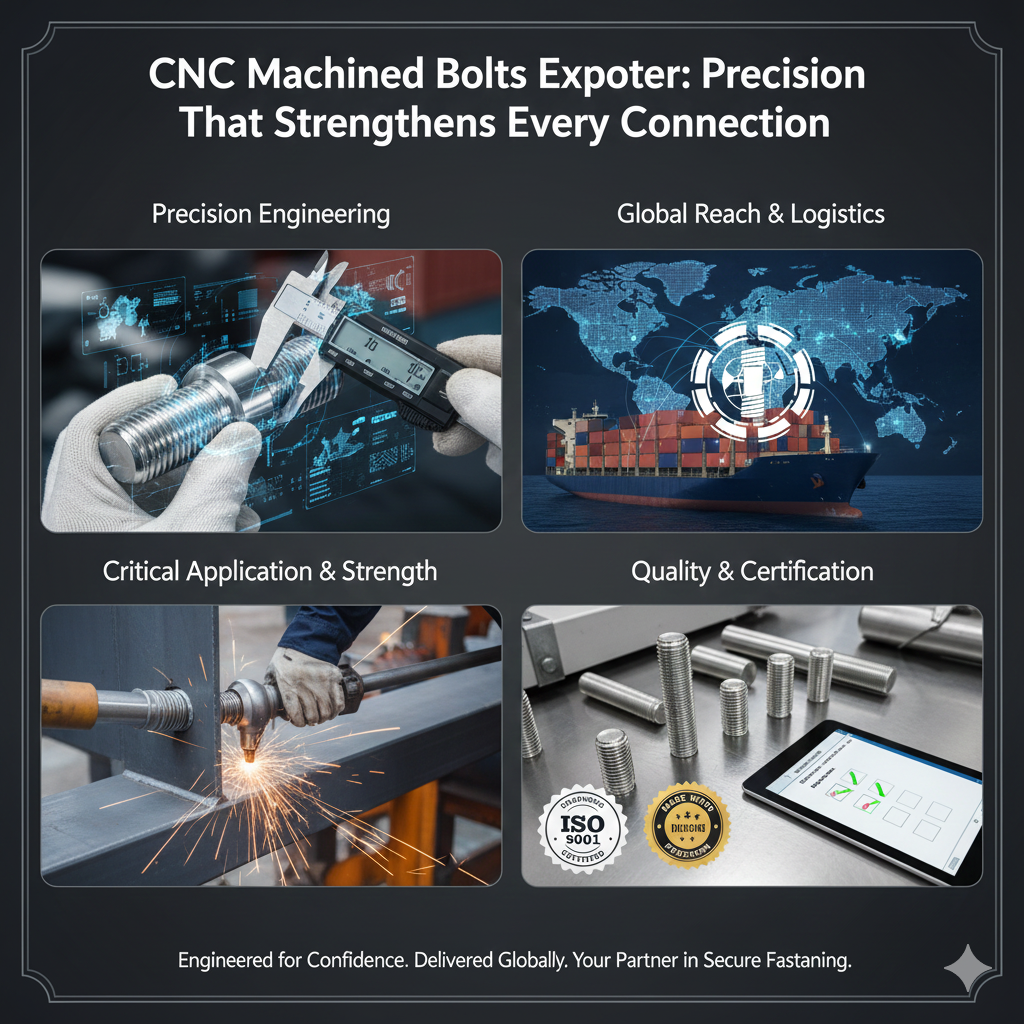
From precision machining to global logistics, every bolt carries the same promise: measurable accuracy, verified quality, and trusted performance.
Explore our CNC bolt manufacturing capabilities at Jingle Homepage or connect directly via Contact Us to discuss your next OEM project.