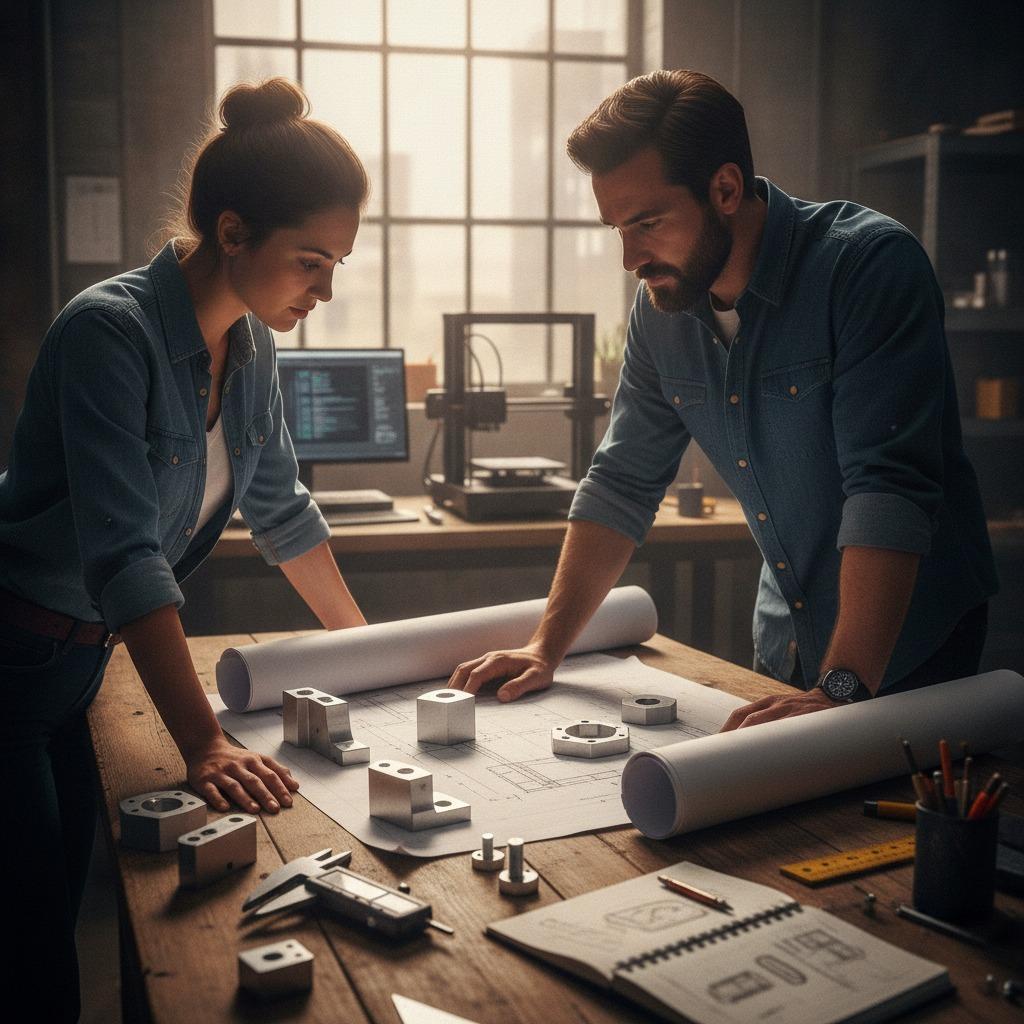
Why a CNC Machining Part Is Never Just “a Part”
A cnc machining part may look simple on a drawing, but in production it usually carries more responsibility than buyers expect. It has to fit, repeat, survive handling, and arrive in a condition that does not create downstream headaches. For engineers and sourcing teams, the real decision is not whether machining can make the part. It is whether the part can be made consistently, with the right material behavior, the right surface finish, and the right cost structure for the program.
That matters because small misses in machined components show up late. A hole location off by a fraction, a burr left on an edge, a poor finish on a sealing face, or a material choice that is fine on paper but awkward in production can stall assembly. Buyers often discover that the cheapest quote is not the cheapest part once scrap, inspection, and rework are counted. That is why selecting a machining source is partly a technical decision and partly a manufacturing risk decision.
What Buyers Usually Need to Decide First
Before sending drawings out for quote, it helps to narrow the job into a few practical questions: what material is required, what geometry is critical, what finish is acceptable, and how much variation the assembly can tolerate. Those four points drive most of the cost and most of the manufacturing risk.
For a cnc machining part, the material choice often sets the tone. Aluminum is popular for lightweight housings and brackets. Steel brings strength and wear resistance but can add machining time and finishing complexity. Stainless steel is often selected where corrosion resistance matters, though it can be less forgiving in machining. Plastics and engineered polymers are useful for electrical insulation, chemical resistance, or weight reduction, but they bring their own challenges with heat, distortion, and dimensional stability. The right answer depends less on the catalog and more on what the part must do in service.
How CNC Machining Supports Different Part Types
Prototype work
Prototypes are usually where CNC machining earns its keep. A single setup can produce a testable part quickly, and revisions are straightforward when a design needs to move. That said, prototype parts can hide production issues. A design that machines nicely in a one-off run may become awkward when quantity rises, fixtures are needed, or inspection time starts to matter.
Low- to mid-volume production
This is often the sweet spot. A cnc machining part in this range can be efficient if the geometry is stable and the setup is well planned. Buyers should pay attention to fixturing, tool access, and how many operations the part requires. A design with too many deep pockets, thin walls, or frequent re-clamping can become expensive even if the material itself is ordinary.
Precision functional components
Some parts are machined not because they are complex, but because they must be dependable. Valve bodies, shafts, brackets, adapters, instrumentation hardware, and mounting features can all be routine shapes with demanding fit requirements. In these cases, communication about critical dimensions matters more than a long feature list. A supplier can usually manage complexity if the drawing clearly separates cosmetic features from functional ones.
Selection Criteria That Actually Matter
When comparing suppliers, many buyers focus on machine count and shop size. Those details help, but they do not tell the whole story. More useful questions are: Does the shop handle the material you need regularly? Can it support the inspection level your assembly requires? Does it seem comfortable discussing design-for-manufacturing changes instead of simply accepting the drawing?
It also helps to ask how the part will be processed from raw stock to final inspection. Even a well-machined component can run into trouble if deburring is inconsistent or if surface protection is handled casually. A careful shop will usually be specific about setup, machining sequence, and inspection points. Vague answers are a warning sign, even if the quote looks attractive.
Common Mistakes Buyers Make
One common mistake is over-specifying every feature. Not every face needs the same finish. Not every dimension needs the same control. Tightening everything on the print can raise cost quickly without improving function.
Another mistake is ignoring manufacturability until late. Sharp internal corners, inaccessible pockets, or extremely thin sections may be acceptable in CAD but expensive in the shop. A small design adjustment can sometimes save an entire machining step. That is worth considering early, even if it means revisiting the drawing.
There is also the recurring issue of assuming all cnc machining part suppliers are interchangeable. They are not. Tooling strategy, operator experience, inspection discipline, and communication style all affect the result. For a buyer, the best supplier is not always the one with the flashiest equipment list; it is the one that can repeatedly make your exact part without drama.
Practical Buyer Advice Before You Order
Send drawings with clear notes on critical dimensions, surface requirements, and any cosmetic areas that matter. If a feature can be controlled more loosely, say so. If a part will be assembled with mating components, provide that context. A supplier can often suggest a cleaner machining path when it sees the larger assembly picture.
It is also wise to ask for material traceability or inspection documentation where the program calls for it, but keep the request realistic. Not every project needs the same level of paperwork. The goal is to match the controls to the risk, not to bury the part under unnecessary administration.
FAQ: Quick Answers for Sourcing Teams
Is CNC machining best for every part?
No. It is a strong fit for precision parts, prototypes, and moderate volumes, but some simple geometries are better suited to casting, stamping, molding, or extrusion followed by limited finishing.
What usually drives cost the most?
Setup time, material choice, tolerances, part complexity, and the number of operations tend to matter more than the raw stock price.
What should I send first when requesting a quote?
A clear drawing, material preference, quantity, target finish, and any special inspection or assembly notes are usually enough to start a meaningful conversation.
What a Good Next Step Looks Like
If you are evaluating a cnc machining part for a new product or a revised assembly, start by separating the must-have features from the nice-to-have ones. Then look for a supplier that can talk through material, setup, inspection, and finish in plain language. That discussion often reveals more than the first price sheet ever will. In machining, the quote is only the opening move; the real value shows up in how the part runs once production begins.