Quick answer: give the bidder a controlled cover sheet, the current drawing, and the project documents that decide whether the anchor is acceptable. On the cover sheet, pin down the concrete and connection first. Then add the product boundary, site method, evidence, order size, packing, shipping term, and dates. Leave an unknown marked “open” instead of filling it with a convenient guess. Otherwise, two identical-looking quotations can conceal two different products.
“M12 wedge anchor, zinc plated, 10,000 pieces” looks complete until someone asks where it will be used. It might be a shelf item for a distributor, a modest indoor fixing, a connection designed in cracked concrete, or an exterior part sitting in salt-laden air. The metal, clip geometry, finish, paperwork, inspection route, label, carton, and delivery plan can change from one case to the next.
The 25 entries below come from the awkward questions that surface between a first email and a usable purchase order. Buyers and distributors can use them to prepare an enquiry; engineers and contractors can use them to spot missing project data; sourcing teams can use them to level competing bids. Supplier responsibility and project-design responsibility remain separate throughout.

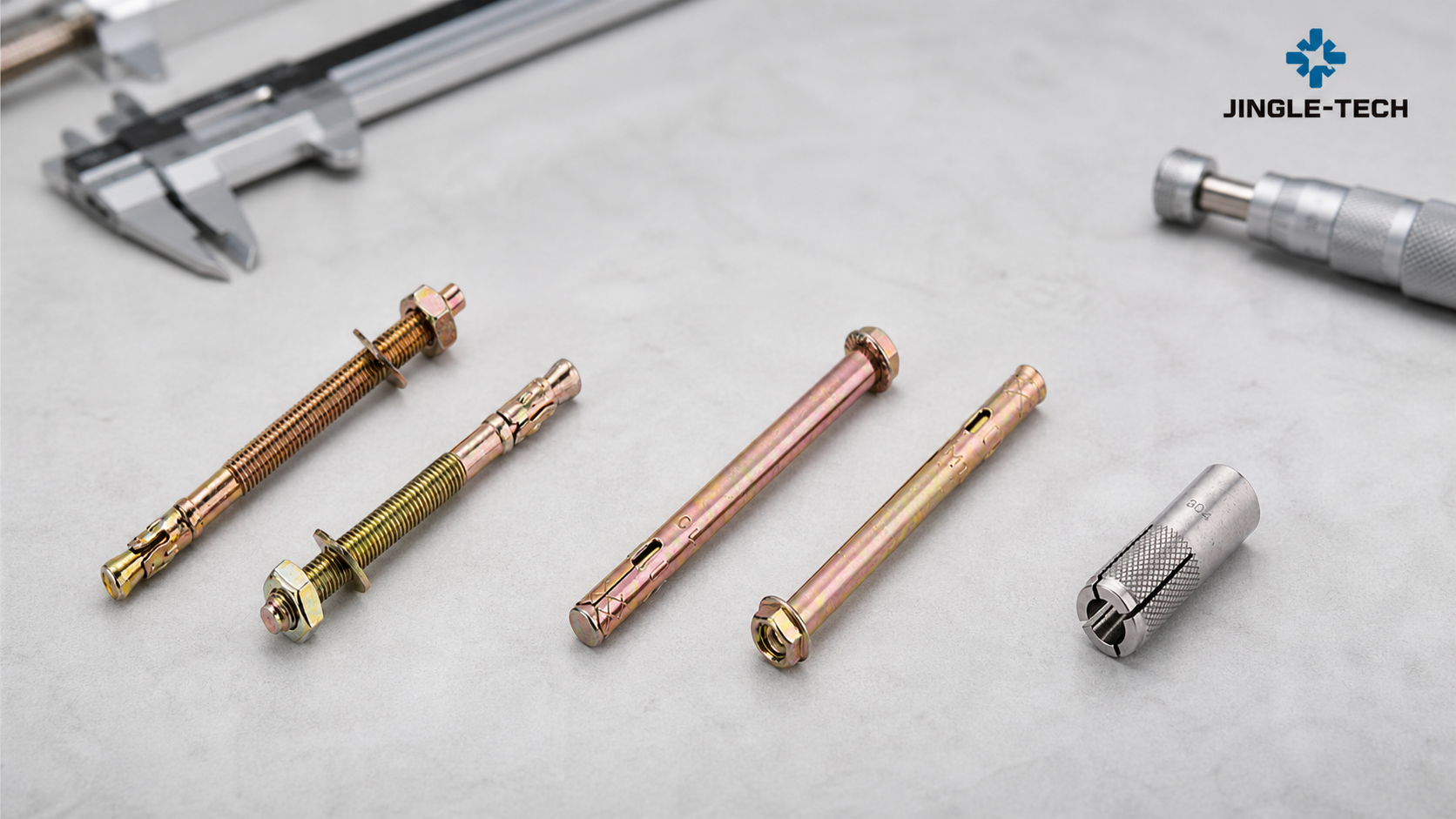
Product comparison image: wedge, sleeve, and drop-in formats may serve different applications; the RFQ must define more than diameter and length.
1. What an “accurate technical quote” should accomplish
An accurate quote is not a promise that every unknown has disappeared. It is a controlled commercial response to a defined revision. It states the exact product or proposed solution, material, finish, size, quantity, standards or product-specific evidence, documents, testing, marking, packaging, price basis, tooling, sample plan, lead-time stages, Incoterm, validity, deviations, and exclusions. Open questions remain visible rather than being buried in assumptions.
Lay the bids beside one another and look for the quiet differences. One price may carry lot numbers through to the carton and include a coating report, submittal work, sturdy export packs, and an outside inspector. Another may cover loose hardware at the factory gate. Both numbers can be honest, but they answer different questions. Normalize the scope before ranking the unit price.
The quote also needs a technical boundary. A manufacturer can confirm what product it offers and provide the applicable product data. The responsible design professional decides whether the connection meets the project’s structural and legal requirements. When the buyer asks a supplier to “choose the safest anchor” without loads, concrete data, layout, or governing rules, the request blurs that boundary and slows everyone down.
Finally, accuracy means revision discipline. Anchor inquiries often begin with a sketch, develop into a formal drawing, and change again after site scanning or engineer review.Put a revision number and date on the RFQ, attachments, and supplier response. A technically sound quote against Revision A is not automatically valid after Revision C changes the base plate, edge distance, coating, and quantity.
2. The 25-input concrete anchor RFQ checklist at a glance
| No. | RFQ input | Minimum useful information | Typical risk if omitted |
|---|---|---|---|
| 1 | Project and destination | Project, country, site, final delivery point | Wrong compliance or freight basis |
| 2 | Governing code and specification | Code edition, specification section, client standard | Unusable submittal |
| 3 | Application and consequence | What is fixed, structural status, service purpose | A general fixing is quoted for critical work |
| 4 | Approval route | Required evaluation report, ETA, test or acceptance | Evidence does not cover the offered product |
| 5 | Substitution and change control | Approved brand status, equivalent-review process | Unapproved look-alike reaches site |
| 6 | Base material and condition | Concrete type, new/existing, deterioration or repairs | Anchor is selected for the wrong substrate |
| 7 | Concrete strength and age | Specified or verified strength, age at installation | Design range or installation condition is missed |
| 8 | Cracked/uncracked classification | Engineer-stated condition | Uncracked-only product is proposed |
| 9 | Load direction and magnitude | Tension, shear, combined action, values and units | No meaningful technical comparison |
| 10 | Load character | Static, seismic, fatigue, vibration, shock,sustained | Wrong qualification scope |
| 11 | Anchor layout | Quantity per group, spacing, edge distance, pattern | Group and edge effects are ignored |
| 12 | Fixture and member geometry | Plate, hole, stack-up, member thickness, embedment | Correct diameter, wrong usable length |
| 13 | Anchor family or open performance brief | Specified system or permitted alternatives | Supplier guesses the mechanism |
| 14 | Material and mechanical requirements | Steel/stainless grade, relevant properties and standard | Vague “high strength” claim |
| 15 | Finish and corrosion exposure | Coating system, environment, durability requirement | Color is mistaken for performance |
| 16 | Installation method and access | Drilling, cleaning, setting, torque, orientation, tools | Selected system cannot be installed correctly |
| 17 | Service conditions and design life | Temperature, moisture, fire, chemicals, expected life | Short-term product is used in long-life exposure |
| 18 | Controlled drawings and data revision | File list, drawing number, revision, units | Supplier prices obsolete information |
| 19 | Inspection and testing | ITP, sampling, reports, witness and acceptance rules | Late testing cost and schedule impact |
| 20 | Marking and traceability | Part/lot marks, label fields,certificate linkage | Delivered goods cannot be identified |
| 21 | Sample and first-article plan | Quantity, purpose, approval, destructive limits | A display sample is treated as validated production |
| 22 | Quantity and demand profile | Trial, order, annual forecast, size mix | Wrong process and price break |
| 23 | Packaging and labeling | Pack count, carton, pallet, label, private brand | Repacking erases margin or traceability |
| 24 | Incoterm and destination | Named place, Incoterm edition, transport assumptions | Landed-cost comparison is false |
| 25 | Schedule and decision gates | Submittal, sample, production and on-site dates | “Urgent” has no executable plan |
3. Inputs 1–5: project identity, rules, and approval path
1. Project and destination
Name the project or buying program, final country, site location, and delivery destination. This basic context affects code language, accepted evidence, corrosion assumptions, shipping documents, labeling, and the questions a supplier should raise. If the material ships to a distributor before the end project, identify both locations. The port of entry is not always the environment where the anchor will spend its service life.
When confidentiality prevents disclosure of a project name, use a controlled project code.Suppliers do not need unrelated commercial secrets, but they do need enough context to prevent documents and quotations from being mixed across jobs.
2. Governing code and specification
Send the adopted code edition, project specification section, client standard, and any approved-product schedule. Do not write only “meet international standard.” Concrete anchor requirements vary by jurisdiction and application. In the United States, project teams may work with ACI 318 and product evaluations connected to criteria such as ICC-ES AC193 for mechanical anchors. European projects may require an applicable European Technical Assessment route. The quote should respond to the project’s actual basis rather than attaching every certificate in a supplier’s library.
If you do not know the governing documents, say who will confirm them and when. A preliminary commercial estimate can proceed, but final approval and production release should remain gated.
3. Application and consequence
Tell the bidder what the anchor holds and what goes wrong if it moves. A column base may affect stability. A ceiling service can fall. A loose machine frame can stop production, while a shifted cover plate may only create a maintenance call. That explanation is not a formal risk assessment; it is the context that stops a critical connection from being priced as an anonymous box of hardware.
Add the practical wrinkles.Will the fixture come off next year? Must it be adjusted? Is it overhead, under water, vulnerable to tampering, or hidden as soon as the next trade finishes? Such details can change the mechanism, material, inspection timing, and even whether a setting tool must be packed with the shipment.
4. Approval route and evidence
Specify the required evidence: product-specific evaluation report, ETA, declaration, laboratory test program, client vendor approval, engineer-reviewed calculation package, material certificate, or another defined route. A test report is not the same thing as a code evaluation. A quality-management certificate is not a load approval. A report for one legal manufacturer or trade designation should not be assumed to cover another product that shares its shape.
The published scope of ACI CODE-355.2-24 addresses testing and evaluation of post-installed mechanical anchors used with ACI 318 and distinguishes acceptance in uncracked concrete from acceptance in cracked and uncracked concrete. EAD 330232-02-0601 provides a European assessment framework for several mechanical-fastener operating principles. These references show why the exact product scope matters; they are not substitutes for the project’s complete design documents.
5.Substitution and change control
State whether the RFQ is for a named approved product, an approved equal, a budget alternative, or a new custom development. If alternatives are permitted, provide the engineer’s comparison criteria and submittal process. Diameter, length, and finish alone rarely demonstrate equivalence. Review load-transfer mechanism, evaluated conditions, design data, geometry, material, installation, inspection, traceability, and legal manufacturer.
Ask the bidder to list every deviation in one schedule. Also define changes that require written notice after approval: manufacturing plant, raw material, sub-supplier, tool, heat treatment, expansion component, coating source, drawing, marking, packaging, or test method. A sample approval should not become permission for silent process changes.
4. Inputs 6–12: what sits behind the fixture
6. Identify the structural base, not just the visible surface
A trowelled grey surface does not guarantee structural concrete. The drill may first pass through screed, topping, grout, repair mortar, masonry, or a hollow-core zone. Name the actual load-bearing material. For existing work, add what is known about weight class, water ingress, chemical or fire damage, loose layers, repairs, spalls, and old holes. Choosing an anchor for sound concrete does not repair an unsound member.
For existing structures, include investigation results available to the project team. Drawings, scan reports, core or rebound data, condition surveys, and photographs may help, but the engineer decides how those findings are used.Do not ask a factory salesperson to infer substrate adequacy from a single mobile-phone picture.
7. Concrete strength and age
Provide specified compressive strength for new work or the engineer’s accepted basis for existing concrete. Use units and test conventions clearly. State the anticipated concrete age at installation if anchors may be installed early. The data range covered by a product evaluation or design method may have limits, and fresh or young concrete introduces considerations that a normal catalog line does not capture.
If the strength is unknown, write “to be verified” and request a budget quote across a stated range only if the engineer agrees. Hiding uncertainty behind a single assumed value creates false precision.
8. Cracked or uncracked concrete
Obtain the classification from the responsible engineer. A surface that looks uncracked during a site visit can be in a zone expected to crack under service actions. Conversely, a visibly distressed member may require repair or assessment beyond normal cracked-concrete anchor design. The RFQ should not turn a structural assumption into a vendor guess.
If cracked-concrete performance is required, ask the supplier to identify the exact report and product range that covers it. Do not accept a family statement such as “all wedge anchors work in cracked concrete.”
9. Load direction and magnitude
Send tension, shear, combined action, moment transfer, and any prying or eccentricity information in the format requested by the engineer.State whether the values are service, factored, allowable, characteristic, test, or another defined category. Include units. A catalog “maximum load” copied without its notes cannot be responsibly compared with a project demand.
When an anchor group shares load through a base plate, send the group analysis or controlled connection drawing rather than dividing the total load by the number of anchors. Plate flexibility, spacing, edge distance, and load eccentricity can make that shortcut wrong.
10. Load character
Describe how the load arrives, not only its peak value. It may sit there, remain sustained for years, repeat with every machine cycle, reverse during an earthquake, or strike suddenly. Mention overhead and life-safety service. ASTM E488/E488M-22 contains laboratory methods for several load and environment categories in cracked or uncracked concrete. A reference to one of those tests defines a test task; it does not extend the result to every category the standard discusses.
Machinery anchors are a useful example. A machine’s static weight may be modest while startup, imbalance, repeated cycles, or accidental impact drives the connection. Include an equipment or structural engineer in that discussion.
11. Anchor layout
Provide the number of anchors in each group, center-to-center spacing, edge distance in both directions, group orientation, and relationship to joints or openings. Send a dimensioned drawing.Small layout changes can influence concrete breakout, splitting, edge behavior, drilling access, and the possibility of hitting reinforcement.
If layout is still flexible, identify the adjustment range. A slightly larger plate or changed hole pattern may improve constructability and reduce cost, but only the responsible designer should accept the change.
12. Fixture and concrete-member geometry
Build the fixture as a stack: plate, coating, shim, grout, washer and any stand-off. Add its hole or slot and the thread that must remain above the nut. Beside that, show member thickness and the permitted drilling depth. Overall length and effective embedment are not synonyms. For example, forty millimetres of fixture has already used forty millimetres of a 180 mm anchor before the concrete engagement is considered.
Attach sections showing reinforcement cover, tendons, embedded services, and prohibited zones where known. The project should define scanning and drilling rules. Product selection that ignores the available drilling depth can fail before installation begins.

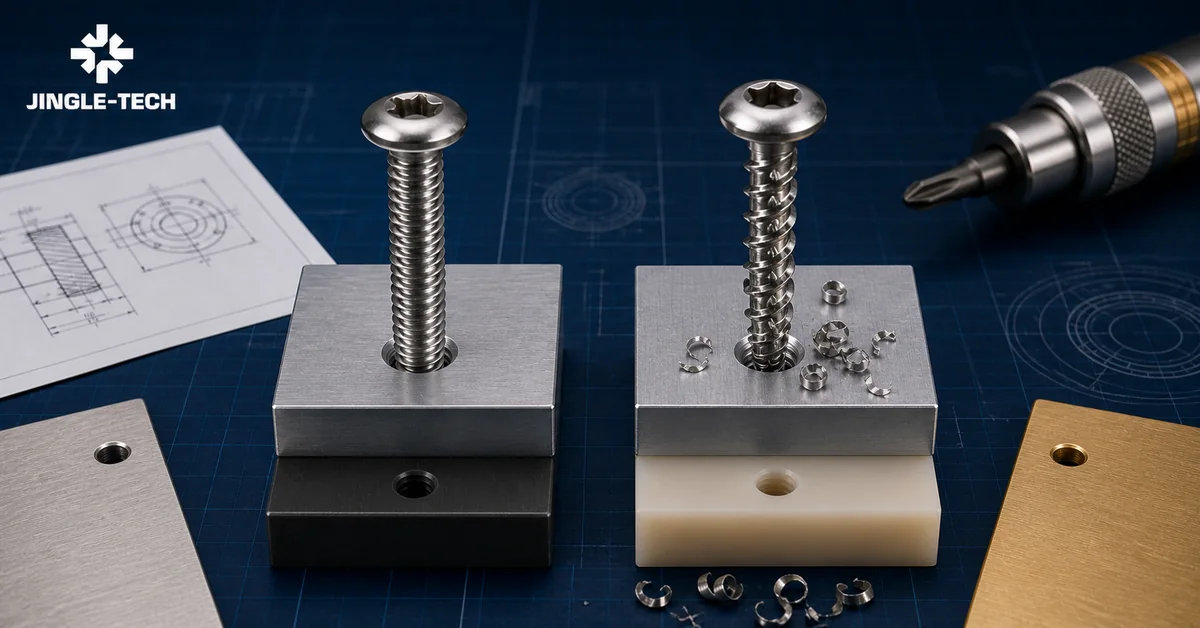
Engineering review scene: the quotation becomes more reliable when drawing revision, load basis, concrete condition, and geometry are reviewed together.
5. Inputs 13–17: product, material, durability, and installation
13.Anchor family—or an open performance brief
If the engineer has selected a system, name the exact product, size, embedment, and accepted report. If selection remains open, state which mechanisms may be considered and what performance and installation boundaries they must meet. This prevents the word “anchor” from attracting unrelated offers.
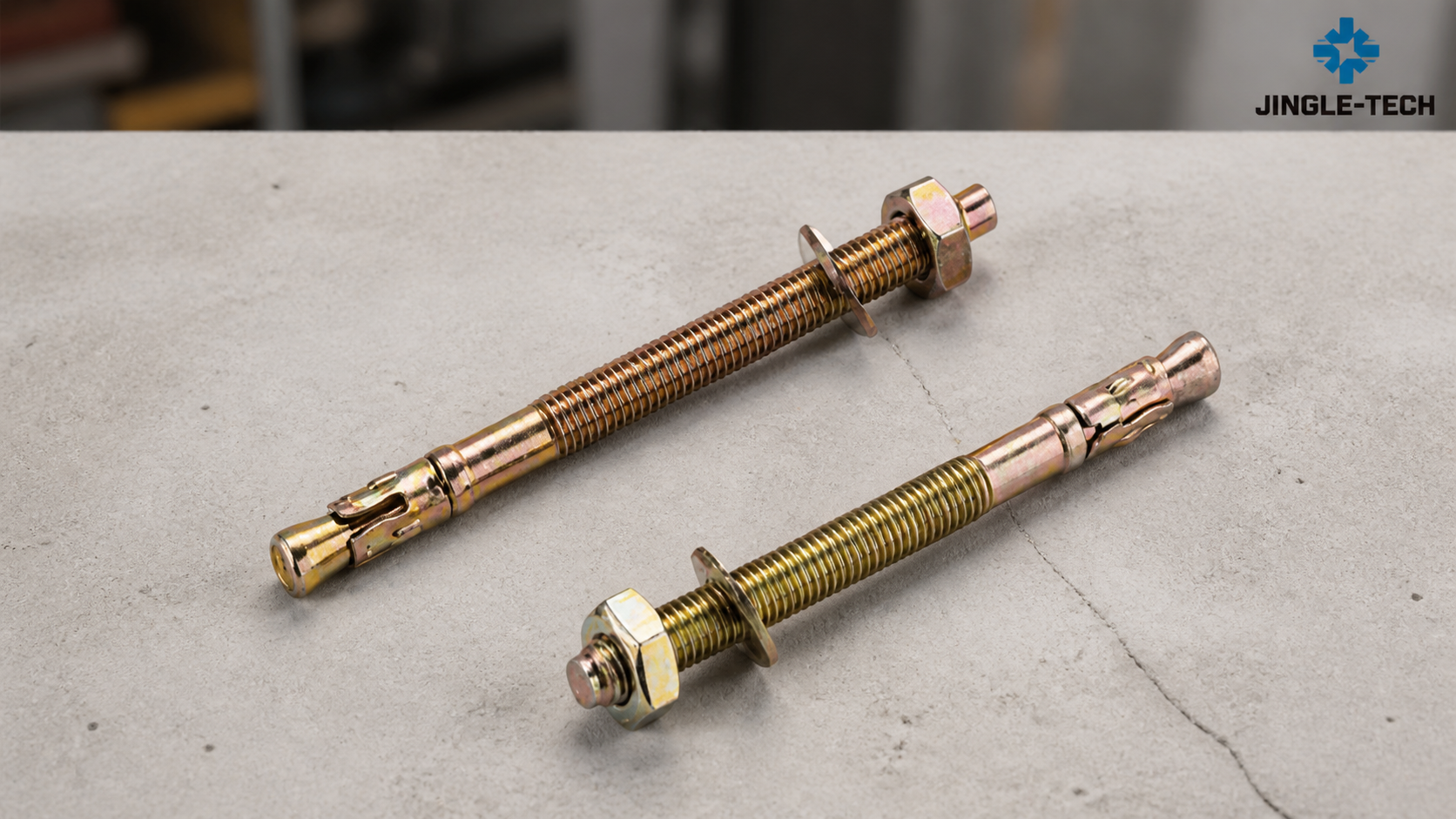
A wedge anchor is a torque-controlled expansion format commonly used for through-fastening. A sleeve anchor expands a sleeve along part of the hole. A drop-in anchor is internally threaded and normally requires a setting tool. A concrete screw engages the drilled hole with a hardened thread. Adhesive and undercut systems add other mechanisms. These descriptions help shortlist products; none proves suitability for a particular connection.
If alternates are allowed, ask each bidder to describe drill diameter, effective embedment, fixture range, setting method, installation torque, reusable or removable status, accessories, and product-specific evidence. A fair comparison looks at the installed system, not only the metal piece.
14. Material and mechanical requirements
Use recognized material or product designations where the project provides them. “Carbon steel,” “stainless,” and “high strength” are families of words, not complete specifications.Identify grade, condition, relevant chemical or mechanical properties, and the certificate type expected. For multi-piece anchors, clarify whether the body, nut, washer, clip, sleeve, cone, or plug have different materials.
Do not overspecify by copying a bolt grade onto a complete anchor without understanding the evaluated system. Anchor performance depends on component geometry, manufacturing tolerance, heat treatment, expansion action, and concrete behavior as well as base steel strength. A custom change intended to make one component “stronger” can move the governing failure mode or invalidate existing evidence.
15. Finish, coating, and corrosion exposure
Describe the environment before choosing a finish. Indoor dry service, outdoor urban exposure, coastal chlorides, industrial chemicals, washdown, immersion, and contact with treated timber are different conditions. Identify design life, wetting, temperature, dissimilar-metal contacts, crevices, and any client corrosion category. Ask the engineer or corrosion specialist to resolve high-risk environments.
Only after the exposure is understood should the RFQ name a coating or stainless grade. Give the applicable standard, class or thickness, sealer or passivation, permitted touch-up, and any required test. “Yellow zinc” is a colour cue, not a durability specification. Zinc added by hot dipping changes the dimensional conversation around threads. Electroplating and its post-treatments introduce another set of controls. Stainless grades, meanwhile, do not all resist the same environments. Ask the quotation to spell out the route offered.
For private-label distribution, request finish samples for appearance if color matters, but keep the visual approval separate from corrosion performance. A pleasing sample is not a durability certificate.
16. Installation method, tools, and access
Explain whether installation is through the fixture or before it, vertical or overhead, close to an obstruction, inside a recess, or at height. List available power, drill type, bit constraints, scanning requirement, hole-cleaning method, setting tool, torque access, and inspection access. If work must proceed in stages, describe which items will be concealed.
Ask the supplier to provide current installation instructions for the offered product, including drill diameter, hole depth, cleaning sequence where required, effective embedment, setting action, torque, fixture limits, and required accessories. The project team should not build an installation procedure by combining a generic video with a different manufacturer’s catalog table.
Concrete drilling also creates health and housekeeping requirements. In the United States, OSHA 29 CFR 1926.1153 includes specified exposure-control methods for concrete drilling and HEPA-filtered vacuum provisions for hole cleaning under its stated conditions. Local rules may differ. Safety planning is a project obligation and should be coordinated with, but not confused with, anchor qualification.
17.Service conditions and design life
List normal and exceptional temperatures, moisture, freeze-thaw exposure, chemicals, fire requirement, radiation where relevant, cleaning agents, electrical isolation, movement, and intended service life. Some limits come from the anchor material; others come from the product evaluation, concrete, fixture, or installation. If the anchor supports a system that will be replaced every five years but the embedded component must remain for fifty, say so.
Also identify maintenance expectations. Will exposed threads be inspected? Can the nut be retorqued, and does the approved system permit that? Will a removable fixture be taken off repeatedly? Can corrosion be seen before it threatens the connection? An RFQ cannot solve asset management, but it should not assume a maintenance regime that the owner will never perform.
6. Inputs 18–21: drawings, inspection, traceability, and samples
18. Controlled drawings and data revision
Create an attachment register with file name, drawing number, revision, date, units, and status. Mark superseded files. If the anchor is a standard evaluated product, distinguish the manufacturer’s controlled product drawing from the customer’s connection drawing. If it is a drawing-based OEM part, define critical dimensions, tolerances, thread system, surface texture where relevant, material, coating, markings, and interfaces.
A useful supplier response repeats the revision it priced. When a new revision arrives, request an impact statement covering tooling, work in process, existing stock, samples, price, and schedule.“Please use the latest drawing” is unsafe when different people have different ideas about which file is latest.
19. Agree on the checks while they can still be scheduled
Send the project inspection plan with the enquiry, not after the lot is packed. Walk through the manufacturing route and place a check where evidence is genuinely needed. That may mean reviewing incoming steel, measuring during production, gauging threads, auditing heat treatment, testing the finish, checking the assembled anchor, or sampling finished packs. Name the hold points, report form, acceptance rule, outside inspector, and the commercial outcome if a lot fails.
Separate product qualification from production quality control and field proof testing. Qualification establishes the basis for stated product performance under a defined route. Production inspection checks whether manufactured lots conform to controlled requirements. Field tests may verify installation or substrate assumptions under a project procedure. One does not automatically replace the others.
If the RFQ references ASTM E488/E488M or another test standard, specify the purpose, specimen configuration, loading category, quantity, laboratory requirements, and acceptance basis. Simply writing “ASTM tested” invites each bidder to price a different program.
20. Marking and traceability
Decide separately what belongs on the metal, the small pack, the carton, and the pallet. A retail box may need the brand, item number, size, finish, count, barcode and origin. A project carton may put more weight on purchase order, lot, packing date and handling notes.The law and the end customer decide the compulsory fields; the goal is an identifier that survives receiving and repacking.
Map the traceability chain before ordering: raw material or incoming component to production lot; production lot to inspection record and certificate; lot to pack label; label to packing list; packing list to site receiving and installation location where required. Repacking into unmarked bags can destroy an otherwise strong quality system.

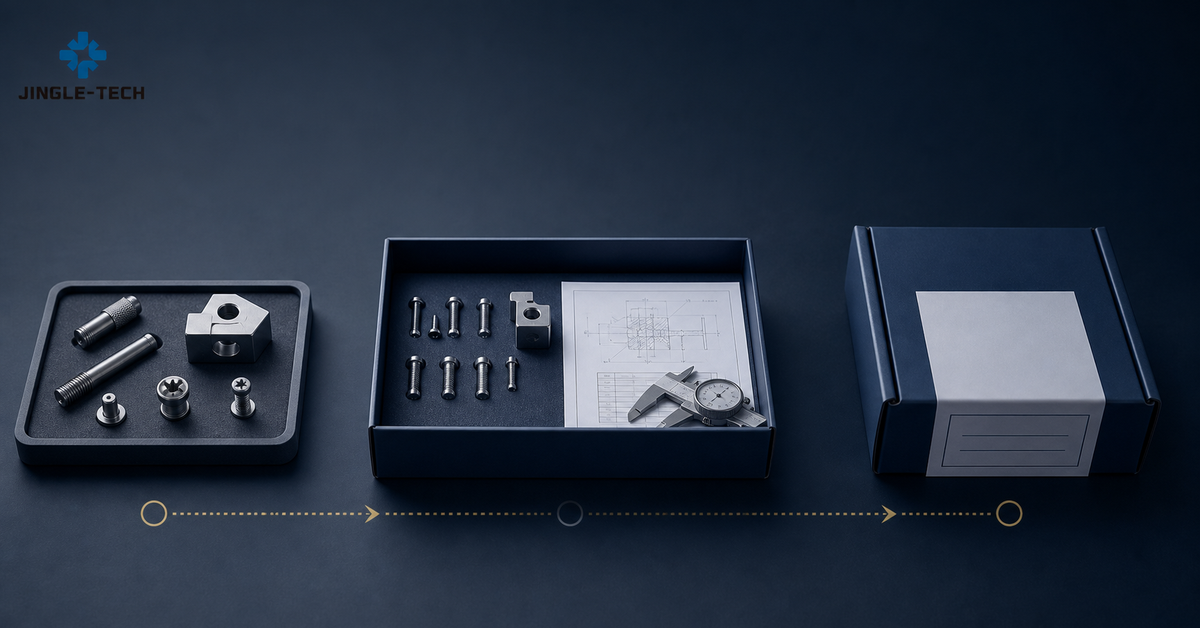
Quality-control scene: dimensions, thread condition, coating, component assembly, lot identity, and records should be linked to the supplied product.
21. Sample and first-article plan
Start by saying what question the sample is supposed to answer. A finish chip settles appearance. Loose anchors can be measured or tried in a box. An installation set lets a contractor check access and tools. A destructive qualification program answers a different class of question altogether. Approval in one lane does not quietly approve the other three.
Record how many pieces will be sent, who will sign them off, and what accompanies them. Note the material, tooling status, actual production route, inspection record, certificates, pack and due date. Also settle the expensive question: may the supplier buy steel or start the run before that signature? A hand-finished sample or temporary tool can be useful, but its differences from production belong on the approval sheet.
7.Inputs 22–25: quantity, packing, delivery basis, and schedule
22. Quantity and demand profile
Provide quantity by size and finish, sample quantity, first order, expected annual demand, call-off pattern, and forecast confidence. A one-time project order, monthly distribution program, and emergency spare requirement may need different manufacturing and stock strategies. Tooling, minimum order quantity, treatment lot size, test sampling, and packaging automation affect the breakpoints.
Ask bidders to separate one-time costs from unit price. Tooling, gauges, special setting tools, testing, artwork, document translation, and third-party inspection should not disappear into a unit rate that becomes confusing at reorder. State tooling ownership, maintenance, storage term, and conditions for transfer or disposal.
23. Design the pack around the journey and the user
Sketch the pack from the inside out. Decide how many anchors a worker can lift and use at once, then group those packs into a carton that survives export, and finally fit the cartons to the receiving pallet. Put limits on weight and mixed sizes. Call out moisture protection, spare components, label language, barcode and artwork. Long anchors punch through weak board; coated pieces rub one another; careless contact can contaminate stainless. A carton trial is often worth more than a paragraph of adjectives.
For a distributor, packaging is part of the product. Send approved artwork and legal label requirements early, and establish who owns barcode data and translation accuracy.For a project shipment, simpler bulk packs may be economical, but only if site receiving can maintain identity and distribute the correct lot and size.
24. Incoterm, named place, and destination
Request one Incoterm rule, its edition, and an actual named place. “FOB China” still leaves the port open. “DDP” raises questions about importer status, tax and local compliance that must be answered for the destination. To reach a landed comparison, follow the money from the goods and export pack through inland haulage, terminals, ocean or air freight, insurance, border costs and the last vehicle to the receiving door.
Tell the factory how receiving works at the other end. Perhaps the warehouse accepts appointments only, has no side-loading forklift, rejects tall pallets, closes at 3 p.m., or will not accept a split order. Documents may have to arrive before the vessel. A cheap carton becomes expensive when it needs repacking, and a missed site slot can cost more than the saving on the anchors.
25. Schedule and decision gates
Replace “urgent” with a line of dates. Begin with the day the quotation and technical questions are due. Follow with submittal, sample dispatch, approval and production release. Finish with inspection, goods ready, latest shipment and arrival on site. Circle the immovable dates; leave the negotiable ones labelled as targets.
Ask where the weeks go. The answer should show time for review and tooling, then steel, forming or machining, any heat treatment and finish, checks, packing and transport. Put approval dependencies beside those stages.“Four weeks” spoken before a drawing is accepted cannot mean four weeks to the job site. A modest contingency is more credible than a heroic promise built on skipped steps.
8. How to normalize competing anchor quotations
Create a comparison sheet that covers technical compliance before price ranking. Use four response choices for every requirement: compliant, compliant with clarification, deviation, or not offered. Require a reference to the quotation page, drawing, or document. A green “yes” without evidence is difficult to audit.
| Comparison block | Questions to normalize | Decision output |
|---|---|---|
| Product identity | Exact designation, legal manufacturer, plant, size, material, finish, accessories? | One controlled item description |
| Technical evidence | What report applies, what scope is covered, what is excluded? | Engineer review status |
| Quality package | Inspection, certificates, traceability, samples, witness costs? | Included-document matrix |
| Commercial scope | MOQ, tooling, unit price, overrun, validity, payment, exclusions? | Normalized total purchase cost |
| Logistics | Pack, pallet, weights, Incoterm, port/place, transit assumptions? | Comparable landed basis |
| Schedule | Approval, sample, production, treatment, inspection and shipping dates? | Risk-adjusted delivery plan |
Score commercial attractiveness only after technical gate items are passed or accepted as deviations. A slightly higher quote may have a lower total risk if it includes the correct evidence, controlled coating, usable packaging, and realistic delivery. Conversely, a long certificate list does not excuse an uncompetitive offer; it simply ensures the comparison is honest.
9. A copy-ready concrete anchor RFQ form
Use the form below as the body of an inquiry. Keep the bracketed prompts until the responsible person fills them. Attach a revision-controlled anchor schedule and drawings.
Subject line: Start with the project code, a short anchor description and the RFQ revision. That makes the message findable six months later.
Opening paragraph: Say where the product will end up, what it fixes and whether you want an exact named system or a proposal. Point the bidder to the code, specification and drawing that govern the response.
Technical paragraph: Summarize the concrete, crack assumption and exposure. Do not retype the engineer’s work; cite the drawing where loads, units, plate stack, hole pattern, edge distances, member thickness and embedment appear. Mention unusual service such as vibration, seismic action, fire or overhead use.
Supply paragraph: Give the size-by-size quantity and the finish or material boundary. State what installation accessories, approval evidence, certificates, inspection records, markings and samples must travel with the offer or goods.
Commercial paragraph: Describe the small pack, carton, pallet and private label, then name the Incoterm place and arrival date. Ask for MOQ, tooling, separate one-time charges, staged lead time, quotation validity and every exclusion.
Close: List the attached files with their revisions. Ask the bidder to return one deviation sheet and to mark questions against the relevant drawing clause. Name the buyer who will consolidate replies and the engineer or quality contact authorized to answer each kind of question.
Do not route every answer through whoever happens to be quickest on email.Let one buyer keep the enquiry orderly, while engineering, quality and logistics answer within their authority. Collect the replies in one query log. When an answer changes price or scope, issue a new revision instead of asking suppliers to reconstruct the decision from the inbox.
10. Supplier responses that deserve a closer look
A technically mature response makes uncertainty visible. It may ask more questions than a commodity quote, but the questions should be relevant and organized. Be cautious when a supplier confirms cracked concrete, seismic performance, universal code compliance, or a long design life without identifying the exact product evidence and conditions. Be equally cautious when certificates show a different company name or product designation and no legal relationship is explained.
Other warning signs include a quotation that silently changes millimetres to inches, combines several sizes under one undifferentiated price, promises any coating color without naming a process, describes a custom part as “same as standard,” or offers a delivery date before drawings and samples are approved. A refusal to list deviations is a process problem even when the offered hardware might be acceptable.
Better responses have a recognizable rhythm. The bidder repeats the revision, asks about genuine gaps, keeps product data separate from project design, indexes the documents, explains how labels connect to records, and shows the stages behind the promised date. None of this proves what happens on the factory floor. It does give an auditor clear claims to verify there.
11.A price gap that disappears when the scope is levelled
Take a hypothetical distributor buying 20,000 M12 anchors. The first bid comes in eighteen percent below the second and says little beyond “M12 × 120 wedge anchor, yellow zinc, export packing.” The dearer bid points to a drawing revision, names the component materials and finish route, and describes its samples, dimensions, coating report, lot label, box, pallet, shipping term and approval-dependent schedule.
The original inquiry did not say whether the anchors were for general inventory or a named project. It did not state cracked concrete, approval evidence, coating performance, or private-label requirements. Offer A may be entirely reasonable for a basic stock product. Offer B may include unnecessary controls—or it may be the only offer close to what the end customer expects. The percentage difference cannot be interpreted until scope is normalized.
The distributor revises the inquiry. The goods are for general retail inventory, not a structural project submittal. The desired product must match a controlled drawing, pass defined dimensional and coating checks, use the distributor’s carton artwork and barcode, retain production-lot identity, and arrive at a named warehouse date. No claim for cracked-concrete or seismic approval may appear. Both suppliers requote against those facts.
Now Offer A adds private-label setup, specified packaging, and reports. Offer B removes a project-evaluation document that was never required. The price gap narrows, and the buyer can compare quality, capacity, payment, delivery risk, and total landed cost.The exercise did not force the buyer toward the more expensive supplier. It removed ambiguity so price became meaningful.
The story is invented and deliberately avoids load values or product-performance claims. Its commercial point is quite real: until the enquiry is controlled, nobody knows whether the lower number is efficient or merely incomplete.
12. Keep one shipping plan without creating one generic specification
It is normal for anchors to share an enquiry with bolts, screws, nuts, clamps, lifting pieces and machined parts. One shipment can save time and freight. The technical records, however, should branch at the item number. When evaluating a custom fastener manufacturer, ask to see how catalog products and drawing-controlled specials are separated in drawings, inspection plans and change notices.
If the bill of materials includes thread-forming, machine, tapping, or special screws, a custom screw manufacturer should respond to the screw drawing and application rather than borrowing the concrete anchor’s requirements. Likewise, a structural bolt manufacturer should identify the structural bolting standard, grade, marking, assembly, and test basis for those products.
Concrete anchor requirements should be reviewed with a qualified concrete anchor manufacturer or supplier using the product-specific evidence needed for the project.Drawing-specific nuts require their own thread, material, heat-treatment, coating, and inspection definition from a custom nut manufacturer. Similar discipline applies to a hose clamp manufacturer, because band, housing, screw, corrosion, clamping range, and application conditions differ from anchor controls.
Precast packages can include cast-in lifting systems as well as post-installed anchors. A lifting anchor manufacturer must address the specified lifting system and its intended use; those items are not interchangeable with ordinary construction anchors. When a buyer searches for a precast concrete machining parts manufacturer, the RFQ should include the machined interface, tolerances, material, installation sequence, and relevant precast-system documentation.
An OEM fastener and machined parts supplier can organize a common quotation register, packing map, production schedule, and shipment while preserving separate technical acceptance for every line. That is the useful form of one-stop sourcing: fewer handoffs without flattening different products into one vague specification.
13.Frequently asked questions about concrete anchor RFQs
What is the minimum information needed for a budget price?
For a preliminary budget, send the anchor family or reference image, dimensions, material or finish, approximate quantity, destination, packaging expectation, and whether project approval evidence is required. Label the quote “budgetary” and list unknowns. Before a final technical offer or order, close the relevant inputs in the 25-point checklist.
Should the RFQ specify an anchor product or a required performance?
Use the approach authorized by the project. If an engineer has selected and approved a product, request that exact system and control substitutions. If suppliers may propose options, provide performance, geometry, installation, evidence, and environmental boundaries and identify who will approve the selection. Do not ask for open alternatives while treating the named reference as secretly mandatory.
Can a supplier quote without project loads?
A supplier can often quote a named product, a distributor stock item, or a clearly labeled budget option without loads. It cannot responsibly confirm connection adequacy from diameter and length alone. If the supplier is expected to propose a system, provide the engineer’s load and design information or keep the offer conditional.
Why must I state whether concrete is cracked or uncracked?
Because qualification and design data may differ. The condition should come from the responsible engineer, not a visual guess at the time of installation. If it is unknown, raise a technical query.Do not let a commercial deadline turn “unknown” into “uncracked.”
Is “zinc plated” enough for a finish requirement?
Usually not when durability, appearance, or compliance matters. State the coating process or standard, class or thickness where applicable, post-treatment, corrosion-test or documentation requirement, and actual exposure. A yellow, blue, or silver appearance does not establish service life.
What is the difference between overall length and effective embedment?
Overall length is the physical end-to-end dimension of the anchor. Effective embedment is a product- and design-specific depth relevant to load transfer. Fixture thickness, washers, shims, grout, thread projection, and anchor geometry mean the two values are not interchangeable. Use the product documents and connection drawing.
Do I need a sample before placing an order?
It depends on risk and purpose. Samples are useful for dimensional review, assembly trials, packaging, marking, finish appearance, and installation planning. They do not automatically validate production controls or structural performance. Define what the sample represents, which documents accompany it, and what written approval releases.
How should I compare certificates from different suppliers?
First identify what each document proves. Check issuer, legal manufacturer, product designation, manufacturing site where relevant, revision, validity, scope, size range, conditions, and linkage to delivered markings. A long document set can still miss the one product-specific report required by the project.
What should be on an anchor carton label?
Start with the decisions the receiver must make: Is this the right part? Which lot is it? How many are inside, and where should it go? A retail pack will probably add brand, barcode and origin; a project pack may emphasize purchase order, size, finish code, date and handling. Put only the needed fields on the label, but make sure they connect the carton to the certificate and receiving record.
How can I reduce anchor lead time without weakening control?
Release a complete RFQ, answer technical queries quickly, approve drawings and samples against a planned date, use standard materials and packaging where suitable, reserve test or inspection capacity early, and distinguish fixed requirements from preferences. Ask for parallel activities only when the commercial risk of starting before approval is explicitly accepted.
Can I reuse this checklist for private-label distributor products?
Yes. Emphasize controlled product drawings, brand and legal claims, artwork, barcode, pack count, carton strength, lot traceability, reorder consistency, change notification, and stock forecasts. Do not place structural approval claims on packaging unless the exact supplied product is legally covered and the wording has been reviewed.
What should I send JingleFix first?
Send your application, destination market, drawing or reference product, size schedule, quantities, material and finish, required evidence, sample plan, packaging, Incoterm, and target date. Mark open engineering items honestly.JingleFix can then organize questions and a commercial response around the stated scope; project-specific design and acceptance remain with the authorized project parties.
14. References used—and one last look before Send
The anchor and safety background above was checked against the public pages for ACI CODE-355.2-24, the ICC-ES acceptance-criteria register, EOTA EAD 330232-02-0601, ASTM E488/E488M-22, and OSHA 29 CFR 1926.1153. Those pages orient the enquiry; they do not replace the complete edition adopted by the job or the documents tied to the exact product.
Pause at the Send button. Can you read a revision on each attachment? Does every blank have a person and a due date? Did all bidders receive the same bundle? Finally, will their replies separate what complies, what departs, what costs extra, which records arrive, and when the goods can really ship? If yes, the email has become a purchasing document.
Editorial note: This article is an educational sourcing checklist. It is not a structural design, product approval, installation instruction, or legal interpretation. The responsible professional must verify the connection, current product documentation, and governing project requirements.