Engineering Clamp Solutions: what buyers actually need to get right
Engineering clamp solutions are one of those industrial details that rarely get celebrated until something slips, shifts, or vibrates loose on the line. Then the clamp becomes the whole story. For engineers, sourcing teams, and product developers, the real task is not just picking a clamp that “fits.” It is choosing a fastening method that holds reliably under load, survives the environment, and does not create avoidable maintenance headaches later.
That matters because clamps do more than squeeze two parts together. In manufacturing, they can control position, manage vibration, support pressure in hoses or tubing, secure panels, or stabilize assemblies during machining and service. A weak selection can lead to leak paths, premature wear, operator frustration, or repeated rework. A good one disappears into the system and lets the rest of the design do its job.
Start with the application, not the hardware
The fastest way to narrow engineering clamp solutions is to define the job in plain terms. Is the clamp holding a hose under internal pressure, anchoring a cable bundle, fixturing a workpiece, or securing a structural joint? Those are not equivalent tasks, even if the parts look similar on a datasheet.
A useful buyer habit is to ask four basic questions early:
What loads will the clamp see, including vibration and thermal cycling?
What is it clamping: soft tubing, rigid pipe, sheet metal, composite material, or a machined component?
What environment will it live in: moisture, coolant, chemicals, UV, heat, or outdoor exposure?
How often will it be adjusted, removed, or inspected?
That last point is often underrated. A clamp that is ideal for one-time assembly may be annoying in a serviceable design. If maintenance access is tight, the team usually feels that pain later.
Common clamp categories and where they fit
There is no single clamp style that covers every industrial use, but a few broad types appear again and again.
Mechanical hold-down and fixturing clamps
These are used when a part must stay immobile during machining, welding, assembly, or testing. Their value is consistency. The clamp should apply force without distorting the component or obstructing the operation. In shop-floor use, repeatability is often more important than brute force.
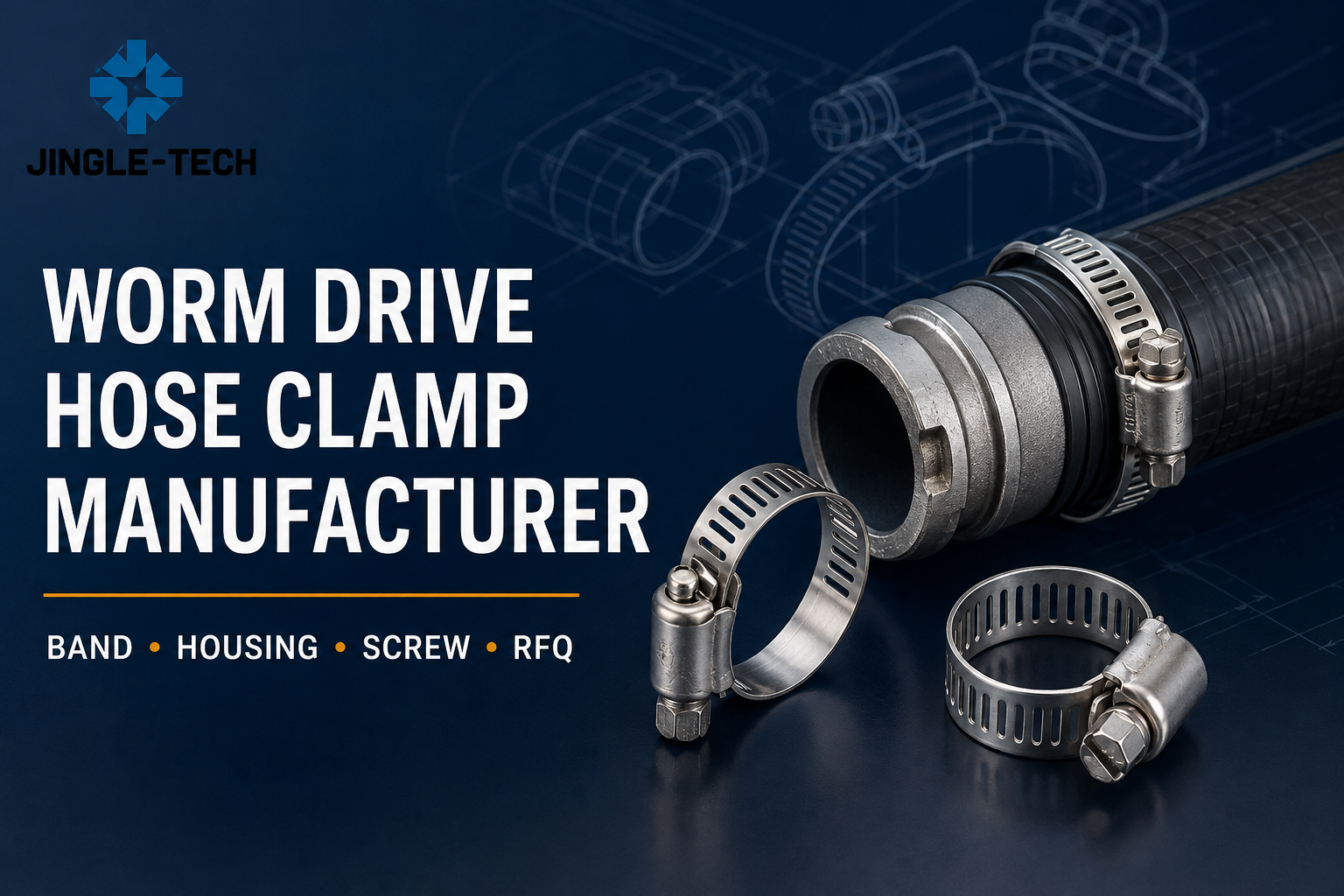
Hose and tubing clamps
These are selected for sealing and retention. In these applications, clamp pressure has to be even enough to protect the joint without damaging the tubing. Over-tightening is a common mistake, especially with softer materials. A clamp that looks secure can still cut into the hose or create a stress point.
Panel, cable, and routing clamps
These are less about sealing and more about organization, strain relief, and vibration control. They matter in electrical enclosures, vehicle systems, equipment frames, and anywhere routing discipline affects reliability. A tidy layout is not just cosmetic; it can prevent abrasion and simplify service work.
Selection criteria that save money later
When teams evaluate engineering clamp solutions, they often focus first on size and finish. That is necessary, but not enough.
Material choice should come next. Stainless steel, coated steel, aluminum, and polymer options each bring tradeoffs in strength, weight, corrosion resistance, and cost. The right answer depends on the surrounding assembly and the operating environment. For example, a corrosion-resistant material may be worth the added cost in a humid or washdown setting, while a lighter component may matter in portable equipment or vehicles.
Clamping force is another area where caution pays off. More force is not automatically better. Excess force can deform parts, shorten service life, or make later removal difficult. In some designs, the clamp should be strong enough to hold but compliant enough to avoid damage. That balance is especially important when the clamped material is soft, thin, or subject to temperature swings.
Ease of installation also deserves attention. If technicians need awkward tools, excessive torque, or several alignment attempts, the clamp may work in theory but fail in production. On a busy line, small assembly frustrations become real cost.
Common mistakes buyers still make
The most common error is treating the clamp as a commodity afterthought. Teams sometimes specify the surrounding assembly in detail and leave the clamp until the end. That often leads to last-minute substitutions and compromises.
Another frequent issue is ignoring service conditions. A clamp selected in a clean design review may behave very differently after exposure to vibration, moisture, or repeated thermal cycling. And if the design depends on periodic disassembly, a clamp that is difficult to remove can become a maintenance problem before the first replacement cycle.
It is also easy to overstandardize. Standard parts are helpful, but forcing the same clamp type across very different uses can create weak points. A clamp that works well for one line item may be the wrong choice for another, even if the sizes are close.
Practical buyer advice for sourcing and engineering teams
When reviewing suppliers or internal options, ask for the information that affects real-world performance: load expectations, compatible materials, surface treatment or corrosion considerations, installation method, and any limits on reuse. If the supplier cannot explain how the clamp behaves in the intended use case, that is worth pausing over.
For new product development, a prototype trial is usually smarter than a paper decision. Even a simple fit-and-retention test can reveal issues with access, assembly time, or serviceability that are hard to spot in CAD.
For sourcing managers, the best commercial decision is often the one that reduces variation downstream. A clamp that is slightly more expensive but easier to install, less likely to damage parts, or more stable in service may lower total cost in ways that do not show up on a unit-price line.
FAQ: quick answers buyers ask
Are all engineering clamp solutions interchangeable?
No. Similar dimensions do not mean similar performance. Material, force profile, and environment all matter.
Should I always choose the strongest clamp available?
Not usually. The right clamp is the one that holds without distorting the part or creating service problems.
What should be checked first when a clamp fails?
Look at loading, installation method, compatibility with the clamped material, and exposure to vibration or heat. The failure is often a system issue, not just a part issue.
Next step
If you are comparing engineering clamp solutions for a new assembly or a redesign, start with the application requirements, then test fit, force, and service access together. That order saves more time than chasing part numbers later.