Quick answer for buyers

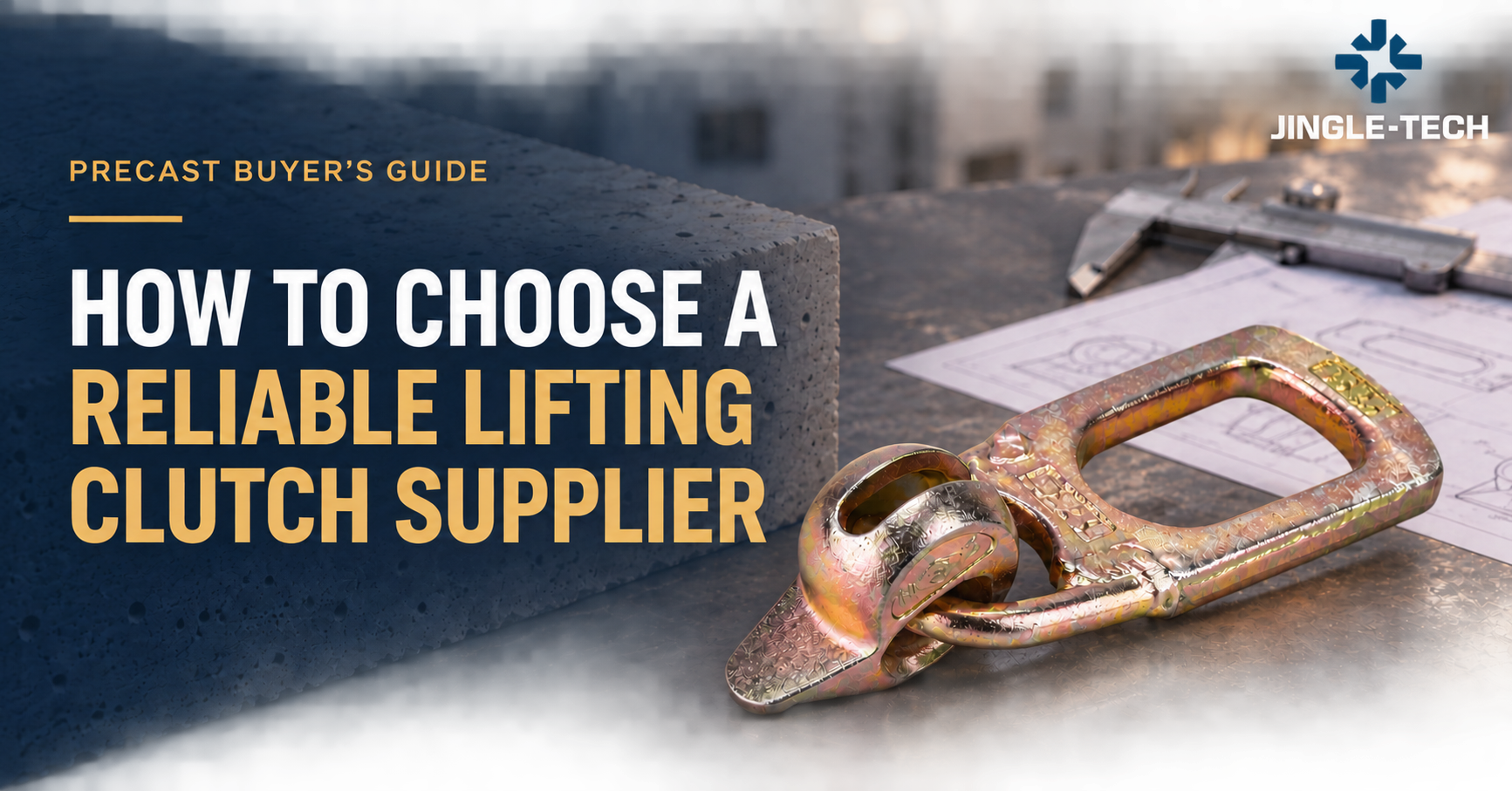
When you choose a precast lifting clutch supplier, treat the clutch and anchor as one matched set. Do not buy the clutch like a loose steel tool from one catalogue and the anchor from another. A useful quotation starts with the matching anchor, the marking on the clutch, the stated working load, the user instruction, the sample-fit check, the packing method and the lifting plan used on the job.
For JINGLE Precast Accessories, do not approve a lifting clutch only because the head looks similar to another supplier’s product. Send the anchor drawing, clutch type, required system, lifting direction, finish, quantity, inspection request and document list. If any system value is not confirmed, write [NEEDS JINGLE CONFIRMATION] and hold it before bulk purchase.
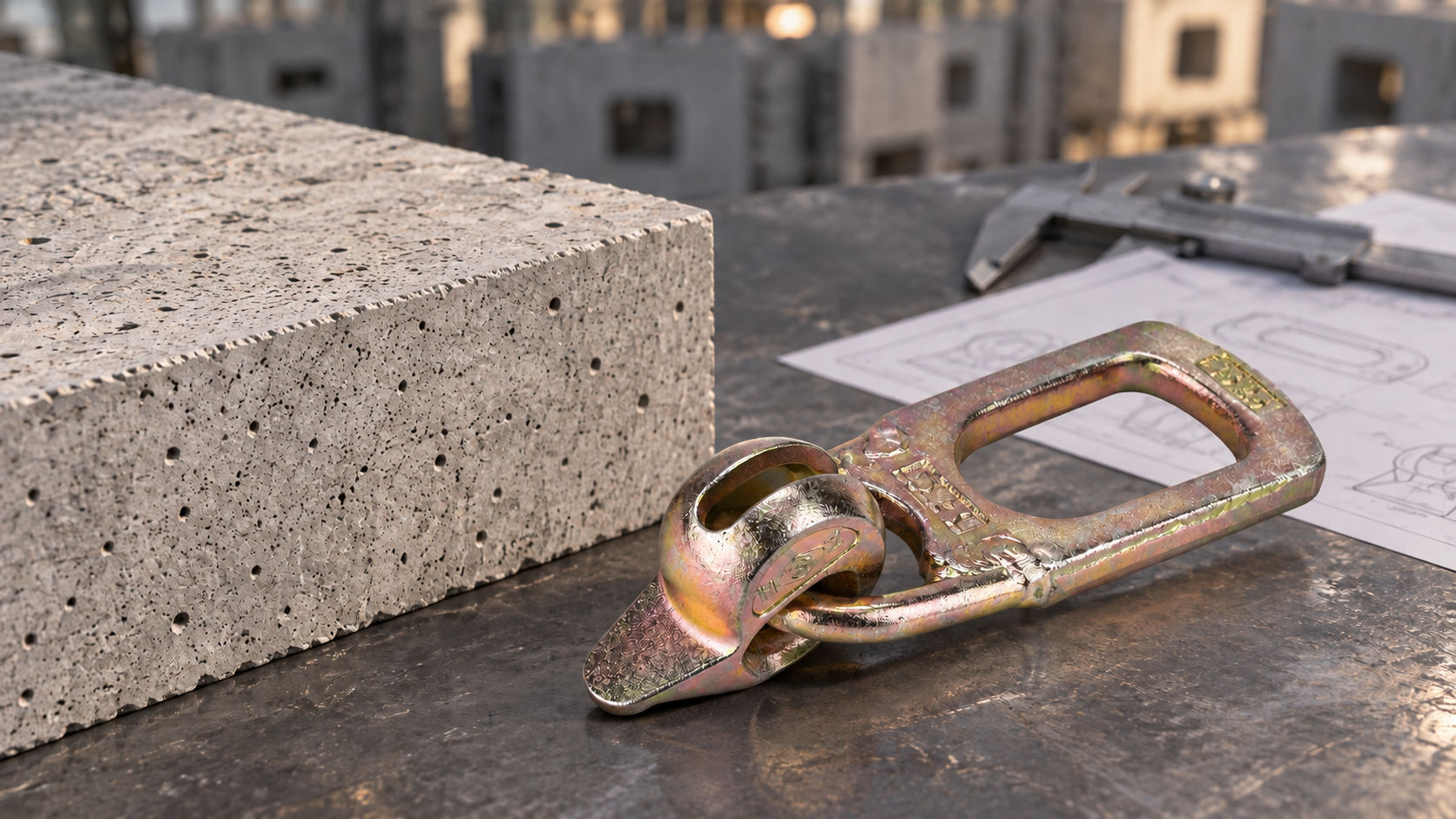
Why a lifting clutch is different from an ordinary accessory
A lifting clutch is handled by workers, riggers and crane teams. It touches the anchor directly, carries a live lifting load, and can be used many times across jobs. That makes it different from a simple cast-in insert or a packaging item.
The mistake I see in buying notes is very simple: the clutch is priced like an ordinary steel part. People compare unit price, surface colour and weight. The harder question is whether that clutch is allowed to work with the exact anchor and lifting direction on the project.
A wrong lifting clutch can create several problems:
- the clutch does not seat fully on the anchor head;
- the ring or bail fouls against the recess shape;
- the operator cannot read the capacity marking after use;
- a similar-looking clutch is used with a non-matching anchor;
- the supplier cannot provide inspection or use instructions;
- worn or damaged clutches stay in circulation because no checking rule was agreed.
If the part is used for lifting precast concrete, the buying process must be more careful than a normal commodity order.
Start with system compatibility
The first question should not be “What is the price?” Ask, “Which anchor system is this clutch for?”
Ask the precast lifting clutch supplier to confirm:
- the exact anchor type or system family the clutch is intended to engage;
- the anchor head or recess form required for correct seating;
- the permitted lifting directions or angle limits from the approved system documents;
- whether the clutch may be used with another brand’s anchor;
- how the product is marked so workers can identify it on site;
- what instructions must travel with the clutch.
PFEIFER, Halfen-style and other established precast lifting systems are normally treated as controlled systems, not random mixtures of similar parts. Buyers should use that same discipline when sourcing from any lifting clutch manufacturer.
Do not mix anchors and clutches without written basis
Many lifting clutches look close in photos. That does not prove they fit the same anchor. A few millimetres at the anchor head, recess depth, lip, slot or ball contact area can change how the load is transferred.
Before accepting a substitute, ask for:
- the original anchor designation;
- the proposed clutch designation;
- the drawing or compatibility statement;
- sample fit photos from several angles;
- the operating instruction that allows the pair;
- the project engineer’s approval if the lift is project-specific.
If the supplier cannot show that basis, leave the offer on hold. A low unit price loses its meaning when the rigging crew refuses the tool, the inspector stops the lift, or the site has to lock the clutches away until someone proves they match.
Marking and identification should be readable after use
Lifting clutch marking is not decoration. It is how site workers know which device they are holding. Ask where the marking is placed and how long it remains readable after normal handling.
Useful markings may include:
- manufacturer or supplier identification;
- clutch type or model;
- working load information;
- batch, serial or traceability code;
- inspection or standard reference if applicable;
- direction or use warning where required by the system.
Do not depend on a paper label tied to the handle. It may disappear after a few days on site. For a reusable lifting device, the mark on the metal is the thing workers can still check later.
WLL evidence and safety rules
Do not guess the WLL from the clutch weight, jaw size or photo. Ask the supplier to state the working load and show the basis for that value.
In the United States, OSHA 29 CFR 1926.704 states requirements for precast concrete work, including capacity factors for lifting inserts and lifting hardware. The practical sourcing lesson is direct: lifting hardware needs a documented capacity basis, and workers should not be asked to guess.
For each RFQ, ask:
| Question | Why it matters |
|---|---|
| What is the rated load or WLL? | Prevents guessing from size or photo |
| Which anchor system is it for? | Stops unsafe cross-use |
| What direction or angle limits apply? | Lifting direction affects load transfer |
| What documents are supplied? | Lets the buyer check instructions before use |
| How is the clutch marked? | Helps site identification |
| How should wear be inspected? | Keeps damaged tools out of service |
If a project has its own lifting plan, that plan takes priority. The supplier’s catalogue is not a substitute for project engineering.
Inspection points before approving samples
A sample clutch should be checked more like a tool than a small casting. Do not approve the sample only from a table photo.
During sample review, check:
- anchor engagement: the clutch seats and releases correctly on the matching anchor sample;
- movement: the ring or bail rotates as expected without catching on the recess;
- surface: no sharp burrs, cracks, severe dents or poor finishing at contact points;
- marking: capacity and identity are readable;
- locking function: any latch or nose works as described;
- fit after finish: paint, galvanizing or other surface treatment does not interfere with movement;
- handling: the operator can attach and detach the clutch without forcing it.
Take sample photos from the front, side, underside and engaged position. Those photos help when comparing the production batch later.
Wear and maintenance questions for reusable clutches
A lifting clutch goes back into the storage box after one lift and may come out again on the next panel. That is why the order should include plain rules for checking it. A good clutch can still be taken out of service by a hard drop, overload, heavy wear, grinding marks, field welding, bent parts or use with the wrong anchor.
Put these items on the supplier’s document request:
- inspection checklist or user instruction;
- wear points that need regular checking;
- rejection rules for deformation, cracks, missing marking or poor rotation;
- cleaning and storage advice;
- whether repair is allowed or prohibited;
- record template for site inspection, if available.
If the supplier has no answer for worn parts, be careful. A lifting clutch without inspection guidance can become a hidden risk after several site cycles.
Compare suppliers by control, not only by steel grade
Some RFQs focus on grade language first. Material matters, but the buyer also needs control over design, marking, load basis, sample fit and inspection.
Use this comparison:
| Supplier answer | Risk | Better buying response |
|---|---|---|
| “It fits all anchors” | Too broad to trust | Ask for exact compatible anchor systems |
| “Same as famous brand” | Copy language, not evidence | Ask for drawing, marking and use basis |
| “Capacity is high” | No measurable value | Ask for WLL and document basis |
| “Surface looks good” | Appearance only | Check contact area, movement and sample fit |
| “Packing is standard” | Mixed sizes may occur | Require labels, batch separation and carton list |
| “No manual needed” | Weak site control | Ask for operating and inspection instructions |
The better supplier is the one that removes doubt before the carton leaves the factory.
Packing and shipment control
Lifting clutches are heavier than many inserts and can damage each other in loose cartons. Define packing early:
- quantity per carton or crate;
- protection around contact surfaces;
- whether each clutch has an individual tag;
- carton label content;
- batch or serial list;
- pallet weight limit;
- photos before shipment.
If several WLL sizes are ordered together, separate them clearly. A small site mix-up can become a large lifting problem.
RFQ checklist for a clean quotation
Send a structured RFQ to each precast lifting clutch supplier:
- product name: lifting clutch / ring clutch / clutch for precast concrete;
- matching anchor type and drawing;
- required WLL or project lifting requirement;
- lifting direction and site use notes;
- finish requirement;
- marking requirement;
- sample quantity and sample-fit expectation;
- inspection and document request;
- packaging rule and label format;
- order quantity and delivery destination;
- whether the clutch must match an existing site anchor system;
- open points marked as
[NEEDS JINGLE CONFIRMATION].
This gives each supplier the same target and makes price comparison fair.
When to stop the order
Stop and request clarification if:
- the supplier cannot name the compatible anchor system;
- the clutch has no readable marking;
- the quoted WLL is unclear;
- sample fit needs force or does not release cleanly;
- the supplier says all similar anchors are acceptable;
- the operating instruction is missing;
- project engineering has not approved a substitute.
Buying teams sometimes feel pressure to keep the order moving. For lifting hardware, a short pause is better than a field problem.
Where JINGLE can help
JINGLE can help buyers organize the technical enquiry for lifting clutches and related precast lifting accessories. Send the anchor drawing, clutch type, system requirement, WLL target, sample request, marking rule, packing details and document needs.
If you already use a certain anchor system on site, say so clearly. JINGLE can then keep the discussion focused on compatibility instead of offering a general-looking part that may not match the job.
FAQ
Is a lifting clutch universal?
No. A lifting clutch should be matched to the anchor system and operating instructions. Similar appearance does not prove compatibility.
What should I ask a lifting clutch manufacturer first?
Ask which anchor system the clutch is designed for, how it is marked, what WLL information is supplied, and what inspection instructions come with it.
Can I buy the clutch from one factory and the anchor from another?
Only if the compatibility basis is clear and accepted by the project. Without written support, mixing parts can create a lifting risk.
What is the most important sample test?
Engage the clutch with the matching anchor sample. Check seating, release, movement, marking and contact areas.
Should lifting clutches be packed separately by WLL?
Yes. If several capacities or models are shipped together, separate labels and carton lists help prevent site mix-ups.