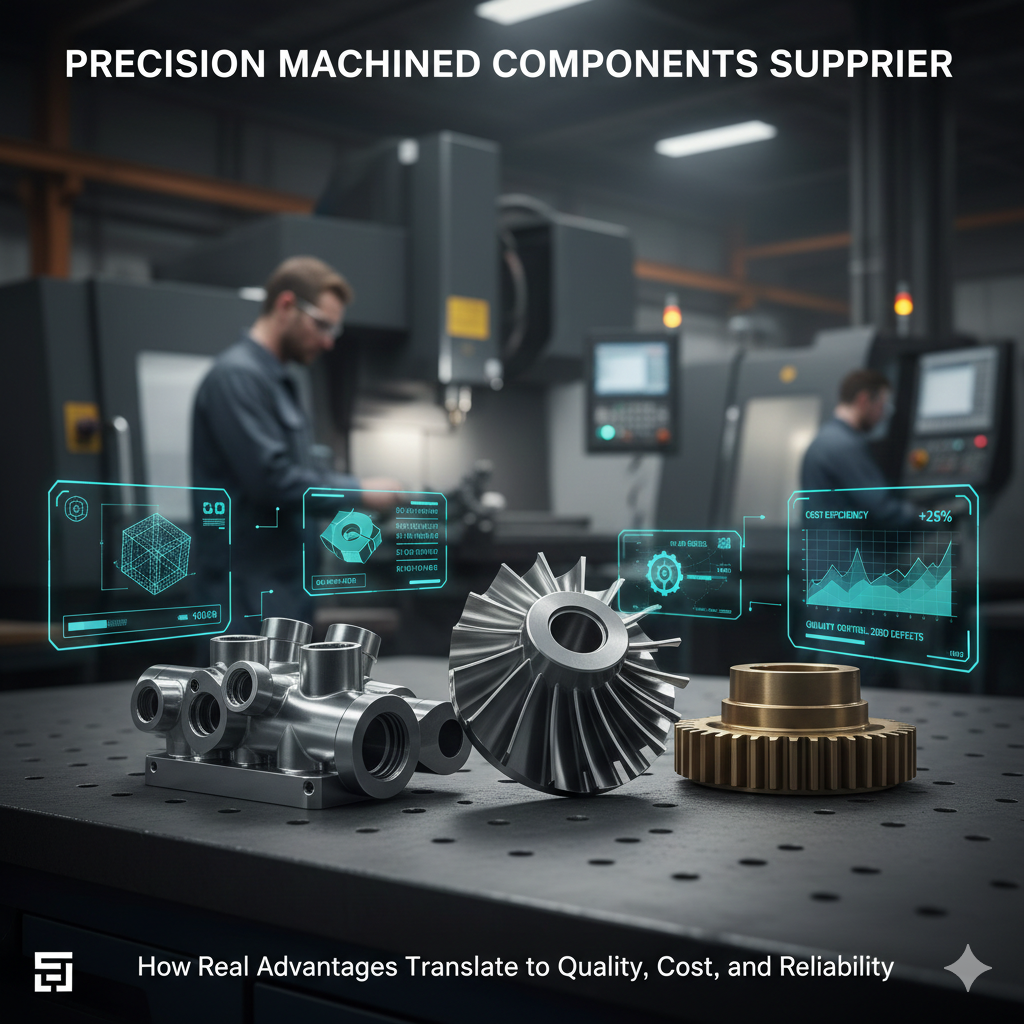
Precision Machined Components Supplier: How Real Advantages Translate to Quality, Cost, and Reliability
Precision machined components are foundational to industrial machinery, structural systems, and critical assemblies. However, engineering teams and procurement managers consistently encounter a disconnect: parts that meet printed tolerances during inspection sometimes fail functional requirements—such as fit, repeat assembly performance, or long-term stability—once deployed or re-ordered. This is not a measurement issue alone; it is a consequence of how the supplier defines and executes precision as an end-to-end engineering outcome, not merely a dimensional specification.
1. When Precision Is Measured vs. When Precision Matters
Many suppliers advertise tolerance numbers (±0.01 mm, surface finish Ra0.8, etc.), but those values do not inherently guarantee functional performance. Functional precision involves multiple interacting variables over the life of a component: material behavior under machining, fixture stability, process sequencing, and batch consistency.
Consider this contrast:
| Evaluation Mode | Inspection Result | Functional Outcome |
|---|---|---|
| Dimensional inspection only | Part A within spec on CMM report | Misalignment in assembly, manual adjustment needed |
| Process-integrated inspection | Part A measured during machining and post-fixture | Assembles repeatedly without adjustment |
| Statistical control | Tracking batch trends over time | Consistent performance across batches |
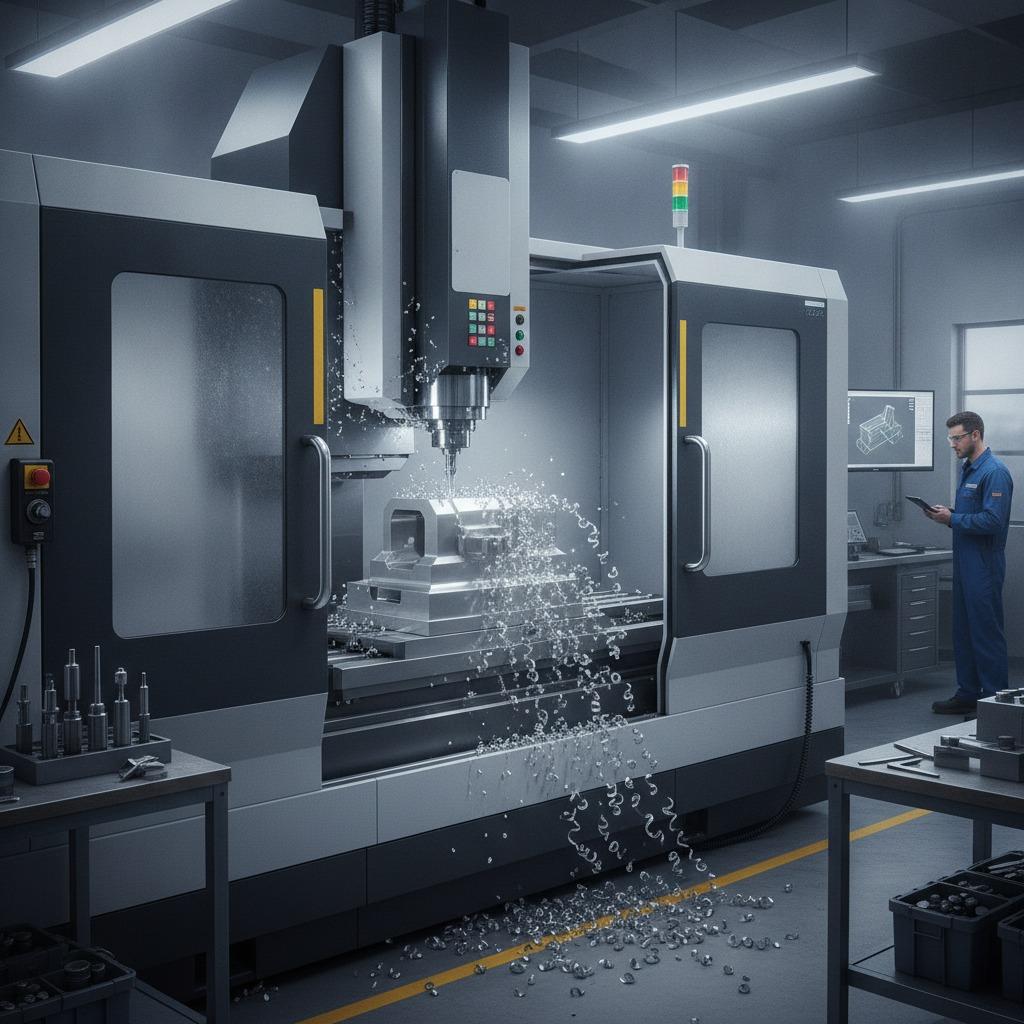
A precision machined components supplier with real advantage integrates quality checks into the process, not just at the end of the process. This means using in-process probing, fixture feedback loops, and statistical process control (SPC) rather than spot checks that merely confirm pass/fail.
2. Material Behavior: From Drawing to Machined Component
CNC machining starts with material, and not all same-grade materials behave identically once cut. Supplier advantage begins with material sourcing and understanding how that stock will respond to machining operations.
Differences in residual stress, heat treatment condition, and grain structure can lead to:
-
Dimensional shift after unclamping
-
Surface strain affecting fatigue life
-
Differential tool wear across batches
| Material Consideration | Impact on Machining | Supplier Control Strategy |
|---|---|---|
| Residual Stress Variance | Post-machining distortion | Precondition stock or adjust roughing strategy |
| Hardness Variation | Tool wear inconsistency | Batch qualification and tool life mapping |
| Grain Direction | Surface finish variation | Fixture orientation optimization |
Real supplier advantage means profiling material behavior before machining, not assuming uniform response based on nominal grade alone.
3. Process Sequencing: When Order Defines Outcome
In precision machining, the order in which features are cut has a direct impact on deformation, thermal shift, and fixture stability. Functional surfaces and critical interfaces must be done in sequences that minimize stress concentration and maximize datum integrity.
For example:
-
Rough machining is performed in a way that balances removal around critical datums, not just any available surface.
-
Precision finishing occurs last on features that will be used for assembly, ensuring those surfaces are cut after the part is thermally stabilized.
Many suppliers finalize programming without addressing feature dependency and process interaction; a supplier with advantage treats this as engineering design, not just CAM programming.
4. Fixture Design: The Silent Feature Enabler
Dimensional accuracy is only as stable as the reference datums carried through each setup. Poor fixturing may allow parts to be technically “in tolerance” in isolation, but functional geometry still fails when all features are combined.
| Fixturing Type | Setup Repeatability | Functional Reliability |
|---|---|---|
| Generic clamps | Low | Variation in batch |
| Tight rigid clamping | Medium | Localized deformation |
| Engineered referencing fixtures | High | High batch reproducibility |
Precision machinists who build fixture logic based on functional datum relationships rather than convenience gain a measurable advantage in repeatability and fit for assembly.
5. Customization: Where Precision Meets Real Engineering
Customization is more than adding holes or tightening numbers on a drawing. Each custom feature introduces variables that must be process-evaluated.
Real supplier advantage comes in how those changes are analyzed, simulated, and validated before machining begins.
Consider two custom scenarios:
Scenario A: Adding a tight tolerance hole near a thin wall
-
If the machining sequence does not consider wall deflection, the part may warp post-cut.
Scenario B: Changing material from 6061 to 7075 alloy
-
Hardness and thermal behavior differences may require revised cutting speeds, toolpath patterns, and fixturing.
| Custom Change | Engineering Risk | Effective Mitigation |
|---|---|---|
| Tight pocket next to open face | Deformation | Adaptive ramping and support tooling |
| Material switch to harder alloy | Tool wear & heat | Adjust feeds, speeds, and tool change scheduling |
| Addition of asymmetric features | Clamping imbalance | Rebalanced fixture strategy |
In both cases, an effective supplier does not simply promise feasibility; it presents a mitigated process plan with clear cost/time impacts before execution.
6. Integrated Process Choices That Reduce Overall Cost
Precision machining does not exist in a vacuum. Integrating upstream and downstream operations—such as near-net shape casting or forging followed by targeted high-precision finishing—can significantly reduce both cost and lead time, especially for complex geometries.
For example, as seen in synergistic manufacturing guides:
-
near-net sand casting provides a cost advantage for large complex blanks that would waste significant material if fully machined from billet
-
CNC machining subsequently refines mating surfaces and critical features to high precision, optimizing both cost and quality
| Production Strategy | Material Use | CNC Time | Typical Cost Impact |
|---|---|---|---|
| Full CNC from solid | High material waste | Long | High |
| Near-net casting + CNC | Low waste | Targeted | Lower overall cost |
| Additive prototyping + CNC | Optimized shapes | Medium | Flexible for iterations |
This hybrid strategy, widely adopted in advanced manufacturing, is not a generic “why it’s good” statement—it directly influences deliverable cost, yield, and lead time.
7. Inspection Strategy That Protects Precision Over Time
If inspection only measures final parts, issues are detected too late. A strategic inspection plan detects variation before it becomes functional failure.
Key elements of an advanced inspection system:
-
In-process probing to verify datum and geometry mid-machining
-
Statistical Process Control (SPC) to monitor trend movement
-
Post-fixture feature correlation checks to ensure assembly-critical relationships hold
This approach creates a narrative of stability over time, not snapshots of compliance.
Common Real Customer Questions (And Practical Answers)
Q1: Why do parts with correct tolerance fail in assembly?
Tolerance values measure isolated dimensions, not the combined functional relationship of features during assembly. Misalignment often arises from datum instability, fixturing variation, or process sequencing gaps—issues that statistical process control and engineered fixture design solve.
Q2: Does using tighter tolerances always improve part performance?
No. Tight tolerances without comprehensive process alignment (material behavior modeling, fixture design, sequence planning) can increase scrap, extend lead times, and create hidden rework costs. Precision is functional repeatability, not a single number.
Q3: How can customization affect delivery consistency?
Every new feature or material change introduces a variable in the machining process. Without reevaluating datum strategy, tooling plan, and inspection checkpoints, batch performance degrades. Effective suppliers mitigate this by upfront engineering validation and clear impact quantification.
Optimized Closing Section
In precision manufacturing, supplier value is proven by consistent assembly performance and repeatable results across production cycles—not by isolated inspection data. A capable precision machined components supplier manages material variation, process stability, and customization risk so that changes in volume or design do not introduce downstream disruption.
For an overview of CNC machining capabilities and precision component supply in real production settings, visit the Jingle Home Page:
👉 HomePage
If you are working with drawings, samples, or ongoing projects and need to assess machining stability, customization feasibility, or delivery risk, direct technical discussion is often the most efficient next step:
👉 Contact Us