Welcome to our website
logo

Steel Hose Clips: Redefinition of Accuracy and Durability

  • fasteners
Posted by JINGLE On May 19 2025

Steel hose clamp: a modern miracle of industrial design


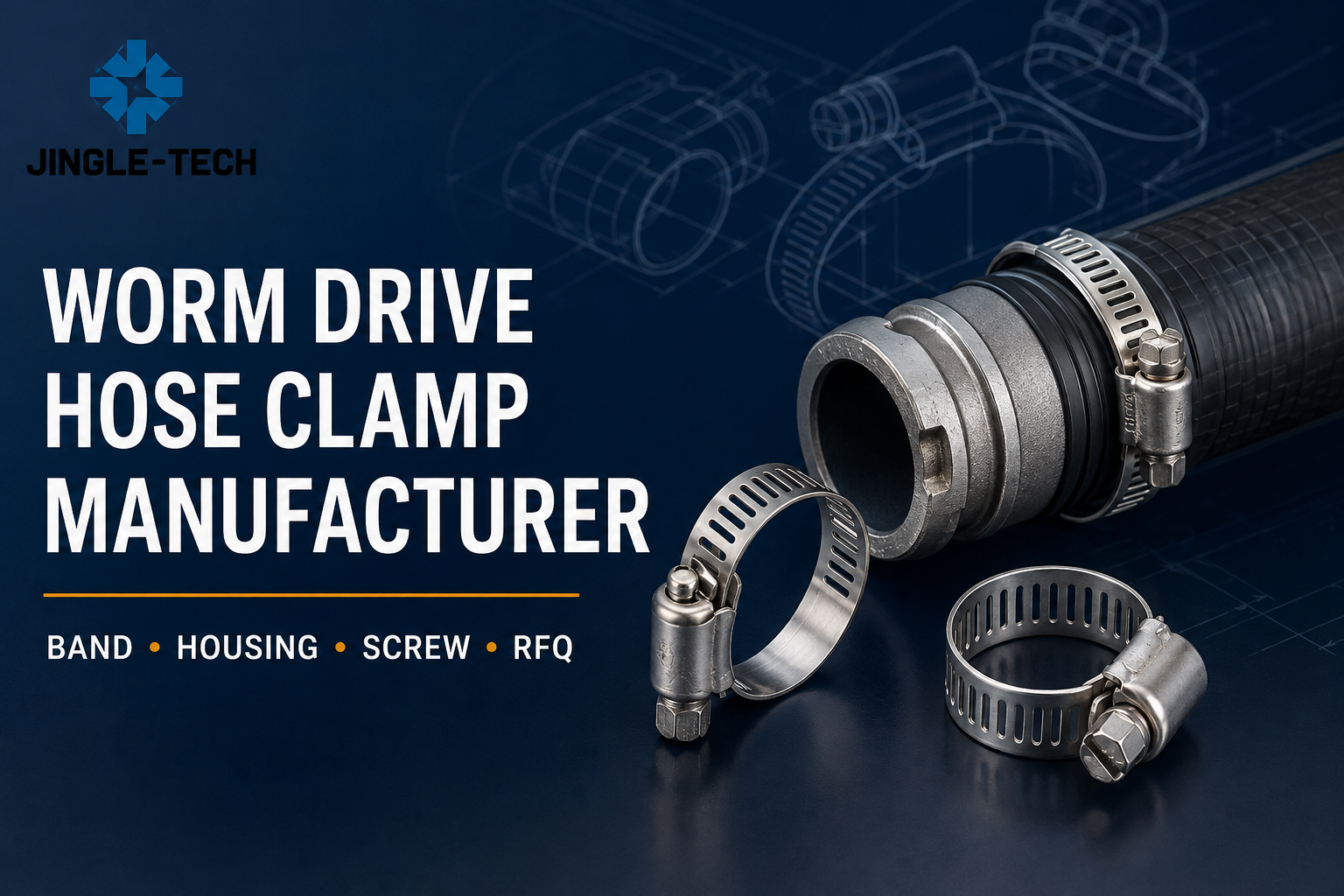
Steel hose clamps are a great example when it comes to tools that seamlessly blend precision, durability and aesthetic appeal. Designed to stand out in the harshest environments, this special tool is made of high-end, rust-resistant galvanized steel for promising robustness and long-lasting use. Whether you are securing a hose in a car, piping or industrial environment, this fixture is designed to provide unparalleled functionality.

Durable and multifunctional design


Steel hose clamps are not only related to utility, but also a visual miracle. Its smooth metal finish reflects the process required by professionals in industrial equipment. The ridge design ensures safety and leak-proof grip for hoses of all sizes, thus giving users confidence in their projects. Coupled with the ergonomic screw tightening mechanism, adjusting and fixing makes it easy while maintaining excellent reliability.

This versatility makes steel hose clamps an ideal companion for a variety of applications. Whether connected to a pipe fixture or protecting important components in a car, its adaptability emphasizes the practicality of the fixture in various situations.

Precisely conform to professionalism


Make a stylish combination of steel hose clips with style and practicality. It caters to professionals who need quality tools without damaging the aesthetics. Its corrosion-resistant galvanized steel structure ensures that the jig retains its strength and finish in a corrosive environment. The thoughtful design lifts it from another fixture to an essential tool for being a professional with a goal of excellence.

Stylish, durable and highly practical, steel hose clamps are more than just a tool, they are the benchmark of modern professional standards. Whether you are tightening the hose or ensuring critical components, this innovative fixture ensures you have everything you need for top-notch performance.
Featured Blogs
Railroad Spike Bolt: How to Choose the Right Fastener

Railroad Spike Bolt: How to Choose the Right Fastener

1. Why railroad spike bolt selection matters more than it looks 2. What the part is expected to do 3. Key factors to compare before you place an order 4. Common buying mistakes 5. Practical selection advice for sourcing teams 6. Quick reference: what a buyer should confirm 7. Questions worth asking a supplier 8. What good procurement looks like

DIN444 Eye Bolts: What Buyers Should Know Before Specifying Them

DIN444 Eye Bolts: What Buyers Should Know Before Specifying Them

1. What DIN444 Actually Covers 2. Why the Standard Matters in Procurement 3. Quick Buyer Checklist 4. Common Mistakes Buyers Still Make 5. Selection Criteria That Actually Help 6. Practical Advice for Engineers and Sourcing Teams 7. FAQ 8. What to Do Next

Nylon Wall Anchor Selection Guide: What Buyers Should Check

Nylon Wall Anchor Selection Guide: What Buyers Should Check

1. What a nylon wall anchor actually solves 2. Why nylon is used so often 3. Common forms and how they behave 4. What buyers should check before specifying one 5. Selection criteria that matter in real sourcing work 6. Common mistakes to avoid 7. Practical buyer takeaway 8. FAQ 9. Next step

Shield Anchor Selection Guide for Reliable Fastening

Shield Anchor Selection Guide for Reliable Fastening

1. Shield Anchor Selection Is More Than a Spec Sheet Decision 2. What a Shield Anchor Does Well 3. Quick Buyer Takeaways 4. Selection Criteria That Actually Matter 5. Common Mistakes in Procurement and Use 6. Practical Advice for Engineers and Sourcing Teams 7. FAQ: Shield Anchor Basics 8. Next Step for a Better Sourcing Decision

Sleeve Anchor Guide: How It Works and When to Use It

Sleeve Anchor Guide: How It Works and When to Use It

1. What a sleeve anchor is and why buyers still use it 2. How a sleeve anchor works 3. Where sleeve anchors fit best 4. Quick comparison: what buyers usually evaluate 5. Selection criteria that actually matter 5.1 Base material 5.2 Load and safety margin 5.3 Environment 5.4 Hole quality 6. Common mistakes seen on the shop floor and site 7. Practical buyer advice before placing an order 8. FAQ 8.1 Can a sleeve anchor be removed and reused? 8.2 Is a sleeve anchor suitable for overhead loads? 8.3 What should I check first when a sleeve anchor slips? 9. Next step for engineers and sourcing teams

Spring Toggle Anchor: Reliable Hollow-Wall Fastening Tips

Spring Toggle Anchor: Reliable Hollow-Wall Fastening Tips

1. Spring Toggle Anchor: when hollow-wall fastening has to be boringly reliable 2. What a spring toggle anchor does 3. Where spring toggle anchors make sense 4. Key selection points buyers should check 5. Common mistakes in hollow-wall fastening 6. Practical advice for sourcing and product teams 7. FAQ: quick answers buyers usually want 8. Next step