The Ultimate Guide to Bolts: Types, Materials, and Applications
Introduction
Bolts are one of the most essential industrial fasteners used in construction, machinery, automotive, and infrastructure projects. Despite their small size, bolts provide the strength and reliability required to hold structures and equipment together safely.
This guide explains what bolts are, their main types, materials, surface treatments, and applications across various industries. Understanding bolts is crucial for engineers, procurement managers, and construction professionals who want durable, high-quality fasteners.
What Are Bolts?
Bolts are externally threaded fasteners that typically work together with nuts to clamp two or more components securely. Unlike screws, bolts generally require pre-drilled holes and a nut to create a strong mechanical joint.
Key benefits of bolts include:
- High tensile and shear strength
- Adjustable and removable connections
- Versatility in materials and sizes
- Compatibility with washers for better load distribution
Industrial bolts come in a wide variety of lengths, diameters, threads, and grades to suit different applications.
Common Types of Bolts
Industrial bolts can be classified based on head type, thread design, and application. Below are the most widely used types.
Hex Bolts
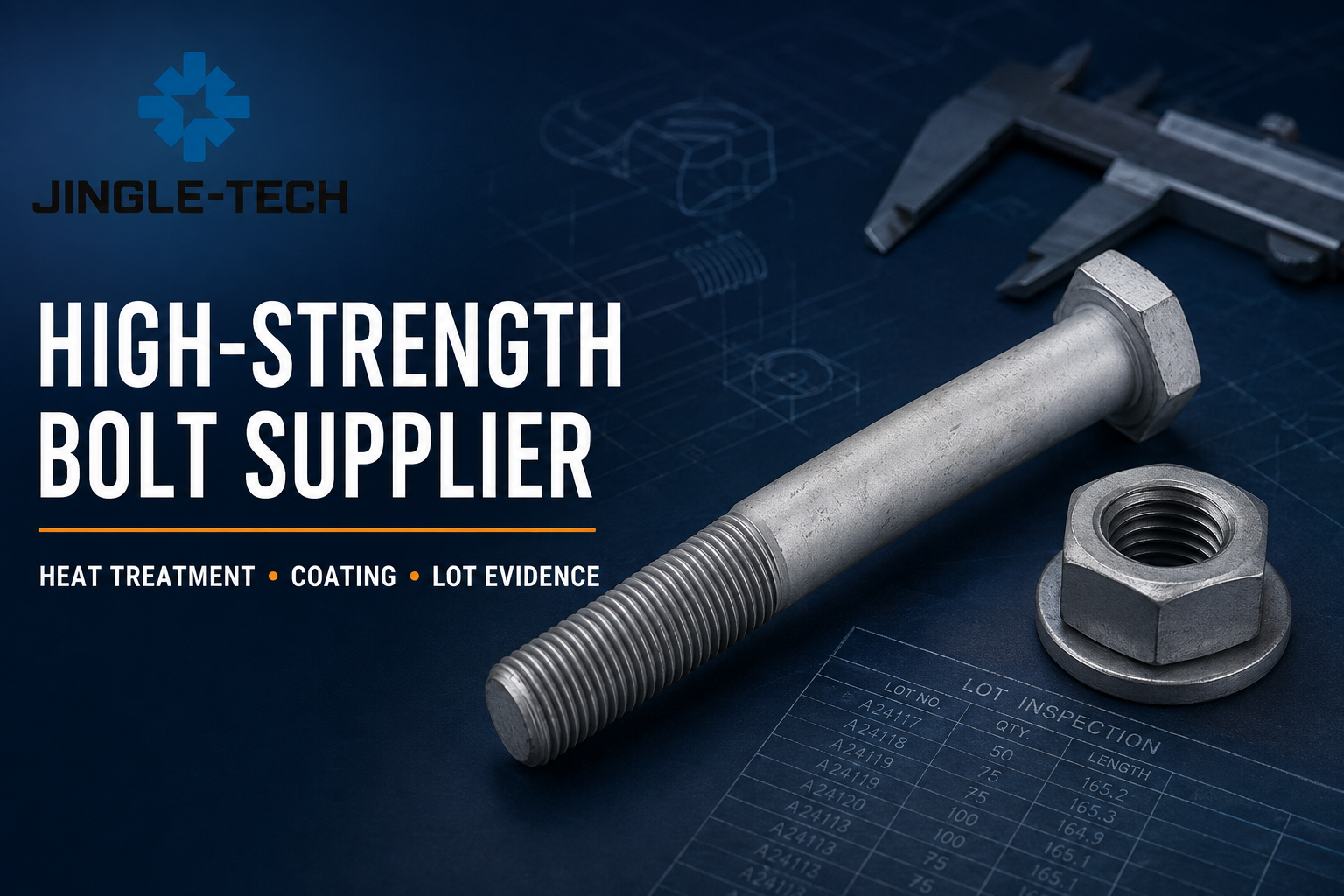
Hex bolts have a hexagonal head and are one of the most common bolts in construction and machinery.
Applications:
- Steel structures
- Machinery assembly
- Bridge construction
Features:
- Can be tightened with a wrench or socket
- High load-bearing capacity
- Available in various grades
Anchor Bolts
Anchor bolts are designed to secure structures or machinery to concrete or masonry surfaces. Learn more in our Complete Guide to Anchor Bolts.
Types of Anchor Bolts:
- Cast-in-place: Installed during concrete pouring
- Expansion anchors: Expand to grip existing concrete
- Chemical anchors: Use resin to secure the bolt
Applications:
- Structural columns
- Machinery bases
- Precast concrete systems
Carriage Bolts
Carriage bolts have a smooth, rounded head and a square neck to prevent spinning during installation.
Applications:
- Wooden structures
- Furniture assembly
- Light construction projects
Features:
- Easy installation in wood or soft materials
- Provides a neat appearance
- Works well with nuts and washers
Structural Bolts
Structural bolts are high-strength bolts designed for heavy load-bearing applications.
Applications:
- Steel frame construction
- Bridges and infrastructure
- Industrial machinery
Features:
- Often pre-tensioned for maximum strength
- Usually meet ASTM or ISO standards
- Require torque control during installation
Read more about Fastener Strength Grades to understand how to choose structural bolts.
Materials Used in Bolts
The material of a bolt affects its strength, durability, and corrosion resistance. Choosing the right material is critical for safety and performance.
Carbon Steel Bolts
Carbon steel bolts are the most common and cost-effective option.
Advantages:
- High strength
- Easy to manufacture
- Suitable for general-purpose applications
Limitations:
- Requires coatings to prevent corrosion
- Not ideal for harsh or outdoor environments
Stainless Steel Bolts
Stainless steel bolts are highly resistant to corrosion and ideal for demanding applications. Learn more in our Stainless Steel vs Carbon Steel Fasteners article.
Applications:
- Outdoor construction
- Marine environments
- Food processing equipment
Popular Grades:
- 304 Stainless Steel
- 316 Stainless Steel
Alloy Steel Bolts
Alloy steel bolts are used for high-strength and heavy-duty applications.
Advantages:
- High tensile strength
- Heat-treated for extra durability
- Suitable for structural and automotive applications
Applications:
- Bridges
- High-rise buildings
- Heavy machinery
Bolt Surface Coatings
Surface coatings protect bolts from rust, corrosion, and environmental damage. Learn more about Fastener Surface Coatings.
Zinc Plating
- Provides moderate corrosion resistance
- Ideal for indoor or dry environments
Hot-Dip Galvanizing
- Thick zinc layer for outdoor and industrial use
- Excellent for structural bolts exposed to weather
Ruspert Coating
- Multi-layer surface treatment
- Superior corrosion resistance for concrete and structural bolts
- Learn more in What Is Ruspert Coating
Black Oxide
- Mild corrosion protection
- Improves aesthetic appearance
- Often used in industrial equipment
Bolt Strength Grades
Bolt strength is classified according to mechanical properties and load capacity.
Metric Grades
- Common: 4.6, 8.8, 10.9
- Higher number = higher tensile strength
SAE/ASTM Grades
- Grade 2, 5, 8
- Higher grade bolts are stronger and suitable for structural or high-stress applications
Choosing the correct grade ensures safety and prevents bolt failure.
Applications of Bolts
Bolts are used across a variety of industries and projects:
Construction
- Steel frame buildings
- Bridges
- Concrete anchoring
Automotive
- Engine assembly
- Chassis connections
- Suspension systems
Energy Infrastructure
- Wind turbines
- Solar mounting systems
- Power line towers
Machinery
- Industrial machines
- CNC equipment
- Assembly lines
How to Choose the Right Bolt
Key factors to consider:
- Load requirements – Determine tensile and shear forces
- Environmental conditions – Outdoor vs indoor, exposure to chemicals or moisture
- Material compatibility – Prevent galvanic corrosion
- Bolt grade and strength – Match mechanical load requirements
- Surface treatment – Ensure adequate corrosion protection
For more guidance, see our How to Choose the Right Fastener article.
Conclusion
Bolts are essential components in modern construction, machinery, and industrial applications. From hex bolts and anchor bolts to structural and carriage bolts, understanding bolt types, materials, coatings, and strength grades is crucial for selecting the right fastener for each project.
By properly choosing bolts and their coatings, engineers and procurement managers can ensure safety, durability, and long-term reliability in any industrial or construction project.
Internal Links (SEO-ready):
- Types of Fasteners Used in Construction
- Fastener Surface Coatings Explained
- What Is Ruspert Coating
- Stainless Steel vs Carbon Steel Fasteners
- How to Choose the Right Fastener
Meta Description:
Learn everything about industrial bolts: types, materials, coatings, strength grades, and applications for construction, machinery, and industrial projects.