


Why foundation anchors deserve more attention than they usually get
Foundation anchors are easy to overlook when a project is still on paper, but they become one of the most important details once steel starts moving and concrete is cured. They are the connection point between a structure and its base, which means they carry real responsibility: holding frames in place, resisting uplift, transferring loads, and keeping machinery or structural members where the engineer intended. If the anchor choice is wrong, the problem is rarely small. Misalignment can slow erection. Poor embedment can compromise load transfer. And a rushed substitution can create a field fix that nobody wanted to pay for.
For engineers, sourcing managers, and product teams, the practical question is not just “what anchor do we need?” It is “which anchor type fits the load, the substrate, the installation sequence, and the tolerance for risk?” That is the decision this article is meant to support.
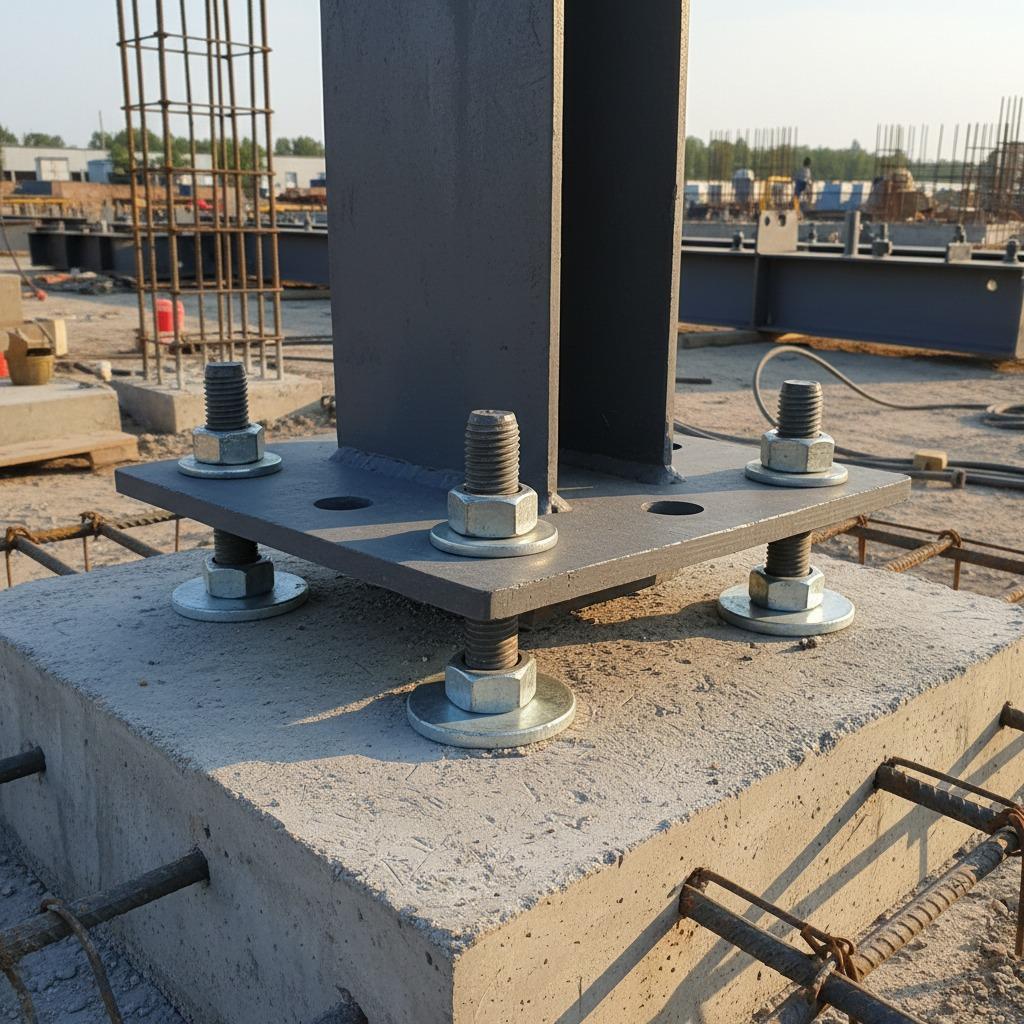
What foundation anchors actually do
At a basic level, foundation anchors secure a superstructure, frame, column base, machine skid, or similar assembly to a concrete foundation. They may be cast in place before the concrete is poured, or installed after cure as post-installed anchors. Some applications need resistance to tension from wind uplift or vibration. Others are more about shear, position control, or long-term stability under repeated loads.
The key point is that anchoring is not only about strength in a brochure sense. It is about how load moves through the joint over time. Concrete quality, edge distance, embedment depth, grout condition, and hole cleanliness can matter as much as the anchor body itself. That is why a good anchor specification is rarely a one-line callout.
Common anchor types and where they fit
Cast-in-place anchors
These are set before concrete placement and are often favored where precise layout can be controlled in advance. They are common in structural steel bases, equipment foundations, and large civil or industrial work. Because they become part of the pour, they can offer strong and reliable performance when installation is handled carefully. The downside is simple: once the concrete is poured, adjustment options narrow fast.
Post-installed mechanical anchors
Mechanical anchors are typically used when retrofit work, late-stage changes, or field installation is unavoidable. They can be practical when the project schedule does not allow for embedded hardware. Still, their performance depends heavily on base material quality and installation discipline. If the hole is drilled poorly or cleaned badly, the result may be weaker than expected even if the hardware looks robust.
Adhesive anchor systems
These rely on a bonding agent between the anchor rod and the drilled hole. They are often selected where higher load performance or flexible embedment is needed, but they demand more process control. Temperature, cure time, drilling method, and hole cleaning all affect outcomes. In a busy jobsite, that is the part that gets skipped too often.
How to select the right foundation anchors
The first filter is load. Tension, shear, and combined loading should be considered separately instead of assuming one oversized anchor solves everything. The second filter is the foundation itself. Fresh concrete, cracked concrete, and existing foundations do not behave the same way. A third filter is installation reality. If the crew cannot reach the hole properly, or if the schedule leaves no cure window, the “best” anchor on paper may be the wrong one on site.
Material choice matters too. Carbon steel, galvanized finishes, and stainless options may all be suitable depending on exposure conditions, but corrosion risk should be addressed early rather than as a late procurement afterthought. That is especially true in outdoor, coastal, or chemically aggressive environments.
Common mistakes buyers and specifiers make
One frequent mistake is treating all anchors as interchangeable as long as the diameter matches. They are not. Embedment, base material, edge distance, and installation method can all change performance in a way that matters structurally. Another mistake is overlooking the sequence of work. If anchor bolts are needed to control column placement, then field tolerance and template accuracy become just as important as load capacity.
A more practical error is buying hardware before confirming the foundation design. That can lead to rushed substitutions, added drilling, or an awkward compromise during installation. None of those are free.
Buyer-facing questions worth asking before ordering
Before you place a purchase order, ask whether the anchors are cast-in or post-installed, what loads they are expected to resist, and what foundation condition they will be installed into. Confirm whether installation will happen in a new pour or an existing slab. If the application involves vibration, dynamic loading, or critical alignment, that should be stated plainly. The more the application depends on the anchor, the less room there is for vague assumptions.
It is also worth asking how the anchors will be packaged, labeled, and identified on arrival. Small hardware can disappear into the general flow of a site if it is not organized properly, and missing one set of anchors can stall a much larger assembly.
Practical takeaway for project teams
Foundation anchors are not just fastening parts. They are load-path components, schedule drivers, and sometimes the difference between a clean install and a field correction. The best choice balances structural requirement, substrate condition, installation method, and the realities of the jobsite. If those four things are aligned early, the rest usually goes more smoothly than the average anchor discussion suggests.
If you are evaluating foundation anchors for a current project, start with the foundation condition and installation sequence, then work back to size, material, and anchor type. That order saves time and avoids the kind of late changes that show up right when they are least welcome.
FAQ
Are foundation anchors the same as anchor bolts?
In many conversations, the terms overlap. In practice, “foundation anchors” is the broader term and may include cast-in or post-installed systems, while anchor bolts often refers more specifically to embedded bolt-style hardware.
Can one anchor type cover every application?
Usually not. Structural framing, machinery, retrofit work, and outdoor exposure each create different demands. A single standard can simplify purchasing, but it should not replace engineering review.
What matters most in installation?
Accuracy, substrate preparation, and following the specified installation method. For many anchor systems, the hole and the installer matter almost as much as the hardware itself.





