


What Buyers Really Need From an Industrial Anchor Factory
When engineers or procurement teams start comparing an Industrial Anchor Factory, they are rarely shopping for metal alone. They are trying to reduce field risk. An anchor that looks simple on a drawing can become a costly problem if the geometry is off, the coating is wrong for the environment, or the supplier cannot repeat the same quality across batches. That is especially true in structural work, equipment installation, and utility projects where an anchor is one of the few things standing between a load and the foundation.
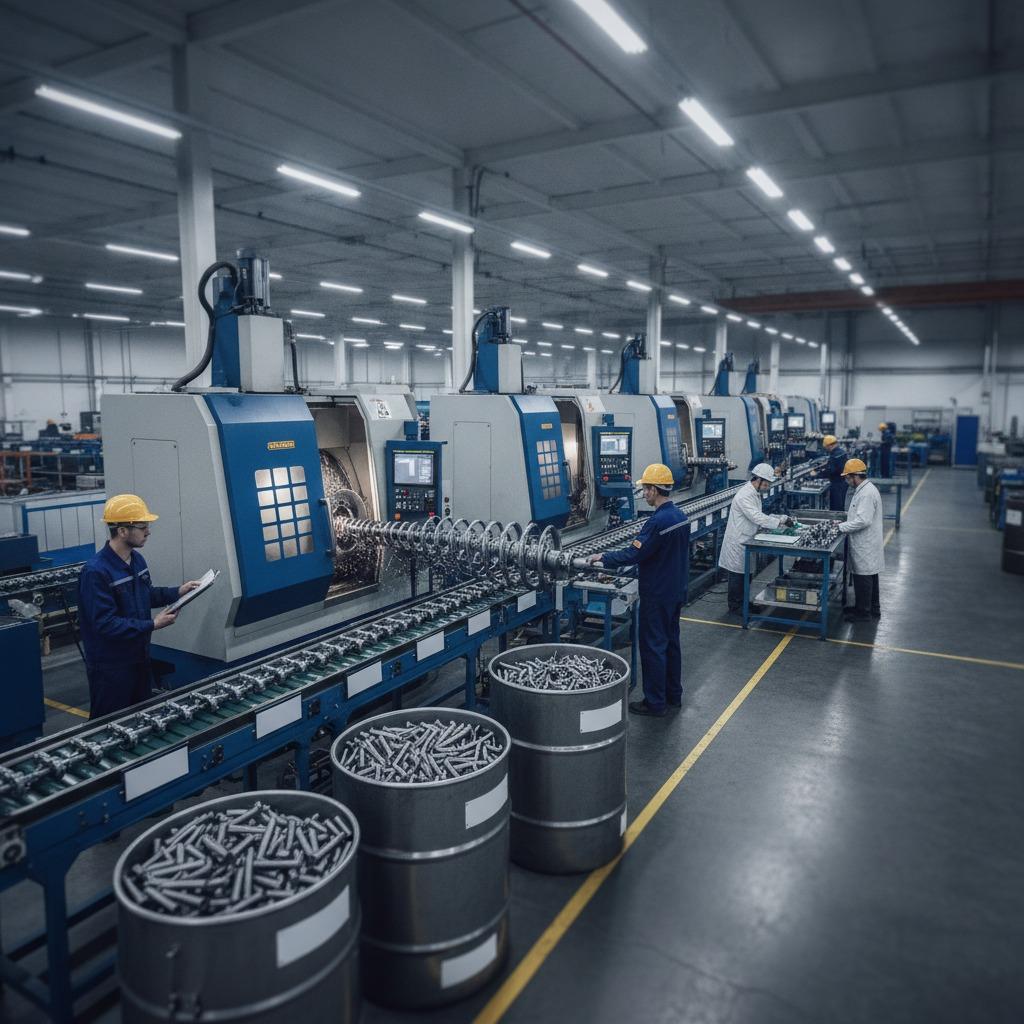
The decision is not just about price per piece. Buyers usually need to know whether the factory can make the right anchor type, handle the specified material, support the drawing requirements, and stay consistent when orders scale up. For project teams, that is the real filter.
Why Anchor Selection Matters More Than It Seems
Anchors are often treated as commodity parts, but field performance says otherwise. A High Strength Anchor Bolt used in heavy machinery, steel structures, or precast installation has to deal with tension, shear, vibration, and installation variation. If the fastening system is weak, the failure may not appear during installation. It shows up later as loosening, movement, corrosion, or in the worst cases, structural damage.
That is why sourcing teams should think beyond dimensions. They need to evaluate how the factory controls material traceability, thread quality, surface treatment, packaging, and documentation. In many projects, those details are more important than a small unit-price difference.
Common Anchor Types Buyers Ask About
Industrial anchor production usually covers several categories, and each one serves a different job. Some are designed for embedded concrete applications, while others are used for post-installed work or equipment anchoring. A factory that understands these distinctions can help the buyer avoid a mismatch between part and application.
For structural and machinery projects
Heavy-duty anchor bolts are often selected for columns, frames, base plates, and machine foundations. Here, consistency matters. Thread engagement, bend shape, and dimensional repeatability all affect how the final assembly behaves on site.
For energy and outdoor installations
An Anchor for Solar Projects needs a different mindset. Solar installations often involve large quantities, outdoor exposure, and repetitive installation patterns. Corrosion resistance and installation efficiency tend to matter as much as raw holding performance. In this segment, the wrong coating or an inconsistent part length can slow the whole job.
What to Ask an Industrial Anchor Supplier
Buyers do not need a long checklist on every project, but a few questions save real trouble later.
First, ask what anchor types the factory produces regularly rather than occasionally. A plant that runs the same families of products all year is usually more reliable than one that treats anchors as an afterthought.
Second, ask how the factory handles material sourcing and lot control. If your project requires a specific steel grade or a certain surface finish, the supplier should be able to speak clearly about it without improvising.
Third, ask how they verify dimensions and thread consistency. Anchor failures are not always dramatic; sometimes they begin with poor fit, cross-threading, or awkward installation. Those issues waste labor on site, which is often more expensive than the fastener itself.
Fourth, ask about packaging. It sounds minor, but damaged threads, mixed lengths, or poorly labeled bundles can delay a job faster than a machine breakdown. Field crews notice this immediately.
Practical Mistakes to Avoid
One common mistake is buying anchors by size alone. Two parts with the same nominal dimensions may behave very differently if the steel, coating, or production method changes. Another mistake is assuming a supplier that serves one sector will automatically understand another. The requirements for civil construction, solar mounting, and industrial machinery overlap, but they are not identical.
Another buyer-facing warning: do not let a quote replace a technical discussion. If a supplier cannot explain how their anchor is made or what it is intended for, that is usually a signal to slow down, not to place the order faster.
How an Industrial Anchor Factory Adds Value
The better factories do more than cut and thread metal. They help translate a project drawing into a repeatable production plan. That may involve advising on manufacturability, suggesting a more practical coating for outdoor use, or flagging a dimension that could cause installation trouble. In large orders, that kind of input can be worth more than a small discount.
For sourcing teams, a strong supplier relationship also helps when project requirements change. A factory familiar with industrial anchors is more likely to respond quickly when quantities shift, drawings are revised, or a different anchor family is needed for a second site.
Buyer Takeaway
If you are comparing anchor suppliers, focus on application fit, repeatability, and communication. The right Industrial Anchor Factory is the one that can support the job from specification to shipment, not just the one that can quote a part number. For structural work, pay close attention to high-load performance. For utility and outdoor projects, especially solar, look hard at corrosion protection and production consistency.
If you are sourcing for a current project, the next step is simple: define the application, the loading environment, and the installation method, then ask the factory how they would build for that use. The answer will tell you more than a catalog ever will.





