


OEM Fastener Manufacturing Process Explained: what buyers actually need to know
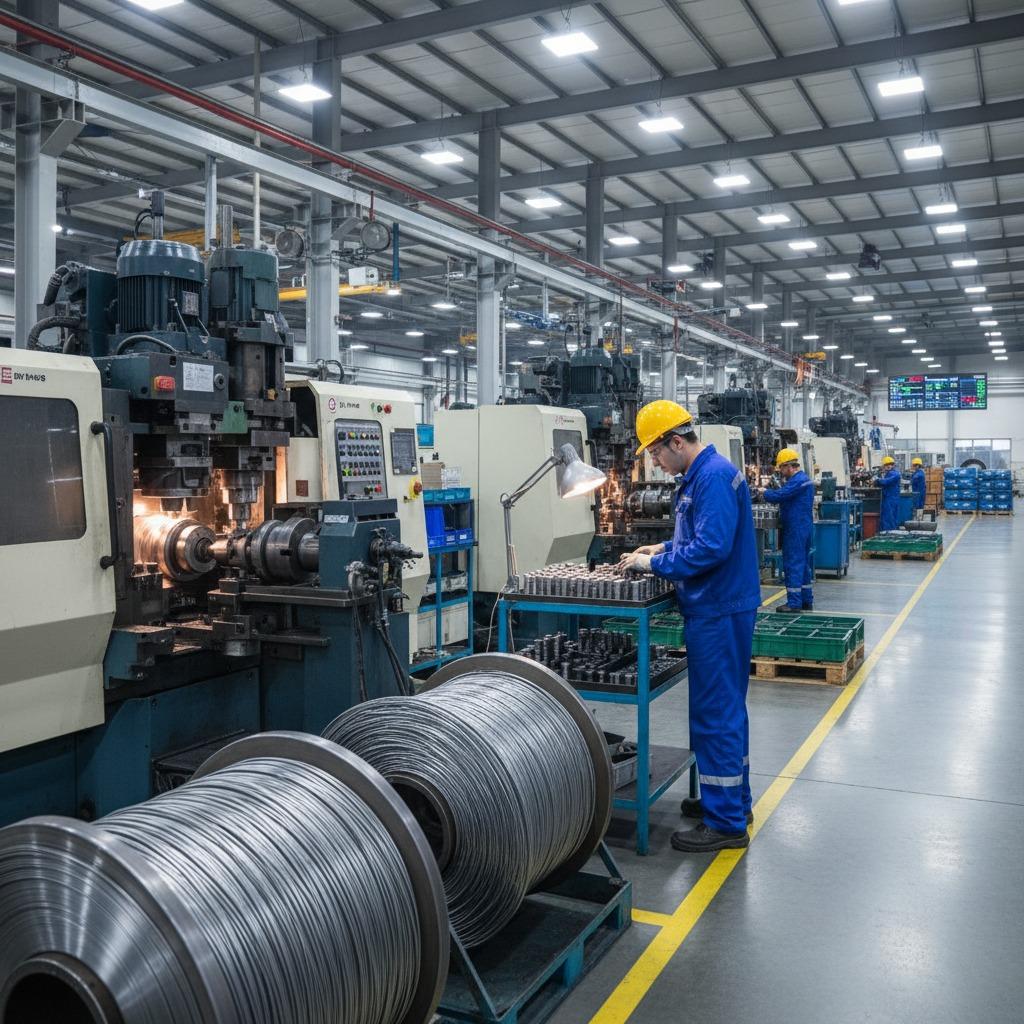
When sourcing fasteners for an assembly, the OEM fastener manufacturing process explained clearly can save a lot of back-and-forth between design, procurement, and quality teams. Fasteners look simple from the outside, but the route from raw wire or bar stock to a usable screw, bolt, nut, or stud involves several choices that affect fit, strength, consistency, corrosion resistance, and ultimately line performance. For engineers and sourcing managers, the real question is not just how a fastener is made, but which parts of the process matter most for your application.
That matters because a fastener is rarely an isolated purchase. It touches the drawing, the assembly method, the finish, the packaging, and sometimes the warranty risk on the final product. If the process is poorly matched to the design, problems usually show up later: galling, stripping, coating damage, dimensional drift, or batch variation that slows production.
From raw material to finished fastener
Most OEM fasteners begin as wire, rod, or bar stock. The material choice depends on the service environment and the required mechanical performance. Common families include carbon steel, stainless steel, and alloy steel, though the final selection should always be tied to the application rather than habit. A strong fastener in the wrong material is still the wrong fastener.
The first physical step is usually forming. In high-volume production, cold heading is widely used because it shapes the head and body efficiently while preserving material continuity. For certain geometries, machining may still be preferred, especially when the design calls for unusual lengths, special threads, or tighter control over a nonstandard feature. That is one of those practical tradeoffs buyers should ask about early, not after drawings have already been frozen.
Threading, heat treatment, and finishing
Once the basic shape is formed, threads are added by rolling or cutting. Thread rolling is common for production fasteners because it improves surface finish and can support stronger thread roots than a cut thread in many cases. Cutting remains useful for smaller batches or parts that cannot be rolled easily.
Heat treatment comes next for many steel fasteners. This step changes hardness and strength, but it also introduces risk if the process is not controlled carefully. Overhardening can make a part brittle; underprocessing can leave it too soft for the load. Buyers do not need to specify the furnace settings, but they should understand that heat treatment is not a cosmetic step. It is central to how the fastener behaves in service.
Surface finishing is the final layer in many OEM fastener manufacturing workflows. Plating, coating, passivation, or other treatments may be used to improve corrosion resistance, appearance, or installation behavior. The finish must be compatible with the substrate and the end use. For example, a coating that performs well in storage may still create friction issues during automated assembly if it is not selected carefully.
Quick reference: what each stage affects
The material choice affects strength, corrosion resistance, and cost.
The forming method affects geometry, throughput, and repeatability.
Threading affects engagement quality and installation consistency.
Heat treatment affects mechanical properties and durability.
Finishing affects corrosion performance, friction, and appearance.
That simple breakdown helps teams decide where to focus their review. Often the most important issue is not the nominal size on the print, but whether the supplier’s process can hold that size and property set across production lots.
Selection criteria buyers should not skip
A good procurement review starts with the drawing, then moves to the service environment. Will the fastener face vibration, moisture, chemicals, temperature cycling, or repeated disassembly? Will it be hand-installed or run through an automated tool? Those conditions affect the right combination of material, thread style, and finish.
It also helps to ask how the supplier controls incoming material, in-process inspection, and final verification. Exact test methods vary by program, but the principle is straightforward: a fastener supplier should be able to explain how parts are checked for dimensional consistency and mechanical performance without turning the answer into vague assurances.
One practical caution: do not assume the cheapest process route is the best value. A part that looks economical on paper can become expensive if it drives tool wear, assembly rework, or coating failures.
Common mistakes in OEM fastener sourcing
A frequent mistake is specifying only basic dimensions and overlooking the manufacturing route. Another is changing finish requirements late in the project, after prototype approval, when the new coating affects friction or appearance. Teams also sometimes compare suppliers as if all fasteners were interchangeable, when in reality the same nominal part can be made by very different methods.
A better approach is to treat the process as part of the specification. That does not mean overcomplicating the drawing. It means asking the supplier how the part will be made and whether that route matches the intended use.
FAQ
Is a cold-headed fastener always better than a machined one?
Not always. Cold heading is efficient for high volumes and many standard shapes, but machining may be the better choice for special features, lower volumes, or geometry that is difficult to form cleanly.
Why does finishing matter so much?
Because finish affects more than corrosion resistance. It can also change torque behavior, installation feel, and long-term appearance.
What should I ask a fastener supplier first?
Start with material, forming method, threading method, heat treatment, and finish. Those five points reveal most of what you need to know about quality and fit for purpose.
Next step for sourcing and engineering teams
If you are comparing suppliers, ask each one to map its production route to your drawing and end-use conditions. That conversation quickly separates routine vendors from partners who understand what the part has to do in the field. The best sourcing decision is usually not the one with the most polished brochure; it is the one with the clearest process fit.





