


Understanding Lock Washers for Bolts
Lock washers for bolts are essential hardware components designed to prevent fasteners from loosening due to vibration or dynamic loads. These small but mighty washers create a locking action by deforming under pressure, ensuring that the bolt remains securely fastened. In applications ranging from automotive assembly to construction projects, lock washers for bolts provide reliability and safety. Without them, even the strongest bolts could fail over time, leading to potential hazards.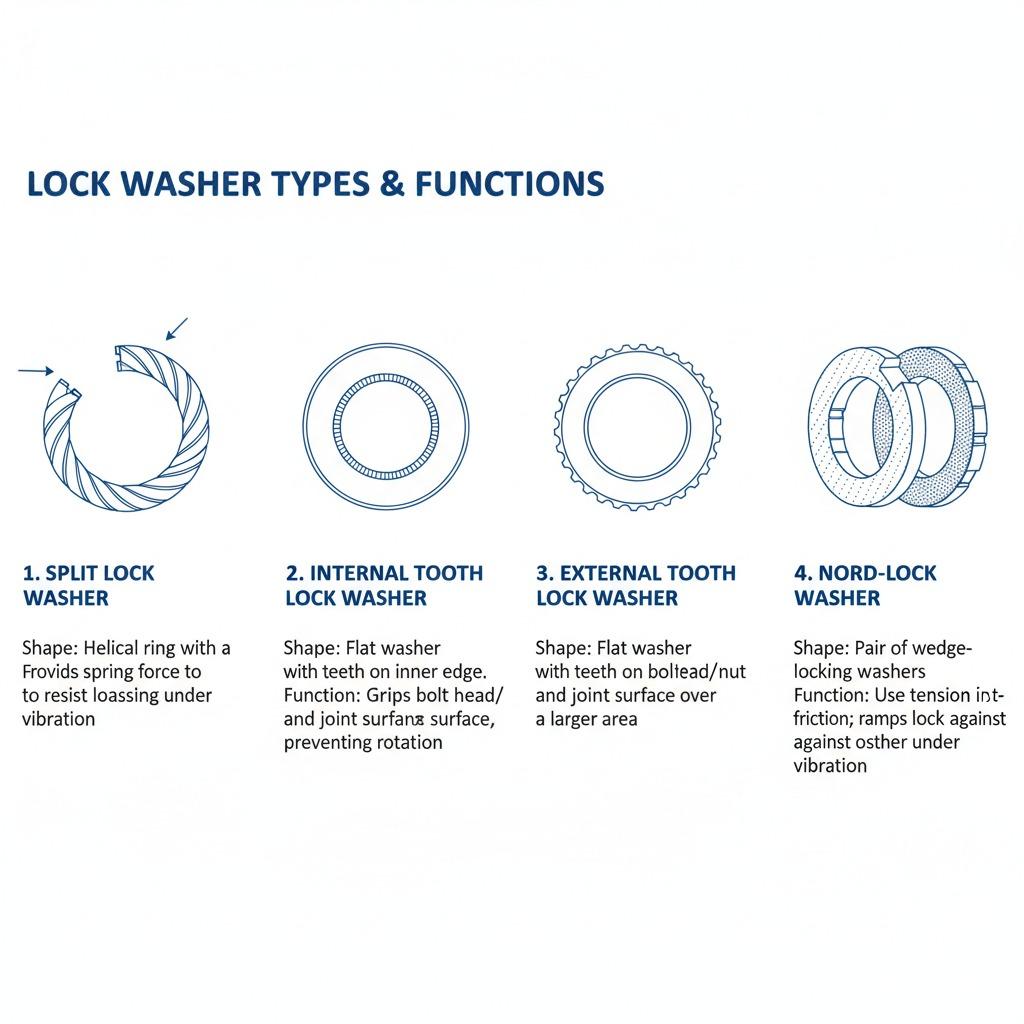
Types of Lock Washers for Bolts
There are several types of lock washers for bolts, each suited to specific needs. Split lock washers, the most common variety, feature a helical shape that springs back when compressed, generating friction against the bolt and nut. Internal and external tooth lock washers bite into the surfaces they contact, offering superior grip in high-vibration environments like machinery. Helical spring lock washers, similar to split ones, distribute load evenly and are ideal for softer materials. Nord-Lock washers, a premium option, use tension rather than compression and are engineered for extreme conditions, such as bridges or heavy equipment. Choosing the right type of lock washers for bolts depends on factors like material compatibility, load requirements, and environmental exposure.
Benefits and Applications
The primary benefit of using lock washers for bolts is enhanced security against self-loosening, which can extend the lifespan of assemblies and reduce maintenance costs. They are particularly valuable in industries where safety is paramount, such as aerospace, where even minor failures can have catastrophic consequences. In everyday uses, like securing furniture or electrical fixtures, lock washers for bolts add peace of mind. Additionally, they help prevent corrosion by maintaining tight seals, especially when paired with coated bolts. For optimal performance, always ensure the washer size matches the bolt diameter—common sizes include 1/4-inch to 1-inch for standard applications.
Installation Tips for Lock Washers for Bolts
Proper installation is key to maximizing the effectiveness of lock washers for bolts. Begin by placing the washer between the bolt head or nut and the surface, ensuring it's oriented correctly—split washers should have their gap facing away from the load path. Tighten the bolt to the recommended torque using a calibrated wrench to avoid over-compression, which could flatten the washer prematurely. It's also advisable to inspect lock washers for bolts before use, checking for defects like cracks or improper plating. In reusable applications, replace lock washers after a few cycles, as their locking properties diminish with repeated use. Following these steps ensures a robust, long-lasting connection.
Maintenance and Best Practices
Regular maintenance involving lock washers for bolts involves periodic checks for signs of wear, such as deformation or embedding into surfaces. In corrosive environments, opt for stainless steel or zinc-plated options to prolong durability. When designing assemblies, consider combining lock washers with thread-locking compounds for added security. By integrating these practices, engineers and DIY enthusiasts alike can rely on lock washers for bolts to safeguard their projects effectively. Ultimately, these unassuming components play a critical role in the integrity of countless mechanical systems worldwide.





