


Understanding Foundation Bolts: The Backbone of Structural Integrity
Foundation bolts are essential components in construction and engineering projects, serving as the critical link between a building's foundation and its superstructure. These heavy-duty fasteners are embedded into concrete foundations to provide a secure anchorage for steel structures, machinery, and other load-bearing elements. By distributing loads evenly and resisting forces like tension, shear, and vibration, foundation bolts ensure the stability and longevity of various installations. Whether you're constructing a skyscraper, installing industrial equipment, or building a bridge, selecting the right foundation bolts is paramount to safety and performance.
Types of Foundation Bolts and Their Applications
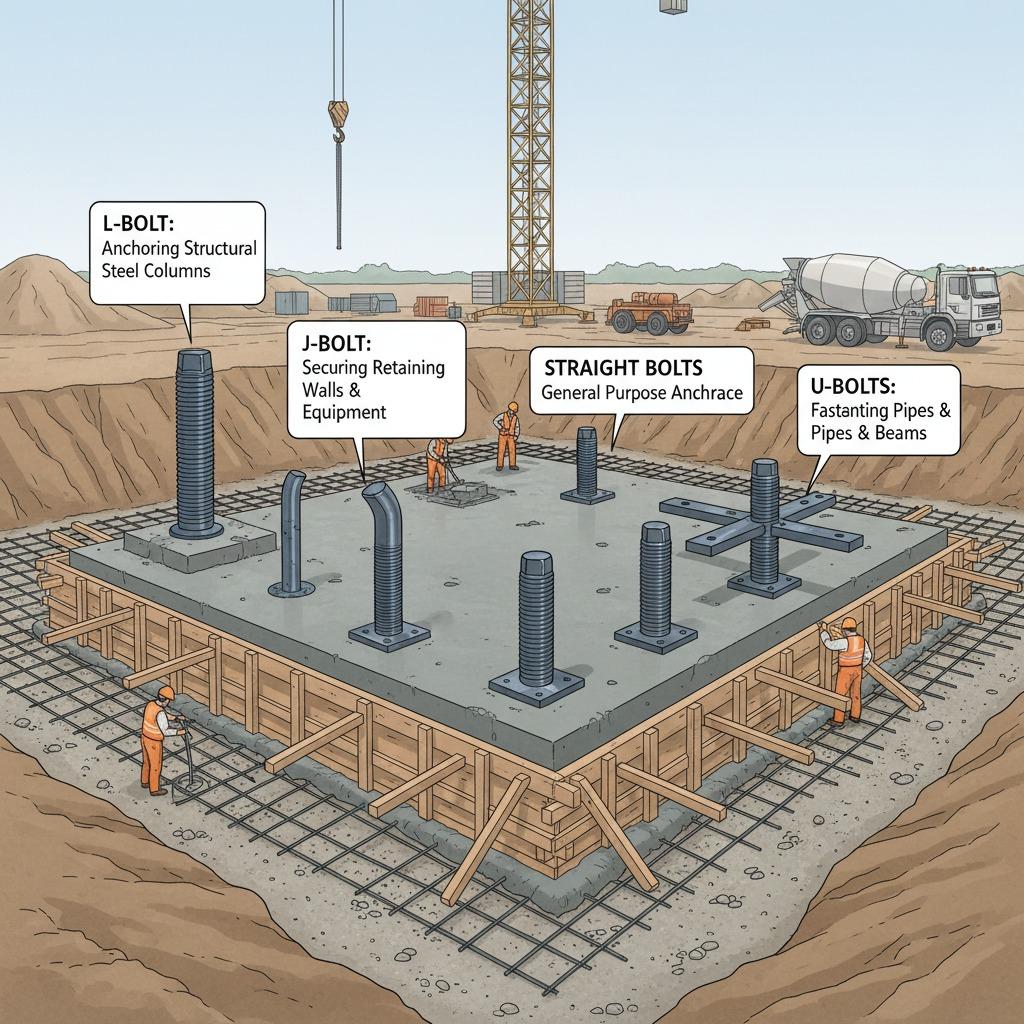
There are several types of foundation bolts designed to meet diverse needs in construction. L-shaped foundation bolts, for instance, feature a hooked end that grips the concrete tightly, making them ideal for applications where pull-out resistance is crucial, such as in seismic zones. J-bolts, similar in design but with a shorter hook, are commonly used in lighter structures like residential foundations. Straight foundation bolts, often called anchor rods, are embedded vertically and provide excellent shear strength for heavy machinery bases. Additionally, U-bolts are versatile for securing pipes and conduits to foundations. Each type of foundation bolt is manufactured from high-strength materials like carbon steel or stainless steel to withstand corrosion and extreme conditions. In practice, engineers specify foundation bolts based on load calculations, soil conditions, and building codes to prevent failures that could lead to costly repairs or safety hazards.
Installation Best Practices for Foundation Bolts
Proper installation of foundation bolts is as important as their selection. The process begins with precise placement using templates or jigs to align the bolts accurately within the concrete formwork. Before pouring concrete, it's vital to clean the bolts and apply a release agent to facilitate removal of templates. The concrete mix should be vibrated thoroughly around the foundation bolts to eliminate air pockets and ensure full embedment. Typically, foundation bolts are embedded to a depth of 4 to 7 times their diameter, depending on the design requirements. After the concrete cures, nuts and washers are tightened to the specified torque using calibrated tools. Regular inspections for alignment and tension are recommended to maintain structural integrity over time. Neglecting these steps can result in misalignment or loosening, compromising the entire structure.
Maintenance and Innovations in Foundation Bolts
Once installed, foundation bolts require minimal maintenance, but periodic checks for corrosion, especially in harsh environments like coastal areas, are essential. Applying protective coatings such as galvanization or epoxy can extend their lifespan significantly. Recent innovations in foundation bolt technology include the development of adjustable anchor systems that allow for fine-tuning during installation, reducing on-site errors. High-performance alloys and smart sensors integrated into foundation bolts enable real-time monitoring of stress levels, enhancing predictive maintenance in critical infrastructure. As construction demands grow with urbanization, advancements in foundation bolt design continue to push the boundaries of safety and efficiency, making them indispensable in modern engineering.





