Understanding the 3/4″ USS Flat Washer Zinc: A Key Component for Secure Fastening
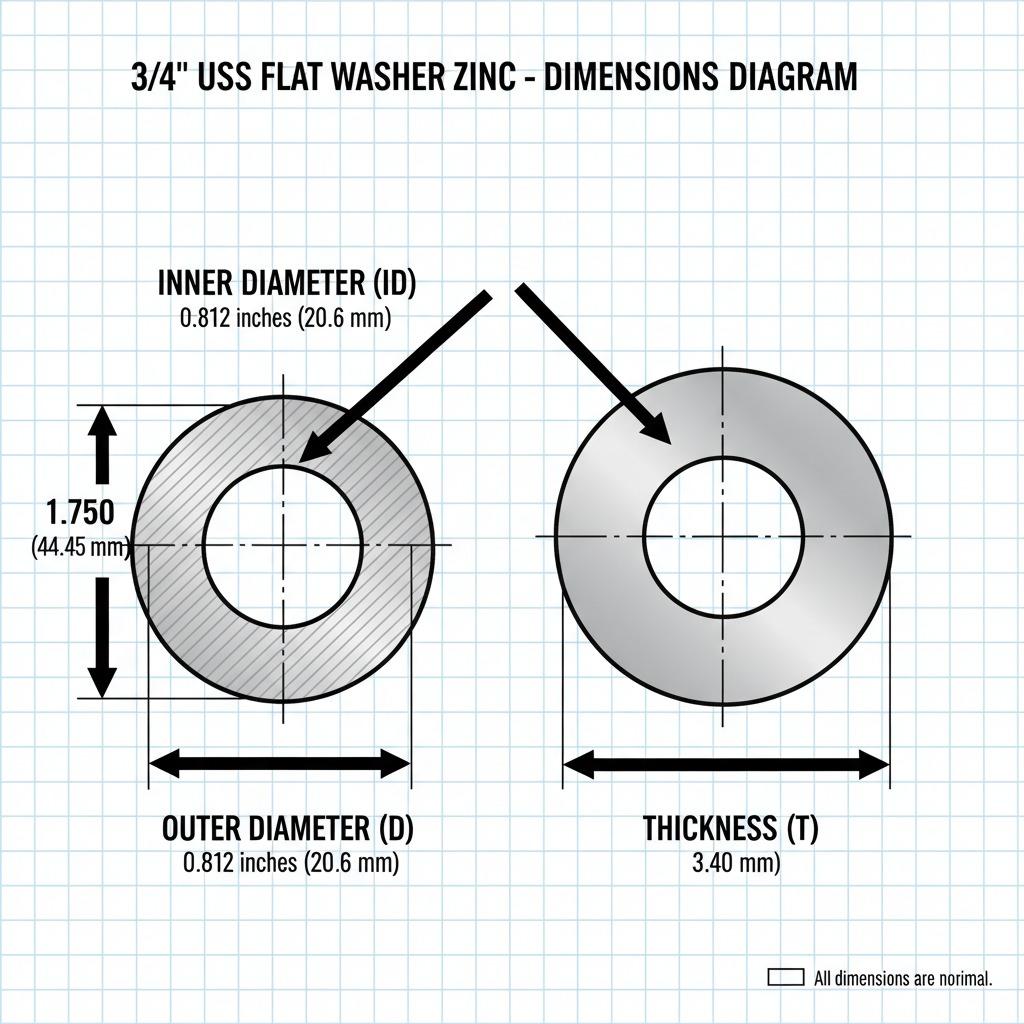
When it comes to reliable hardware solutions, the 3/4″ USS Flat Washer Zinc stands out as an essential piece in various construction and assembly projects. This washer, designed under the United States Standard (USS) specifications, provides a smooth, flat surface that distributes load evenly, preventing damage to the surface it's fastened against. Coated with zinc for enhanced corrosion resistance, it's particularly useful in environments exposed to moisture or outdoor conditions. Whether you're working on automotive repairs, structural builds, or DIY home improvements, incorporating the 3/4″ USS Flat Washer Zinc ensures durability and safety in your fastening applications.
The Specifications and Benefits of 3/4″ USS Flat Washer Zinc
The 3/4″ USS Flat Washer Zinc is crafted from high-quality steel, with an inner diameter precisely sized at 0.812 inches to fit standard 3/4-inch bolts and screws. Its outer diameter measures about 1.469 inches, offering a broad bearing surface that helps in load distribution. The zinc plating not only gives it a shiny, professional finish but also acts as a sacrificial barrier against rust, making it ideal for both indoor and outdoor use. One of the primary benefits is its ability to reduce the risk of fastener loosening over time due to vibration or thermal expansion. In mechanical assemblies, this washer prevents the bolt from digging into softer materials like wood or plastic, thereby extending the lifespan of the joint. Engineers and builders appreciate its compliance with USS standards, which guarantee consistency in thickness—typically around 0.134 inches—ensuring compatibility across different projects.
Applications and Installation Tips for 3/4″ USS Flat Washer Zinc
In practical applications, the 3/4″ USS Flat Washer Zinc is widely used in plumbing fixtures, machinery mounting, and even in the assembly of furniture or playground equipment. For instance, in construction, it's often paired with nuts and bolts to secure beams or trusses, where its zinc coating protects against weathering. Automotive enthusiasts find it valuable for suspension systems or engine mounts, where even load distribution is critical for safety. When installing, always place the washer between the bolt head or nut and the workpiece to maximize its effectiveness. Ensure the surfaces are clean and aligned to avoid uneven pressure. It's advisable to use the correct torque settings to prevent over-tightening, which could deform the washer. For heavy-duty applications, stacking multiple washers can provide additional support, but always check load ratings to maintain structural integrity.
Why Choose 3/4″ USS Flat Washer Zinc for Your Next Project
Selecting the 3/4″ USS Flat Washer Zinc over generic alternatives offers peace of mind through its standardized quality and robust performance. The zinc finish not only enhances aesthetics but also provides long-term protection in harsh environments, such as coastal areas or humid climates. Compared to stainless steel options, it's more cost-effective without sacrificing essential properties, making it a go-to for budget-conscious professionals. Always source from reputable suppliers to ensure the plating thickness meets industry standards, typically at least 0.0005 inches for optimal corrosion resistance. By integrating this washer into your toolkit, you contribute to safer, more reliable constructions that stand the test of time. Whether for small repairs or large-scale builds, the 3/4″ USS Flat Washer Zinc proves to be an indispensable hardware essential.