Quick answer: if a concrete member may crack in the anchor zone during its service life, select an anchor system whose current evaluation evidence explicitly covers use in cracked concrete and the project’s load, installation, environmental, and code conditions. In other words, anchors for cracked concrete must be selected against documented project conditions rather than a catalog name alone. A product name such as “wedge anchor,” “sleeve anchor,” “drop-in anchor,” or “concrete screw” is not, by itself, proof of suitability. The responsible engineer must define the design condition and verify the applicable evaluation report, technical assessment, design data, and installation instructions.
That distinction sounds simple. In procurement, it is often missed. A drawing may call for an M12 expansion anchor while the purchase request says only “zinc-plated anchor bolt.” A supplier may quote a part that matches the diameter and length but has no evidence for cracked concrete, seismic loading, the specified embedment, or the required edge distance. The hardware can look correct and still be the wrong technical product.
This guide explains how engineers, contractors, distributors, and international buyers can specify anchors for cracked concrete without turning the RFQ into a guess. It also shows what a responsible concrete anchor manufacturer or sourcing partner should ask before offering a price.It is not a substitute for a project-specific design, an evaluation report, or the instructions supplied with an approved anchor system.

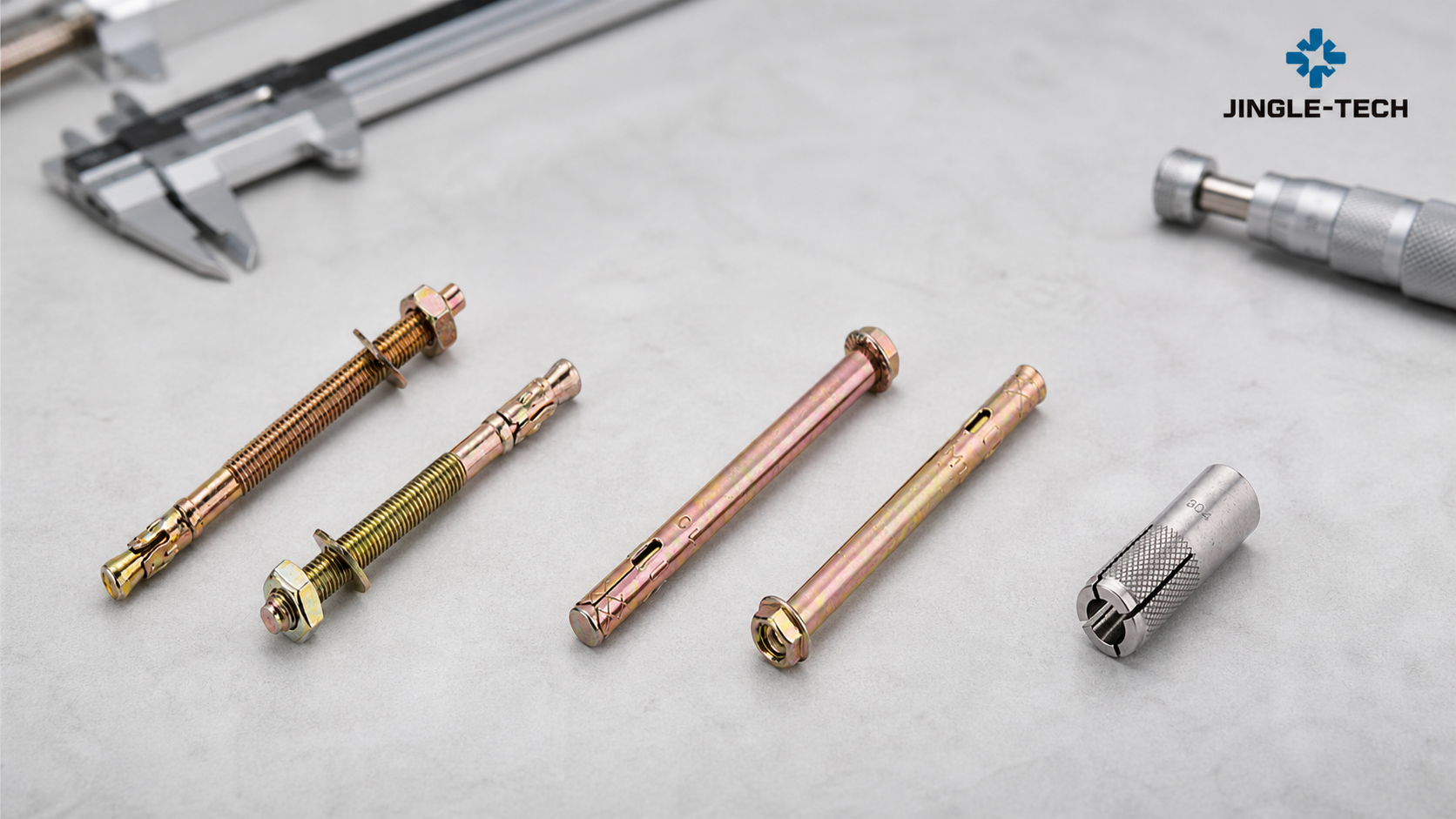
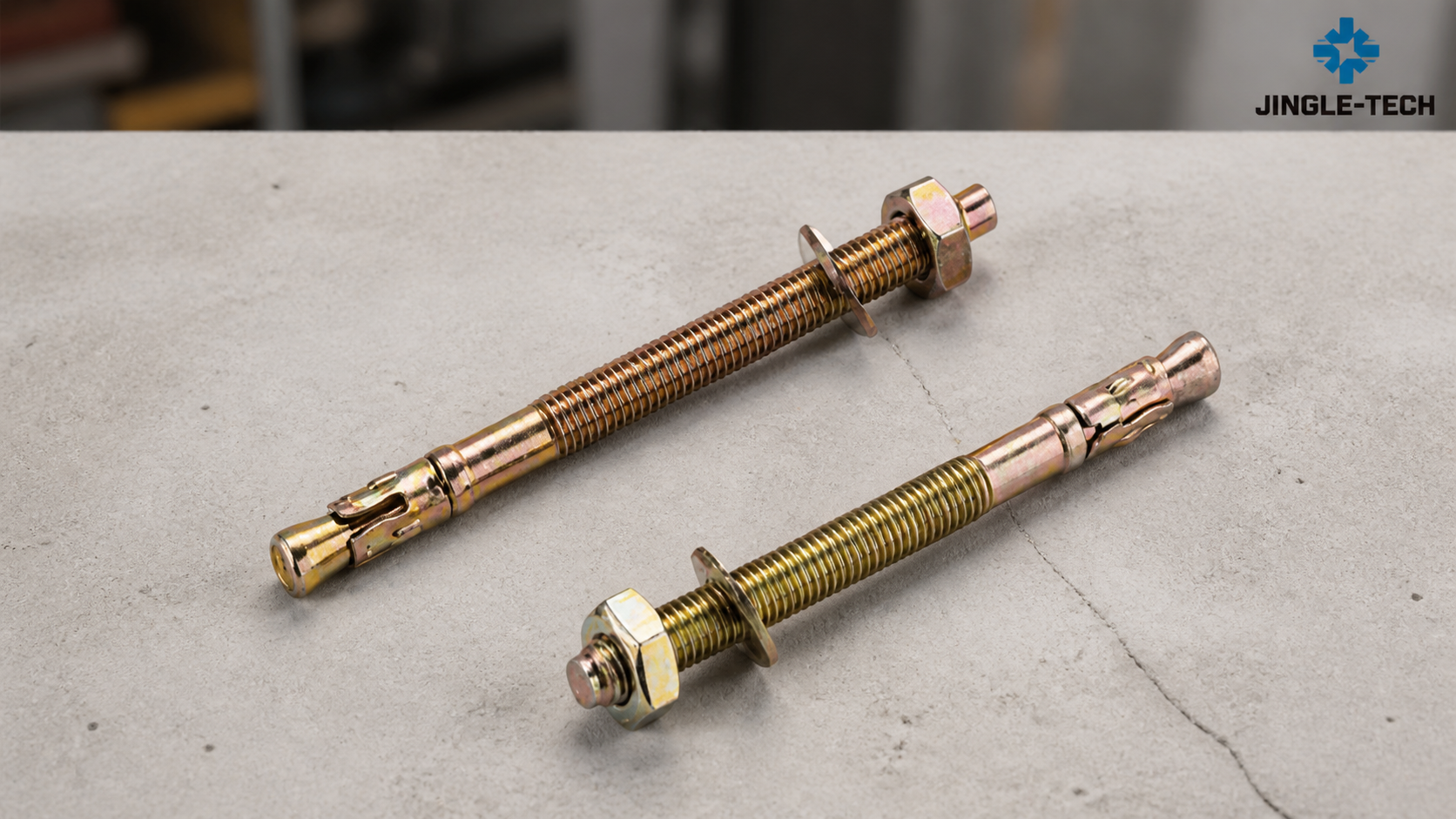
Product image: representative wedge anchors. Product appearance or catalog dimensions alone do not establish cracked-concrete qualification.
1. What “cracked concrete” means in anchor design
Cracked concrete is a design condition, not merely a description of a floor that happens to have a visible line on inspection day. Reinforced concrete is commonly designed with the expectation that tensile zones can crack under service loads, restraint, temperature effects, shrinkage, differential movement, or other actions. An anchor placed in such a zone may encounter a crack during part of its service life even when the surface looked intact at installation.
The practical implication is important: the person selecting the anchor should not classify the base material by walking to the site and deciding that it “looks uncracked.” The classification should come from the structural design basis, project specification, assessment of the existing member, and the judgment of the responsible design professional. Existing structures may require drawings, scanning, condition surveys, concrete testing, or other investigation before the anchor zone is understood.
A crack can intersect the drilled hole or the stress field around an anchor. Depending on the anchor mechanism and the approved system, this may affect load transfer, displacement, expansion behavior, concrete breakout resistance, or reliability under repeated crack opening and closing. That is why qualification programs distinguish between anchors intended only for uncracked concrete and anchors evaluated for both cracked and uncracked concrete.
The American Concrete Institute’s ACI CODE-355.2-24 describes testing and evaluation requirements for post-installed mechanical anchors used in structural applications addressed by ACI 318. Its published description expressly distinguishes acceptance for uncracked concrete only from acceptance for cracked as well as uncracked concrete. For European work, buyers may encounter EAD 330232-02-0601, which sets out how mechanical fasteners in concrete are assessed. Do not treat the two documents as substitutes. The useful purchasing takeaway is to read the stated scope before relying on any values.
Cracked does not mean damaged beyond use
The word “cracked” can alarm buyers who are new to structural fastening. Here, it does not by itself say that the member is defective or unusable. It tells the designer which concrete condition the anchor has been evaluated against. That is very different from concrete that is delaminated, badly damaged, fire-affected, chemically attacked, or deteriorated. Choosing an anchor labeled for cracked concrete does not repair such a substrate; engineering assessment and repair may still be necessary.
Uncracked concrete is not the default assumption
For a low-consequence nonstructural fixing, project rules may permit a straightforward selection. For guardrails, façades, overhead supports, machinery, seismic work, or any other safety-sensitive fixing, an uncracked assumption needs project backing. When the drawings or specification are silent, send a technical query. The supplier should not be asked to infer the condition from a one-line part description.
2. Who decides whether cracked-concrete performance is required?
The responsible engineer or other legally authorized design professional should define the design assumptions. The manufacturer supplies product-specific evidence and instructions. The contractor controls installation. The inspector verifies defined attributes. Procurement makes sure the ordered product, revision, documentation, and delivery match the approved submittal. These roles overlap in communication, but they should not be collapsed into one vague promise from a salesperson.
| Role | Primary decision or evidence | Common procurement failure |
|---|---|---|
| Responsible engineer | Defines design condition, loads, code basis, geometry, durability, and acceptable evaluated system. | The RFQ omits the engineer’s basis and asks the vendor to “recommend something strong.” |
| Manufacturer or authorized supplier | Provides traceable product identity, current evaluation evidence, technical data, and installation instructions. | A generic catalog sheet is presented as if it were a project approval. |
| Contractor and installer | Uses the specified tools, hole preparation, embedment, setting method, and torque. | A qualified anchor is installed with an unapproved drill bit, dirty hole, or uncontrolled torque. |
| Inspector and quality team | Checks product marking, location, dimensions, installation records, and project-required tests. | Inspection begins after the work is concealed and lot identity has been lost. |
| Buyer or distributor | Maintains the specification-to-purchase-order-to-delivery chain. | A cheaper “equivalent” is ordered based only on size and finish. |
A high-quality RFQ for anchors for cracked concrete therefore asks a manufacturer to confirm a defined requirement, not to perform structural design from an incomplete email. The distinction protects every party. It also shortens quotation time because the supplier can identify gaps before tooling, sampling, testing, or commercial commitments begin.
3. Anchor families: mechanism first, approval second
Concrete anchors are often grouped by how they transfer load. Torque-controlled expansion anchors develop expansion as the nut is tightened. Deformation-controlled expansion anchors are set by driving an internal plug or using a setting tool. Undercut anchors engage a formed bearing surface. Concrete screws cut or form engagement along the drilled hole. Adhesive anchors rely on a qualified bonding system and have their own installation and sustained-load considerations.
Those mechanism labels help organize a selection. They do not replace the product-specific evaluation. Two anchors that look almost identical can have different steel, tolerances, clip geometry, installation torque, embedment range, evaluation scope, or manufacturing controls. A generic drawing cannot carry the design values of a tested system unless the applicable approval or engineering basis allows it.
Wedge anchors
A wedge anchor is a familiar torque-controlled expansion format for through-fastening into concrete. Buyers like the simple geometry, broad availability, and direct installation workflow. The sourcing question is not whether wedge anchors can ever be used in cracked concrete. Some evaluated systems can. The question is whether the exact anchor being offered is covered for the stated condition, diameter, embedment, concrete strength, load case, edge distance, spacing, installation method, and jurisdiction.
The JingleFix product page referenced above can support a conversation about dimensions, finish, quantity, and packing. It should not be read as proof that every listed size is qualified for every cracked-concrete or seismic application. Ask for the current, product-specific evidence required by the project.
Sleeve anchors
A sleeve anchor expands a sleeve against the hole wall and is commonly considered for concrete or masonry fixing. Its long expansion zone can be useful in certain base materials and fixture arrangements. Yet “sleeve anchor” covers many designs.Some products are intended for general fixing rather than structural cracked-concrete work. Do not transfer values from a branded evaluation report to an unverified look-alike.
Drop-in anchors
A drop-in anchor is an internally threaded, deformation-controlled expansion anchor installed below the surface and set with a specified tool. It can be attractive where a removable bolt or threaded rod is desired. Buyers should confirm setting-tool requirements, thread engagement, embedment, member thickness, inspection method, and evaluation scope. A drop-in format is not automatically approved for cracked concrete, overhead service, seismic loading, or every installation orientation.
Concrete screws
A concrete screw engages the base material through a hardened thread profile. Installation can be efficient, and some evaluated systems permit removal or adjustment under defined conditions. Hole diameter, drill-bit condition, concrete strength, embedment, installation torque, and repeated-use rules can be decisive. As with expansion anchors, the exact evaluated system controls.
Adhesive anchors
Adhesive anchors deserve mention because buyers often compare them with mechanical anchors for edge distance, deep embedment, retrofit geometry, or rebar connection work. Their performance can depend on resin system, hole-cleaning method, drilling method, temperature, cure time, moisture condition, sustained load, installer qualification, and dispensing controls.Do not substitute adhesive and mechanical systems on price alone. Use the design and qualification path applicable to the project.
4. The design inputs that belong in a cracked-concrete anchor RFQ
A useful inquiry does more than name an anchor. It tells the supplier which product identity and documentation must be priced. When the project team has not finalized every parameter, label the unknowns instead of hiding them. “To be confirmed by engineer” is more useful than a false assumption that later becomes a purchase-order conflict.
| Input | Why it changes selection or price | What to send |
|---|---|---|
| Jurisdiction and design basis | The required evaluation route, documentation, terminology, and design method differ by market. | Country, project location, governing code, specification section, and required report type. |
| Cracked or uncracked condition | Qualification scope and design parameters may differ. | Engineer’s stated condition; do not infer from a site photograph. |
| Concrete properties | Strength, density, age, deterioration, and member type can affect design and testing. | Specified strength, known existing strength, lightweight/normal-weight status, and condition notes. |
| Load direction and magnitude | Tension, shear, combined action, moment, and prying influence anchor demand. | Design actions per anchor or anchor group, load combinations, and units. |
| Load character | Static, seismic, fatigue, impact, vibration, and shock require different evidence or checks. | Application description and the governing project category. |
| Anchor layout | Spacing, edge distance, group effects, and fixture stiffness affect capacity and constructability. | Dimensioned base-plate or fixture drawing, including hole pattern. |
| Member thickness and reinforcement | Drilling depth, breakout geometry, interference, and spalling risk depend on the member. | Section drawing, thickness, cover information, and scanning requirement. |
| Fixture thickness and hole type | It determines usable thread, anchor length, washer arrangement, and tolerance. | Provide the full fixture build-up: coating, hole diameter, slot orientation, leveling components, and every layer under the washer. |
| Exposure and required service life | State the conditions that drive the steel and finish choice: corrosion category, water, chlorides, chemicals, operating temperature, and any fire requirement. | Say whether the fixing is indoors or outdoors, note coastal or industrial exposure, give the temperature range, and cite the durability requirement. |
| Installation access | Overhead work, limited tool clearance, deep fixtures, or restricted drilling can eliminate otherwise suitable options. | Photos, sequence, access envelope, power/tool limits, and whether through-fastening is possible. |
| Inspection and testing | Witness points, proof testing, installer qualification, and records add time and cost. | Inspection plan, acceptance basis, sampling, report format, and third-party requirements. |
| Commercial scope | Quantity, packaging, marking, Incoterm, and delivery plan affect the real landed offer. | Size schedule, annual demand, trial quantity, destination, delivery dates, and packing rules. |
Do not send allowable loads copied from a competitor’s table without the table notes. Do not mix service loads, factored loads, test loads, and catalog capacities. State the units and the design convention. If procurement does not own the load data, ask the engineer to release a controlled anchor schedule.
5. How to read approval evidence without being misled
Approval language is frequently compressed into a single line: “ETA approved,” “ICC approved,” “CE anchor,” or “tested to ASTM.” Each phrase is incomplete unless it identifies the exact product, document, issuer, revision, intended use, and limitations.A test report can show how samples behaved under stated conditions; it does not automatically create a code evaluation or permit use outside the tested scope. A management-system certificate does not establish anchor capacity. A CE mark on one construction product does not cover a visually similar product family.
For projects using ACI and the International Building Code
Ask for the current product-specific evaluation report recognized by the authority having jurisdiction and confirm that the report identifies the supplied anchor. Review the conditions of use, cracked/uncracked scope, seismic category where relevant, concrete range, diameters, embedment options, edge and spacing rules, installation torque, drill-bit requirements, special inspection, and any limitations on overhead or sustained loading. ICC-ES lists AC193 as its acceptance criteria for mechanical anchors in concrete elements. The evaluation report, not the AC number alone, is what ties an individual product to evaluated data.
ASTM E488/E488M-22 covers laboratory test methods for the tensile and shear strength of anchors in cracked or uncracked concrete and includes different loading and environmental categories. Referencing that standard may be appropriate for a defined test program. It still does not authorize a supplier to publish another system’s design values or claim universal code compliance.
For European projects
Ask which European Assessment Document, European Technical Assessment, declaration, and intended-use conditions apply. Confirm the legal manufacturer, product trade name, sizes, base material, installation parameters, service conditions, and notified or technical assessment bodies involved. EAD 330232-02-0601 covers several mechanical-fastener operating principles, including torque-controlled expansion, deformation-controlled expansion, undercut fasteners, and concrete screws. That broad framework does not mean every anchor manufactured in those formats has an ETA.
A six-point document check
- Identity: Does the report name the same legal manufacturer, product family, model, and marking that will be delivered?
- Revision: Is the document current for the project date, and have superseded versions or technical changes been addressed?
- Scope: Does it include cracked concrete, the load type, seismic requirement, material, diameter, embedment, and exposure?
- Installation: Are drill bit, hole cleaning, setting tool, torque, temperature, and inspection instructions available?
- Traceability: Can cartons, labels, lot records, certificates, and received goods be tied back to the approved product?
- Authority: Has the responsible engineer and, where applicable, building official or approving party accepted the proposed system?
If one of these links breaks, stop the substitution. A persuasive brochure cannot repair a missing technical chain.

Application scene: substrate condition and anchor-zone assumptions should be reviewed before the product is selected.
6. Seven stops between the drawing and the purchase order
Step 1: name the job before naming the anchor
Begin with the object being fixed and the trouble that follows if it moves. An anchor holding a removable machine guard lives a different life from one at a column base. A handrail sees hands, carts, and occasional abuse; an overhead service introduces a falling-object hazard; a vibrating support repeats the same demand thousands of times. Record the connection’s structural status, expected life, location, movement, unusual loads, and consequence in plain language. That short description often reveals questions hidden by the part number.
Step 2: find out what the drill will actually meet
A concrete-looking surface may be grout, topping, screed, a repair layer, masonry, or a thin skin over a void. Confirm the structural base. With existing work, put the available strength records and condition findings beside the drawing. Note old holes, wet patches, repairs, crowded reinforcement, spalls, and anything else that could turn a routine hole into a site decision. Investigation belongs ahead of drilling.
Step 3: obtain the design demand and geometry
Layout is part of the anchor choice.A hole close to an edge, a thin slab, a flexible plate, a slotted fixture, or a load applied away from the concrete face may govern even when the steel anchor looks generous. Keep the dimensioned plate and concrete section on the same review screen. Where the pattern is not frozen, a little more room between holes—or a wider plate—may buy more reliability than a larger anchor. The engineer decides whether that trade is available.
Step 4: remove unsuitable systems before comparing prices
Make the first cut with the non-negotiables: jurisdiction, crack condition, loading category, substrate, exposure, access, and required evidence. Products outside any one boundary leave the list. The survivors can then be compared for mechanism, diameter, embedment, stock, installation effort, and cost. Starting with a unit price usually ends with someone trying to retrofit the paperwork to a product already chosen.
Step 5: verify constructability
Review drilling clearance, rebar scanning, hole depth, dust control, hole-cleaning tools, setting tools, calibrated torque equipment, installer training, inspection access, and the sequence of adjacent work. An excellent design that cannot be installed as specified is not an excellent design.
Step 6: lock the submittal and purchasing description
The approved submittal should flow into the bill of materials and purchase order. Include manufacturer, product designation, size, material, coating, embedment or anchor length, accessories, evaluation-document reference, installation instructions, packaging, and substitution-control language.Avoid a purchase description that collapses all of that into “M12 anchor bolt.”
Step 7: preserve the chain at delivery
Receiving should verify labels, quantities, visible condition, lot identity, product markings, documentation, and accessory completeness. Quarantine mixed or unmarked goods until resolved. If anchors are repacked for site distribution, preserve product and lot identification on the smaller packs.
7. Installation controls: qualification does not survive bad workmanship
Post-installed anchors are unusually sensitive to the handoff between design and site execution. The drilled hole is part of the installed system. Drill diameter, bit wear, hole depth, perpendicularity, cleaning, embedment, setting action, and torque can change behavior. The project should use the current manufacturer’s instructions for the accepted product; a generic internet installation sequence is not enough.
Before drilling
- Confirm the approved anchor, diameter, length, embedment, location, and fixture.
- Check the latest installation instructions and required tools.
- Locate reinforcement, tendons, embedded services, and prohibited drilling zones using the project’s approved method.
- Verify concrete age, strength, surface condition, and repair areas where relevant.
- Establish dust, noise, access, work-at-height, and exclusion-zone controls.
Drilling and hole preparation
Use the specified drilling method and compatible bit. Mark or control depth; do not assume the bit shoulder provides the required embedment.Keep the hole within the permitted orientation tolerance. For systems that require cleaning, follow the exact sequence and equipment stated in the instructions. Brushing with the wrong diameter brush or giving a dusty hole one casual blast is not process control.
Dust deserves its own line in the method statement. Drilling concrete may release respirable crystalline silica, so the crew needs the exposure controls required where the job is located. For United States work, OSHA 29 CFR 1926.1153 sets out control methods for drilling tasks; its Table 1 addresses drill-mounted dust collection, and the rule also addresses HEPA-filtered vacuum use for hole cleaning in the stated circumstances. Other countries use different rules. None of these safety measures should be mistaken for structural approval of the anchor.
Setting and torque
Install to the stated depth and use the specified setting tool when the system calls for one. If torque forms part of the installation, control it with suitable equipment. The instinct to give the nut “one more pull for safety” is a bad one: that pull may strip a thread, dish a washer, crush the fixture, or alter expansion. Stopping too soon creates the opposite problem and may leave a torque-controlled anchor short of its intended set.
Decide what will be witnessed before the hole is hidden
Write the inspection points while the work can still be seen.A useful record tells a later reviewer which lot went into which location, who installed it, what drill and bit were used, how depth and cleaning were checked, and which torque or setting tool was involved. Add the date, concrete observations, calibration reference, witness signature, and any correction made. When proof tests are specified, settle the rig, load, hold time, sample, acceptance rule, and fate of the tested anchors before the tester arrives.

Application scene: dust control, drilling method, embedment, setting, and torque belong to the installed anchor system.
8. What to ask a concrete anchor supplier before approval
A capable supplier should be willing to separate what is known from what still requires confirmation. Fast answers are helpful; unsupported answers are not.Use the following questions during supplier qualification:
- What legal entity manufactures the exact product, and what entity will appear on the quotation, invoice, packing list, and certificate?
- Which evaluation report, ETA, test report, or technical file applies to this exact product and revision?
- Does the evidence cover cracked concrete, the project load condition, the requested size and embedment, and the intended environment?
- Which dimensions and characteristics are controlled on the production drawing?
- How are steel, heat treatment, forming, thread, expansion component, coating, and assembly verified?
- What markings and lot information appear on the anchor and packaging?
- Which installation instructions, drill bits, cleaning equipment, setting tools, and torque values are supplied?
- Can samples and documents be reviewed before the production order?
- What changes require customer approval: raw material, plant, sub-supplier, tool, coating source, drawing, or packaging?
- How are nonconforming products contained and how are corrective actions recorded?
For a standard commercial anchor with no project approval requirement, the documentation package may be modest. For safety-critical or code-controlled work, it may be extensive. The mistake is using the same low-detail purchasing process for both.
9. Price and lead-time drivers buyers should expect
The lowest unit price may omit the controls that make the offer usable.Steel and stainless selection matter, but so do heat treatment, tight dimensions, the geometry of a clip or cone, and the chosen surface process. Then come tests, lot separation, markings, cartons, outside inspection, technical documents, tooling, and order size. A small trial lot can consume more engineering and handling per piece than a production run even though the anchor itself is simple.
Lead time should be separated into technical review, sample or document approval, raw material, manufacturing, surface treatment, inspection, packing, and transport. A supplier cannot responsibly confirm a final production lead time while the product identity, coating, approval scope, quantity, and packing remain open. If the project has a fixed installation date, send the required-on-site date and destination, not only “urgent.”
Ask for a quotation that clearly lists included documents, sample status, Incoterm, validity, tooling ownership, test cost, production quantity, over/under shipment tolerance, packing, and exclusions. That makes competing offers comparable and reduces late commercial surprises.
10. Worked example: turning an incomplete anchor request into an engineer-ready inquiry
Consider a hypothetical retrofit project in which a contractor needs to attach outdoor steel equipment frames to an existing reinforced-concrete slab. The original email says: “Please quote 1,200 pcs M16 wedge anchors, 180 mm long, hot-dip galvanized, high strength.” It includes a photograph of one frame and asks for delivery in six weeks.
That message is enough for a budgetary conversation, but not for a technically comparable offer.It does not identify the country or governing code. It does not state whether the slab is designed as cracked concrete, whether the frames carry cyclic machinery loads, how close the anchors are to an edge, how thick the base plate is, what effective embedment the engineer requires, whether reinforcing steel limits drilling depth, or what “high strength” means. It also gives no coating standard, service environment, approval requirement, inspection plan, packaging format, or required-on-site date.
A disciplined supplier would not fill every blank with a favorable assumption. The supplier would issue a short technical query and mark the first offer as preliminary. The buyer, contractor, and engineer might then return the following controlled information:
- The project is in a jurisdiction using an edition of the International Building Code and ACI 318 identified in the specification.
- The engineer requires an evaluated mechanical anchor suitable for cracked concrete and the project’s stated seismic design condition.
- The concrete has a specified compressive strength, but the existing slab condition and actual strength must be confirmed from project records and investigation.
- A dimensioned frame drawing gives tension and shear demand, base-plate thickness, hole diameter, edge distance, anchor spacing, member thickness, and a no-drill zone around known reinforcement.
- The frame is outdoors in an industrial atmosphere; the project durability specification, not the phrase “galvanized,” will define acceptable material or coating.
- The contractor can use rotary-hammer drilling with approved dust controls, scan before drilling, record hole depth, and apply installation torque with calibrated equipment.
- The submittal must include the current evaluation report, technical data, installation instructions, product and carton marking information, and a proposed certificate package.
- The initial requirement is 60 pieces for submittal and field planning, followed by 1,200 production pieces after written approval.
Now the supplier can compare candidate systems against the real constraints. An M16 by 180 mm catalog size may remain appropriate, or the evaluated embedment, fixture stack-up, thread projection, and edge condition may point to another length or layout. The environmental review may favor a stainless option or a specifically documented coating system. The six-week request can be separated into document review, sample availability, production, treatment, inspection, and transit.
The result is not merely a more expensive quotation. It is a quotation that states what is being supplied and what remains outside the supplier’s scope. The engineer still performs or accepts the project design. The contractor still controls installation. The buyer obtains a product-and-document package that can be compared line by line instead of choosing between vague claims.
This example is intentionally non-numeric. Anchor capacity cannot be responsibly calculated from a generic scenario, and a blog should not invent a load table.Its purpose is to show the decision path: design basis first, product-specific evidence second, controlled installation third, and commercial optimization after the technical boundaries are known.
11. Build the RFQ on one controlled cover sheet
A cover sheet works better than a heroic email paragraph. Keep drawings, calculations, specifications, and inspection plans as separate controlled attachments; the cover sheet points to them and shows who owns each open answer. The format below is compact enough for a purchasing system without pretending that the attachments do not exist.
| Cover-sheet block | Put this on the record | Best source |
|---|---|---|
| Job identity | Project code, city and country, end site, shipment destination, enquiry revision | Buyer’s document register |
| Engineering basis | Connection description, concrete condition, design actions, geometry, environment and life | Engineer’s anchor schedule and drawings |
| Acceptance path | Code edition, specification, report or assessment required, submission deadline | Project specification and submittal register |
| Site method | Drilling access, orientation, scan restrictions, cleaning, setting, torque,inspection and tests | Contractor’s method and inspection plan |
| Supply request | Size schedule, sample and order quantities, pack, labels, Incoterm, destination and on-site date | Procurement and logistics plan |
| Bidder’s return | Exact designation, evidence scope, documents, open points, departures, lead-time stages, validity and exclusions | Signed quotation and deviation sheet |
Give every bidder the same revision. When an offer departs from it, copy the departure into a shared comparison sheet and obtain a written decision. Email threads are poor hiding places for technical differences, and they are worse sources for a purchase order six weeks later.
12. One shipment can contain several very different specifications
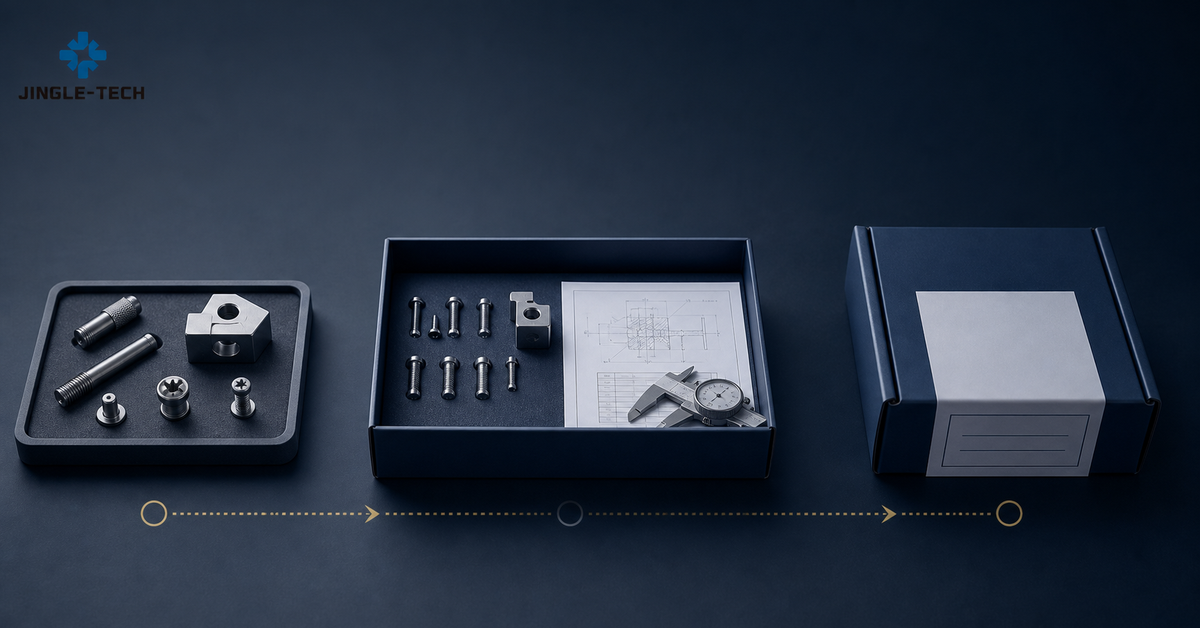
A construction or equipment order may place concrete anchors on the same packing list as dozens of other parts.Combining freight and communication is useful. Combining the specifications is not. Each family still needs a drawing or standard, material, process, inspection method, and document set of its own. Buyers evaluating a custom fastener manufacturer should ask how the factory keeps drawing-controlled specials from being confused with catalog stock.
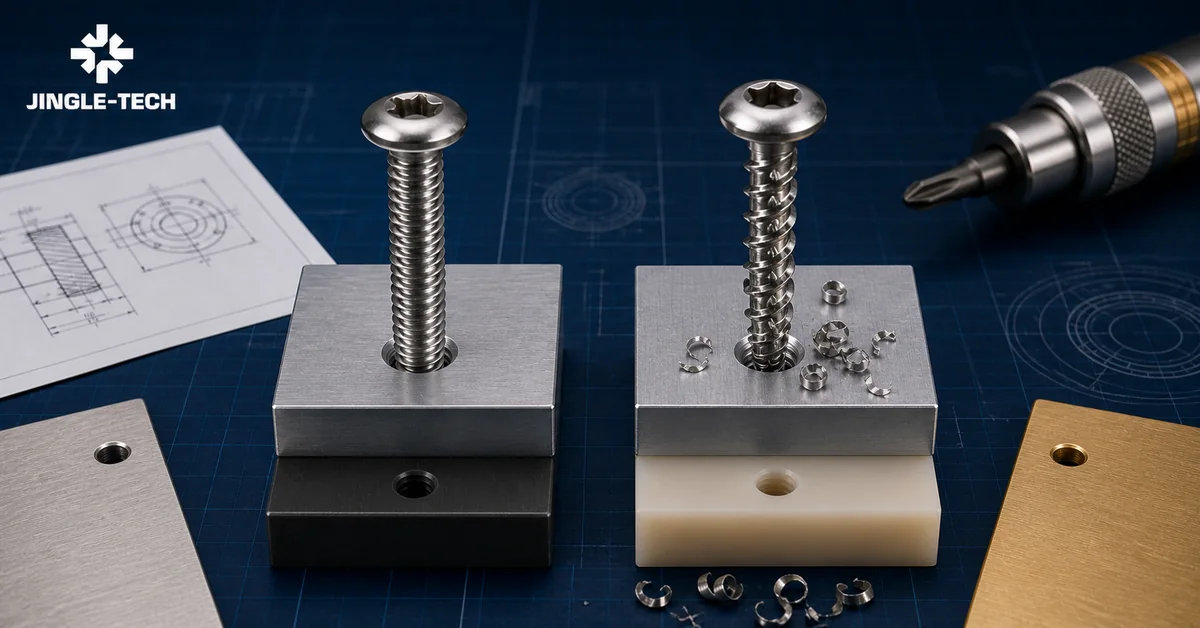
A related connection may need tapping screws, machine screws, or engineered specials from a custom screw manufacturer; heavy steelwork may require coordination with a structural bolt manufacturer. These products do not inherit an anchor approval simply because they share a shipment. Their grades, standards, test evidence, marking, and installation procedures remain separate.
The same rule applies when an assembly includes locknuts or drawing-specific nuts from a custom nut manufacturer, pipe or hose retention components from a hose clamp manufacturer, or lifting-system components sourced through a lifting anchor manufacturer. “One supplier” should mean coordinated control, not one generic certificate copied across unlike products.
Precast projects sometimes combine cast-in accessories, lifting items, anchors, plates, and machined inserts. A buyer searching for a precast concrete machining parts manufacturer should send component drawings, interface dimensions, installation sequence, and the applicable precast-system requirements. Machined geometry can be precise while the system application remains incorrectly specified; both product and use must be reviewed.
When turned, milled, or fabricated pieces travel with the fasteners, an OEM fastener and machined parts supplier can keep one enquiry register and one shipping plan. The time saving comes from fewer handoffs. The safeguard is mundane but essential: every line keeps its own revision, inspection route, pack identity, and acceptance decision.
13. Frequently asked questions about cracked-concrete anchors
Can I tell whether concrete is “cracked” by looking at it?
No. A visible crack may be relevant and should be assessed, but the design classification is not a simple visual test. A member that looks intact can develop cracks in a tensile zone during service. Use the project design basis and responsible engineer’s determination. Existing members may also require investigation for strength, deterioration, reinforcement, tendons, repairs, or prior drilling.
Is every wedge anchor suitable for cracked concrete?
No. “Wedge anchor” describes a general mechanism and shape. Suitability depends on the exact product and the scope of its current evaluation evidence, including diameter, embedment, concrete condition, load category, installation details, and jurisdiction.Never transfer design values from one evaluated wedge anchor to an unverified product that merely looks similar.
Does a higher steel strength make an anchor acceptable in cracked concrete?
Not by itself. Anchor behavior can be governed by steel failure, pullout, concrete breakout, splitting, edge failure, pryout, installation effects, or interaction between these modes. Clip or sleeve geometry, tolerances, embedment, concrete, layout, and qualification all matter. “High tensile” is not a substitute for product-specific evidence and project design.
Can I use catalog ultimate load as the allowable project load?
Do not do that unless the governing design method explicitly directs how the published value is used. Test ultimate load, characteristic resistance, nominal strength, allowable load, factored resistance, and recommended load are different concepts. Table notes, reduction factors, edge and spacing effects, concrete condition, load combinations, and safety formats matter. Ask the engineer to identify the required design data and convention.
What if the drawing only says “M12 expansion anchor”?
Raise a request for information. Ask for the connection loads, concrete condition and strength, embedment, spacing, edge distance, member and fixture dimensions, environment, design basis, and required evaluation. Procurement can obtain budget prices while those questions are open, but the final product should not be released solely from the generic description.
Are sleeve anchors or drop-in anchors never allowed in cracked concrete?
A family-wide yes or no is unsafe.Some evaluated systems may cover particular uses; many general-purpose products do not. Review the exact system, report, limitations, installation, and project acceptance. The same principle applies to concrete screws, undercut anchors, and adhesive systems.
Can an ETA, ICC-ES report, or test certificate be shared across equivalent-looking anchors?
Not merely because products look equivalent. The document must identify or legally cover the supplied product and manufacturer under its stated rules. Check markings, trade designation, size range, production controls, revision, and conditions of use. If the supply chain cannot connect the carton and lot to the document, the approval chain is incomplete.
Should an outdoor anchor be galvanized or stainless?
The site decides more than the product name does. A sheltered inland bracket and a splash-zone fixing near salt water should not share a default. Review chlorides, industrial pollution, wetting, crevices, neighbouring metals, concrete chemistry, installation damage, and intended life. Then specify a stainless grade or a complete coating standard that fits those conditions; a coating thickness by itself tells only part of the durability story.
Why does installation torque matter?
On a torque-controlled expansion system, tightening is part of the setting process, not a finishing touch. Stop short and the anchor may not develop its intended expansion. Keep pulling after the specified value and the installer may strip a thread, distort the fixture, or upset the way force enters the concrete.Follow the current product instructions and use controlled equipment where the job requires it.
Does proof testing prove the design capacity of every installed anchor?
No. A proof test is a project-defined quality-control or verification action, not an automatic substitute for product qualification and engineering design. The test load, equipment, reaction arrangement, duration, sampling, acceptance criteria, substrate effects, and disposition of tested anchors must be defined. A poorly planned test can damage the installation or produce misleading results.
What information has the greatest effect on quotation speed?
The fastest useful RFQs usually include the controlled drawing, jurisdiction, concrete condition, required approval route, material or exposure requirement, exact size schedule, quantities, documentation list, destination, and required date. A supplier can ask focused questions when these items are present. Without them, the quote may be quick but full of assumptions.
Can a supplier design the anchor connection for me?
A supplier can provide product data, clarify available systems, and in some business models offer technical support. Responsibility for project design and approval depends on law, contract, competence, and professional authorization. Do not assume a sales quotation transfers design responsibility. State the requested scope and identify the engineer who will accept the final selection.
What should I send JingleFix for a first review?
Send the anchor schedule or drawing, application, destination market, concrete information, loads or engineer-selected product, size and quantity, material or finish, documentation requirement, packaging, and delivery target. JingleFix can then clarify whether the request concerns a standard product, a sourcing comparison, or a drawing-based OEM component. Final suitability remains subject to the project’s engineering and approval process.
14. Source notes and final buyer checklist
This guide uses publicly available descriptions and requirements from ACI CODE-355.2-24, the ICC-ES acceptance-criteria register, EOTA EAD 330232-02-0601, ASTM E488/E488M-22, and OSHA 29 CFR 1926.1153. Always use the editions and project documents adopted for the actual job; a source link does not replace access to the full standard or professional review.
Before issuing a purchase order, confirm five things in writing: the design condition, the exact accepted product, the product-specific evidence, the controlled installation procedure, and the traceable delivery description. If any one is missing, the anchor conversation is not finished.
Editorial note: This article is educational sourcing content, not a structural design, installation instruction, or product approval. Project-specific selection must be completed or accepted by the responsible professional using the current product documents and governing requirements.