Why the concrete screw has become a default fastening choice on job sites
A concrete screw looks simple, but for installers and buyers it solves a problem that still causes a lot of unnecessary labor: how to create a reliable mechanical anchor in hardened concrete without waiting on cure time, mixing epoxy, or overcomplicating the detail. For many production environments, maintenance crews, and MRO buyers, that makes the concrete screw a practical fastening option when speed and predictable removal matter more than ultimate pullout resistance in every case.
The appeal is not hard to understand. A contractor can drill a correctly sized hole, drive the fastener, and move on. That sounds almost too easy, which is where the caution comes in. The fastener only performs well when the base material, hole preparation, and installation method are all compatible. A concrete screw is not a universal answer, and treating it like one is a common source of stripped holes, loose fixings, and wasted time.
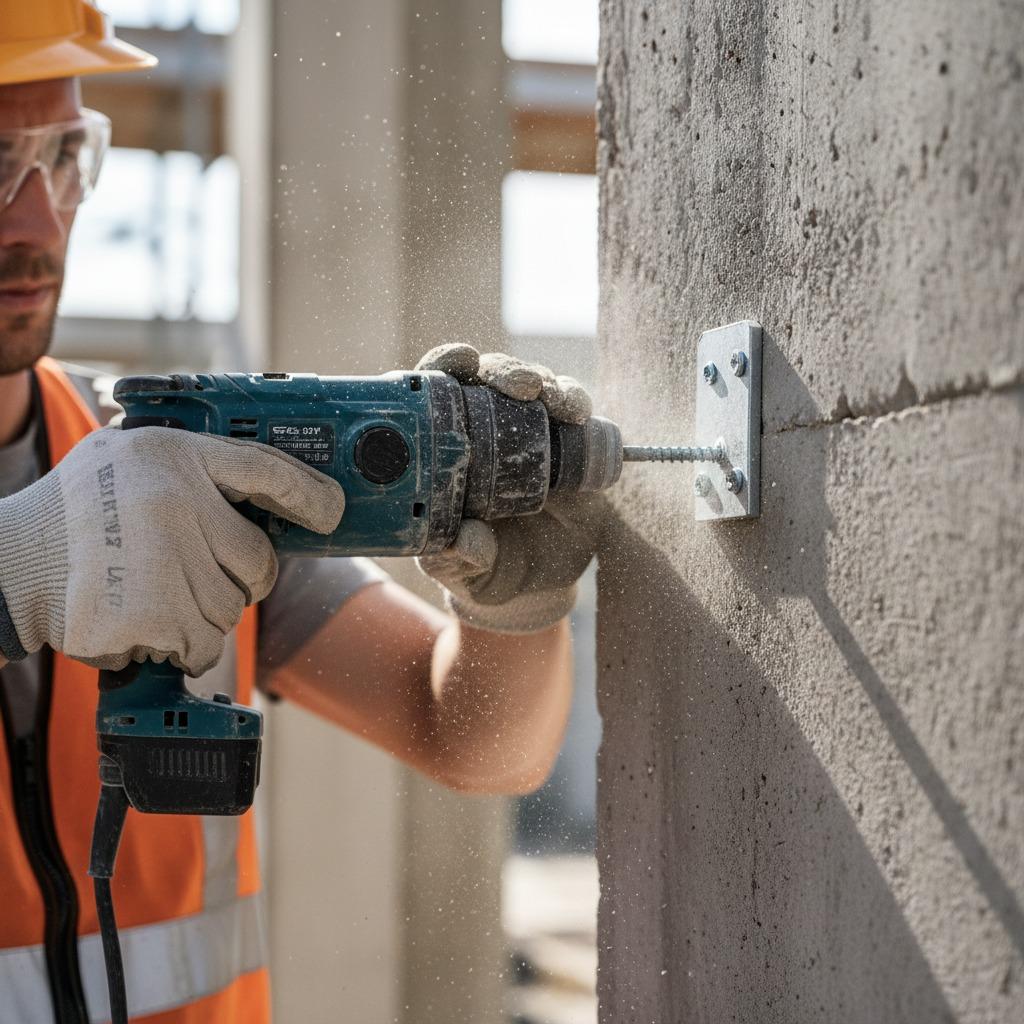
What a concrete screw is, and what it is not
A concrete screw is a threaded fastening solution designed to cut or form engagement directly into masonry or concrete. Unlike expansion anchors that rely on outward pressure, the screw creates its holding power through thread interaction with the substrate. That difference matters because it changes the installation feel, the removal behavior, and the type of load it can handle.
In practice, buyers use concrete screws for brackets, support rails, conduit hardware, light framing elements, machine guards, shelving, and many other secondary attachments. They are often favored where the installer may need to back the fastener out and reset the component later. For temporary or semi-permanent assemblies, that can be a real advantage over adhesive systems.
Quick comparison: where a concrete screw fits best
If you are deciding between fastening methods, the simplest way to think about it is this: concrete screws are generally a good fit for fast installation, moderate holding needs, and applications where serviceability matters. They are less suitable when the design depends on very high loads, cracked concrete performance without verification, or heavily variable base materials.
Compared with adhesive anchors, the concrete screw is cleaner and faster to install, but it does not offer the same depth of chemical bond. Compared with wedge anchors, it can be easier to remove, but not always the first choice for heavy structural duty. Compared with plastic plugs and standard screws, it is far more suitable for direct fastening into hard substrates.
How the fastening process works
Drill, clean, drive
Most installation problems start before the screw ever enters the hole. The hole diameter and depth must match the fastener system being used, and the hole should be drilled to the required depth without wandering or oversizing. Dust left in the hole can reduce thread engagement, especially in dense concrete where the screw relies on crisp interaction with the walls of the bore.
Once the hole is prepared, the screw is driven with the correct tool and controlled torque. This is a point many crews underestimate. Overdriving can damage threads, weaken the hole, or make later removal difficult. Underdriving may leave a bracket loose, which is obvious on day one but more troublesome after vibration or thermal cycling.
Material and design details that matter to buyers
For sourcing teams, the useful questions are not limited to length and diameter. Thread design, head style, coating, and corrosion resistance all influence performance. A concrete screw used indoors in dry service is a different procurement decision than one specified for humid plant areas, exterior mounting, or utility infrastructure.
Head style also affects assembly flow. Countersunk heads help where the fixture must sit flush. Hex heads can make installation faster in some field conditions. Washer-head designs may distribute load more effectively for certain fixtures, though the exact choice depends on the application and available clearance. None of that is exotic, but it is where a lot of selection mistakes are made: people specify by habit instead of by the real geometry of the part being attached.
Common mistakes that cause poor performance
The most frequent issue is simple hole error. If the drilled hole is too large, the concrete screw may spin without developing proper holding power. If the hole is too shallow, the installer may think the fastener has seated when it has not. Another recurring mistake is using the wrong fastening method for cracked or weak concrete without checking suitability first. The screw may still go in, but the result can be disappointing in service.
Another practical warning: concrete quality is not uniform from one structure to the next. Older slabs, patch repairs, surface spalls, and areas with embedded aggregate can all affect installation feel. A good field technician notices this immediately. A rushed one just keeps driving until something feels tight.
What engineers and sourcing managers should ask before specifying
Before approving a concrete screw for production or maintenance use, ask a few basic questions. What is the base material? Is the application indoors or outdoors? Does the fastening need to be removable? Is the load static, dynamic, or subject to vibration? Will the fixture be installed repeatedly by field crews with varying skill levels?
Those questions often point to the right decision faster than any catalog table. They also reduce the chance of over-specifying a fastening system that is harder to install than the job actually requires. In manufacturing environments, that matters because a theoretically stronger anchor is not always the better one if it slows down routine maintenance.
Practical buyer advice
When evaluating concrete screw options, review the fastener as part of the full assembly: base material, drill requirement, head geometry, coating, tool access, and service expectations. If the part will be removed and reinstalled, pay attention to how the hole behaves after repeated use. If the environment is exposed or damp, corrosion considerations deserve more attention than they sometimes get during early sourcing discussions.
It is also worth asking suppliers for clear installation guidance instead of relying on assumptions from similar fasteners. That small step can save a surprising amount of rework on the floor.
Final buying direction
A concrete screw is most useful when the job calls for speed, moderate holding strength, and straightforward installation into concrete or masonry. It is not the answer to every anchor problem, but it is often the right answer when teams need dependable fastening without adding unnecessary complexity. If you are selecting one for a product, fixture, or maintenance program, start with the substrate and the service conditions, then work outward to size and head style. That order usually produces a better decision than shopping by fastener type alone.