Welcome to our website
logo

Features and applications of hose clamps: How to choose the right hose clamps

  • fasteners
Posted by JINGLE On May 21 2025

What is a hose clamp?


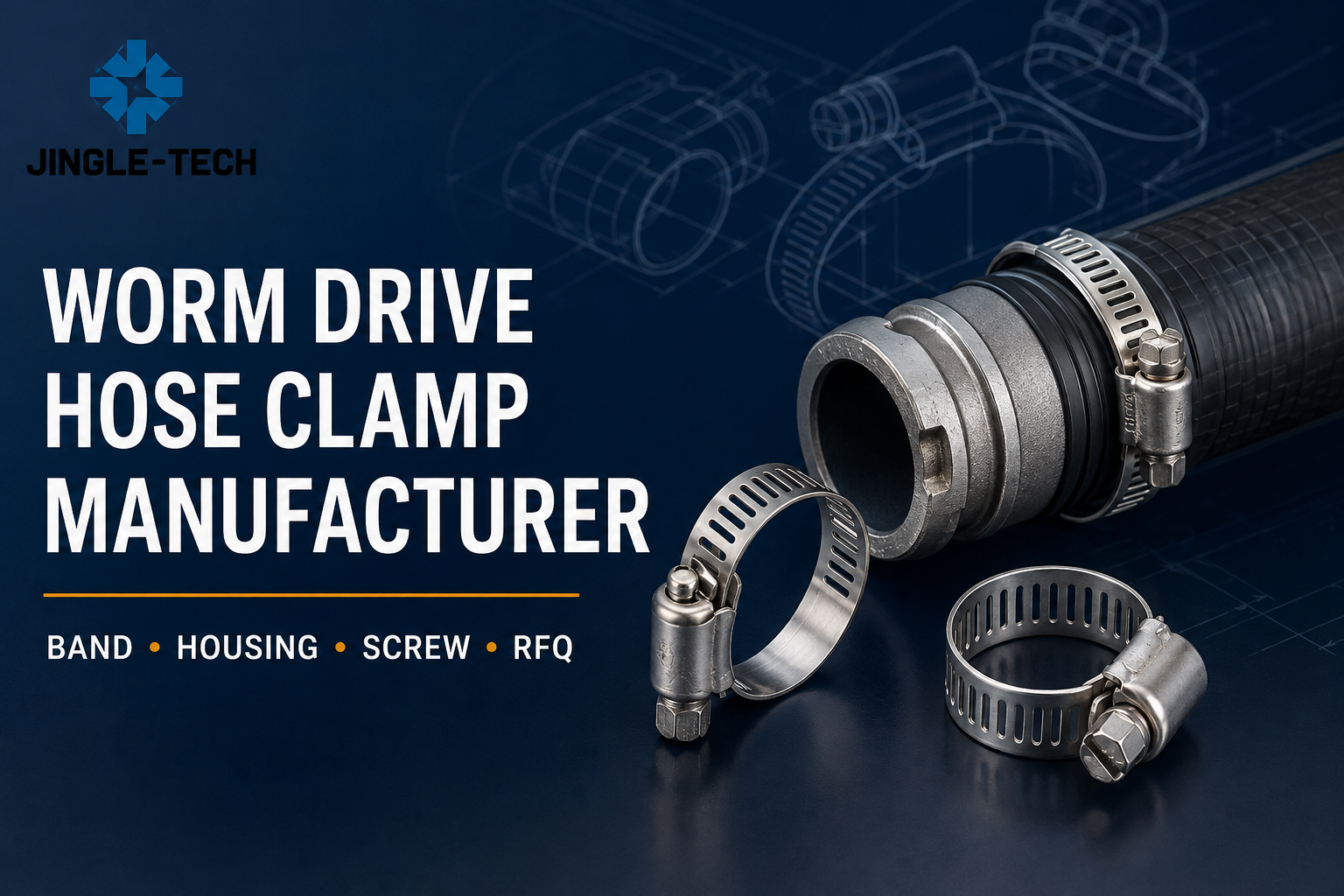
Host clamp is a fastener specially designed for securing and sealing hoses. Whether it is industrial production, automobile repair or the use of home equipment, hose clamps play an indispensable role. It ensures the effective operation of the system by securely securing the hose to a certain interface to prevent liquid or gas leakage. This simple but powerful tool is indispensable in many application scenarios.

Main Features of Hose Clip


Host clamps have a diverse design and materials to meet the needs of different usage environments. The commonly used stainless steel hose clamps are highly favored for their corrosion resistance and are especially suitable for environments that are exposed to moisture or chemicals for a long time. In addition, some advanced hose clamps are equipped with a quick locking mechanism, which improves installation efficiency and enhances flexibility in use.

The hose clamp has a wide range of sizes and can meet the diameter requirements of various hoses. At the same time, its design has been carefully calculated, which not only ensures a stable connection between the hose and the interface, but also does not cause damage to the hose material. This feature that takes into account both functionality and protection makes hose clamps the first choice in various industries.

Application range of hose clamps


The hose clamp is widely used and can be found in many fields. In the field of automobile manufacturing and maintenance, hose clamps are used to secure hoses in fuel pipes, coolant pipes, and air conditioning systems. In agricultural irrigation systems, it can ensure the proper operation of the water source distribution system. In household equipment such as washing machines and dishwashers, hose clamps also play a vital role in ensuring proper operation of drainage and water supply functions.

In addition, hose clamps are also used in high-end application scenarios such as aerospace, medical equipment and chemical industry. Its high applicability and reliability make it able to adapt to various demanding working environments and become an irreplaceable tool in related industries.
Featured Blogs
Railroad Spike Bolt: How to Choose the Right Fastener

Railroad Spike Bolt: How to Choose the Right Fastener

1. Why railroad spike bolt selection matters more than it looks 2. What the part is expected to do 3. Key factors to compare before you place an order 4. Common buying mistakes 5. Practical selection advice for sourcing teams 6. Quick reference: what a buyer should confirm 7. Questions worth asking a supplier 8. What good procurement looks like

DIN444 Eye Bolts: What Buyers Should Know Before Specifying Them

DIN444 Eye Bolts: What Buyers Should Know Before Specifying Them

1. What DIN444 Actually Covers 2. Why the Standard Matters in Procurement 3. Quick Buyer Checklist 4. Common Mistakes Buyers Still Make 5. Selection Criteria That Actually Help 6. Practical Advice for Engineers and Sourcing Teams 7. FAQ 8. What to Do Next

Nylon Wall Anchor Selection Guide: What Buyers Should Check

Nylon Wall Anchor Selection Guide: What Buyers Should Check

1. What a nylon wall anchor actually solves 2. Why nylon is used so often 3. Common forms and how they behave 4. What buyers should check before specifying one 5. Selection criteria that matter in real sourcing work 6. Common mistakes to avoid 7. Practical buyer takeaway 8. FAQ 9. Next step

Shield Anchor Selection Guide for Reliable Fastening

Shield Anchor Selection Guide for Reliable Fastening

1. Shield Anchor Selection Is More Than a Spec Sheet Decision 2. What a Shield Anchor Does Well 3. Quick Buyer Takeaways 4. Selection Criteria That Actually Matter 5. Common Mistakes in Procurement and Use 6. Practical Advice for Engineers and Sourcing Teams 7. FAQ: Shield Anchor Basics 8. Next Step for a Better Sourcing Decision

Sleeve Anchor Guide: How It Works and When to Use It

Sleeve Anchor Guide: How It Works and When to Use It

1. What a sleeve anchor is and why buyers still use it 2. How a sleeve anchor works 3. Where sleeve anchors fit best 4. Quick comparison: what buyers usually evaluate 5. Selection criteria that actually matter 5.1 Base material 5.2 Load and safety margin 5.3 Environment 5.4 Hole quality 6. Common mistakes seen on the shop floor and site 7. Practical buyer advice before placing an order 8. FAQ 8.1 Can a sleeve anchor be removed and reused? 8.2 Is a sleeve anchor suitable for overhead loads? 8.3 What should I check first when a sleeve anchor slips? 9. Next step for engineers and sourcing teams

Spring Toggle Anchor: Reliable Hollow-Wall Fastening Tips

Spring Toggle Anchor: Reliable Hollow-Wall Fastening Tips

1. Spring Toggle Anchor: when hollow-wall fastening has to be boringly reliable 2. What a spring toggle anchor does 3. Where spring toggle anchors make sense 4. Key selection points buyers should check 5. Common mistakes in hollow-wall fastening 6. Practical advice for sourcing and product teams 7. FAQ: quick answers buyers usually want 8. Next step