What buyers really need from an Industrial Clamp Factory
When engineers, sourcing teams, or distributors start comparing an Industrial Clamp Factory, the question is rarely just “who can make the part?” The real question is who can make a clamp that stays consistent from batch to batch, fits the application without constant rework, and does not create headaches downstream in assembly or field use. That matters because clamps are small components that often carry outsized responsibility. If a clamp slips, distorts, or wears too quickly, the failure tends to show up where it costs the most: at the line, in the field, or in a customer complaint.
A good buying decision starts with understanding the clamp’s job. Is it holding hose, tubing, cable, conduit, or a structural element? Is the priority vibration resistance, corrosion resistance, quick installation, or repeat opening and closing? The best supplier is usually the one that understands the use case before quoting the part.
Key questions to ask before you request a quote
Most sourcing problems with clamps are not caused by price alone. They come from unclear requirements. Buyers should define the application, environment, and interface details as early as possible. Even a modest design change can affect clamping force, installation time, and long-term reliability.
For example, material choice can matter more than buyers expect. Steel, stainless steel, aluminum, and engineered polymers each bring their own tradeoffs. Stainless often earns its place in corrosive or outdoor environments. Polymer parts may reduce weight and avoid some surface damage, but they are not the right answer for every load condition. A factory that offers Engineering Clamp Solutions should be able to discuss these tradeoffs in practical terms rather than pushing a single material for every job.
Quick reference for buyer evaluation
Use this simple filter when comparing suppliers:
• Does the factory understand the end-use environment?
• Can it support consistent dimensions and repeatable assembly?
• Are material and finish options aligned with the application?
• Is the design flexible enough for OEM, maintenance, or distribution needs?
• Can the supplier communicate clearly about packaging, labeling, and replenishment?
Why consistency matters more than a one-time sample
A clean sample can hide a lot. In clamp sourcing, the true test is not whether one part fits nicely on a bench. It is whether the same result holds after production ramps up. Distributors feel this first because mixed lots create customer returns. Engineers feel it when tolerances stack up during installation. Production teams feel it when operators have to force-fit parts or sort through marginal inventory.
This is where a reliable Clamp Supplier for Distributors has an advantage. Distributors usually need steady availability, predictable packaging, and fewer surprises in repeat orders. They also need product families that are easy to explain to customers. If a supplier can support that with orderly part numbering and clear product separation, it saves everyone time. That may sound basic, but basic discipline is often what separates a dependable source from an attractive quote that becomes a problem later.
Common clamp categories and where they fit
Clamps are not a single product type. In industrial settings, buyers may need hose clamps, pipe clamps, U-bolts, mounting clamps, cable clamps, spring clamps, or custom retaining styles. Each one behaves differently under load and environmental stress.
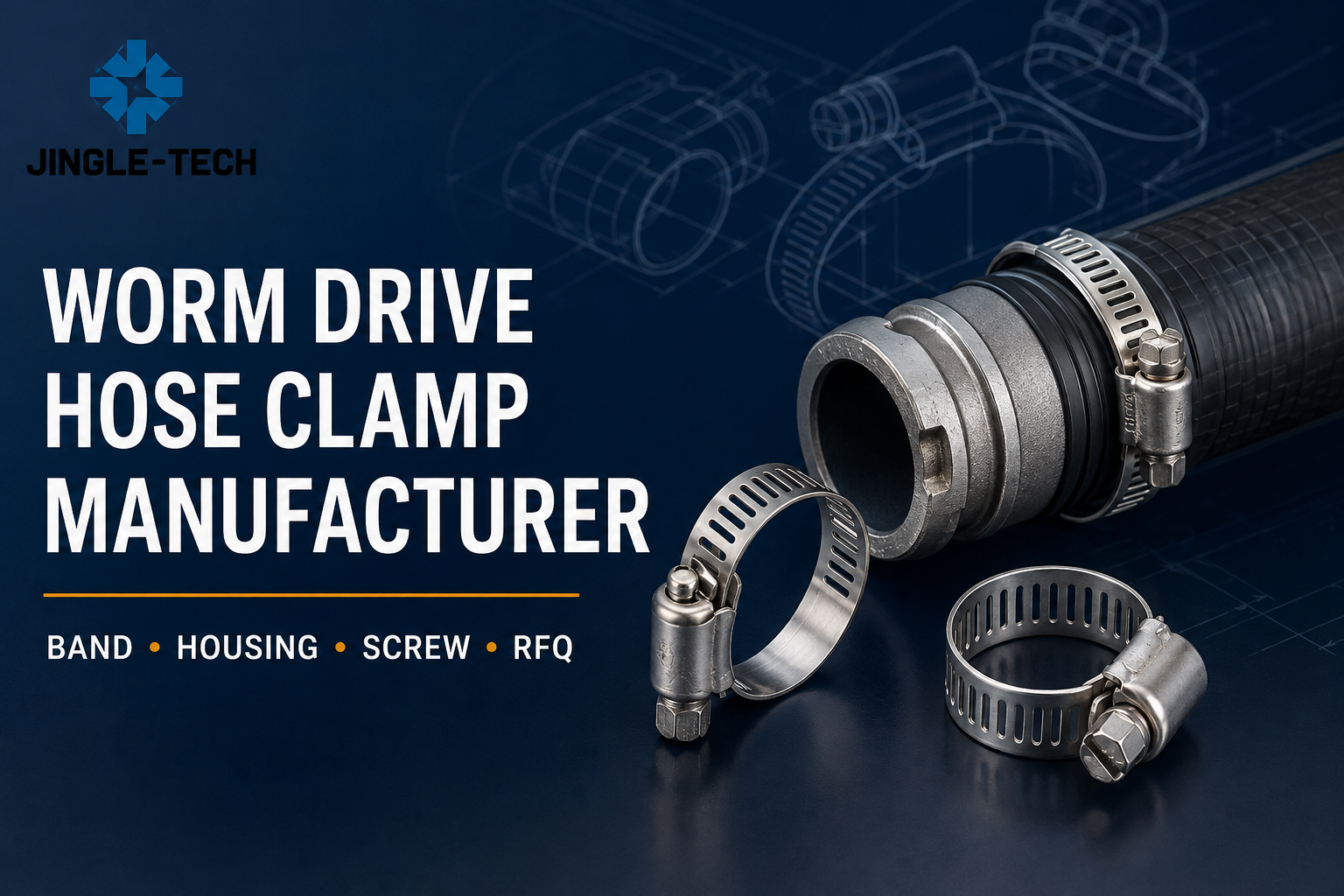
Hose clamps often need reliable tightening and controlled pressure. Pipe and mounting clamps may need stable support and resistance to loosening. Cable clamps may prioritize clean routing and protection from abrasion. Custom clamps usually come into play when a standard shape does not meet the geometry, clearance, or installation constraints of the assembly. An Industrial Clamp Factory that handles multiple product families can help buyers reduce the number of suppliers in the system, but only if the factory actually understands the functional differences between those categories.
Practical mistakes buyers still make
One common mistake is specifying only dimensions and ignoring the working environment. A clamp that looks correct on paper may still fail if heat, moisture, salt, chemicals, or vibration are part of the application. Another mistake is assuming the lowest-cost part is the lowest-cost solution. If the product needs to be reworked, replaced, or re-sent, the real cost moves quickly.
Buyers also sometimes over-design. That happens when the clamp is made stronger, heavier, or more complex than the application requires. Extra material does not always equal better performance. It can raise cost, slow installation, and create compatibility issues with surrounding components.
What a strong factory relationship should look like
The best supplier relationship is practical, not theatrical. You want straightforward communication, stable production behavior, and a willingness to discuss application details without drifting into vague assurances. For engineering teams, that means help with geometry, material selection, and fit. For sourcing managers, it means dependable ordering and fewer exceptions. For distributors, it means a product line that can be stocked, explained, and replenished without confusion.
A useful factory will also be honest about where it is strong and where it is not. That kind of caution is worth more than a polished pitch. If a clamp design has unusual loading, tight installation space, or an aggressive environment, it is better to surface that early than to discover it after tooling or first shipment.
Choosing the right path for your next project
If your project depends on a clamp that must perform repeatedly and at scale, start by mapping the use case before comparing prices. Define the application, the environment, and the installation process. Then ask whether the supplier can support the product as a working component, not just as a piece of hardware.
That approach helps engineers avoid redesign loops, helps sourcing teams reduce risk, and helps distributors carry products that customers can trust. If you are evaluating an Industrial Clamp Factory now, the next step is simple: send a clear application brief, ask for material and design recommendations, and compare suppliers on how well they respond to the real job your clamp has to do.