Welcome to our website
logo

Metal Fasteners Factory: Delivering Scale, Consistency, and OEM Solutions

  • blog
Posted by JINGLE On Sep 03 2025

metal fasteners factory

Metal Fasteners Factory: Delivering Scale, Consistency, and OEM Solutions

Factories at the Core of Global Supply

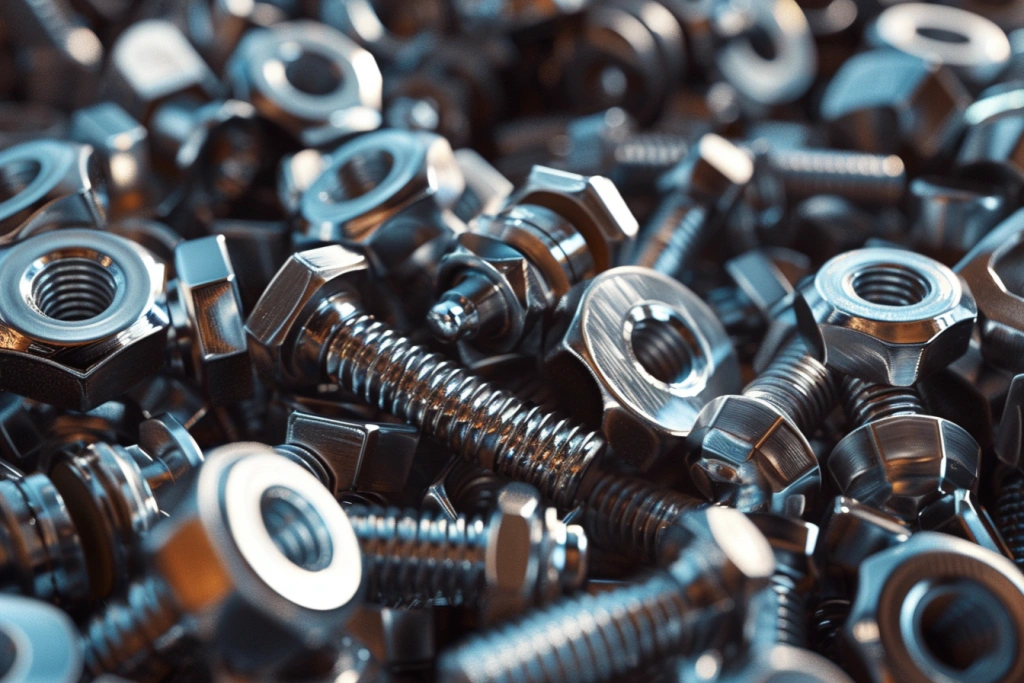
The demand for fasteners grows with every infrastructure project, energy installation, and transport expansion. A metal fasteners factory does not simply “make hardware”—it stabilizes supply chains by ensuring bulk production, strict quality checks, and reliable delivery. For distributors and contractors, this means predictable lead times and consistent quality across thousands of parts, which generic workshops cannot guarantee.

Why Metal Diversity Matters

Fasteners used in urban buildings differ greatly from those in offshore turbines or aerospace systems. A professional factory provides flexibility in materials so that each project can specify the right balance of strength, corrosion resistance, and weight. Stainless steel may secure coastal bridges, while alloy steels serve in mining machinery. Titanium fasteners reduce load in aerospace. This ability to adapt materials to environments is what makes factory-level supply indispensable.

OEM Capabilities from the Factory Floor

Modern projects rarely succeed with catalog-only fasteners. A factory’s OEM strength lies in its ability to collaborate with engineers early, prototype quickly, and then scale production without losing precision. This process ensures fasteners are designed for the project, not retrofitted after drawings are complete. From surface treatments for chemical plants to fatigue-resistant designs for rail systems, OEM capability transforms a factory into a long-term partner rather than a one-time supplier.

JINGLE’s Factory Advantage

At JINGLE, factory operations are aligned with the needs of international markets. Instead of focusing only on output volume, JINGLE integrates OEM customization, advanced material selection, and certified testing into its production model. Every bolt, nut, and rivet is produced with full traceability, ensuring compliance with ISO and CE standards. Combined with ERP-driven logistics, this enables consistent global delivery—whether for infrastructure distributors or contractors managing large-scale projects.

Where Factory Strength Makes a Difference

The reliability of a dedicated fasteners factory is most visible in critical sectors:

  • Energy and Offshore: Coated, corrosion-resistant fasteners extend service life in saltwater and refinery conditions.

  • Transport Systems: Fatigue-tested components support high-speed rail and automotive safety assemblies.

  • Heavy Industry: Mining and construction require fasteners that can withstand constant impact and vibration.

  • Urban Infrastructure: Bridges and tunnels need anchors and couplers that meet long-term safety regulations.

These sectors depend on factories capable of aligning material science, OEM design, and scale production.

Securing the Supply Chain with Confidence

In a market where delays or quality issues can halt entire projects, the role of a metal fasteners factory extends far beyond manufacturing. It is about ensuring continuity, compliance, and confidence.

With its OEM approach, certified processes, and global logistics systems, JINGLE provides industries with more than fasteners—it provides the assurance that every project will stand secure for decades.

Discover how JINGLE strengthens supply chains with certified OEM fasteners: Contact JINGLE.
Featured Blogs

Tag:

  • Industrial Application Solutions
Share On
Featured Blogs
Join Us at the 2026 Cologne Hardware Fair – Visit Us at Booth 3.1B078!

Join Us at the 2026 Cologne Hardware Fair – Visit Us at Booth 3.1B078!

Title: Join Us at the 2026 Cologne Hardware Fair – Booth 3.1B078 Summary: Visit us at Booth 3.1B078 during the 2026 Cologne Hardware Fair (March 3-6) to explore new hardware innovations, connect with industry experts, and discover solutions tailored to your needs.

Small Batch CNC Machining: How to Balance Cost, Speed, and Consistency in Real Production

Small Batch CNC Machining: How to Balance Cost, Speed, and Consistency in Real Production

Small batch CNC machining is widely used for prototyping, pilot runs, and low-volume production, but many projects face unstable quality, rising costs, and delayed scaling. This article explains how process planning, material control, and production strategy ensure efficient and repeatable small batch CNC machining.

CNC Milling Parts Supplier: How Complex Geometry Is Controlled in Real Production

CNC Milling Parts Supplier: How Complex Geometry Is Controlled in Real Production

CNC milling parts are widely used in structural components, housings, and precision assemblies, but many projects face dimensional inconsistency and assembly misalignment during production. This article explains how a CNC milling parts supplier controls material behavior, toolpath strategy, and tolerance zoning to ensure stable performance across real industrial applications.

Stainless Steel CNC Turning Parts: How Stability and Wear Resistance Are Achieved in Real Use

Stainless Steel CNC Turning Parts: How Stability and Wear Resistance Are Achieved in Real Use

Stainless steel CNC turning parts are widely used in high-load, corrosive, and long-life applications, yet many projects encounter premature wear, thread failure, or dimensional drift after installation. This article explains how material grade control, turning strategy, surface management, and application-driven process design ensure reliable performance in real industrial environments.

Aluminum CNC Precision Parts: How Process Control Delivers Stability Across Real Applications

Aluminum CNC Precision Parts: How Process Control Delivers Stability Across Real Applications

Aluminum CNC precision parts are widely used in automation, enclosures, and lightweight structures, yet many projects encounter instability after installation or during repeat production. This article explains how controlled material selection, machining strategy, tolerance zoning, and application-driven process design ensure consistent performance across real industrial environments.

Custom CNC Machining Service: How Customization Impacts Cost, Lead Time, and Consistency

Custom CNC Machining Service: How Customization Impacts Cost, Lead Time, and Consistency

Custom CNC machining projects often fail not because parts are complex, but because customization decisions are made without considering process impact. This article explains how material choice, machining strategy, tolerance control, and supplier workflows determine whether custom CNC machining remains stable, predictable, and scalable.