What a nylon wall anchor actually solves
A nylon wall anchor sounds like a small purchase, but it often decides whether a mounted part stays put or ends up in a pile on the floor. For engineers, sourcing teams, and product designers, the issue is rarely just “which fastener fits the hole.” It is whether the load, wall material, installation method, and environment all line up well enough for the anchor to do its job without drama. That is the real decision this article helps with: choosing the right nylon wall anchor for the substrate and service conditions, instead of treating every anchor as interchangeable.
In practice, these anchors are used when a screw needs help gripping a base material that will not reliably hold threads on its own, such as drywall, brick, concrete, or masonry. Nylon is popular because it is light, cost-effective, and forgiving during installation. It also offers useful electrical insulation in some assemblies, though buyers should not overread that advantage; application fit still matters more than material generalities.
Why nylon is used so often
Nylon wall anchors sit in a middle ground that many buyers appreciate. They are not the most specialized option, but they are often good enough for a wide range of hanging and mounting tasks. The material has enough resilience to expand under screw insertion, which helps create holding force. It is also less brittle than some harder plastics, so it usually tolerates ordinary installation handling better than cheaper alternatives.
That said, nylon is not magic. In a damp, high-heat, or chemically aggressive setting, the material choice deserves closer scrutiny. A wall anchor used indoors for shelving is a very different problem from one used near equipment, piping, or service panels. If the application is demanding, buyers should ask not only about size and shape, but also about the operating environment and expected service life.
Common forms and how they behave
Expansion-style anchors
These are the familiar general-purpose nylon wall anchor types. A screw forces the anchor to expand against the wall cavity or drilled hole, creating friction and mechanical grip. They are widely used for lighter fixtures, brackets, hooks, and small assemblies.
Ribbed or split designs
Ribbed anchors are made to resist rotation while the screw is driven in. Split designs open as the screw advances. Both approaches improve grip, but they still depend heavily on correct hole sizing and a clean installation.
Specialty versions
Some nylon anchors are shaped for hollow walls, while others are meant for more solid masonry. The geometry matters. A buyer comparing two anchors that look broadly similar should still check where each one is intended to work, because performance can fall off quickly when the substrate is wrong.
What buyers should check before specifying one
The first question is the wall material. Drywall, concrete, block, brick, and hollow cavities behave very differently. The second is load type. A static hanging load is easier to manage than vibration, repeated adjustment, or side loading from a bracket or machine support. The third is installation control. If your team cannot control drill diameter, hole cleanliness, or screw selection, even a decent anchor can underperform.
A practical caution: many field failures come from oversizing the drilled hole or using a screw that is simply not matched to the anchor. The result is a fastener that looks installed but does not really develop the expected grip. That mistake is common enough that it deserves a line item in any buyer checklist.
Selection criteria that matter in real sourcing work
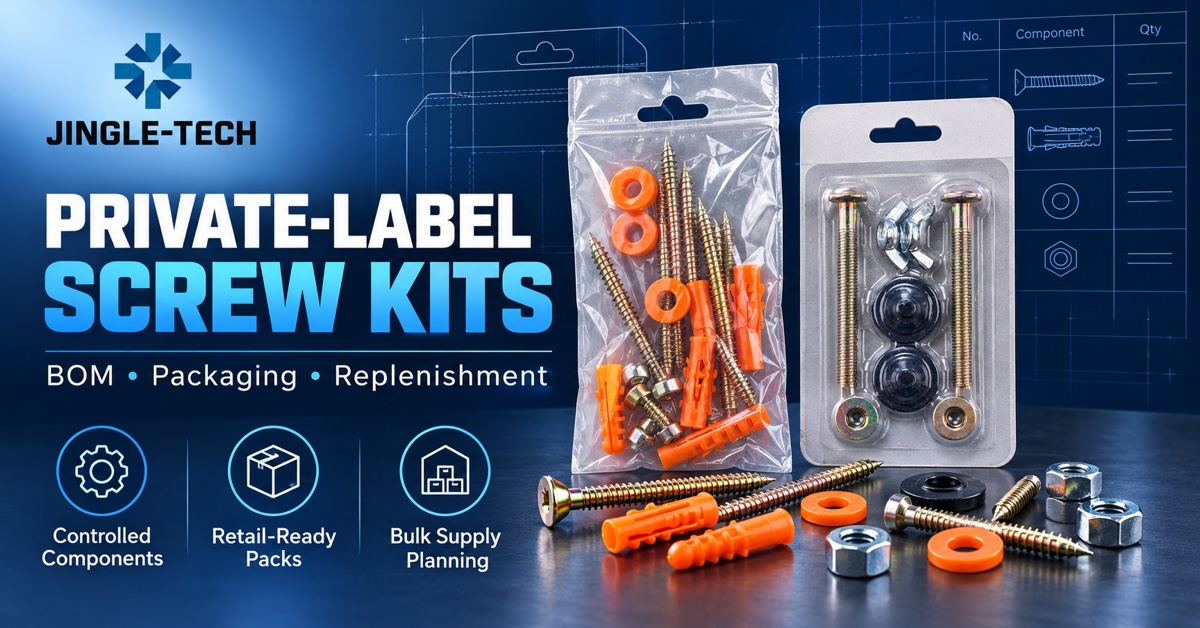
If you are sourcing nylon wall anchor components for a product line or maintenance kit, start with consistency. Dimensions, material behavior, and packaging quality should be repeatable. A little variation is tolerable in some consumer uses, but not when the anchor supports equipment or safety-related hardware.
Then look at installation speed. Contractors and assembly teams value anchors that are easy to place and unlikely to spin in the hole. Also consider whether the anchor needs to pair with a specific screw type. This is one of those unglamorous details that causes avoidable returns.
Finally, think about the total system, not the anchor alone. If the bracket, screw, wall finish, or mounting surface is weak, the anchor cannot compensate for everything. That sounds obvious, yet it is a frequent source of field complaints.
Common mistakes to avoid
One mistake is treating all nylon wall anchor products as generic hardware. Another is ignoring the substrate and assuming a larger anchor automatically means a better hold. A third is forgetting that environment matters. Heat, moisture, and chemical exposure may not ruin an anchor immediately, but they can change long-term performance in ways that only show up later.
There is also a quieter problem: buying based on appearance alone. Two anchors can look nearly identical and still behave differently in use. That is why sample testing in the actual wall material is worth the time, even for modest programs.
Practical buyer takeaway
For engineers and sourcing managers, the best way to evaluate a nylon wall anchor is to start from the wall, the load, and the installation method, then work backward to the anchor design. If those three factors are clear, selection becomes much easier. If they are fuzzy, no amount of catalog browsing will fully solve the problem.
Ask for the application fit first. Then confirm the matching screw, the intended substrate, and any environmental limits that may affect service life. That approach is a little less convenient than buying by name or size alone, but it usually saves more trouble than it costs.
FAQ
Are nylon wall anchors only for light loads?
Often, yes, but not always. The load rating depends on the anchor design, wall material, and installation quality. Light to moderate service is the common use case.
Can they be reused?
Usually not in a reliable way. Once a nylon wall anchor has been expanded and removed, its holding behavior may change.
Do they work in all wall types?
No. That is one of the biggest mistakes buyers make. The anchor must match the wall construction, or performance can fall short quickly.
Next step
If you are comparing nylon wall anchor options for a product, maintenance kit, or industrial supply program, start with a short qualification test in the actual substrate. It is a modest step that often reveals more than a spec sheet can.