What Power Line Fittings Do, and Why Buyers Notice the Weak Ones First
Power Line Fittings are one of those components nobody in a utility project wants to think about until something moves, loosens, corrodes, or starts loading the conductor in a way it should not. They sit quietly in overhead and distribution systems, but they are carrying a very practical burden: holding conductors, managing tension, maintaining alignment, and helping the line survive wind, ice, vibration, and everyday mechanical stress. For engineers and sourcing teams, the real question is not whether the fitting looks robust on a drawing. It is whether the part will perform consistently in the field, where access is difficult and failures are expensive.
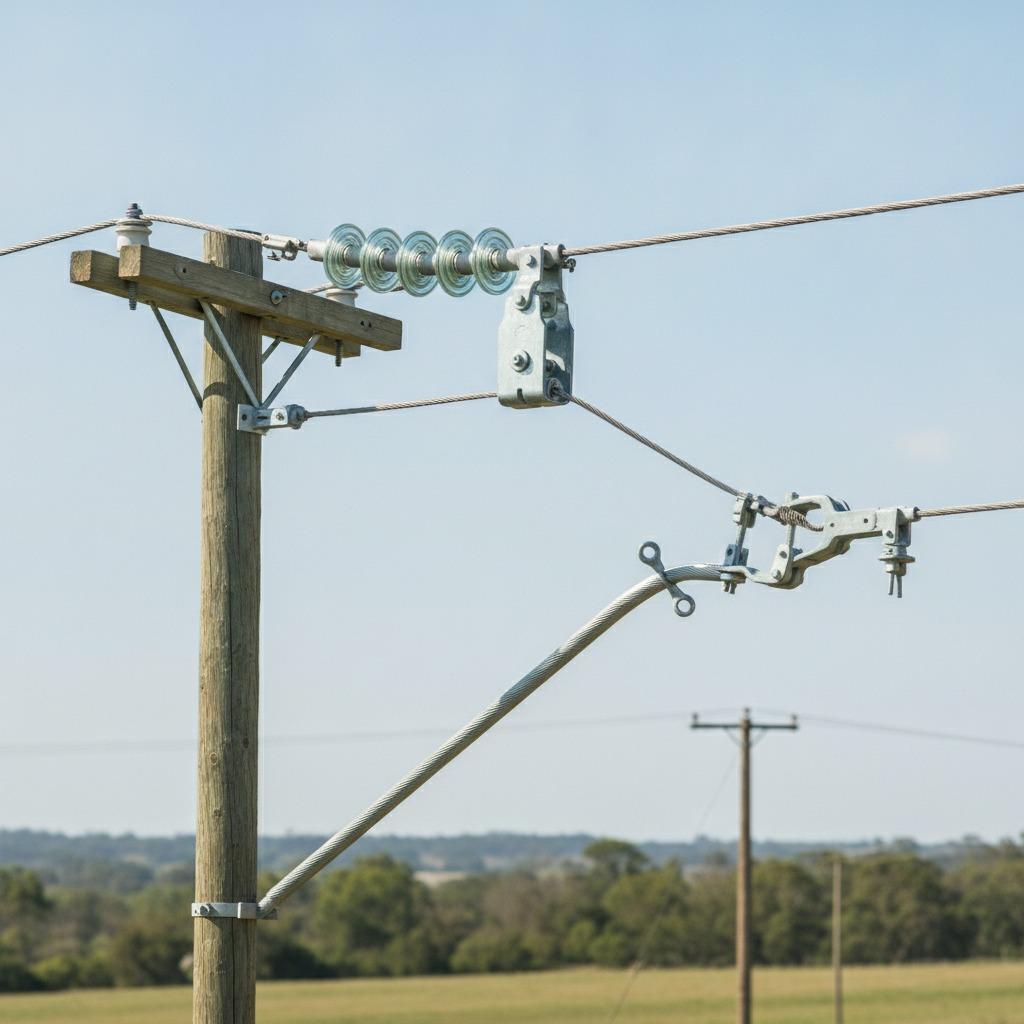
That is why buying decisions around these components tend to be cautious. A small mismatch in material, geometry, or coating can lead to wear on the conductor, premature corrosion, or installation trouble. In utility work, those are not minor defects. They affect downtime, crew safety, and lifecycle cost.
Quick Buyer Takeaways
If you are comparing Power Line Fittings for a project, start with the job they need to do rather than the catalog name. Some are intended for suspension, some for dead-ending or anchoring, and others for connecting or supporting specific line hardware. That distinction matters because a fitting that works well in one load condition may be the wrong choice elsewhere.
Also pay attention to the environment. Coastal air, industrial pollution, high UV exposure, and repeated temperature swings all change the way a fitting ages. A part that is mechanically adequate on day one can become a maintenance issue if the surface protection is not suited to the site.
Main Types and Where They Fit in the System
Suspension and support fittings
These help carry conductors while allowing a degree of movement. In many overhead lines, that flexibility matters because the conductor is not a rigid member. It expands, contracts, and moves under load. A good support fitting should manage that motion without introducing unnecessary wear points.
Dead-end and tension fittings
These are used where line tension must be transferred and controlled. They are especially important at line ends, angle structures, and other points where mechanical load concentrates. If these fittings are underspecified, the consequences can show up fast under weather loading or installation stress.
Connecting and auxiliary hardware
This group includes the smaller pieces that often determine whether the system is practical to install and maintain. Clips, clamps, links, and related parts may seem secondary, but field crews know that awkward hardware can cost real time during installation.
What Materials and Surface Protection Usually Matter Most
For utility hardware, buyers often look at steel-based parts with protective coatings, aluminum alloys, or other metal combinations suited to the duty cycle and environment. The right choice depends on conductivity needs, mechanical strength, weight, and corrosion resistance. There is no single best material for every line. That is the point many spec sheets gloss over.
Surface protection is just as important as base material. Galvanized finishes, for example, are commonly used in outdoor power applications because they help resist corrosion. In harsher environments, buyers may need to consider whether the coating system aligns with local exposure conditions rather than assuming a generic finish will be enough.
Selection Criteria That Actually Change Project Outcomes
Start with mechanical load. The fitting must match the conductor type, span conditions, and expected tension. Then check compatibility with the rest of the line hardware. A component may meet a generic strength target but still fit poorly with the assembly around it.
Next, think about installation. Field teams prefer fittings that are straightforward to align and secure, because tricky hardware invites inconsistent assembly. That is one of those practical details procurement teams sometimes underestimate. If a design slows crews down, the real cost may appear long after the purchase order is closed.
Finally, evaluate long-term maintenance implications. Ask how the fitting behaves under vibration, whether it is likely to loosen over time, and how it will be inspected in service. Utility buyers tend to value parts that are simple to verify visually and do not demand special handling.
Common Mistakes Buyers Still Make
One common error is treating all fittings in the same category as interchangeable. They are not. Load path, conductor type, and structure geometry all matter. Another mistake is over-focusing on unit price while underweighting replacement risk. In power infrastructure, the cheapest part is not always the lowest-cost part.
A smaller but still important problem is ignoring regional environmental conditions. A fitting selected for a dry inland line may not be the best choice for a humid or coastal project. That oversight can shorten service life in ways that are hard to spot during procurement.
Practical Advice for Engineers and Sourcing Teams
When comparing suppliers, ask for clear product descriptions, application limits, and material details. If a vendor cannot explain the intended use of a fitting in plain language, that is worth a second look. You are not just buying hardware; you are buying confidence that the assembly will survive a difficult environment.
It also helps to review whether the supplier can support repeatable manufacturing. For line hardware, consistency matters as much as design. Small variations in finish, fit, or forming quality can complicate installation across a large project.
FAQ
Are Power Line Fittings all used for the same purpose?
No. Different fittings support, anchor, connect, or suspend conductors depending on the line design.
Should buyers prioritize strength or corrosion resistance?
Usually both, but the balance depends on the application. A high-strength part with weak corrosion protection may still be a poor choice for outdoor service.
What is the safest procurement approach?
Match the fitting to the load case, environment, and installation method, then review supplier consistency rather than judging only by appearance or price.
Next Step
If you are sourcing Power Line Fittings for a utility, transmission, or distribution project, build the comparison around application, material, and environmental exposure first. That keeps the discussion focused on field performance, which is where these parts prove their worth or expose a weak spec.