Why buyers care about a reliable clamp manufacturer
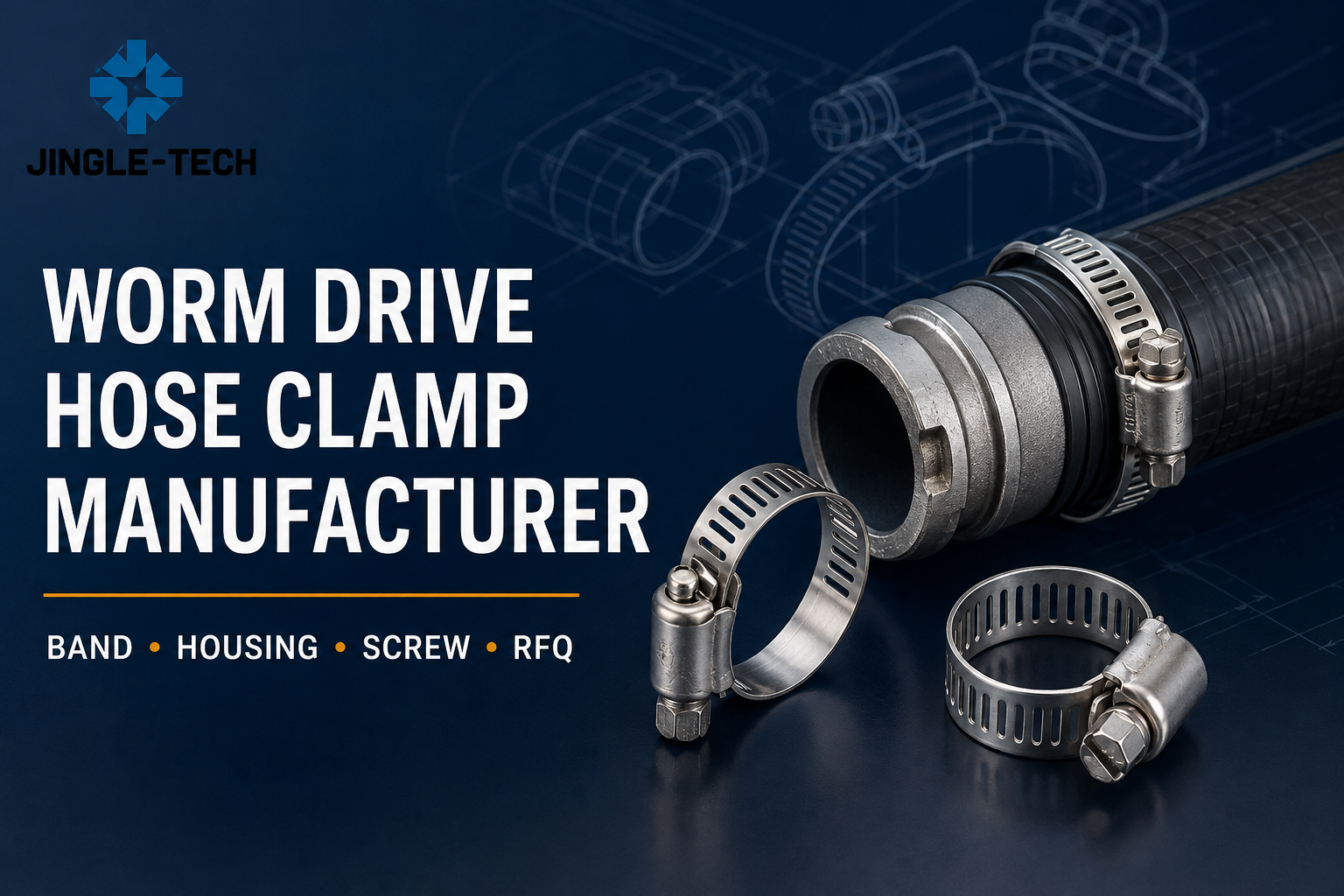
Choosing a reliable clamp manufacturer is rarely about the clamp alone. It is about keeping assemblies aligned, preventing leaks or slippage, and avoiding the kind of field failure that turns a routine build into a warranty issue. For sourcing teams, the challenge is simple enough to state and hard enough to solve: which supplier can consistently make clamps that perform the same way from batch to batch, not just once on a sample bench?
That question matters across automotive, industrial equipment, HVAC, plumbing, electronics, and general fabrication. Clamps are often small line items, but they sit in places where vibration, pressure, thermal cycling, and installation variation all show up quickly. A weak clamp can loosen under load. An inconsistent one can damage hoses, distort mating parts, or force installers to overtighten. Buyers do not always see the failure first; they usually see the cost after the fact.

What a good clamp supplier actually provides
A professional clamp factory should do more than stamp metal and ship cartons. The better suppliers build around repeatable forming, stable materials, and controlled finishing. In practice, that means attention to geometry, edge quality, surface treatment, and the way the clamp behaves when tightened and released. Those details sound minor until you are comparing field performance across several production lots.
For procurement teams, the useful question is not “Can they make a clamp?” but “Can they make this clamp consistently, with the same holding force and fit every time?” That is the difference between a commodity source and a dependable manufacturing partner. It is also why sample approval alone is never enough. A clean first article can still hide process drift if the factory does not manage incoming material, tooling wear, and inspection discipline.
Key factors to compare before you place an order
Material compatibility
Clamp performance starts with the base material. Stainless steel, carbon steel, and other metals each bring different corrosion behavior, spring characteristics, and cost profiles. If the clamp will live outdoors, in a wet cabinet, or near chemicals, material choice matters more than many buyers expect. A low-cost clamp that corrodes early is no bargain.
Dimensions and fit
Even a well-made clamp can fail the application if sizing is sloppy. The clamp must match the hose, tube, cable, or assembly it is meant to secure. This is especially important when the design has to accommodate tolerance stack-up from other parts in the system. Ask how the factory controls dimensions across the production run, not just on the drawing.
Surface finish and edge condition
Sharp edges can cut operators, scar adjacent parts, or create stress points. Surface finish also affects corrosion resistance and appearance. On many projects, these are not cosmetic concerns. They are assembly and serviceability concerns.
Testing and process control
Good suppliers can explain how they verify clamp strength, fit, and consistency. They should be able to describe their inspection approach in plain language. If that conversation becomes vague, treat it as a warning sign. A buyer does not need a textbook answer; they need evidence that the factory understands how the part behaves in real use.
Common mistakes when sourcing clamps
One common mistake is selecting on price alone. Clamp sourcing can look straightforward because the part is small and familiar, but small parts carry large consequences when they fail. Another mistake is assuming all factories are equivalent if they offer the same category of product. In reality, process maturity varies widely. One shop may be organized for stable production; another may depend on after-the-fact sorting.
Buyers also sometimes overlook packaging. Clamps can be bent, scratched, or mixed if they are shipped without care. That leads to assembly delays that have nothing to do with the part design itself. A dependable supplier understands that outbound handling is part of product quality.
How to evaluate a supplier with fewer surprises
Start with the application, not the catalog. Define the operating environment, the load conditions, installation method, and any compatibility concerns. Then ask the supplier how they would make the clamp for that use case. A serious manufacturer will usually ask a few practical questions in return. That is a good sign.
Next, compare documentation and communication. Technical responses do not need to be fancy, but they should be specific. If a factory can explain material choice, process flow, and inspection points without drifting into vague promises, that tells you something useful about its internal discipline. For sourcing managers, this is often where a reliable clamp manufacturer separates itself from a purely transactional vendor.
Practical buyer advice
When evaluating quotes, do not stop at unit price. Look at stability, response time, customization ability, and whether the supplier understands your end use. A slightly higher price can be easier to justify if it reduces rework, complaints, or incoming inspection effort. In manufacturing, hidden costs usually arrive later and in batches.
If you are building a long-term supply chain, it helps to view the clamp supplier as part of your production system. The right partner reduces risk quietly. The wrong one creates small recurring problems that consume engineering time, operator patience, and margin.
FAQ: what buyers usually ask
Is a low-price clamp always a bad choice?
Not always, but price should be read alongside material quality, fit consistency, and supplier discipline. A cheap clamp that performs reliably may be acceptable. A cheap clamp that varies from lot to lot is not.
What should I request from a new supplier?
Ask for product specifications, material details, sample status, and a clear explanation of how the factory checks consistency. If possible, request photos or process information that helps confirm the supplier understands your application.
If you are shortlisting suppliers, start by comparing how each one talks about the part, not just how it quotes it. The best partner will sound practical, not polished. That usually tells you more than a brochure ever will.