Why stainless steel tek screws keep showing up in real fabrication work
Stainless Steel Tek Screws are a familiar choice anywhere installers need to fasten metal quickly without a separate pre-drilling step. That basic promise sounds simple, but it matters in the shop and on site: fewer handling steps, faster assembly, and less risk of missing a pilot hole when panels, brackets, or light-gauge frames need to line up under pressure. For sourcing teams and engineers, the real question is not whether the screw can drill, but whether it is the right fastener for the substrate, the exposure, and the load path.
These screws sit at the intersection of speed and corrosion resistance. Stainless steel brings the obvious advantage in wet, coastal, or washdown environments, while the drill point saves time on common sheet metal jobs. That combination is useful, but it is not universal. The buyer still has to think through material hardness, sheet thickness, joint movement, and whether the application is cosmetic, structural, or somewhere in between.
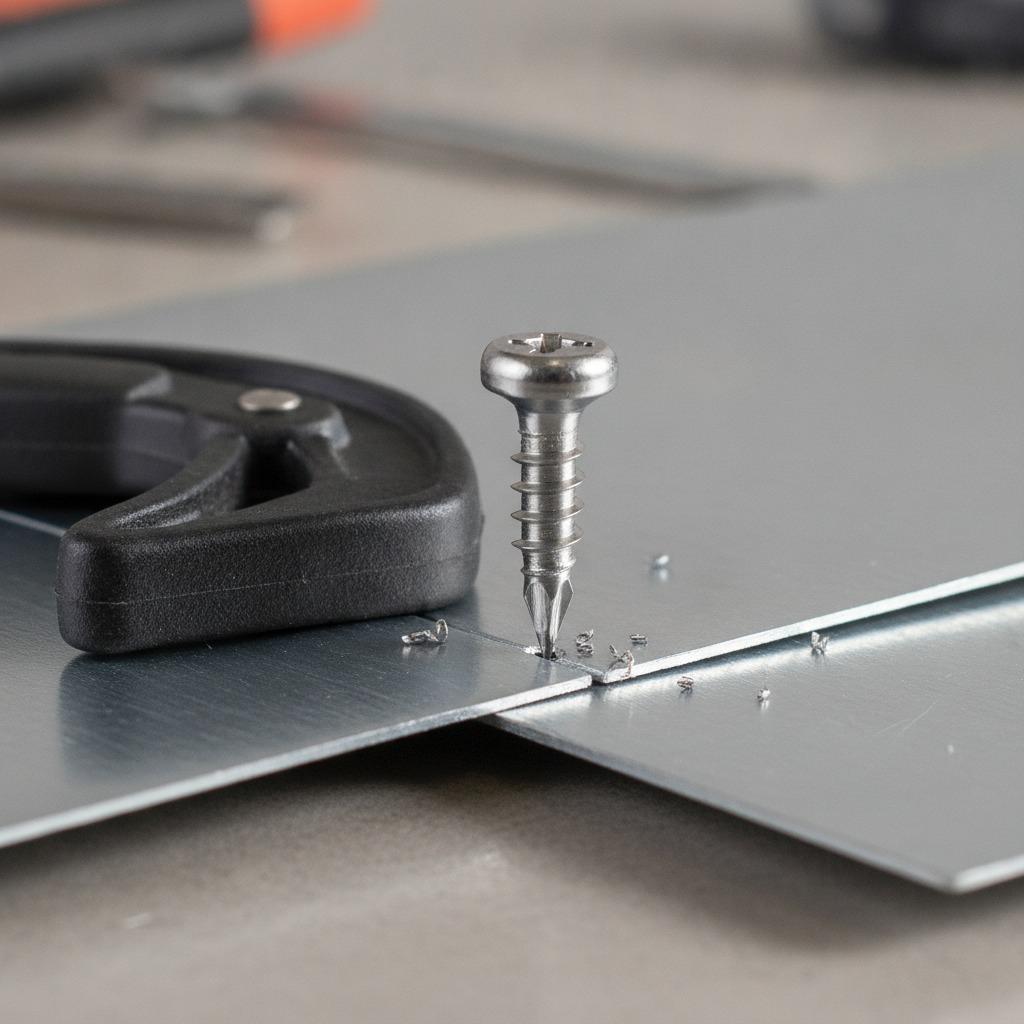
What makes a tek screw different from a standard self-tapping screw
People often use the terms loosely, but the distinction matters. A tek screw is a type of self-drilling fastener with a drill-shaped point that cuts its own pilot hole as it advances. A standard self-tapping screw usually expects some form of pre-formed hole or softer substrate. In practical terms, that means a tek screw can shorten assembly time and improve repeatability when used within its intended range.
For a Self Drilling Screw for Steel, the point geometry is a bigger deal than many buyers realize. If the point is underspecified, the screw can wander, burnish the surface, or stall before the threads engage. If it is oversized for the sheet gauge, the joint may lose holding strength or strip more easily. The balance is mechanical, not just cosmetic.
Where stainless steel tek screws are commonly used
The best Self Drilling Screw Applications are usually those involving sheet metal, cladding, light structural attachments, HVAC components, roofing accessories, electrical enclosures, and general fabrication work. They are also commonly specified for environments where rust staining would become a maintenance issue or a visual defect.
That said, stainless is not a free pass. In high-load connections, vibration-heavy assemblies, or very thick steel, the fastener may need different point geometry, a different diameter, or a different fastening method altogether. A screw that works well for a louver or panel seam may not be the right answer for a load-bearing bracket. Buyers sometimes learn this the hard way after the first field failure.
Selection factors that actually influence performance
1. Base material and thickness
Match the screw to the metal being drilled. Thin sheet and light-gauge steel are the most comfortable territory for tek screws. As thickness increases, the drilling demand rises, and point selection becomes less forgiving. If the application is borderline, testing a short production sample is worth more than relying on a catalog description.
2. Corrosion exposure
Stainless steel is often chosen for moisture, salt exposure, cleaning chemicals, or general corrosion resistance. But “stainless” still means choosing the right grade and understanding the environment. Mixed-metal assemblies can also create galvanic concerns, especially where stainless fasteners sit against less noble metals in a wet setting.
3. Head style and drive
Head style affects contact area, clamp appearance, and installation speed. Drive type affects tool wear and strip risk. In production environments, the wrong drive can slow the line more than the screw itself. That is the kind of detail procurement teams sometimes overlook because it looks minor on paper.
4. Washer sealing and finish requirements
For roofing or exterior panel work, sealing washers and head geometry may matter almost as much as the drill point. A fastener that drills cleanly but does not seal properly can create a maintenance headache later. That is especially true where water ingress is costly or access is limited.
Common mistakes buyers and installers make
One common mistake is assuming stainless steel automatically means stronger. Corrosion resistance and mechanical strength are related only in a general way. Another is using the same screw across too many substrates. Steel, aluminum, coated sheet, and composite-backed assemblies all behave differently.
A second mistake is over-specifying the fastener because “more robust” sounds safer. In self drilling screw applications, too aggressive a point or too large a diameter can hurt the joint, not help it. The cleanest installations usually come from matching the drill point and thread profile to the actual material stack, not to a vague idea of toughness.
Practical buyer advice for sourcing and production teams
When evaluating Stainless Steel Tek Screws, ask for the material stack, substrate thickness range, and intended environment before you talk about quantity. If the use case is repetitive, ask whether the installer will be using handheld tools, torque-controlled drivers, or production fixtures. Tooling affects strip risk, installation speed, and consistency more than many spec sheets admit.
It is also worth confirming whether the joint needs sealing, vibration resistance, or removable service access. Those requirements can change the screw choice quickly. A fastener selected only for drilling ability may perform acceptably in prototype work and then become a nuisance in production.
FAQ: quick answers before you place an order
Can stainless steel tek screws drill into steel?
Yes, within the material thickness and point range they are designed for. For a Self Drilling Screw for Steel, matching the point to the sheet gauge is essential.
Are they always the best choice for outdoor use?
Not always. Stainless helps with corrosion, but the rest of the assembly still has to be compatible with moisture, movement, and load.
Should I use them for every metal fastening job?
No. They are a good fit for many light-gauge metal jobs, but not a universal replacement for bolts, rivets, or welded joints.
What to do next
If you are comparing fasteners for a new build or a repeat production run, start with the actual substrate and exposure conditions rather than the screw family name. That will usually narrow the field faster than any catalog filter. For teams reviewing Self Drilling Screw Applications, a short test on the real assembly is often the cleanest way to confirm fit, installability, and finish quality before committing to a full purchase.