Welcome to our website
logo

How to Choose the Right Bolt Factory for Wholesale Parts Supply

  • blog
Posted by JINGLE On Jul 28 2025

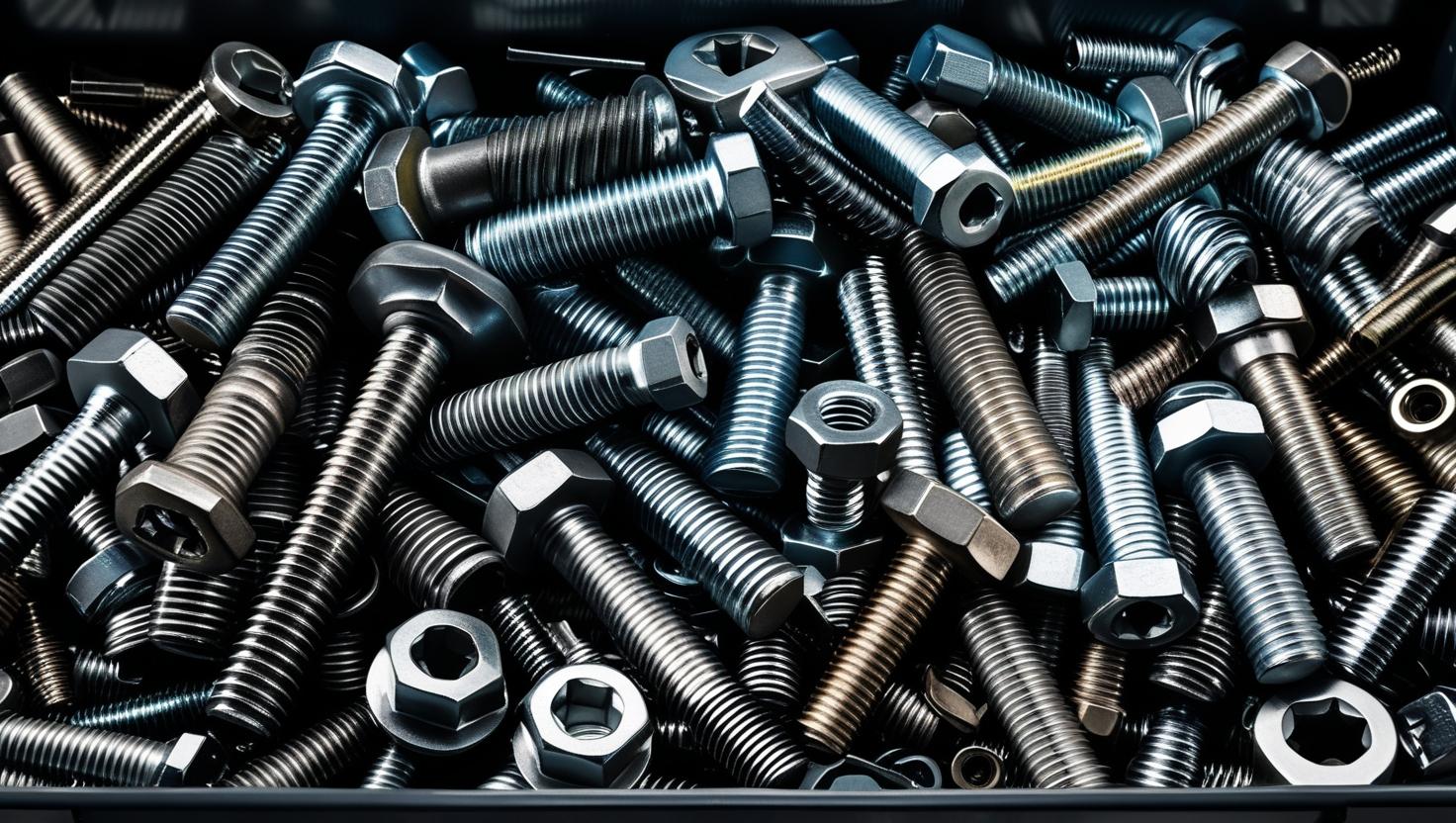
Jingle bolt factory production line for wholesale parts and OEM export kits

How to Choose the Right Bolt Factory for Wholesale Parts Supply

Why Bolt Wholesale Buyers Face Supply Chain Issues

For industrial distributors, construction firms, and equipment manufacturers, bolts are a basic yet critical component. However, bulk sourcing is often disrupted by:

  • Delayed lead times due to capacity overloads

  • Unstable pricing from resellers or traders

  • Inconsistent specifications across batches

  • Missing documentation for export or compliance

  • Lack of OEM customization (head type, marking, kits)

These challenges make it essential to work directly with abolt factoryinstead of relying solely on middlemen.

What Defines a Reliable Bolt Factory?

Not all factories are created equal. A reliablebolt factoryoffers more than just production—they deliver integrated solutions for long-term wholesale supply.

Here are the key traits to look for:

Capability What It Means Buyer Benefit
In-house cold forming, threading, heat treatment Full process control Consistent bolt quality
Bulk production capacity (e.g. 300 tons/month) High-volume ready Meets large orders fast
ISO 9001 or CE certification Quality compliance Accepted by global buyers
Export-ready packaging Cartons, polybags, labels Faster customs clearance
Document services CO, CI, PL, MSDS Complete for every shipment
OEM bolt kit customization Logo stamping, kitting Supports branding & retail

Jingle, operates a fully equipped bolt manufacturing base with cold heading, thread rolling, and full inspection systems—enabling consistent supply ofbolt wholesale partswith OEM-level service.

How to Evaluate a Bolt Factory Before Ordering

Here’s a checklist you can use during your factory audit or supplier evaluation:

  1. Production Equipment– Does the factory have cold heading machines, thread rollers, and automatic packing?

  2. Bolt Grades and Materials– Can they produce carbon steel, stainless steel, or alloy bolts? Do they support Grades 4.8, 8.8, 10.9, or 12.9?

  3. Coating Options– Look for zinc plated, black oxide, HDG, Dacromet, etc.

  4. Minimum Order Quantity (MOQ)– Make sure they support both trial and scale orders.

  5. Packaging Flexibility– Neutral cartons, OEM branding, or custom kits?

  6. Certificates & Test Reports– Do they offer tensile, yield, and salt spray test reports?

  7. On-Time Delivery Track Record– Ask for export records or customer references.

A truebolt factorydoesn’t just make fasteners—they engineer reliability into your supply chain.

Take the Guesswork Out of Bolt Sourcing

Whether you’re a wholesaler, an EPC contractor, or a brand looking to expand your OEM bolt line, sourcing from a dedicatedbolt factoryis key to:

  • Maintaining consistent stock levels

  • Meeting local compliance standards

  • Reducing total sourcing cost

  • Enhancing customer trust with consistent quality

Start Your Next Bulk Bolt Order

If you're planning your next project or expanding your inventory, now is the time to work directly with a capable, export-oriented bolt factory.

Jingle supports full OEM customization, kitting, documentation, and flexible production runs for global clients.

Visit ourhomepageto explore our manufacturing capabilities orcontact our teamto request a quote tailored to your bolt wholesale needs.
Featured Blogs
Join Us at the 2026 Cologne Hardware Fair – Visit Us at Booth 3.1B078!

Join Us at the 2026 Cologne Hardware Fair – Visit Us at Booth 3.1B078!

Title: Join Us at the 2026 Cologne Hardware Fair – Booth 3.1B078 Summary: Visit us at Booth 3.1B078 during the 2026 Cologne Hardware Fair (March 3-6) to explore new hardware innovations, connect with industry experts, and discover solutions tailored to your needs.

Small Batch CNC Machining: How to Balance Cost, Speed, and Consistency in Real Production

Small Batch CNC Machining: How to Balance Cost, Speed, and Consistency in Real Production

Small batch CNC machining is widely used for prototyping, pilot runs, and low-volume production, but many projects face unstable quality, rising costs, and delayed scaling. This article explains how process planning, material control, and production strategy ensure efficient and repeatable small batch CNC machining.

CNC Milling Parts Supplier: How Complex Geometry Is Controlled in Real Production

CNC Milling Parts Supplier: How Complex Geometry Is Controlled in Real Production

CNC milling parts are widely used in structural components, housings, and precision assemblies, but many projects face dimensional inconsistency and assembly misalignment during production. This article explains how a CNC milling parts supplier controls material behavior, toolpath strategy, and tolerance zoning to ensure stable performance across real industrial applications.

Stainless Steel CNC Turning Parts: How Stability and Wear Resistance Are Achieved in Real Use

Stainless Steel CNC Turning Parts: How Stability and Wear Resistance Are Achieved in Real Use

Stainless steel CNC turning parts are widely used in high-load, corrosive, and long-life applications, yet many projects encounter premature wear, thread failure, or dimensional drift after installation. This article explains how material grade control, turning strategy, surface management, and application-driven process design ensure reliable performance in real industrial environments.

Aluminum CNC Precision Parts: How Process Control Delivers Stability Across Real Applications

Aluminum CNC Precision Parts: How Process Control Delivers Stability Across Real Applications

Aluminum CNC precision parts are widely used in automation, enclosures, and lightweight structures, yet many projects encounter instability after installation or during repeat production. This article explains how controlled material selection, machining strategy, tolerance zoning, and application-driven process design ensure consistent performance across real industrial environments.

Custom CNC Machining Service: How Customization Impacts Cost, Lead Time, and Consistency

Custom CNC Machining Service: How Customization Impacts Cost, Lead Time, and Consistency

Custom CNC machining projects often fail not because parts are complex, but because customization decisions are made without considering process impact. This article explains how material choice, machining strategy, tolerance control, and supplier workflows determine whether custom CNC machining remains stable, predictable, and scalable.