Avoid Structural Surprises: Smarter Anchoring for Modern Building Projects
The Cost of Overlooking Anchoring Details on Site
In fast-paced construction projects, it’s easy for anchors and embedded components to be treated as minor details. But ask any structural contractor—when an anchor fails, everything stops.
From reinforced concrete beams to curtain wall brackets, improperly installed or underspecified anchoring systems can result in:
-
Cracks and deflection in concrete slabs
-
Façade misalignmentrequiring re-drilling and rework
-
Inspection delaysdue to missing certifications or torque records
These issues are more than nuisances—they delay timelines, raise costs, and erode trust with project owners.
Top Anchoring Challenges in Building Projects
1. Inconsistent Field Installations
Many anchors are installed by subcontractors without standardized torque or resin application, leading to pull-out failures.
JINGLE Solution: We providepre-matched anchor kitswith controlled-depth sleeves, torque specs, and simplified install guides tailored for on-site teams.
2. Rebar Clash and Embed Interference
Poor coordination between MEP and structural drawings often leads to anchor clashes with rebar or ducts.
JINGLE Solution: Ourmodular embedded sleevesallow flexible bolt positions while maintaining structural integrity. We supportdrawing review and clash detectionpre-delivery.
3. Certification Gaps During Inspections
Municipal inspectors often flag anchors without mechanical test data, anti-corrosion proof, or seismic tolerance documentation.
JINGLE Solution: All anchor systems are delivered withpull-out test reports,salt spray resistance certificates, andstandard compliance sheets(ETAG, ACI, EN norms).
Practical Gains for Project Managers and Site Leads
With JINGLE, anchoring becomes aplanned, not reactivepart of the build:
-
Clear labeling and packaging reduce install errors by over 40%
-
Anchors and sleeves are pre-sorted by floor or phase
-
Anti-vibration and anti-loosening features eliminate re-tightening cycles
-
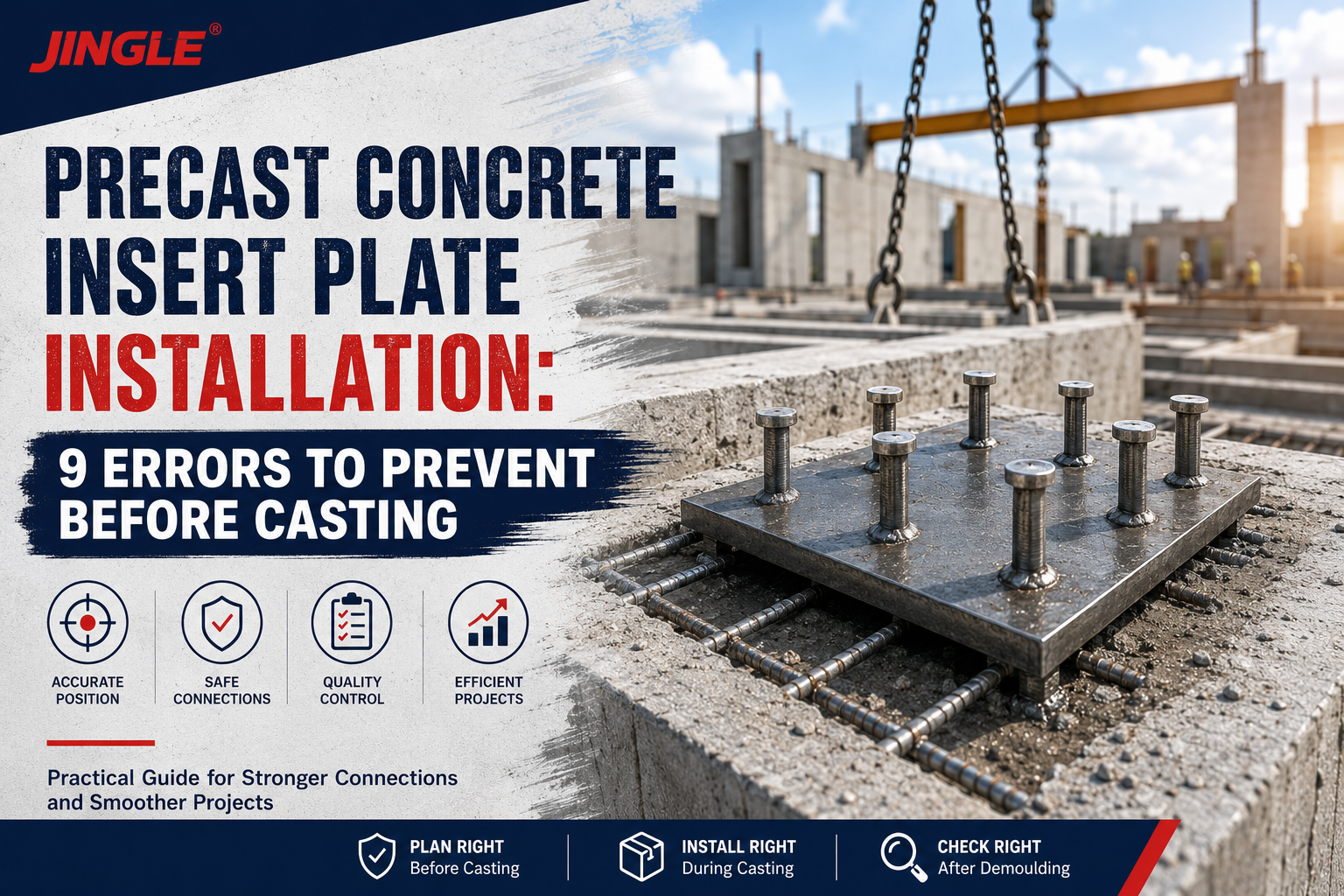
Factory-drilled embedded plates speed up curtain wall or canopy install
One high-rise contractor reportedtwo full weeks of schedule savingsby switching to JINGLE’s embedded plate system with bolt presetting and template jigs.
From High-Rises to Hospitals: Application Versatility
JINGLE's systems support a wide range of building types:
| Project Type | Solution | Benefit |
|---|---|---|
| Commercial towers | Chemical anchors + embedded curtain wall plates | Faster façade install, minimal rework |
| Hospitals | Anti-vibration anchors under MEP supports | Stability for long-span pipe systems |
| Schools | Cast-in channels for bracket and handrail fixings | Safer install, tamper-proof finish |
| Residential | Rebar connection anchors for load transfer walls | Seismic-safe transitions between floors |
Choosing Anchors That Withstand Inspection and Time
The construction industry is moving fast—but building safety, compliance, and reliability can’t be rushed. That’s why JINGLE provides not just steel components, but:
-
Clash-checked designs, ready for BIM coordination
-
Certified mechanical and chemical anchorsfor static and dynamic loads
-
Resin, torque, and embed guidesfor every kit shipped
-
Localizable documentationfor municipal review or third-party QA
We understand what it means whena misaligned sleeve sets you back three floors—and we build our systems to prevent that from happening.