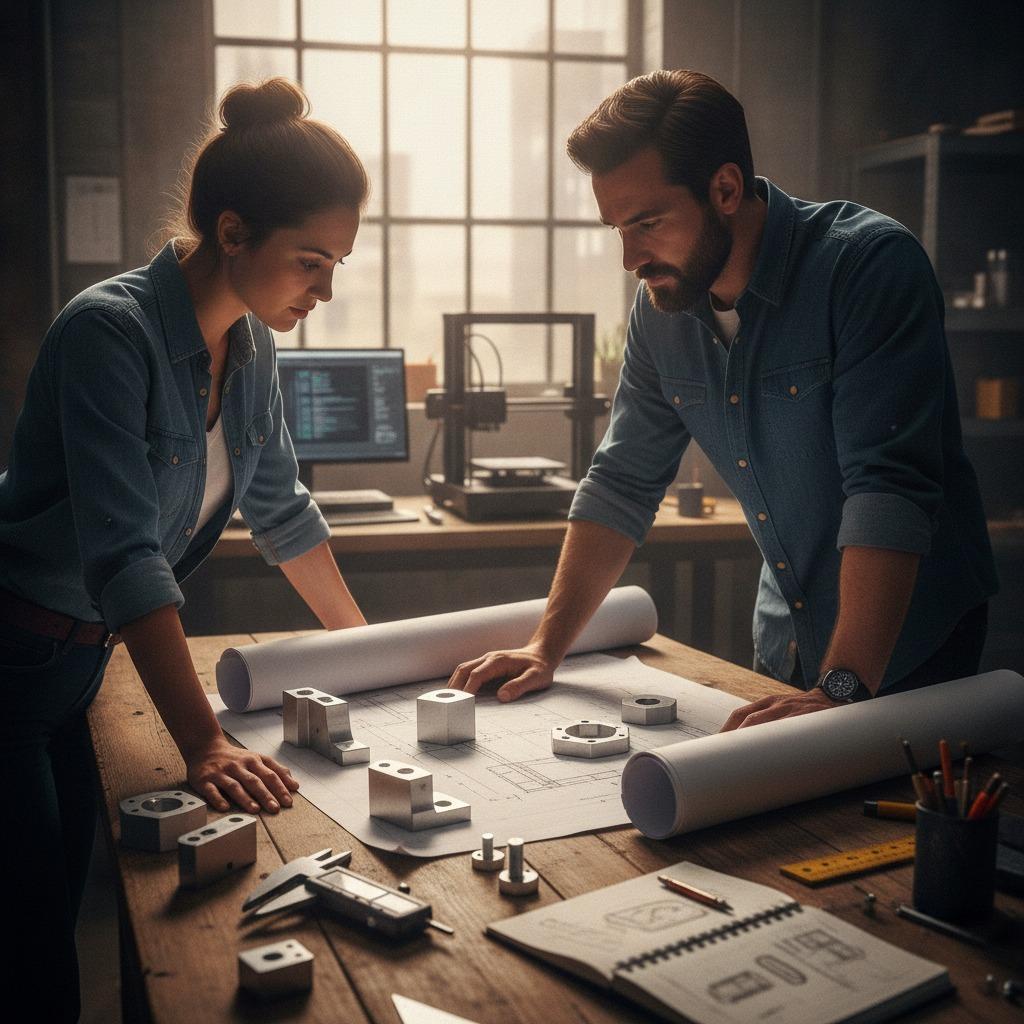
Why Non-standard Customized Hardware Parts Matter in Real Production
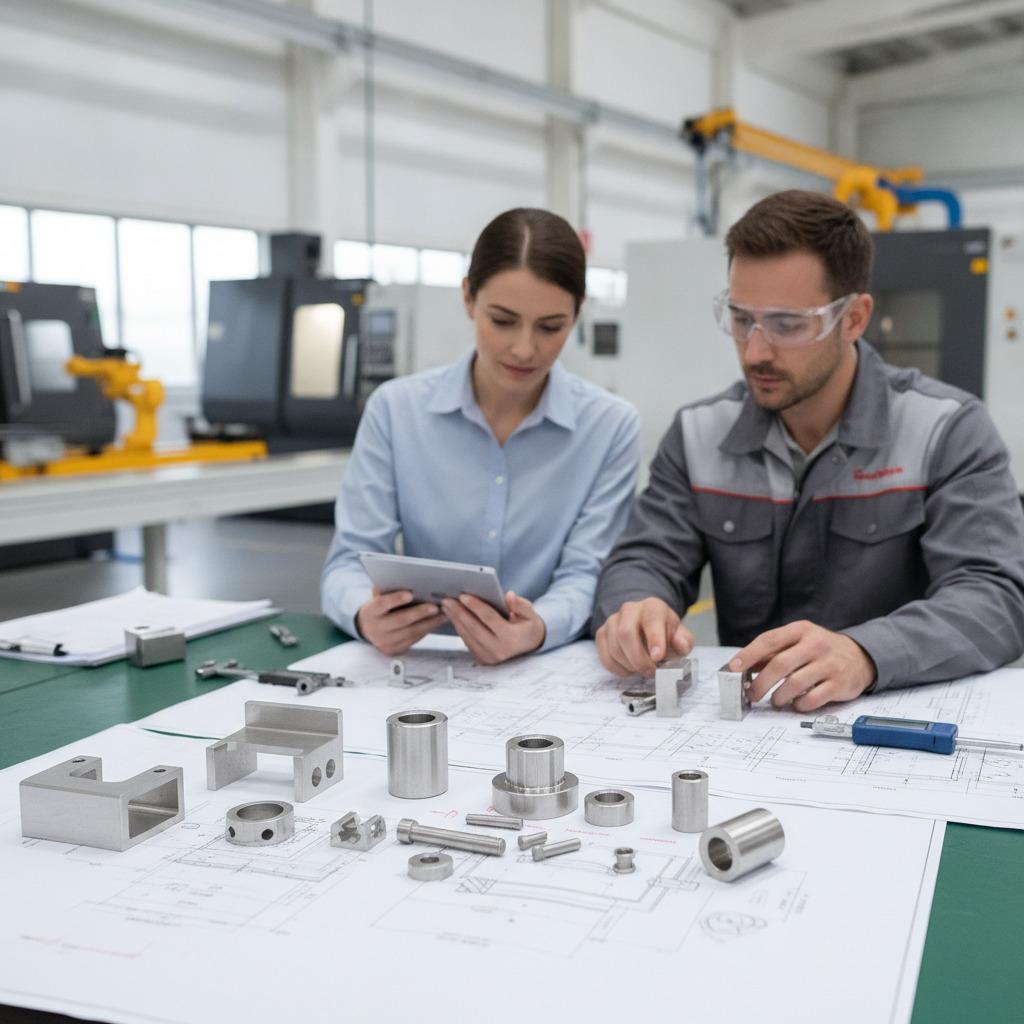
Non-standard customized hardware parts are often the difference between a product that ships cleanly and one that keeps slipping in prototype, pilot run, or field service. When a design uses off-the-shelf fasteners and fittings, life is simpler. But the moment packaging gets tighter, load paths change, corrosion becomes a concern, or assembly time needs to come down, standard hardware can become a poor fit. That is usually when engineers start looking for parts that are made to the drawing rather than chosen from a catalog.
For sourcing managers and product teams, the decision is not just about getting a part made. It is about controlling fit, repeatability, manufacturability, and long-term supply. A small piece of hardware can carry a lot of risk if it is poorly specified. A washer that is slightly off in thickness, a bracket with an awkward bend radius, or a stud with an unusual thread can affect assembly yield and even serviceability. That is why the topic deserves more attention than it usually gets.
What Counts as a Custom Hardware Part?
In practical terms, custom hardware includes fasteners, brackets, spacers, pins, clips, inserts, standoffs, and many other small functional components made for a specific application. The phrase non-standard customized hardware parts covers a wide range of items, from simple modified stock parts to custom non-standard machined components with more demanding geometry or tighter integration into an assembly.
The common thread is that these parts are not chosen because they are available; they are created because the product needs something standard hardware cannot offer. That may mean a unique head shape, special thread length, a captive feature, a non-magnetic material, or a profile that fits around other components in a crowded enclosure.
Why Engineers Specify Custom Instead of Standard
There are a few recurring reasons. First is packaging. Modern products are compact, and clearance is often the first constraint to fail. Second is function. A hardware part may need to locate another component, absorb vibration, or provide a repeatable stop point. Third is assembly efficiency. One custom part can replace several standard items and cut labor time, though that only works if the part is designed with manufacturing in mind.
There is also the issue of maintenance and supply continuity. Standard parts can go out of stock or change slightly over time. If a design depends on a very specific off-the-shelf item, the part may not stay “standard” in practice for very long. A customized approach can reduce that dependency, but it also shifts responsibility onto engineering and procurement to control the specification properly.
Typical Manufacturing Routes and What They Suit
The best process depends on geometry, volume, and performance requirements. Machining is often used for accurate small parts, prototypes, and low-to-mid volume runs. It works well when the part has features that are difficult to form economically, or when design changes are still expected.
Cold heading, stamping, bending, and other forming processes usually make sense when the design is stable and volumes justify tooling. These methods can be efficient for repeat production, but they require more discipline up front. If the drawing is still changing every few weeks, a highly tooled process can become expensive friction.
Sometimes the right answer is a hybrid: a machined blank with secondary operations, or a formed part with a critical machined feature. That kind of compromise is common in hardware, and it is not a bad sign. It usually means the buyer and engineer are balancing cost, precision, and delivery risk rather than chasing one perfect process.
Selection Criteria Buyers Should Actually Check
A good sourcing review goes beyond dimensions. Material compatibility matters, especially if the part sits near moisture, chemicals, heat, or dissimilar metals. Surface finish can affect corrosion resistance, appearance, and installation feel. Thread quality, edge condition, and burr control matter more than many teams expect, because hardware parts are handled by people and assembled into larger systems.
It is also worth asking how the supplier plans to inspect the part. Not every custom hardware item needs full metrology on every feature, but the critical dimensions should be defined clearly. If the drawing is vague, the manufacturing outcome will be vague too. That is a buyer-facing warning that sounds obvious, yet it still causes plenty of problems.
For custom non-standard machined components, it helps to identify the functional surfaces first and separate them from non-critical cosmetic features. This gives suppliers room to manufacture efficiently without guessing where precision truly matters.
Common Mistakes That Create Delays
The most common mistake is over-specifying everything. When every edge, finish, and tolerance is treated as critical, lead time and cost usually rise without improving the product. Another mistake is under-specifying the part and assuming the supplier will interpret the design intent correctly. Hardware is small, but ambiguity scales quickly when production begins.
A third issue is forgetting the assembly context. A part can look fine on paper and still be awkward to install with gloves, difficult to orient, or prone to jamming in a jig. Practical fit is not an afterthought; it is part of the design.
How to Choose the Right Supplier
Look for a supplier that asks uncomfortable but useful questions: Which dimensions are truly critical? What is the expected annual demand? Is the part for prototype validation or repeat production? Can the design be simplified without losing function? Those questions usually signal a real manufacturing mindset.
You also want a partner that can support drawing review and sample iteration. For non-standard customized hardware parts, the first sample is often a learning step, not a final verdict. The best outcomes usually come from a short loop of clarification, sample review, and controlled revision rather than a single rushed quote.
Practical Takeaway for Engineering and Procurement
If your project is struggling with fit, assembly, or supply stability, custom hardware may be the right move. But treat it as a manufacturing decision, not just a design preference. The right part should solve a clear problem, be manufacturable at the needed volume, and be specified tightly enough that suppliers can quote and build it without guessing.
For teams early in the process, the next step is simple: map the function of the part, identify the critical dimensions, and decide which process family matches the expected volume. From there, a capable supplier can help turn a rough concept into a repeatable component rather than a one-off workaround.
FAQ
Are custom hardware parts always more expensive?
Not always. They can reduce assembly time, part count, and rework. The total system cost may be lower even if the unit price is higher.
Do custom parts only make sense at high volume?
No. Low-volume projects often use custom hardware when standard parts simply do not fit the design. The process choice just needs to match the volume.
What should be prepared before requesting a quote?
A clear drawing, material intent, quantity range, application notes, and a short list of critical dimensions. That gives suppliers enough context to quote responsibly.