How Precast Concrete Accessories Define the Longevity of Modern Construction
Building Reliability from the Ground Up
In today’s construction landscape, durability and installation efficiency define success. The demand for precast concrete accessories has surged as projects shift toward modular, prefabricated systems that reduce on-site labor and error.
Yet not all suppliers deliver components that maintain uniform performance under stress, moisture, and time. Jingle’s expertise in material science and OEM manufacturing bridges this gap—ensuring every insert, anchor, and lifting socket performs exactly as designed.
How Modern Precast Accessory Systems Maintain Structural Integrity
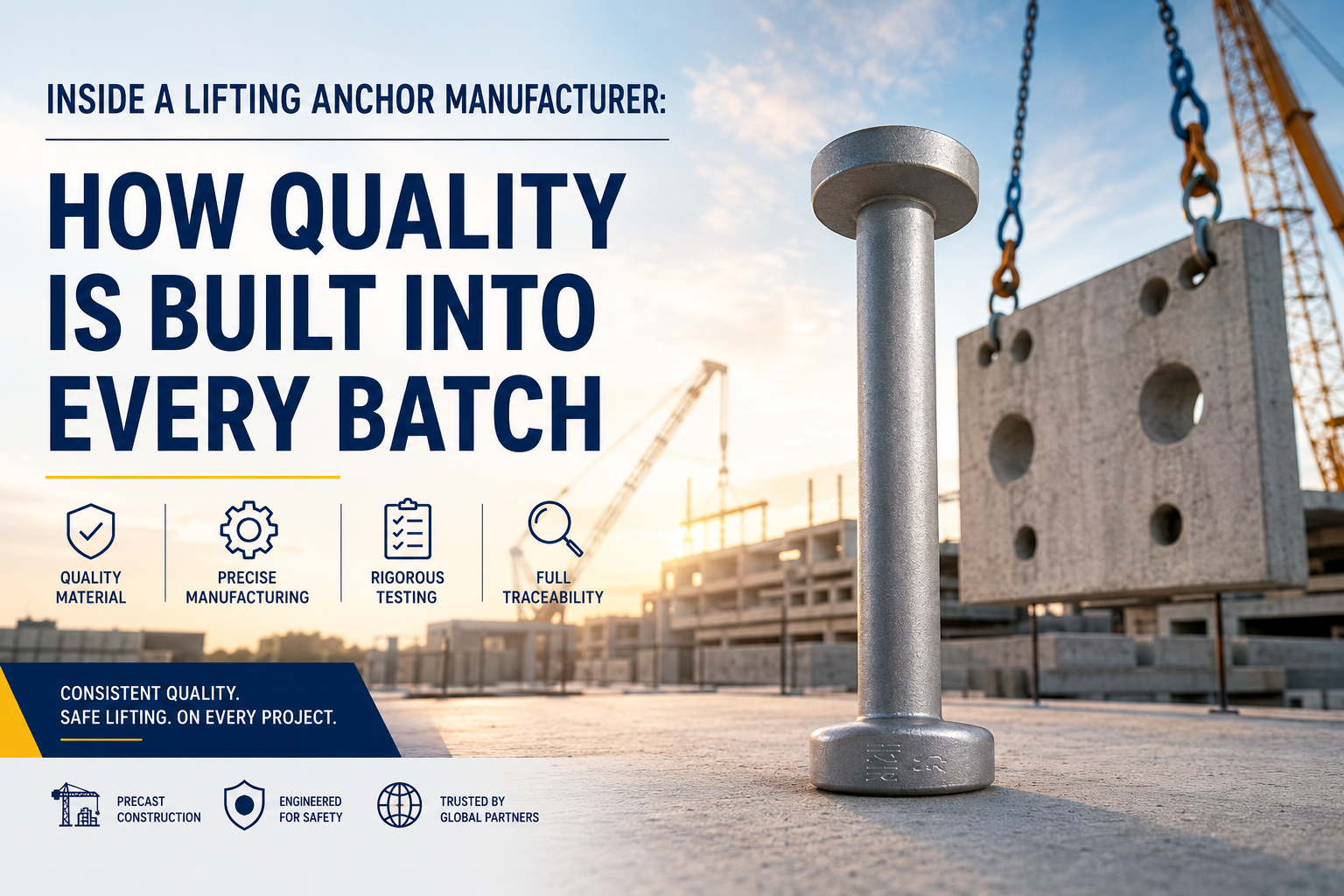
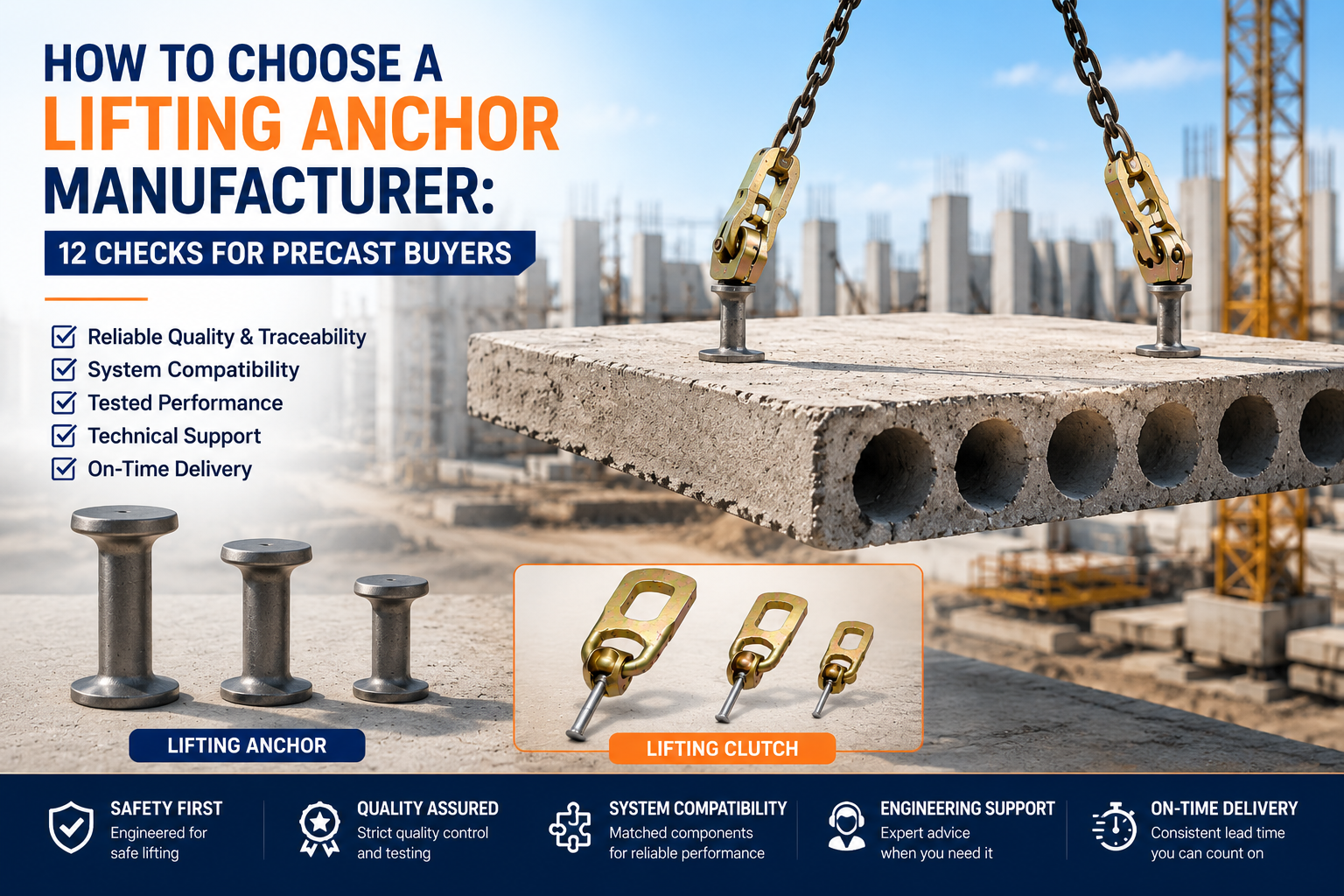
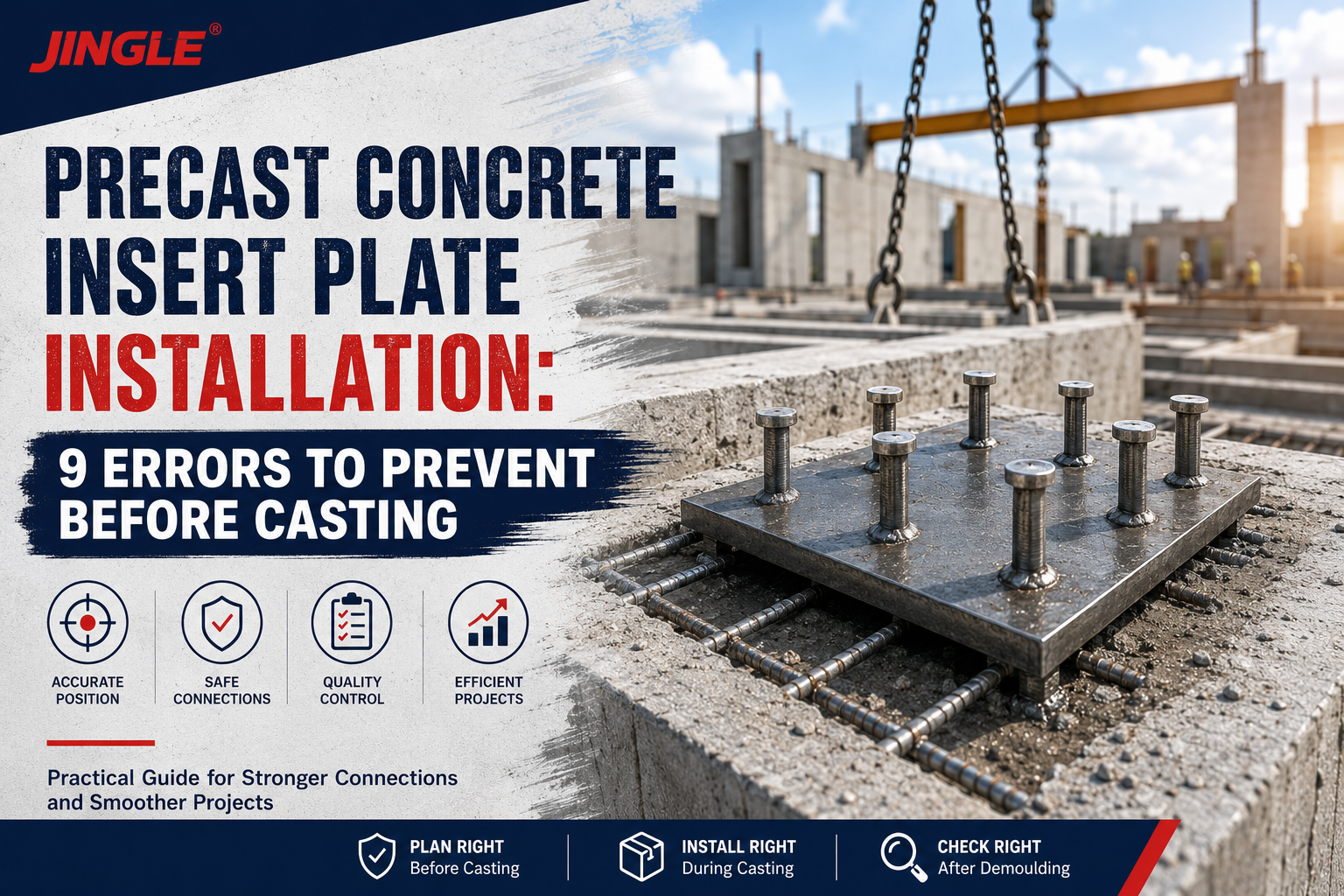
Precast components rely on small yet critical accessories to achieve dimensional accuracy and long-term adhesion. Each part—from anchor plates to lifting eyes—affects the stability and service life of the final structure.
Key engineering mechanisms behind high-quality precast accessories:
-
Galvanized protection – Prevents corrosion from concrete alkalinity and exposure cycles.
-
Precision threading and casting – Ensures mechanical compatibility with rebar and formwork inserts.
-
Load-tested fittings – Verified for static and dynamic stress up to 2–5 tons per component.
-
Concrete bond optimization – Uses ribbed surface geometry to maximize grip in structural joints.
Every accessory functions as an interface of trust—linking reinforced concrete elements into one cohesive framework.
Technical Comparison: Traditional vs. OEM Precast Supply
| Parameter | Generic Supply Chain | Jingle OEM Precast Accessories |
|---|---|---|
| Material Source | Mixed alloys | Certified galvanized steel or ductile iron |
| Dimensional Control | Manual inspection | CNC-assisted casting and machining |
| Surface Finish | Standard zinc coat | Multi-layer hot-dip galvanization |
| Testing Method | Random sample pull tests | 100% torque, tension & shear testing |
| Documentation | Basic COA | Full traceability with lot number and batch record |
By combining metallurgical precision with standardized testing, Jingle’s accessories ensure mechanical integrity in both compression and tension-critical environments.
Real Applications: From Transport to Urban Infrastructure
1. Bridge and Highway Systems
Anchor sockets, lifting loops, and dowel bars enhance slab joint performance and ease installation in modular bridge segments.
2. Commercial and Residential Buildings
Connection inserts and rebar couplers provide fast, safe assembly for wall panels and floor slabs with minimal site welding.
3. Water Retaining Structures
Corrosion-resistant inserts and tie rods prevent degradation under moisture exposure and high chloride content.
4. Precast Tunnel Segments
Heavy-duty lifting anchors and embedment plates enable efficient alignment during tunnel ring assembly.
5. Energy & Utility Infrastructure
Support brackets and embedded anchors ensure stable mounting for heavy electrical conduits or HVAC systems.
Across each sector, Jingle’s product consistency simplifies procurement and installation—reducing project timelines and maintenance costs.
Professional Selection Guide: Matching Accessories to Project Conditions
Selecting the right precast accessory depends on load, environment, and construction method. Below is a technical reference for engineers and project planners.
| Application Scenario | Recommended Accessory Type | Technical Focus |
|---|---|---|
| Marine or Coastal Projects | Hot-dip galvanized lifting inserts | High corrosion resistance, sealing integrity |
| Bridge Decks & Flyovers | Threaded anchor sockets | High tensile strength, vibration resistance |
| Residential Wall Panels | Rebar connectors and inserts | Ease of installation, accurate alignment |
| Utility Chambers | Ductile iron lifting eyes | Long-term structural reliability under load |
| Industrial Plants | Heavy-duty anchor plates | Compatibility with high-load embedded systems |
Engineering tip: Always evaluate accessories based on tensile load, embedment depth, and galvanic compatibility with concrete reinforcement.
Expert Insights: What Defines a Reliable Supplier
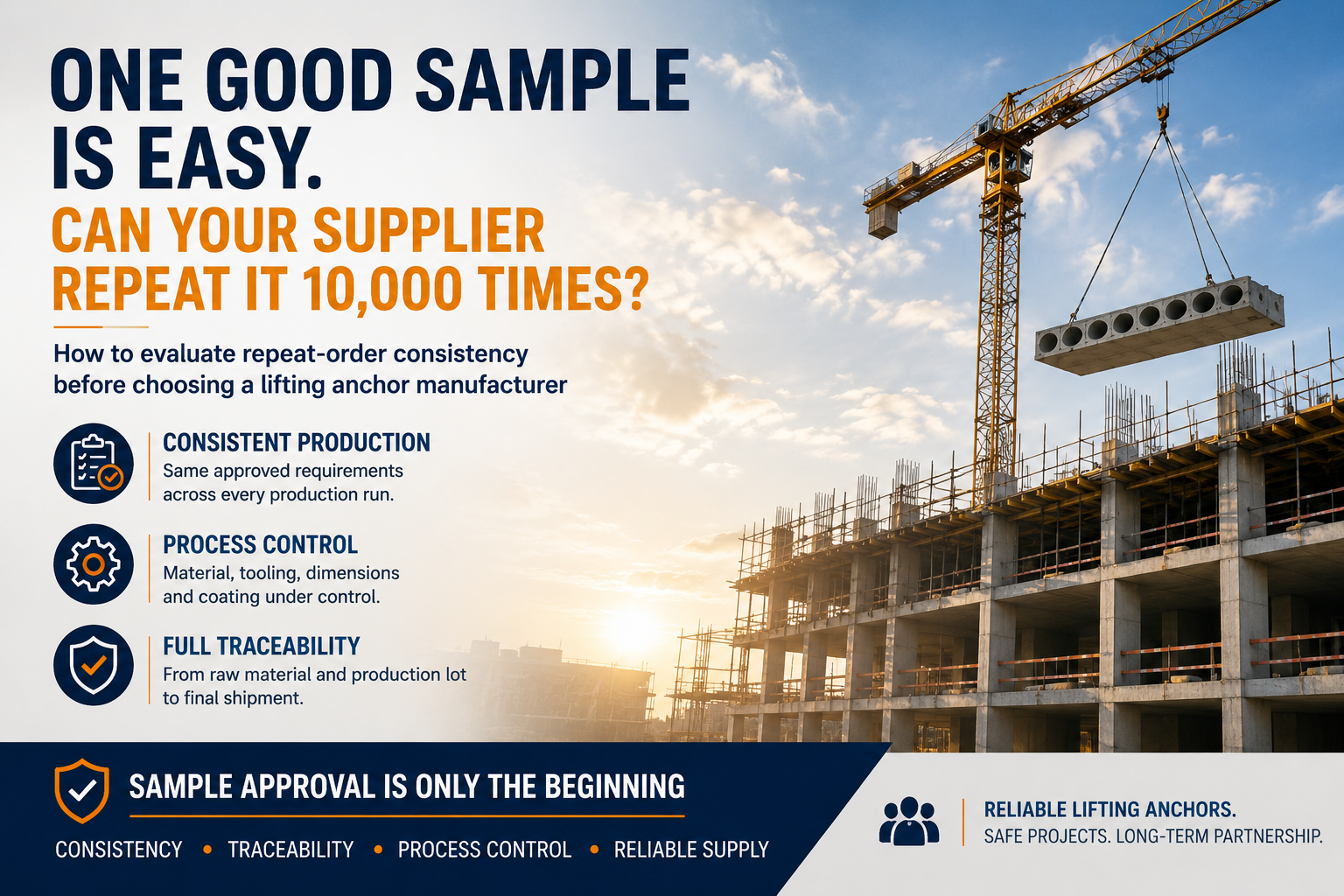
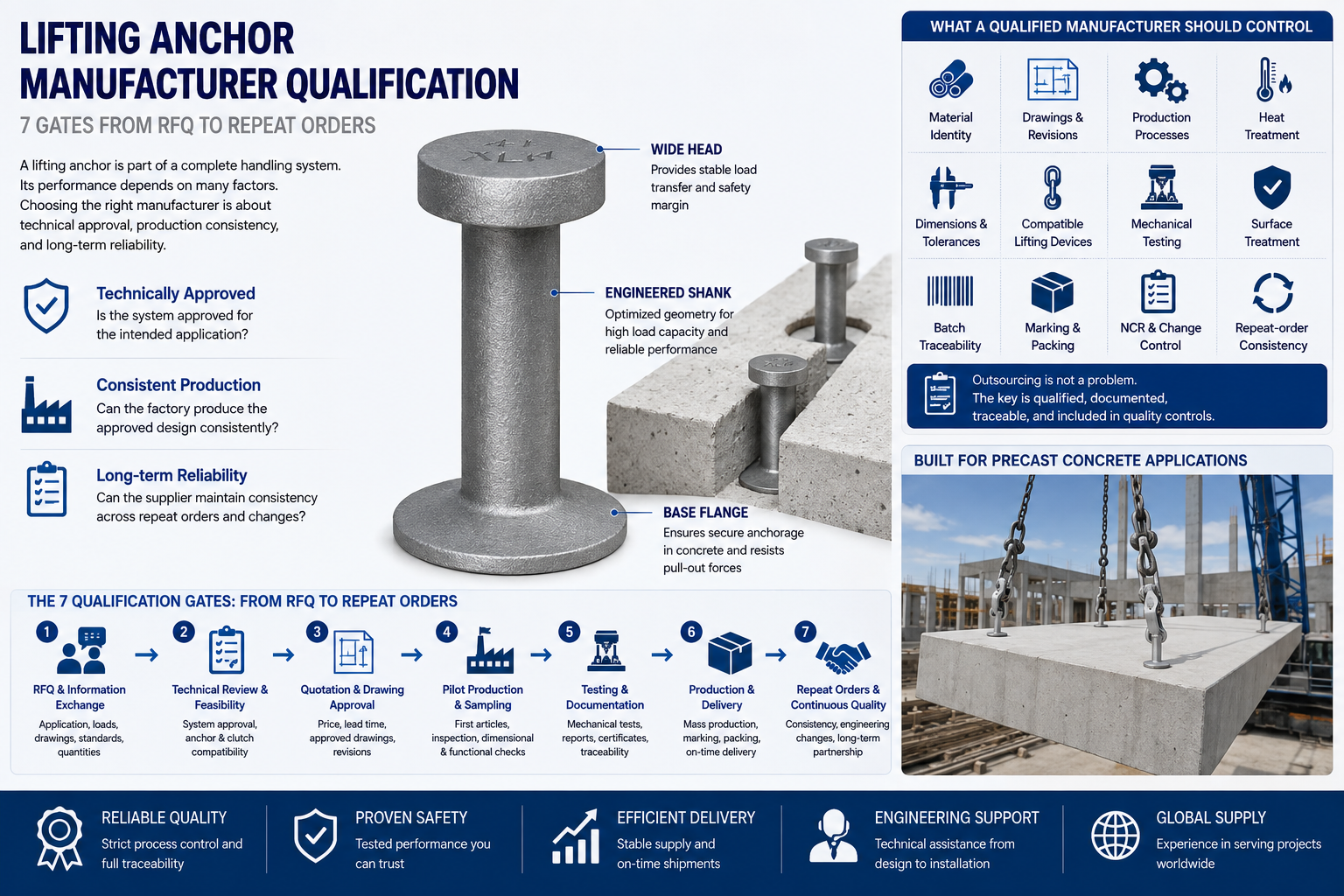
A qualified precast concrete accessories supplier must demonstrate measurable control across three areas:
-
Material Traceability – Every batch certified for mechanical strength and coating thickness.
-
Dimensional Repeatability – CNC-controlled manufacturing eliminates tolerance drift.
-
Surface & Corrosion Testing – Salt spray and fatigue cycle testing exceeding 1,000 hours.
These principles not only meet ISO 9001 and EN 1090 standards but also establish the supplier’s credibility for international infrastructure tenders.
Sustaining Structural Confidence Through Precision and Partnership
Modern infrastructure depends on invisible yet crucial details—fasteners, anchors, and fittings that hold massive systems together. By focusing on precision-built, corrosion-resistant, and traceable components, Jingle ensures every structure stands the test of time.
To learn more about how Jingle’s precast accessory solutions can enhance your next project, visit our homepage or reach our engineering team through the contact page.