Precision Metal Parts Supplier: What Separates Reliable Output from Hidden Risk
In real industrial projects, metal parts rarely fail because a dimension is obviously wrong.
They fail because relationships between features drift, assemblies lose interchangeability, or repeat orders behave differently from the first batch.
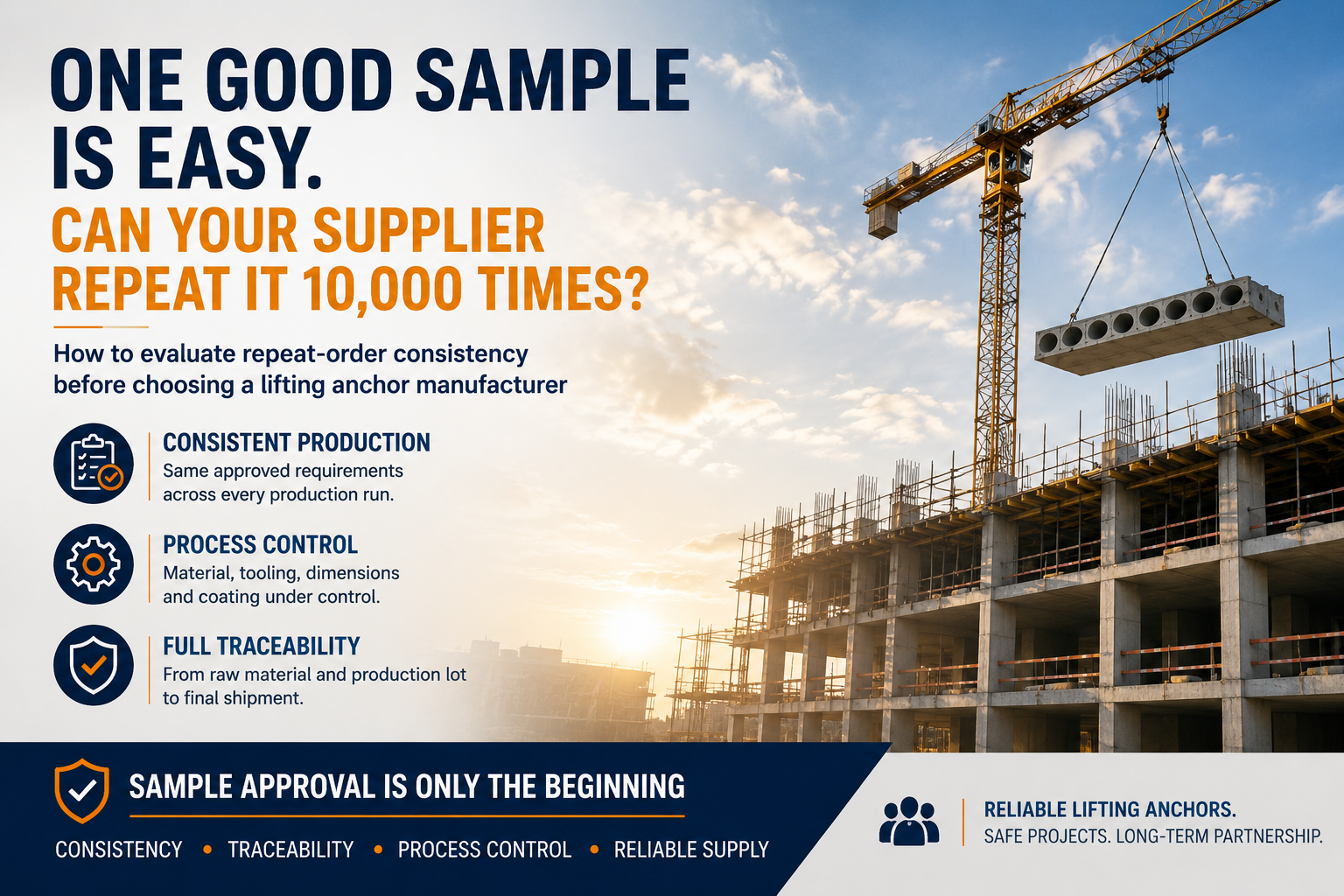
Most buyers have encountered this gap. The inspection report looks acceptable, but production slows once parts reach the assembly line. At that point, the issue is no longer a single component—it becomes a supplier-level problem.
This is where the role of a precision metal parts supplier becomes decisive.
Precision Is a System Behavior, Not a Measurement
Precision does not exist at one machining step.
It is created—or lost—across material sourcing, process sequencing, fixturing logic, and inspection feedback.
Suppliers that define precision as “meeting tolerance” often struggle once orders scale or designs evolve. Suppliers that define precision as maintaining functional consistency over time build processes differently from the start.
That distinction determines whether parts assemble cleanly across multiple batches or require ongoing adjustment.
Material Control Is the First Structural Advantage
Metal behaves differently once stress is released through machining. Residual stress, hardness range, and batch consistency all influence dimensional stability—especially in aluminum, stainless steel, and alloy steels commonly used for industrial components.
| Material control approach | Typical production result |
|---|---|
| Mixed batch sourcing | Inconsistent repeatability |
| Certificate-only control | Batch-to-batch variation |
| Controlled sourcing + tracking | Stable long-term output |
A capable precision metal parts supplier aligns machining strategy to actual material behavior, rather than assuming nominal grades behave identically.
Process Sequencing Determines Whether Geometry Holds
In precision metal components, the order of operations matters as much as the operations themselves. Aggressive early finishing or poorly sequenced cuts introduce stress that reappears later as distortion or misalignment.
Effective suppliers design machining sequences to:
-
balance material removal around functional datums
-
delay finishing of critical interfaces until thermal and mechanical stability is achieved
-
protect alignment features across multiple setups
These decisions are rarely visible to buyers—but they determine whether geometry survives beyond inspection.
Fixturing Controls Relationships, Not Just Position
Most functional failures are relational.
A hole may be in tolerance. Two holes may not align.
Fixture strategy governs whether feature relationships remain stable across runs and operators.
| Fixture strategy | Effect on assembly consistency |
|---|---|
| Generic clamping | Variable feature alignment |
| Over-constrained fixtures | Elastic deformation |
| Functional datum referencing | Repeatable assembly fit |
This is one of the clearest differentiators between a machining shop and a true precision metal parts supplier.
Customization Is Where Risk Multiplies Fastest
Customization is unavoidable in industrial metal parts.
It is also where most suppliers lose control.
Common high-risk customization scenarios include:
-
adding features without redefining datums
-
tightening tolerances locally without revising process flow
-
changing material grade without adjusting tooling strategy
Without process re-evaluation, customization shifts risk downstream—into assembly, testing, and delivery.
| Custom change | Typical unmanaged consequence |
|---|---|
| Additional hole patterns | Positional drift |
| Thinner wall sections | Post-machining distortion |
| Material upgrades | Tool wear instability |
| Mixed tolerance zones | Inspection blind spots |
A mature precision metal parts supplier evaluates customization by process impact, not just manufacturability.
Inspection That Only Confirms Limits Misses Drift
Final inspection answers one question:
Is the part acceptable now?
Production reliability depends on another:
Is the process changing?
Suppliers with real control monitor:
-
dimensional trends across batches
-
correlation between tool wear and feature movement
-
repeatability of assembly-critical interfaces
| Inspection approach | What it actually protects |
|---|---|
| In-process probing | Setup integrity |
| SPC trend tracking | Early deviation detection |
| Feature correlation checks | Functional fit |
| Historical comparison | Long-term consistency |
This is how inspection becomes a control mechanism, not a reporting exercise.
Where Supplier Precision Becomes a Cost Issue
Precision failures rarely show up as scrap alone.
They surface as:
-
delayed assembly
-
selective fitting
-
repeated inspection
-
unstable reorder performance
Across multi-batch projects, these effects commonly increase total project cost by 10–30%, even when unit pricing appears competitive.
That cost difference is usually traced back to supplier-side process discipline.
Applications Where Precision Metal Parts Matter Most
Precision metal components are critical in:
| Application | What consistency protects |
|---|---|
| Construction hardware | Load-path alignment |
| Industrial equipment | Interchangeable assemblies |
| Energy systems | Interface reliability |
| Automation | Motion stability |
| Transportation | Long-term fit integrity |
In these contexts, choosing the right precision metal parts supplier directly affects system reliability, not just component quality.
Common Buyer Questions
Q1: Why do metal parts pass inspection but fail during assembly?
Because inspection often checks isolated dimensions, while assembly depends on relationships controlled by datums and fixturing.
Q2: Does tighter tolerance automatically improve precision?
No. Without process adjustment, tighter tolerance often increases instability, scrap, and cost rather than functional consistency.
Q3: How does customization affect repeat orders?
Customization introduces new variables. Without redefining process logic and inspection focus, repeatability degrades even if the first batch passes.
Conclusion
A precision metal parts supplier with real capability delivers parts that behave consistently across time, batches, and design changes. That reliability is built through disciplined material control, structured machining processes, controlled customization, and inspection that tracks trends—not just limits.
For an overview of CNC metal part manufacturing and precision component supply in real production environments, visit
👉 Jingle Home Page
If you are working with drawings, samples, or active projects and need to evaluate machining stability, customization feasibility, or delivery risk, early technical discussion can prevent downstream rework and delays:
👉 Contact Jingle