Precision Screws Factory: Delivering Accuracy and Reliability at Scale
Why Precision Screws Matter More Than Ever
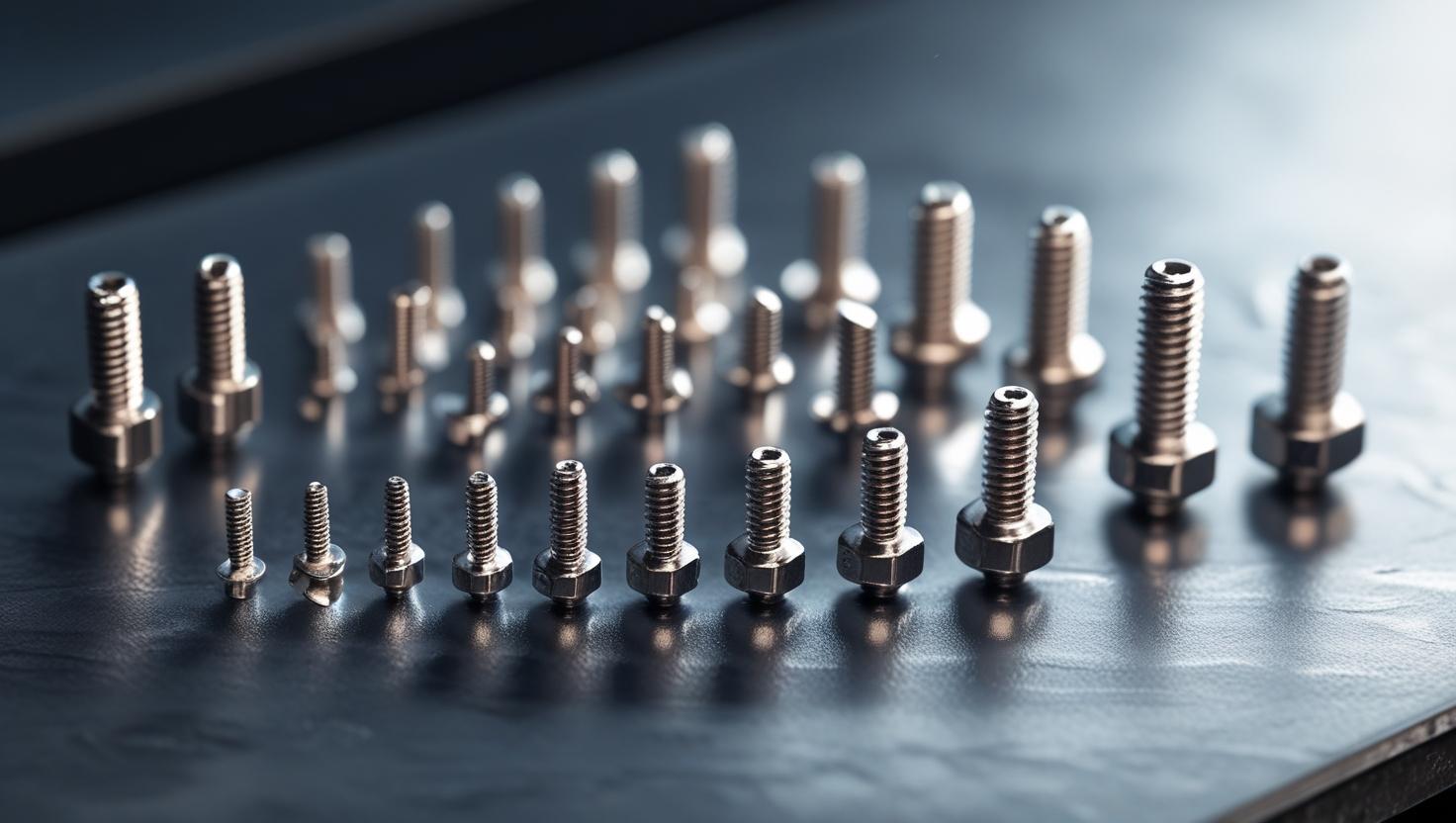
Screws are among the smallest components in engineering, yet their failure can cause massive consequences. In electronics, a loose micro screw may damage circuit boards; in aerospace, a fatigued screw could endanger safety. Precision screws are engineered not just to hold parts together, but to ensure systems operate reliably under high stress, vibration, and extreme environments.
Unlike generic screws produced in bulk, precision screws undergo advanced design, machining, and testing processes. For industrial buyers, the real value lies in knowing that every screw—from the first to the thousandth—is manufactured to the exact same standard.
Inside a Precision Screws Factory: What Sets It Apart
A precision screws factory is fundamentally different from a small-scale supplier. It brings together advanced machining, automated inspection, and certified processes to guarantee quality at industrial volumes.
-
Micro-Tolerance Machining
Advanced CNC systems cut threads and heads with tolerances measured in microns. Even subtle variations are unacceptable in industries like aerospace or medical devices. -
Surface Engineering
Screws may receive heat treatments, passivation, or coatings such as zinc-nickel or PVD. These processes enhance fatigue strength, corrosion resistance, and biocompatibility for medical use. -
Batch Consistency
Automated optical inspection checks thousands of screws per hour, ensuring identical dimensions and flawless finishes across entire production runs. -
OEM Flexibility
Factories design screws to meet exact specifications—non-standard heads, special drive types, or custom coatings—tailored to specific projects. -
Compliance and Certification
Precision screws are produced under ISO, ASTM, or CE-certified systems, with full traceability of material origin, machining processes, and testing records.
JINGLE’s Strength as a Precision Screws Factory
At JINGLE, screws are not treated as commodities but as critical engineered components. The factory integrates every step—design, machining, finishing, and inspection—into a seamless process.
-
OEM Solutions: Whether for electronics requiring tiny micro screws or heavy-duty assemblies in automotive, JINGLE develops screws to exact customer needs.
-
Capacity and Scale: With high-volume production capability, JINGLE ensures that bulk orders for global distributors arrive consistent and defect-free.
-
In-House Testing: Every batch undergoes tensile strength tests, fatigue analysis, salt-spray corrosion checks, and microscopic inspections of threads.
-
Advanced Materials: Stainless steel, titanium, and specialty alloys are used depending on application environments.
-
Traceability and Logistics: Each lot is ERP-tracked, ensuring full traceability from raw material to delivery.
This factory model provides not just screws, but the confidence that every component is engineered for performance and safety.
Where Precision Screws Make the Difference
-
Electronics and Semiconductors
Micro screws secure delicate circuit boards, screens, and connectors. Even slight dimensional variation can cause misalignment or failure. -
Medical Devices
Surgical tools, implants, and diagnostic equipment rely on screws with exact tolerances and biocompatible finishes. Precision here is literally a matter of life and health. -
Automotive Systems
Precision screws ensure stability in electronic modules, interior assemblies, and engine components, withstanding vibration and temperature cycles. -
Aerospace Applications
Titanium screws, engineered to withstand vibration and extreme forces, are critical in aircraft seats, control systems, and satellite assemblies. -
Heavy Industry and Machinery
Industrial machines demand screws that resist fatigue under constant vibration, with protective coatings against oils, chemicals, and dust.
These scenarios highlight why industrial buyers cannot risk sourcing from non-specialized suppliers. Factories capable of delivering precision screws with repeatable quality are the cornerstone of modern projects.
Factory-Level Reliability for Global Buyers
Precision screws are not just products—they are assurances of accuracy, safety, and compliance. A dedicated factory ensures that every order, regardless of size, meets strict international standards while offering the OEM flexibility needed by industries worldwide.
With its OEM customization, high-capacity production, certified testing, and global logistics, JINGLE positions itself as a trusted precision screws factory for critical industries.
Discover how JINGLE supports electronics, medical, automotive, and aerospace projects with precision screws: Contact JINGLE.