私たちのウェブサイトへようこそ
logo

コンクリートアンカーメーカー: 選択と調達ガイド

  • ファスナー
Posted by JINGLE On Aug 20 2026
コンクリート アンカー メーカーを評価するための購入者ガイド (選択の証拠と RFQ コントロールを含む)
アンカー タイプ、承認証拠、設置管理、供給文書を一致させるための購入者のフレームワーク。

コンクリート アンカー メーカー: 選択と調達ガイド

簡単な答え: カタログから始めないでください。まずは接続から始めましょう。設計チームはまず、コードのルート、具体的な条件、設計アクション、形状、露出、設置方法、およびその作業に期待される証拠を決定する必要があります。そうして初めて、調達部門はサプライヤーの正確な製品と承認範囲を比較することができます。

エンジニアリングおよび安全に関する通知: この記事は、調達および仕様のフレームワークであり、アンカーの設計、設置手順、プロジェクトの製品の承認ではありません。アンカーの能力は、システム全体と現場の条件によって異なります。認可された設計専門家および管轄当局は、適用される規定、設計措置、必要なアンカー資格、詳細設定、設置、検査、および受け入れ要件を決定する必要があります。実際のジョブでは、現在のプロジェクトのドキュメント、正確な製品評価レポート、およびメーカーが公開した指示がこのガイドより優先されます。

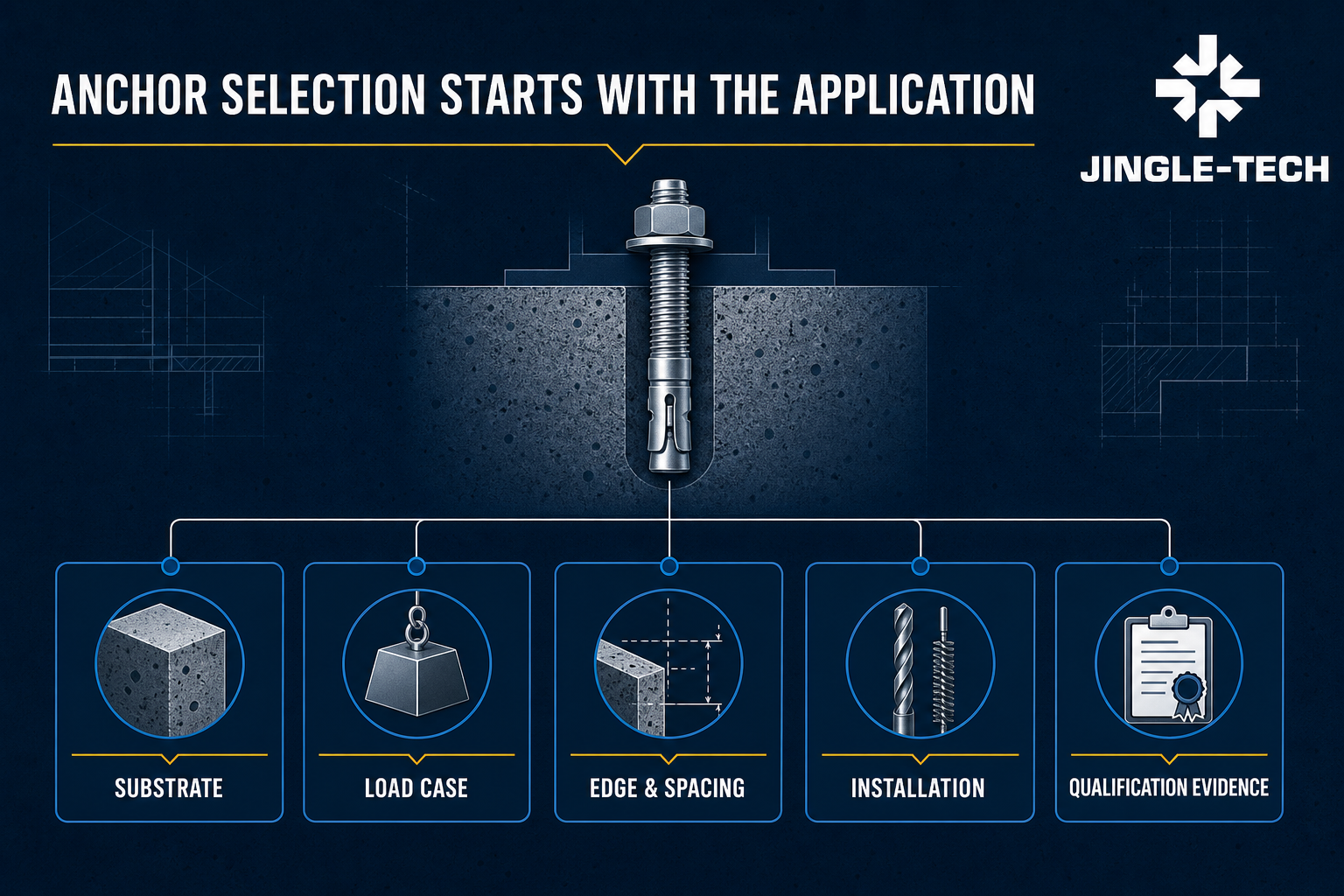
コンクリート アンカー メーカー は、ウェッジ、スリーブ、ドロップイン、スクリュー、アンダーカットなどのよく知られた部品名で到着することがよくあります。名前は役に立ちますが、RFQ を伝えることはできません。まず接続について説明します。何が付いているのでしょうか?設計ではコンクリートにひび割れがあるものとして扱っていますか?アクションは張力、剪断、またはその両方ですか?近くの端、天候への曝露、振動、または地震の役割など、厄介な詳細にも注意してください。該当するコード エディションと製品評価ルートにより、開始概要が完成します。

このガイドは、サプライヤーの認定、製品固有の証拠、RFQ 管理、国境を越えた調達に焦点を当てています。別のコンクリート固定アンカー タイプ選択ガイド、および鋳込みアンカー ボルト メーカー チェックリスト

これらの質問が欠けていると、異なる製品、仮定、または証拠をカバーしているにもかかわらず、見積書が同等に見える可能性があります。最低価格は、間違った承認範囲、環境に適合しない材料、現場で利用できない設置ツール、出荷ロットに接続できない文書など、コストのかかる不一致を隠す可能性があります。

このガイドは、エンジニア、購買チーム、ディストリビュータ、プロジェクト サプライヤーに、アプリケーション定義から制御された見積依頼までの実際的なルートを提供します。図面とアプリケーションの概要がすでにある場合は、具体的なアンカーの RFQ について話し合ってください。サプライヤーからの入力は製品および商業情報に限定されており、技術的な選択やプロジェクトの承認を構成するものではありません。

1.アンカー名ではなく接続から始めます

コンクリート アンカーは、取り付けられたコンポーネントからコンクリート部材にアクションを伝達します。この短い文は、単なる鉄鋼製品ではなく、システムを説明しています。母材、アンカーの形状、固定具、ワッシャーまたはナット、取り付け穴、設置プロセス、アンカー周囲のコンクリートはすべて接続に影響します。 1 つの要素を変更すると、元の選択をサポートしていた証拠の外にデザインが移動する可能性があります。

最初の調達タスクは、1 ページの申請封筒です。添付されたアイテムに名前を付け、それが何をするのかを説明します。プロジェクト、管轄区域、具体的なメンバー、およびエンジニアが提供したアクションを記録します。予定された耐用年数、暴露、設置順序、検査または文書化の義務を追加します。一部のフィールドはまだ開いている可能性があります。その横に「未解決」と書きます。目に見えるギャップは、静かなサプライヤーの仮定よりも安全です。

最低限の決定要旨

  • 接続機能: 構造的な取り付け、機器の拘束、ファサードのサポート、手すり、サービスのサポート、一時的な設置、またはその他の定義された用途
  • コンクリート: 部材のタイプ、指定された強度、ひび割れの有無の設計状態、関連する場合の軽量または通常重量の分類、状態、アクセス可能な厚さ
  • アクション:
  • エンジニアが提供する張力、せん断、複合アクション、持続アクション、疲労、衝撃、振動、火災、または耐震要件(該当する場合)
  • 形状: 器具の厚さ、穴のパターン、近くのエッジ、アンカーの間隔、補強材、埋め込まれたアイテム、および利用可能な穴あけの深さ
  • 暴露:
  • 乾燥した屋内、屋外、沿岸、工業、化学、湿潤、温度に敏感な環境、またはその他のプロジェクトで定義された環境。
  • コンプライアンス ルート: コード、プロジェクト仕様、評価レポート、または欧州技術評価、検査、提出要件を採用しました。

営業チームに、不足している設計アクションの計算や、コンクリートをひび割れとして扱うべきかどうかの決定を依頼しないでください。これらはプロジェクトの決定事項です。責任あるサプライヤーは、ギャップにフラグを立て、製品の証拠を説明し、記載された要件に基づいて見積もりを作成できます。記録上のエンジニアを置き換えるべきではありません。

2.主要なコンクリート アンカー ファミリを理解する

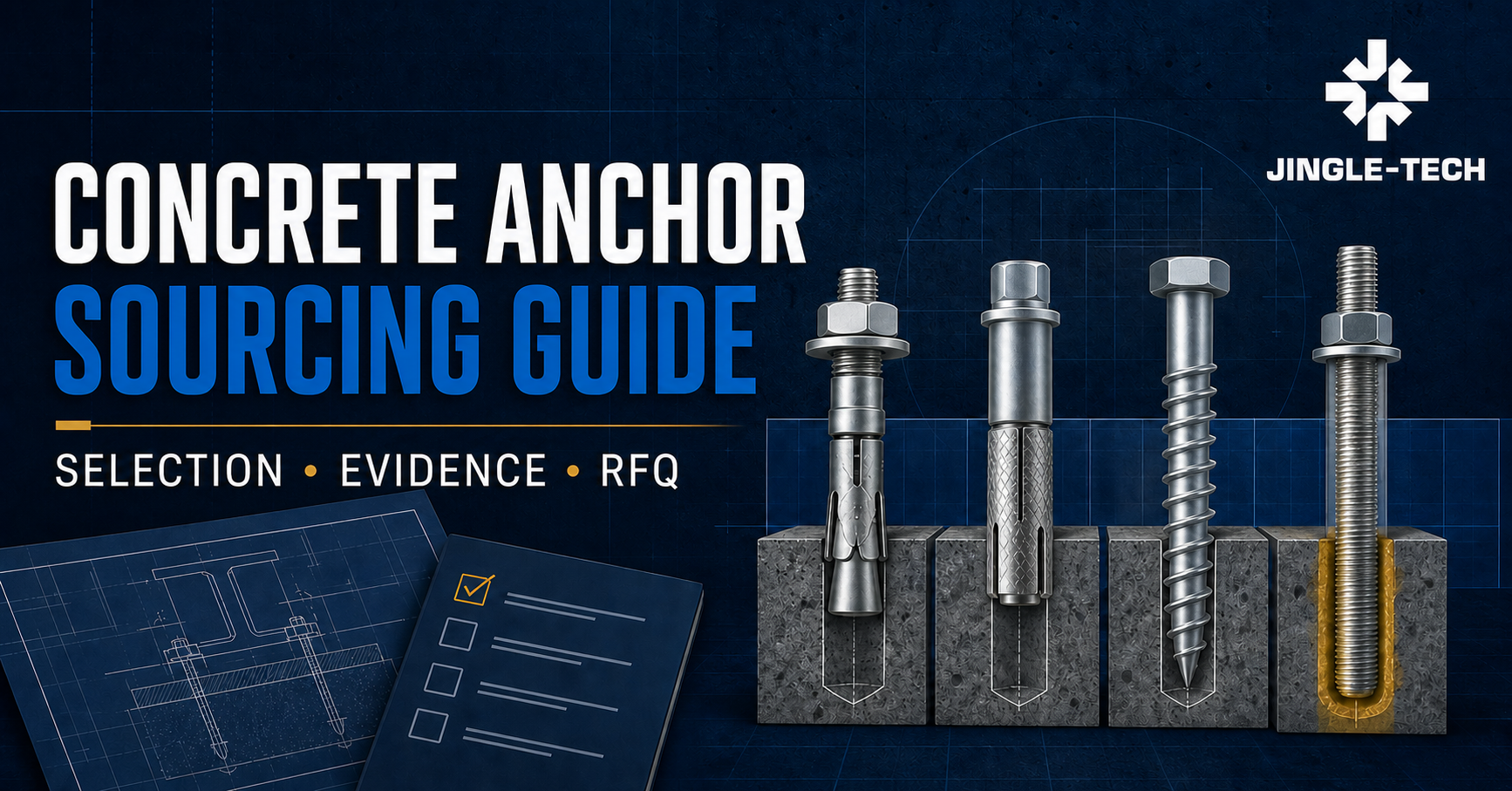
コンクリート アンカーの名前は市場によって完全に統一されていないため、見積書には図面、製品の指定、設置原則を含める必要があります。以下の比較は、調達の方向のみを示しています。適合性や能力を確立するものではありません。

また、RFQ の開始時に鋳造アンカーを後設置システムから分離します。鋳込みアンカー ロッド、頭付きアンカー、スタッド、チャンネル、およびインサートは、コンクリートが硬化する前に配置され、さまざまな詳細設定、配置、検査、および製品仕様のパスに従います。 ASTM F1554-20 は、鋼製アンカー ボルトとアンカー ロッドの製品仕様です。これは、構造支持体をコンクリート基礎に固定することを目的とした製品を対象とし、機械的拡張アンカーは明示的に除外します。それ自体は、アンカーの設計や製品の認定基準ではありません。これらの製品は、名前に「アンカー」という単語が含まれているという理由だけでグループ化すべきではありません。

<頭> <本体>

ウェッジ アンカーとコンクリート ネジはどちらも後施工の機械式アンカーですが、穴の準備、設置メカニズム、取り外しオプション、工具、評価データが異なります。スリーブ アンカーは、異なるスコープを搭載していても、別の拡張製品と同じように見えることがあります。ドロップイン アンカーは、互換性のある設定プロセスがなければ不完全です。アンダーカット システムには特殊な穴形状が必要な場合があります。これらの違いが、直径だけで製品を置き換えるのが安全でない理由です。

接着アンカーには明示的な境界が必要です。これらは単に「別の仕上げ」や機械式アンカーの一般的な代替品ではありません。それらの認定、保管、穴の清掃、設置温度、硬化、持続荷重に関する考慮事項、および検査義務は、大きく異なる場合があります。接着剤のスコープを独自の提出および承認パスに維持します。

3.支配的な承認パスで候補リストをフィルタリングします

製品データシートは、コードで認識された評価証拠と同じものではありません。まず、どのコンプライアンス ルートがプロジェクトに適用され、どのエディションが採用されているかを設計チームに尋ねます。米国ではACI CODE-318-25 は、このガイドのレビュー時点での現在の ACI 建築基準法であり、コンクリートへの固定はその範囲内です。地域の管轄区域では異なる版が施行される場合があるため、「最新」と「法的に適用可能な」という言葉は互換性がありません。

後付けメカニカルアンカーの場合、ACI CODE-355.2-24 では、静的または地震的作用、ひび割れのあるまたはひび割れのないコンクリートの分類など、ACI 318 で扱われる構造用途の適格性試験と評価について説明しています。 ICC 評価サービスにはAC193 はコンクリート要素内のメカニカル アンカー用、AC308 はコンクリート要素内の後付け接着剤アンカーと鉄筋用です。 ICC-ES はまた、評価サービス報告書が用途、設置規定、使用条件、提出された証拠、および製品の識別を特定するものであると説明しています。これらのセクションは、パンフレットにバッジをコピーするよりも購入者にとって有益です。

ACI ルートの下で、ACI CODE-355.4-24 は、アンカー要素として使用される変形鉄筋を含む接着剤アンカーを ACI 318 章に基づく設計に適格とします。 17.ACI CODE-355.5-24 は、ACI 318 の直筋開発およびスプライス長さの規定に基づいて使用される後施工鉄筋システムに個別に対応しています。認定証拠を選択する前に、意図した設計モデルを確認してください。

ヨーロッパのプロジェクトの場合、EOTA はEAD 330232-02-0601 コンクリートおよび 接着ファスナーおよび接着拡張用の EAD 330499-02-0601コンクリートに使用される留め具。該当する欧州技術評価および宣言ルートは、特定の製品および市場について確認する必要があります。あるルートに基づく証拠が自動的に別の管轄区域を満たすとは考えないでください。

サプライヤーの速記は重要な境界線を曖昧にする可能性があります。 ACI 318 は設計コードです。 ACI 355.2、355.4、および 355.5 は、異なる認定ルートを扱います。 「ACI 認定アンカー」をそれ自体で有用な証拠に変えるものはありません。有用な記録は、現在の範囲と照らし合わせて読み取られた、見積書に基づく製品の正確なレポートまたは評価です。

レポートを 1 行ずつ読む

レポート所有者、製品名、レポート番号、該当するコード、アンカー サイズ、材料、承認されたコンクリート条件、設置パラメータ、設計データ、特別検査規定、使用条件、製品識別情報を記録します。次に、それらのアイテムを見積書および納品されたラベルと比較します。見積書に「同等」と記載されている場合は、実際のプロジェクトと同等であることを示す証拠を特定するようサプライヤーに依頼してください。同様のジオメトリは、評価レポートをリストに掲載されていない製品に拡張することはありません。

ASTM のASTM E488/E488M-22 は、指定された荷重および環境カテゴリにわたる、ひび割れまたはひび割れのないコンクリートにおけるアンカーの引張強度およびせん断強度の実験室試験方法について説明しています。規格自体は、製品固有の評価および合格基準によって要件が追加される可能性があると述べています。したがって、臨床検査レポートは、関連する評価ルートに照らして読む必要があります。単一のプル テストやマーケティング グラフだけでは完全な資格とは言えません。

4.アンカーをコンクリート、アクション、ジオメトリに一致させます

購入者はよく「このアンカーはどれくらいの荷重に耐えられますか?」と尋ねます。責任ある普遍的な答えはありません。設計では、アンカーと構成に応じて、鋼材の破壊、コンクリートのブレークアウト、引き抜き、こじ開け、側面の吹き抜け、亀裂、張力とせん断の相互作用を考慮する必要がある場合があります。制御結果は、埋め込み、端部の距離、間隔、部材の厚さ、コンクリートの強度と状態、アンカー グループのレイアウト、鉄筋によって変化します。地震、持続、疲労、火災、またはその他のプロジェクト要件により、許可される範囲がさらに変更される可能性があります。

表 1. コンクリート アンカー ファミリ: 設定原則と証拠の調達
アンカー ファミリ 一般的な設定原則 選択を制御する質問 確認すべき調達証拠
トルク制御拡張アンカー (多くの場合、ウェッジ スタイルを含む) 取り付けトルクにより、ドリル穴に対する拡張が促進されます。 コンクリートの状態、承認された直径と埋め込み、器具の厚さ、エッジ/間隔の形状、トルク手順、および露出。 製品固有のレポート、取り付け手順、寸法、設定トルク、工具、材質/仕上げ、および識別。
変形制御された拡張アンカー (ドロップイン スタイルを含むことが多い) 設定ツールは、穴内の内部または外部要素を拡張します。 設定ツールへのアクセス、確認済みの設定、雌ねじのかみ合い、治具アセンブリ、および承認済みのベース材料。 一致する設定ツール、設定インジケーターまたは指定されている検査方法、ねじデータ、レポート、およびパッケージ化コントロール。
スリーブ タイプの拡張アンカー アセンブリを締め付けるとスリーブが拡張します。 正確な製品分類、承認されたコンクリートの状態、貫通固定の形状、固定具の厚さ、および設置順序。 外観からスコープを推測しないでください。具体的な評価、手順、コンポーネント、寸法を確認してください。
コンクリート ネジ アンカー 硬化したネジ付きアンカーが、事前に開けられた穴を切断または形成して係合します。 穴の直径、穴あけシステム、承認された取り付けツール、ヘッド/固定具のインターフェース、承認された再利用または調整の規定、および基板の状態。 製品レポート、ドリルビットと工具の要件、設置制限、ヘッド マーキング、コーティング/材料、ロットの識別。
アンダーカット アンカー 機械式ベアリング機能がコンクリートのアンダーカットに係合します。 穴/アンダーカットの作成方法、特殊な工具、取り付けアクセス、検査、製品承認の範囲。 システム ツール、トレーニングのニーズ、設定の検証、レポート、寸法、完全なコンポーネント リスト。
接着アンカー システム 認定された接着剤システムにより、下穴にねじ付き要素または鉄筋が接着されます。 カートリッジとロッドのセットではなく、システムとしての価格を設定します。概要には、接着剤と要素に加えて、穴あけ、洗浄、コンクリートの状態、温度、方向、硬化、持続的な作業、設置者の要件、検査も含まれている必要があります。 名前付きシステム修飾を確認します。次に、保存期間、保管場所、ディスペンサー、洗浄方法、硬化ウィンドウ、設置者と検査のルール、ロットの識別を追跡します。
<頭> <本体>

基材の識別も同様に重要です。コンクリートアンカーを石材、中空ブロック、石、グラウト、または薄いトッピングにむやみに移してはならない。通常重量コンクリートの承認は、すべての軽量コンクリート構成をカバーしているわけではありません。既存の工事には、修理、空洞、劣化ゾーン、補強、埋設工事など、新しい図面には示されない不確実性が伴います。これらの条件にはプロジェクトのレビューが必要です。本能的に大きな直径を選択しても、問題は解決されません。

設計入力から承認および設置管理までのコンクリートアンカー購入者の決定フロー
選択は、接続定義→管理承認→製品証拠→設置計画→追跡可能な供給という制御されたパスです。

5.材料と腐食保護をシステムとして指定します

「亜鉛メッキ」「亜鉛メッキ」「ステンレス」は完全な耐久仕様ではありません。 RFQ に母材とグレードまたは合金を入力します。コーティング システムと、プロジェクトで必要な場合はその厚さを定義します。露出、設計寿命、触れる素材、必要な証拠もそこに属します。細かい部分を確認してください。本体、クリップ、スリーブ、ナット、ワッシャー、アクセサリは 1 つの保護システムを共有していない場合がありますが、それらの組み合わせは意図的で互換性がある必要があります。

埋設部分と露出部分は、たとえ 1 つのアンカーであっても、異なる環境に存在する可能性があります。湿気、塩化物、化学物質、熱、隙間、異種金属との接触、設置の損傷はすべて問題となります。光沢のある表面はコーティングについて何も証明しません。 「ステンレス」はファミリーであり、単一の普遍的な材料ではありません。また、準拠する仕様のないコーティング名では性能が確立されません。プロジェクト設計者または腐食専門家は、必要なシステムを定義する必要があります。

メーカーがコーティング関連の寸法や設置動作をどのように管理しているかについても質問してください。仕上げは、ねじのフィット、ナットの回転、駆動、または拡張コンポーネントの動きに影響を与える可能性があります。認定製品が特定の素材とコーティングで定義されている場合、変更は見た目以上のものになる可能性があります。書面による変更通知と承認証拠との照合を要求します。

6.インストールを購入仕様の一部にする

正しく選択されたアンカーでも、間違った穴、ねじ山の損傷、不完全な設定、制御されていないトルク、コンポーネントの欠落、または承認された指示からの逸脱によって損傷を受ける可能性があります。したがって、インストールは調達されたプロセスとなります。プロジェクト チームは、製品を承認する前に、どのドリル、ビット、洗浄装置、設定ツール、トルク ツール、深さ制御、アクセス、トレーニング、検査方法が利用可能かを知っておく必要があります。

フィールド制御シーケンス

  1. 最新の承認済み文書を確認します。 図面の改訂、アンカー スケジュール、製品レポート、作業現場での設置手順を確認します。
  2. 補強および隠蔽されたサービスを特定します。 プロジェクトが承認した調査またはスキャン計画を使用します。承認された設計レビューなしにアンカーを再配置しないでください。
  3. 完全な製品を確認します。 指定、サイズ、素材、コンポーネント、マーキング、レポート番号、パッケージが提出物と一致していることを確認します。
  4. 指定どおりに穴を準備します。穴の直径、深さ、穴あけモード、ビットの状態、および洗浄手順は製品によって異なります。
  5. 指定された工具を使用してアンカーを設置します。 該当する場合は、必要な順序、工具、設定指示、およびトルクに従ってください。一般的な値を代用しないでください。
  6. 検査と記録。必要な特別な検査、サンプリング、場所の記録、設置者の識別、不適合プロセスを適用します。

コンクリートの掘削により、吸入可能な結晶性シリカが生成される可能性があります。アメリカではOSHA の29 CFR 1926.1153 では、雇用主はリストに記載された業務に対して指定された管理を実施するか、代替の暴露管理規定に従うことが求められています。現場の安全計画、現地の法律、工具の説明書、および雇用主のプログラムが作業を管理します。この調達ガイドはそれらに代わるものではありません。

注文書を発行する前に、プロジェクトで必要な言語でのインストール手順を依頼してください。特殊工具が品目として識別され、交換用の摩耗部品が区別できることを確認します。流通の場合、パッケージは糸と仕上げを保護しながら、受領、保管、設置者への発行を通じて製品の指定とロットの識別がわかるようにする必要があります。

具体的なアンカーの RFQ について話し合う

7.サプライヤーが推測せずに見積もることができる RFQ を作成する

高品質のコンクリート アンカーの RFQ は、セールス用語が含まれているため長くはありません。仮定を明らかにするので便利です。すべての入札者に同じ管理されたパッケージを提供します。各サプライヤーに、すべての行に対して「準拠」、「逸脱」、「代替」、または「含まれていない」を記載した準拠マトリックスを返すよう依頼します。

表 2. 設計入力と調達責任
設計入力 調達にそれが必要な理由 証拠または意思決定の所有者
ひび割れ/ひび割れのない状態 製品の承認された範囲が設計の前提条件と一致するかどうかを制御します。 デザインの専門家による状態。製品レポートにより認定が確認されます。
張力、せん断、相互作用 見出しの容量ですべての方向や組み合わせを表すことはできません。 エンジニアはアクションと計算を提供します。レポートは製品パラメータを提供します。
エッジ、間隔、グループ レイアウト 近くのコンクリートと隣接するアンカーは接続応答に影響します。 承認された図面とアンカーのデザイン。
部材の厚さと補強 利用可能な穴あけ深さ、取り付けの競合、設計チェックを制御します。 構造文書、調査/スキャン計画、エンジニアによるレビュー。
治具と穴の形状 グリップ、スタンドオフ、ヘッド/ワッシャーのインターフェース、アクセス、取り付け順序に影響します。 調整された接続図とサプライヤーの寸法データ。
環境とサービス 材質、腐食、温度、火災、メンテナンスに関する質問を促進します。 プロジェクトの耐久性仕様と製品証拠。
<頭> <本体>

If design is still in development, issue the RFQ in stages. Stage one can request a technical shortlist and evidence index. Stage two can quote only the engineer-approved options. Stage three can cover samples or a pilot lot with a defined inspection plan. This prevents a preliminary conversation from being mistaken for a released production specification.

8. Audit the manufacturer behind the specific anchor

A company may manufacture many metal fasteners and still rely on outside parties for forming, heat treatment, coating, assembly, testing, or packaging. Outsourcing is not automatically a defect. Trouble begins when nobody can draw the boundary: who owns the product, who controls an outside source, where the lot identity travels, and who checks a process change against the qualified configuration.

Sketch the route of the quoted item from incoming stock to release. Depending on the product, the stops may include forming or machining, thread production, heat treatment, finishing, assembly, inspection, marking, and packing. Whenever the route leaves the supplier's site, name the person or organization that approves the source, holds the specification, carries the lot identity, reviews the result, and closes corrective action. If an evaluation covers the product, identify the report holder and document how the offered item connects to that report.

表 3. 具体的なアンカーの RFQ データとサプライヤーの回答
RFQ ブロック 提供する情報 サプライヤーの対応が必要
プロジェクトと管轄 国、場所、採用されたコード/エディション、プロジェクト仕様、権限、および提出ルート。 そのルートに対して提供される正確な製品証拠。未解決の競合。
アプリケーションと描画 接続図、リビジョン、固定具、穴のパターン、設置方向および機能。 製品の指定、寸法、設置方法、図面のレビュー コメント。
デザイン入力 エンジニアが承認したアクション、具体的なデータ、形状、耐震/火災/疲労、またはその他の要件。 各要件に関連するセクションとパラメータをレポートします。一般的な容量の主張はありません。
素材と仕上げ 材料グレード/合金、コーティング仕様、露出および互換性の要件。 コンポーネントごとの材質/仕上げ、証明書、マーキング、および偏差のリスト。
インストール パッケージ サイトの制約、利用可能なツール、言語、インストーラー、検査要件。 現在の指示、ツールリスト、設定管理、トレーニング/検査の義務と除外事項。
Quality and traceability Required certificates, inspection records, lot definition, retention, labels and change control. Sample records and a map from raw material/process lots to carton and shipment identity.
Commercial data Quantity per size, annual demand, delivery schedule, destination, packaging and Incoterm. Price basis, tooling, samples, tests, documents, minimum batch, schedule assumptions, validity and exclusions.
<頭> <本体>

Request blank document formats before qualification: certificate of conformity, material certificate linkage, dimensional report, coating or process record, packing list, and nonconformance response. The title of a certificate matters less than whether its data can be tied to the correct part, revision, lot, and shipment.

9. Compare quotations on total risk, not unit price

Concrete anchor cost is affected by material and finish, diameter and length, manufacturing route, evaluation scope, lot size, testing and documentation, packaging, special tools, logistics, and the level of application support. A quote that excludes the setting tool, prescribed washer, inspection document, special packaging, or evaluation-related component is not directly comparable with a complete system quote.

Normalize quotations in one worksheet. Separate unit price, tooling, samples, testing, documentation, setting equipment, packaging, freight, duty, and recurring versus one-time costs. Record the technical deviations beside the commercial lines. A cheaper line that changes material, coating, approval, embedment, or packaging is an alternate, not a saving. Route that alternate back through engineering before it enters the comparison.

Build the schedule in stages rather than accepting one unexplained lead-time number. Show technical review and approval first; then tooling where needed, material, production, outside processing, inspection, documents, packing, and transport. Mark buyer-held decisions in one color and outside-supplier dependencies in another. An estimate becomes a commitment only when its assumptions are written down.

10. Use samples and a pilot lot to prove the supply process

A sample should answer a written set of questions. Was it made from the proposed material and route? Does it carry the required identification? Does the complete installation system work with site tooling? Do dimensions and components match the approved submittal? Can its records be traced? A polished sample with no connection to the planned production process provides limited evidence.

For a pilot lot, exercise the real path from purchase-order review through packaging. Verify drawing revision, product designation, incoming certificates, process lot controls, inspection records, labels, installation instructions, tools, carton quantities, damage protection, and export documents. Any deviations should be closed in writing before repeat orders.

Hypothetical sourcing scenario

Scenario—illustrative only, not a real JINGLE project: A buyer is sourcing post-installed anchors for an equipment base retrofit. The first RFQ lists only diameter, length, and quantity. Bidder A quotes a wedge-style anchor; Bidder B quotes a concrete screw. Prices cannot be compared because the concrete condition, actions, fixture geometry, approval route, material, and installation constraints are missing.

The team pauses the quote, obtains engineer-approved inputs, identifies the applicable evaluation requirements, scans the existing member, and issues a revised RFQ with a compliance matrix. One product remains within the approved scope and fits the available installation sequence. The commercial decision is then made between technically compliant offers. The value comes from removing ambiguity, not from assuming one anchor family is universally better.

11. Build an internal sourcing path across related components

Concrete anchors rarely sit alone in an industrial sourcing program. Teams may also need to qualify a custom fastener manufacturer, a custom screw manufacturer, a structural bolt manufacturer, or a custom nut manufacturer. Keep each product family's governing standard, evidence, and acceptance plan distinct while reusing the same disciplined RFQ and change-control method.

Related procurement teams can continue with a hose clamp manufacturer, a lifting anchor manufacturer, or a precast concrete accessories manufacturer. Note that precast lifting anchors are handling-system components and should not be confused with post-installed anchors used to attach fixtures to hardened concrete.

Where a program includes machined interfaces or combined sourcing, review the evidence expected from a precision CNC machining parts manufacturer and an OEM fastener and machined parts supplier. The common discipline is controlled requirements; the technical acceptance criteria remain product-specific.

12. Concrete anchor manufacturer FAQ

What information is needed for a concrete anchor quote?

Provide the project location and code route, connection drawing and revision, engineer-approved actions, concrete data, cracked/uncracked condition, geometry, fixture thickness, environment, material/finish, product evaluation requirements, installation constraints, inspection documents, quantities, packaging, destination, and schedule. If any field is unresolved, label it.

Wedge anchor or concrete screw: which should I shortlist?

There is no winner by category. The two systems engage the hole differently, install differently, and can carry different approval scopes. Let the design, concrete, geometry, product report, site access, tooling, inspection plan, and exposure narrow the choice.

Can an anchor approved for uncracked concrete be used in cracked concrete?

Do not make that substitution unless the responsible design professional confirms it and the product-specific evaluation evidence covers the required condition. The design team's concrete condition must match the product's qualified scope.

How do I verify an ICC-ES report for a concrete anchor?

Use the current report from ICC-ES, then match the report holder, product designation, size, material, code edition, approved uses, design data, installation, conditions of use, inspection, and product identification to the offered and delivered item. Do not rely on a cropped logo or report number alone.

Are adhesive anchors interchangeable with mechanical anchors?

No generic interchange should be assumed. Adhesive anchors form a separate qualified system with product-specific requirements for adhesive, element, hole preparation, cleaning, temperature, cure, storage, sustained loading, installer qualification, and inspection. Any change requires project review.

What is the minimum order quantity for custom concrete anchors?

There is no universal minimum. One order may be constrained by purchased material; another by tooling, furnace or coating batches, tests, packing, or documents. Request three separate quantity discussions—prototype, pilot, and repeat production—and make the supplier show what each assumption changes.

What drives concrete anchor price?

Key drivers include product type, material, finish, size, manufacturing route, approval maintenance, quantity, inspection and certificates, packaging, setting tools, logistics, and support scope. Compare complete compliant systems, not unit prices attached to different assumptions.

Can a manufacturer make an anchor from my drawing?

A drawing can support a manufacturability review, but it does not by itself establish code compliance or design suitability. For regulated or safety-relevant structural use, the project may require product-specific qualification and evaluation. Confirm that path before investing in tooling or production.

Should I request pull testing on site?

Field testing, proof loading, sampling, acceptance criteria, and interpretation must be defined by the project documents and responsible design professional. A field test does not automatically replace product qualification, anchor design, correct installation, or required inspection.

What documents should arrive with the shipment?

The list is project-specific. It may include a certificate of conformity, traceability data, material or process certificates, inspection results, packing list, product identification, current installation instructions, and any approved project submittal references. Agree on format and lot linkage before ordering.

How should distributors prevent product mix-ups?

Preserve the manufacturer's product designation, size, material, lot, report reference, labels, and instructions through repacking and order fulfillment. Physically segregate similar products, control substitutions, and ensure the installation document follows the correct item.

Can the supplier select the anchor for me?

A supplier can explain product scope, identify missing information, and help compare options against a defined application. Final design, code interpretation, suitability, and approval belong to the responsible project professionals and authority having jurisdiction.

13. Send a decision-ready inquiry

A useful inquiry is a compact technical package, not a price-only request. It gives the supplier enough context to surface product evidence and deviations before price pressure takes over. Begin with the controlled drawing, revision, application, and jurisdiction. Add the engineer-approved design inputs, concrete and exposure information, required material and finish, approval route, and installation limits. Close with documents, quantity, packing, destination, and the requested schedule.

The supplier's reply should name the product without shorthand. It should point to the evidence, map compliance, supply dimensions and installation information, state material and finish, and show how a lot can be traced. Keep quotation assumptions, exclusions, and change control in that same reply. Engineering, quality, and purchasing can then review one record instead of three versions of the story.

Contact JINGLE-TECH to discuss a concrete anchor RFQ
Share the application and controlled requirements first; receive a clearer technical and commercial response.

Discuss your concrete anchor RFQ

Authoritative references

Official pages checked on 20 August 2026. Before using this guide on a job, confirm the editions and listings that the local jurisdiction actually accepts; any of them may change or be withdrawn.

注目のブログ

Tag:

  • ボルト
シェアオン
注目のブログ
コンクリートアンカーメーカー: 選択と調達ガイド

コンクリートアンカーメーカー: 選択と調達ガイド

プロジェクト固有の見積もりを要求する前に、コンクリート アンカーのタイプ、承認の証拠、設置管理、RFQ データ、サプライヤーのチェックを比較します。

カスタムねじのコスト: 工具、MOQ、材料、ねじ、仕上げ

カスタムねじのコスト: 工具、MOQ、材料、ねじ、仕上げ

調達に焦点を当てたカスタム ネジのコストに関するガイド。工具、MOQ、形状、プロセス ルート、材料、ねじ、公差、仕上げ、品質証拠、見積の正規化、サポートされていない価格ベンチマークを使用しないエンジニアリング主導のコスト削減をカバーします。

セルフタッピングネジとセルフドリリングネジ: どちらの設計があなたのアセンブリに適合しますか?

セルフタッピングネジとセルフドリリングネジ: どちらの設計があなたのアセンブリに適合しますか?

穴の作成からタッピング、プルダウン、着座、検証、コスト、サプライヤーの証拠に至るまで実際の接合部をトレースすることにより、セルフタッピングねじとセルフドリリングねじのどちらかを選択します。

カスタムネジメーカー: 完全な OEM 調達ガイド

カスタムネジメーカー: 完全な OEM 調達ガイド

ねじ継手の定義、製造ルートの選択、管理された RFQ の構築、サンプルの検証、技術データの保護、サプライヤーの証拠の比較を行うための実用的な OEM 調達方法。

工業用ファスナーメーカーの選び方:12項目の購入者チェックリスト

工業用ファスナーメーカーの選び方:12項目の購入者チェックリスト

工業用ファスナーメーカーのサンプル選定、発注、または量産プログラムへの移行前に評価を行うための、実用的なバイヤー向けチェックリスト。

産業プロジェクトに中国のファスナーメーカーを選ぶ理由

産業プロジェクトに中国のファスナーメーカーを選ぶ理由

適切な中国製ファスナーメーカーを選ぶには、価格以上の要素が重要です。このガイドでは、工場直送生産、包括的なサプライチェーン、品質管理、OEM対応能力が、産業界の購買担当者が長期プロジェクトに適した信頼性の高いファスナーを調達する上でどのように役立つかを解説します。

Table 4. Product-specific manufacturer audit
Audit area Evidence to request Warning sign
Product identity Controlled drawing, critical characteristics, marking and packaging example. Report number is shown, but the supplied designation cannot be found in its scope.
Material and process Material certificate example, route card, special-process specification and lot map. Material or coating may change based on availability without approval.
Inspection Characteristic, method, instrument, sample/frequency, acceptance limit and record. “Final QC” is offered without measurable acceptance criteria.
Evaluation maintenance Current report, listing status, surveillance or quality documentation as applicable. An expired, withdrawn, or unrelated document is presented as universal approval.
Change control Written rules for material, geometry, tooling, site, process, sub-supplier and packaging changes. Changes are communicated only after shipment.
Nonconformance Segregation, disposition authority, root-cause example and traceable corrective action. Rework or sorting is performed without an approved instruction and verification.