Welcome to our website
logo

Fastener Packaging for Export: Everything You Need to Know

  • blog
Posted by JINGLE On Jul 24 2025

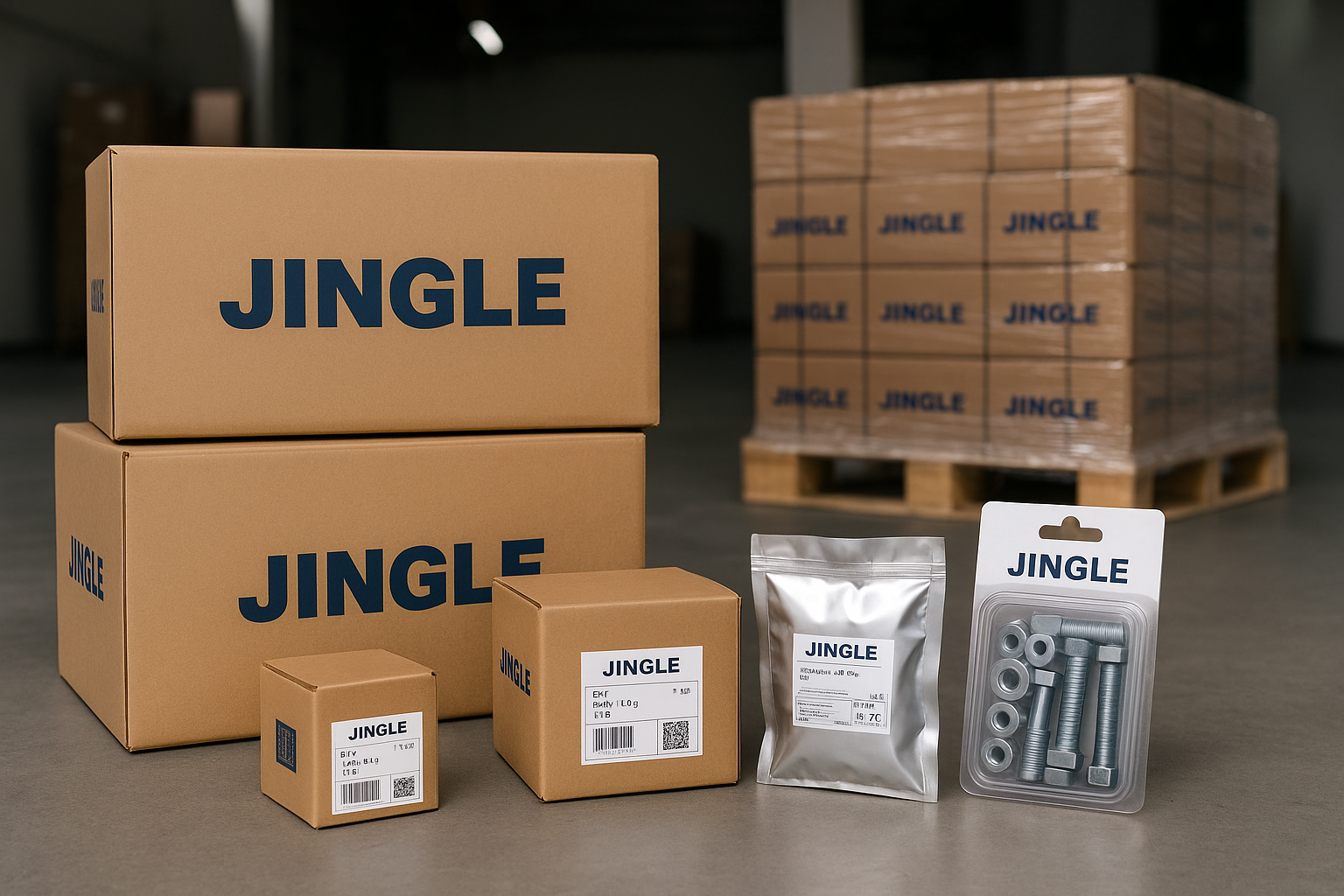
Fastener packaging for OEM export with JINGLE logo on boxes

Why Fastener Packaging Matters in Export Scenarios

When it comes to exporting fasteners, packaging is more than just a container—it's a critical factor in protecting your products, minimizing damage during transit, and presenting your brand to global buyers. For OEM clients and distributors, poor packaging can lead to increased returns, customs delays, or even lost orders. JINGLE understands these risks and offers customizable packaging solutions built for real-world export demands.

Key Challenges Faced by Exporters

OEM and distribution partners often face the following packaging issues:

  • Breakage and rust during sea shipmentdue to inadequate moisture-proof protection

  • Incorrect labelingthat causes customs clearance delays

  • Boxes collapsing under loadduring pallet stacking in warehouses

  • Clients requesting branded packaging or retail-ready designsbut suppliers offering generic cartons

JINGLE works with each customer to prevent these pain points by offering packaging solutions matched to shipping method, product type, and branding goals.

Types of Fastener Packaging We Offer

To support export requirements, JINGLE provides:

  • Bulk packagingin strong, double-wall cartons with reinforced corners

  • Small box inner packaging(e.g., 1kg, 5kg) with custom print or barcode stickers

  • Retail-ready packaginglike blister cards, clamshells, or header bags

  • Moisture barrier linersand desiccants for sea shipment

  • Pallet packaging with shrink wrap and edge guardsfor container loading

Each packaging type is validated for its durability and tested against shipping scenarios commonly encountered in export.

Branding and Customization Options

If you are a distributor or OEM buyer, you likely want your packaging to reflect your brand. That’s why JINGLE offers:

  • Logo printingon boxes and labels

  • Color-coded packagingfor different product types

  • Barcoding systemsfor warehouse integration

  • QR code or instruction insertsfor end-users

You send us your packaging guidelines—we produce and ship accordingly.

Compliance and Standards for International Shipping

Meeting international standards isn’t optional—it’s essential. All JINGLE packaging complies with:

  • ISPM-15 pallet regulations(for wooden packaging)

  • RoHS and REACH compliant labeling (if required)

  • Country-specific labeling (e.g., CE mark for EU, warning labels for USA)

  • Customs documentation pockets and itemized packing lists

This ensures fast clearance and lowers risk of penalties or shipment rejection.

Smart Packaging Is Smart Business

Choosing the right fastener packaging helps prevent damage, improves customer satisfaction, and enhances brand recognition. Whether you're shipping pallets to B2B clients or selling on retail shelves, JINGLE’s export packaging solutions are built for performance and flexibility.

To explore more of our export-ready fastener solutions, visitour homepageorcontact usfor tailored OEM packaging support.

Featured Blogs

Tag:

  • Industrial Application Solutions
Share On
Featured Blogs
Inside a Lifting Anchor Manufacturer: How Quality Is Built Into Every Batch

Inside a Lifting Anchor Manufacturer: How Quality Is Built Into Every Batch

This article takes precast buyers inside the manufacturing process, explaining how lifting anchor quality is controlled from material receipt and forming to heat treatment, critical-dimension inspection, surface finishing, testing, marking, traceability, and repeat production. It also provides factory-audit questions, a document checklist, common warning signs, and practical FAQs.

Inside a Lifting Anchor Manufacturer: How Quality Is Built Into Every Batch

Inside a Lifting Anchor Manufacturer: How Quality Is Built Into Every Batch

This article takes precast buyers inside the manufacturing process, explaining how lifting anchor quality is controlled from material receipt and forming to heat treatment, critical-dimension inspection, surface finishing, testing, marking, traceability, and repeat production. It also provides factory-audit questions, a document checklist, common warning signs, and practical FAQs.

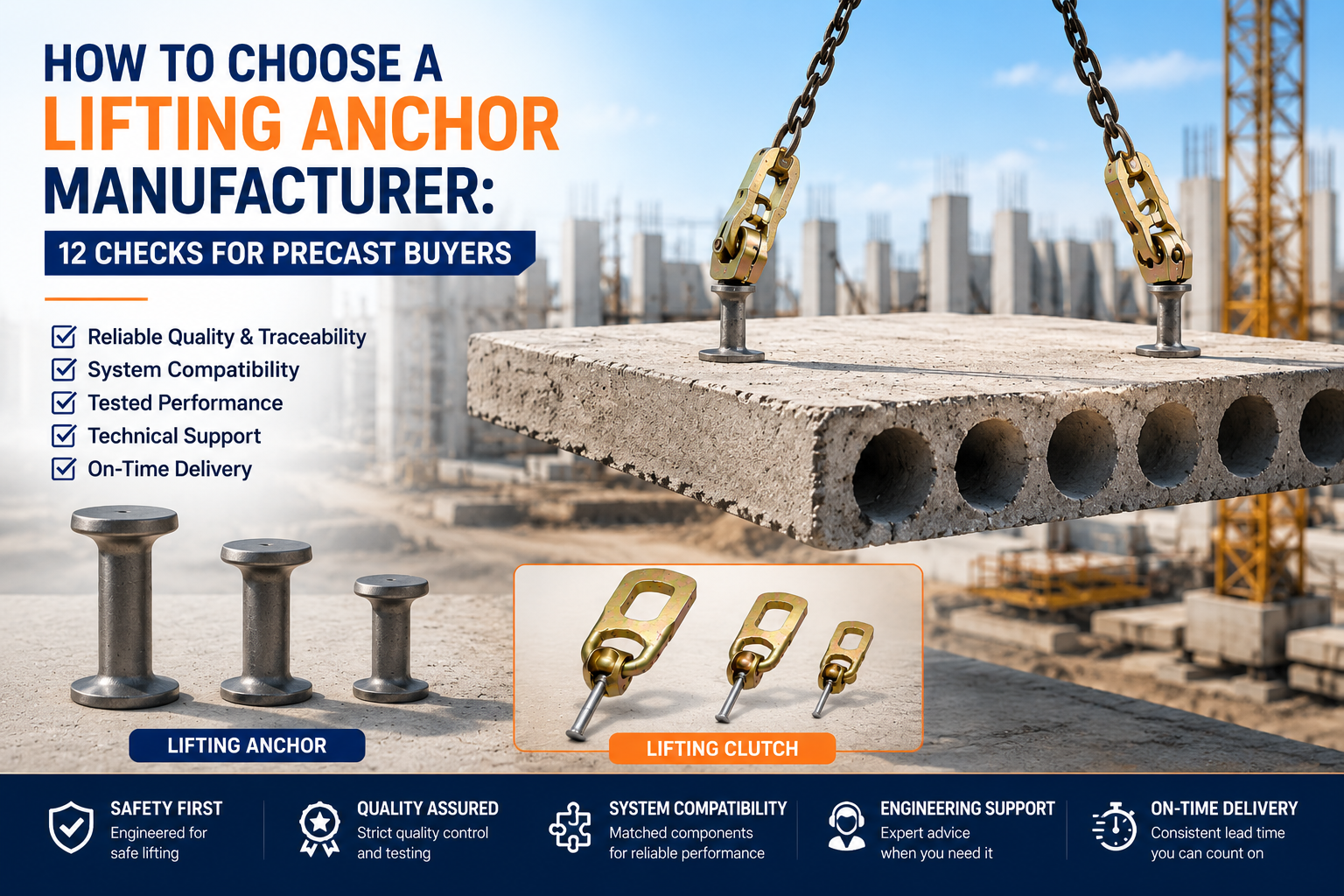
How to Choose a Lifting Anchor Manufacturer: 12 Checks for Precast Buyers

How to Choose a Lifting Anchor Manufacturer: 12 Checks for Precast Buyers

This guide helps precast concrete buyers evaluate lifting anchor manufacturers based on application fit, system compatibility, technical documentation, material and process control, traceability, testing, quality management, production readiness, and engineering support. It includes a supplier scorecard, an RFQ checklist, common warning signs, and practical FAQs.

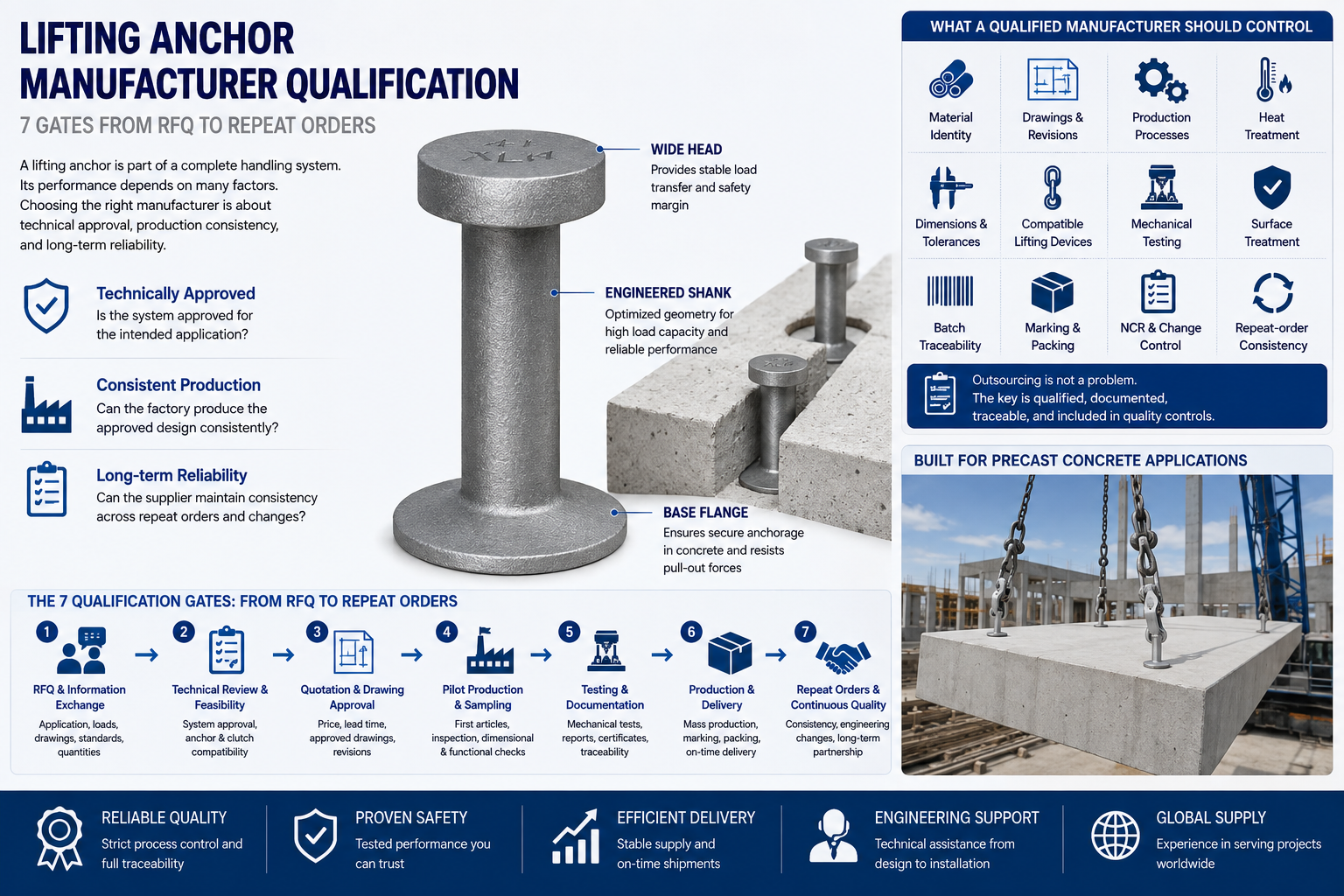
Lifting Anchor Manufacturer Qualification: 7 Gates From RFQ to Repeat Orders

Lifting Anchor Manufacturer Qualification: 7 Gates From RFQ to Repeat Orders

This guide explains how precast concrete buyers can qualify a lifting anchor manufacturer through seven decision gates, covering application review, system compatibility, factory process control, technical evidence, sample approval, pilot production, traceability, and repeat-order management. It also provides an audit table, RFQ checklist, cost model, warning signs, and practical FAQs.

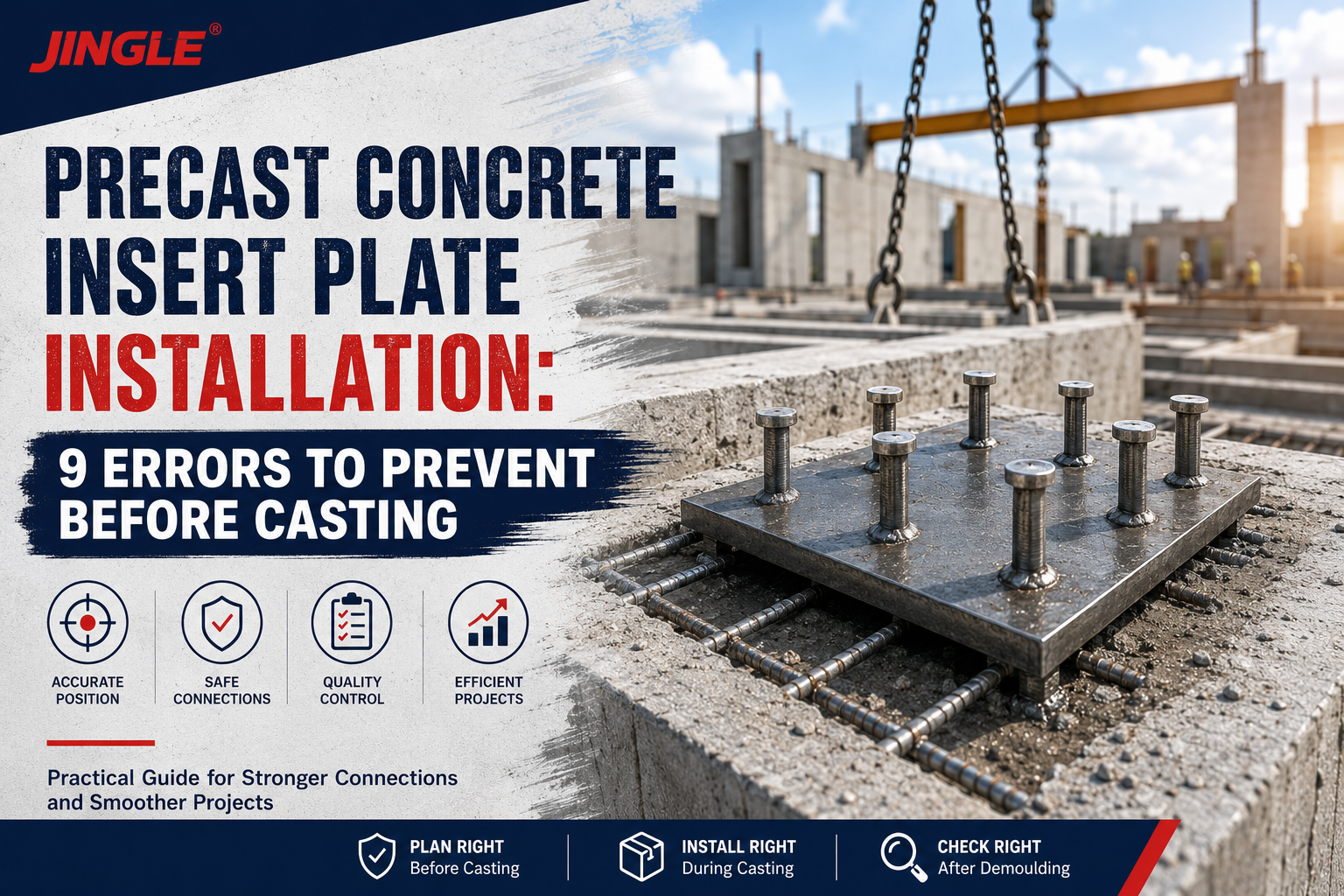
Precast Concrete Insert Plate Installation: 9 Errors to Prevent Before Casting

Precast Concrete Insert Plate Installation: 9 Errors to Prevent Before Casting

Learn how to prevent positioning, reinforcement, welding, coating, concrete-placement, and inspection errors when installing precast concrete insert plates before casting.

How to Specify Precast Concrete Insert Plates with Welded Studs

How to Specify Precast Concrete Insert Plates with Welded Studs

A practical guide for engineers and procurement teams evaluating precast concrete insert plates. Learn how to define plate material, stud layout, weld quality, surface finish, reinforcement clearance, inspection records, and supplier requirements before approving production.