Fasteners for Harsh Environments: How Manufacturers Adapt to Extreme Conditions
Why Standard Fasteners Cannot Withstand Harsh Environments
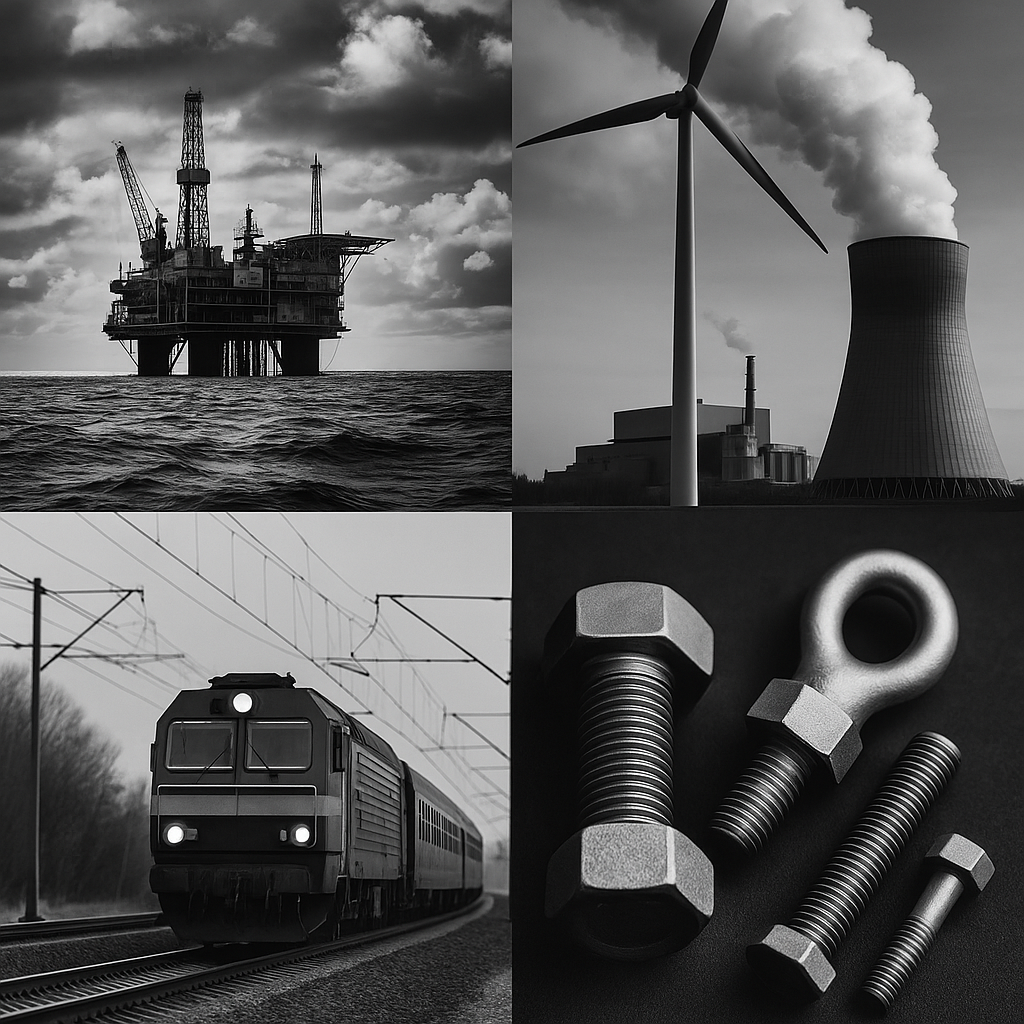
In everyday applications, standard bolts, nuts, and rivets perform well enough. But in harsh environments—offshore wind farms, oil rigs, arctic railways, or desert solar farms— conditions push fasteners far beyond their limits. Saltwater accelerates corrosion, freezing climates cause metal fatigue, and high-vibration machinery demands more than catalog fasteners can deliver. The cost of failure in these settings is not just financial—it can compromise entire structures or safety systems.
The Environmental Challenges Manufacturers Must Address
-
Corrosive Saltwater and Humidity
Marine and offshore projects expose fasteners to constant salt spray and moisture, leading to rapid rusting and weakening. Standard coatings deteriorate too quickly, requiring specialized alloys and protective layers. -
Extreme Temperatures
In arctic rail networks, materials must remain tough at sub-zero temperatures. In desert energy plants, fasteners must endure scorching heat without losing tensile strength. Both extremes can cause metals to crack or warp if not engineered correctly. -
Constant Vibration and Fatigue
Heavy machinery, turbines, and transport systems place continuous stress on fasteners. Without fatigue-resistant designs, parts loosen or fail, leading to downtime or catastrophic damage. -
Chemical Exposure
Refineries and industrial plants often expose fasteners to acids, solvents, or abrasive chemicals. These conditions demand tailored materials and coatings to maintain durability.
How Manufacturers Adapt Fasteners for Extreme Conditions
Professional fastener manufacturers integrate advanced strategies to overcome these challenges:
-
Material Engineering: Stainless steels, high-alloy steels, titanium, and duplex alloys resist corrosion, fatigue, and extreme temperatures better than standard carbon steel.
-
Surface Treatments: Hot-dip galvanizing, zinc-nickel plating, epoxy coatings, and new eco-friendly alternatives provide long-lasting protection.
-
OEM Customization: Tailoring fasteners for unique loads, geometries, or material pairings ensures precise fit and durability.
-
Rigorous Testing: Salt-spray testing, tensile strength analysis, fatigue simulations, and chemical resistance checks validate performance before deployment.
-
Lifecycle Traceability: Digital batch tracking ensures that every fastener installed in a critical environment can be traced back to its production process.
JINGLE’s Capabilities as a Manufacturer for Harsh Environments
As a professional OEM fasteners manufacturer, JINGLE delivers solutions engineered to survive the world’s most extreme conditions:
-
OEM Solutions: Customized bolts, nuts, rivets, and anchors tailored for offshore, energy, and infrastructure projects.
-
Certified Quality: Compliance with ISO and CE standards, supported by in-house fatigue, tensile, and corrosion testing.
-
Factory Capacity: Annual production capacity exceeding 10,000 tons, ensuring consistency even for large-scale global projects.
-
Material Expertise: Proficiency in stainless steel, titanium, and advanced alloys suitable for extreme environments.
-
Global Supply: ERP-driven logistics and traceability ensure reliable and transparent delivery worldwide.
With these strengths, JINGLE supports industries where failure is not an option.
Real-World Applications of Harsh-Environment Fasteners
-
Offshore Energy: Corrosion-resistant bolts for wind turbines, oil rigs, and marine infrastructure.
-
Bridges and Tunnels: High-strength fasteners capable of handling humidity, vibration, and long-term structural loads.
-
Rail and Transport: Cold-resistant fasteners for rail networks in freezing climates, fatigue-proof fasteners for high-speed systems.
-
Heavy Industry: Fasteners engineered for chemical exposure and constant shock in mining and refinery equipment.
-
Renewable Energy: Solar farms and hydro projects requiring UV-resistant, anti-corrosion solutions that last decades.
Each application demonstrates the need for specialized fasteners that extend service life and reduce long-term maintenance costs.
The Future of Fasteners in Extreme Conditions
As industries expand into harsher environments, the demand for engineered fasteners will grow. Future trends include:
-
Eco-Friendly Coatings: Moving away from hazardous treatments toward sustainable, high-performance alternatives.
-
Lightweight High-Strength Alloys: Titanium and composite materials balancing strength and reduced weight.
-
Smart Fasteners with Sensors: Enabling real-time monitoring of stress, fatigue, and corrosion.
-
Global Traceability: Blockchain and ERP integration to ensure every fastener is traceable throughout its lifecycle.
These innovations will ensure that fasteners remain reliable even as engineering challenges intensify.
Strength in Every Condition
Harsh environments test not only the durability of structures but also the resilience of the components holding them together. Standard fasteners may suffice for everyday use, but extreme conditions demand more—specialized OEM solutions, advanced materials, and certified quality from trusted manufacturers.
With its OEM expertise, certified production, and global delivery systems, JINGLE delivers fasteners designed to perform where failure is not an option.
Learn how JINGLE provides engineered fasteners for extreme conditions: Contact JINGLE.