What do buyers really need from hex nut manufacturers?
The importance of hex nut manufacturers is often underestimated until field tightening fails. The nut itself may be small, but it represents a much larger decision: whether an assembly can withstand vibration, load, corrosion, and repeated maintenance. For engineers, procurement teams, and product teams, the real issue isn't just where to buy nuts, but how to select suppliers who can provide the geometry, materials, finishes, and consistency required for the application.
This is crucial because hexagonal nuts are almost universally used in mechanical fastening. Mechanical equipment assembly, metalworking, automotive repair, maintenance, and construction all rely on standard nuts that can be tightened using common tools and match bolts or threaded rods. Thread mismatch, poor surface finish, or inconsistent dimensions can turn what should be a simple assembly into a thorny repair problem. Moreover, on the production line, these problems often only become apparent later, causing even greater losses.
Advantages of standard hexagonal nuts
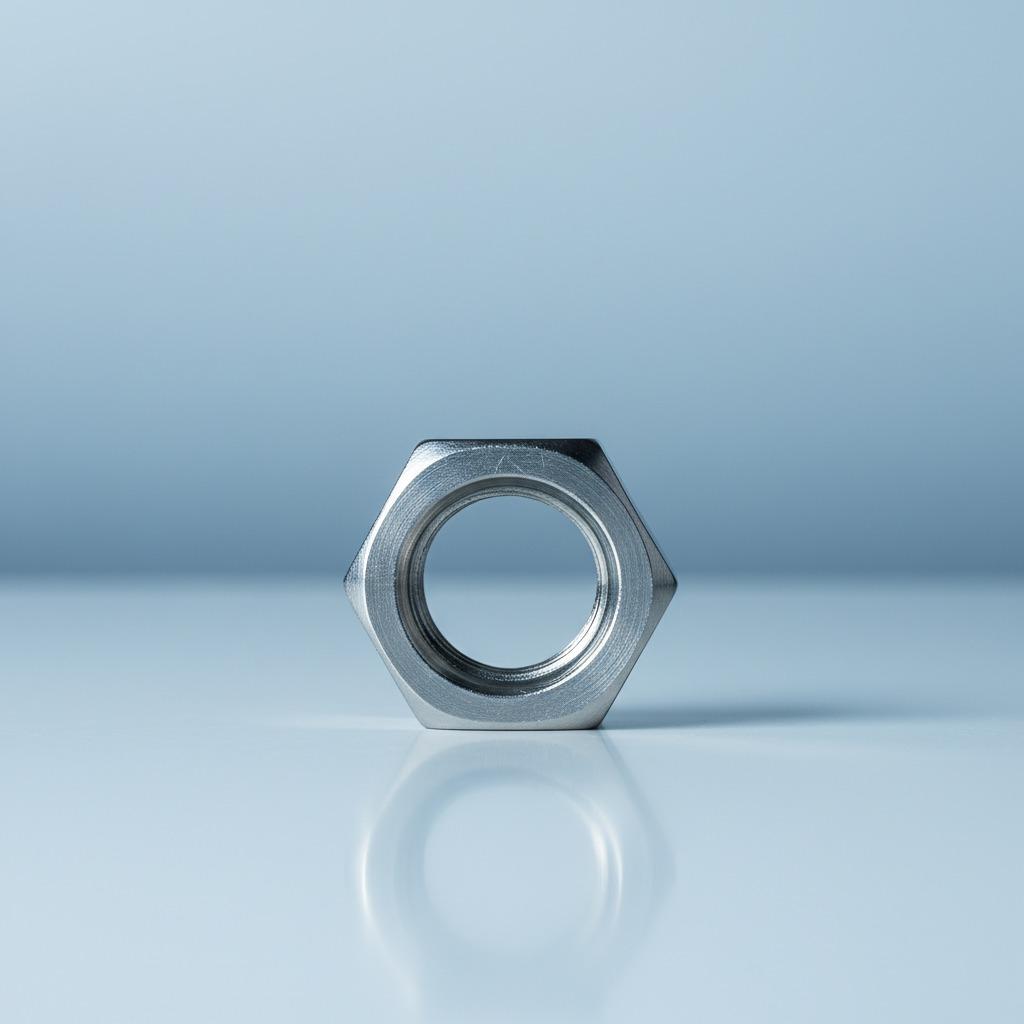
There's a reason this basic design is so common. A standard hex nut has six facets for easy wrench tightening, an internal threaded hole, and a compact, one-piece body. This shape makes it suitable for confined spaces and very easy to install. Visually, it's a traditional metal fastener with a reflective finish for some protection. It looks like a standard hex nut, not a flange nut or lock nut, so unless otherwise specified, buyers shouldn't assume it has additional anti-loosening features.
In many applications, this simplicity is precisely its advantage. If the bolt, washer, and nut are matched correctly, a standard hex nut can be an efficient and reliable choice. It's important to note that the standardization of a standard nut is only valid within specific size and material requirements. Thread size, pitch, strength grade, and coating all need to be matched to the assembly design.
Choosing a hexagonal nut supplier: What aspects need to be compared?
When comparing hex nut suppliers , the lowest quoted price often doesn't tell the whole story. A more effective comparison should begin by listing the following practical points:
Material selection depends on the corrosive environment and load requirements, such as stainless steel or carbon steel.
Surface treatments, including electroplating, zinc plating, or passivation, are used when both protection and appearance are important.
Thread consistency is important because if the nut does not slide smoothly on the bolt, it will slow down the assembly process or damage the mating parts.
For production repetitiveness, especially for large-volume orders, dimensional deviations are a real risk.
Packaging and labeling may seem trivial, but things get complicated when a mixed box arrives at the production line and someone has to sort the fasteners by hand.
Buyers should also inquire whether the supplier has cold forming and threading capabilities, as these are common processing techniques for standard hexagonal nuts. While this doesn't guarantee quality, it's generally suitable for efficient, high-volume production. If the supplier also offers post-treatment electroplating or passivation, it can simplify the procurement process. However, don't assume that a glossy surface equates to good corrosion resistance in all environments.
Chinese Hexagonal Nut Factories: Why Capacity and Process are Crucial
Users searching for "Chinese hexagonal nut factories" are typically buyers seeking large-scale production, cost control, or broader sourcing channels. This is understandable. China has a well-established fastener manufacturing system, with many factories capable of mass-producing standard hardware. However, what truly matters is not just the factory's location, but also its ability to maintain stable production volumes, clearly document specifications, and effectively communicate details affecting interchangeability.
For general-purpose fasteners, process control is more important than fancy marketing rhetoric. A factory that can consistently form hexagons, precisely cut or roll internal threads, and complete the required surface treatments is generally more valuable than one that merely claims to have extensive capabilities. Buyers should be especially careful in selecting material and coating compatibility if the application involves structural elements, exposure to humid environments, or requires frequent maintenance.
Stainless steel or carbon steel?
The choice between stainless steel and carbon steel hex nuts typically depends on environmental factors, cost, and maintenance requirements. Stainless steel is often the preferred choice when corrosion resistance is critical, especially in humid, outdoor, or washable environments. Carbon steel is more common when strength, cost-effectiveness, and widespread availability are priorities, particularly when components require protective coatings or are in controlled environments.
That said, stainless steel is not a panacea. Some applications require the mechanical properties, electroplating compatibility, or cost advantages of carbon steel. Other applications require stainless steel, but still need to consider the choice of meshing, thread lubrication, or mating materials. If procurement personnel treat material selection merely as a list of options, it can easily lead to problems later on.
Common purchasing mistakes
A common mistake is ordering based solely on appearance. A bright silver finish may indicate a different manufacturing process, and visual characteristics do not determine alloy composition or performance. Another error is assuming all hex nuts are suitable for bolts of roughly the same size. Thread pitch and tolerances are crucial. Even if parts appear interchangeable on paper, the applicable standard is equally important.
There is also a tendency towards over-design in some projects. Buyers sometimes make complex requirements that exceed the actual needs of the application, which increases costs and complicates the supply chain. Practical procurement reviews should distinguish between essential functions and optional extras. If a nut does not require a locking function, forcing a special design into the bill of materials may only create unnecessary trouble.
What questions should I ask before placing an order?
Before ordering fasteners, always request the exact dimensions, thread specifications, material, finish, and any applicable standard documentation. If the application requires frequent maintenance, confirm whether the nut will be used with washers, coatings, or lubricants. If the parts are susceptible to corrosion or vibration, raise these issues as early as possible, rather than waiting until the first field failure occurs.
For many buyers, the best supplier is one that can answer these questions honestly and without reservation. A reliable hex nut manufacturer should be able to describe the type of part, its material, surface treatment, and intended use. If this basic information is unclear, the purchasing risk is higher than it appears.
Next steps for engineers and buyers
If you are comparing various hexagonal nut options for equipment manufacturing or regular procurement projects, first consider the application environment and the requirements of the matching fasteners. Then, narrow down your choices based on materials, surface finishes, and supply stability. This approach usually helps you find fasteners that are better suited for the actual assembly, rather than just those on the drawings.
For the procurement team, the next step is simple: request full specifications and confirm that the supplier can consistently meet these requirements, especially when weighing cost against corrosion resistance or production volume.